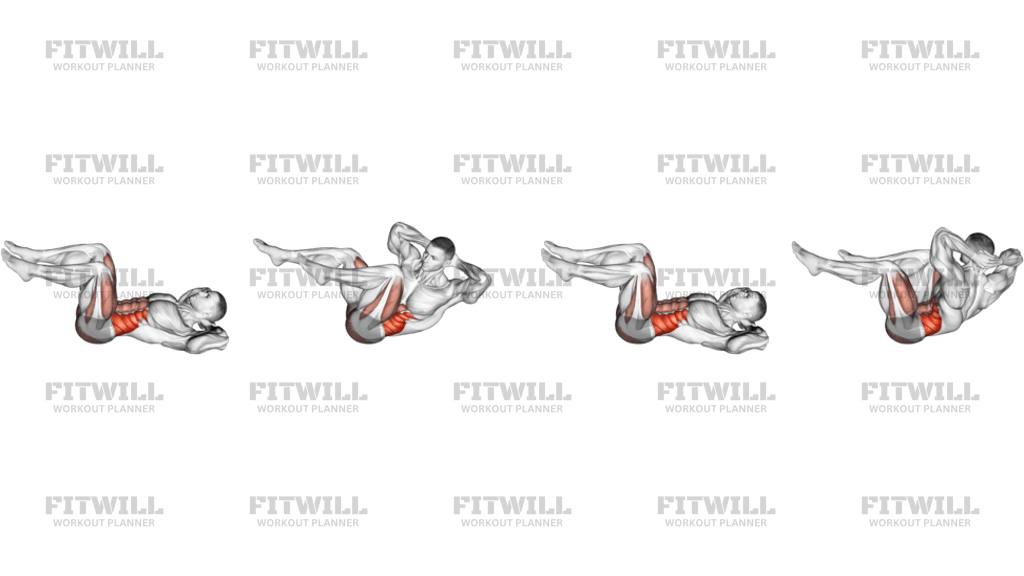
Trunk Twist Hop
The Trunk Twist Hop is a standing, body weight rotation drill that combines an explosive twisting of the torso with a small hop. You start with your feet close together and your arms extended out to your sides at chest height, then rotate your lower body from one side to the other while the upper body counter-rotates, with each hop landing in a slightly flexed, athletic position. The whole point is rhythmic, controlled rotation under light ground contact — not a big jump.
This movement earns its place in warm-ups and conditioning circuits because it trains rotation dynamically. Most core work happens on the floor or in slow, deliberate patterns, but real rotation in sport and daily life happens quickly and while you are on your feet. The Trunk Twist Hop teaches your obliques, deep core, and hips to produce and absorb rotational force while your calves and quadriceps handle the landing.
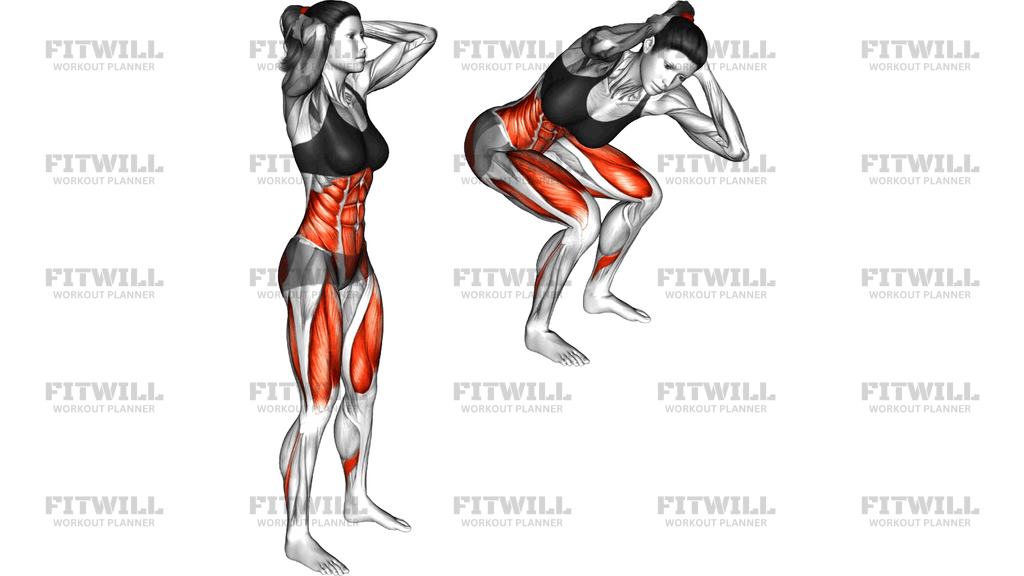
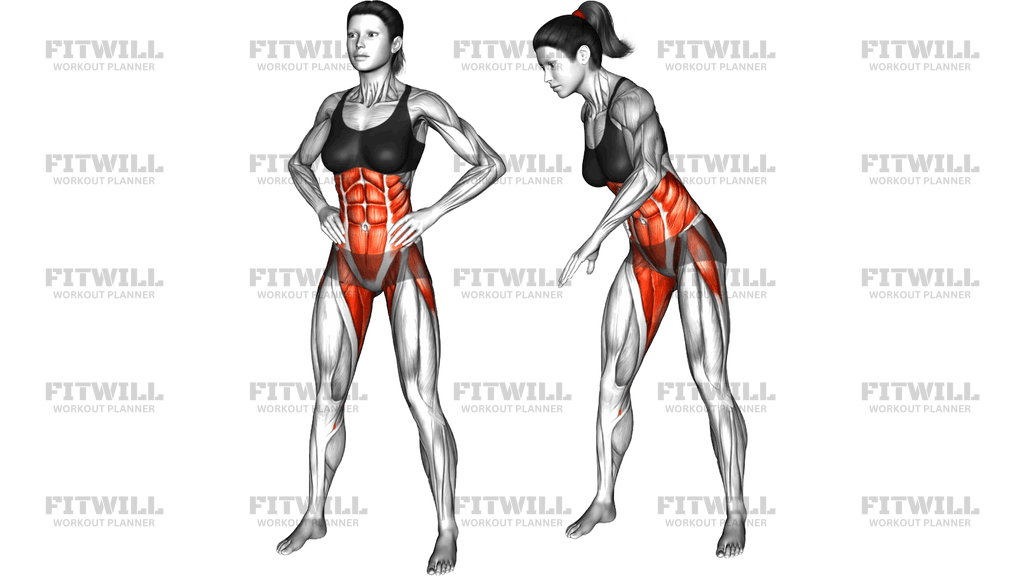
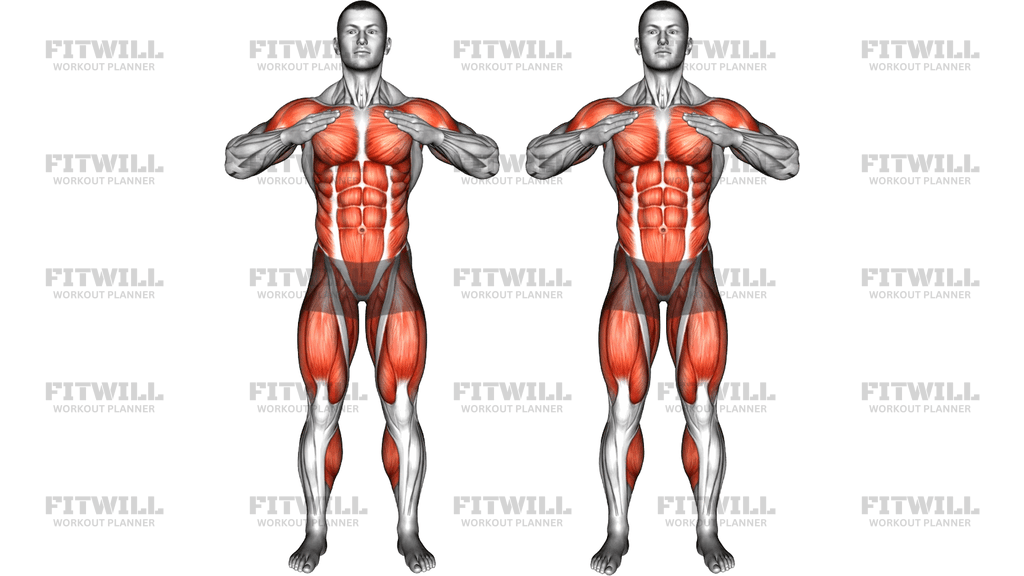
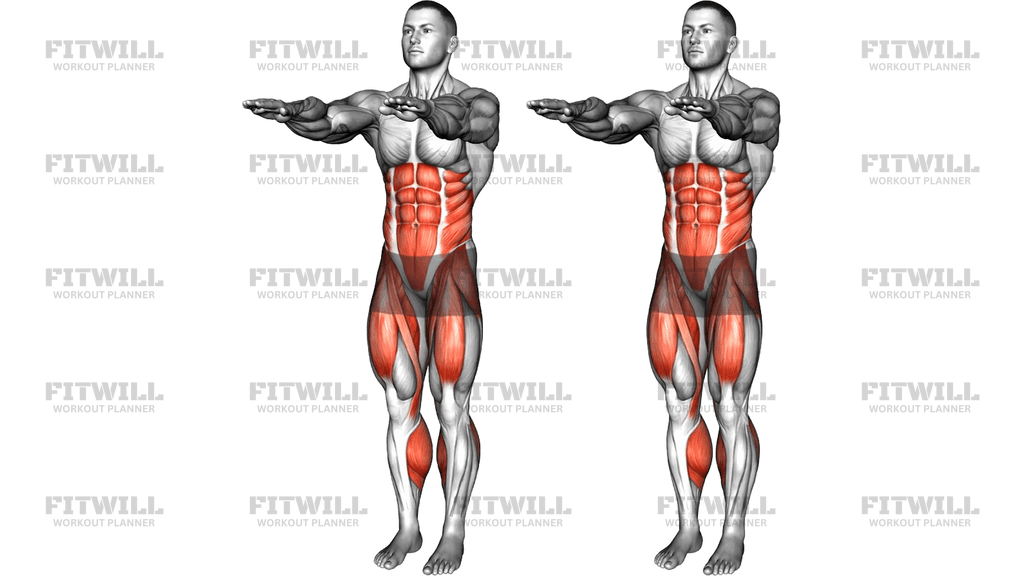
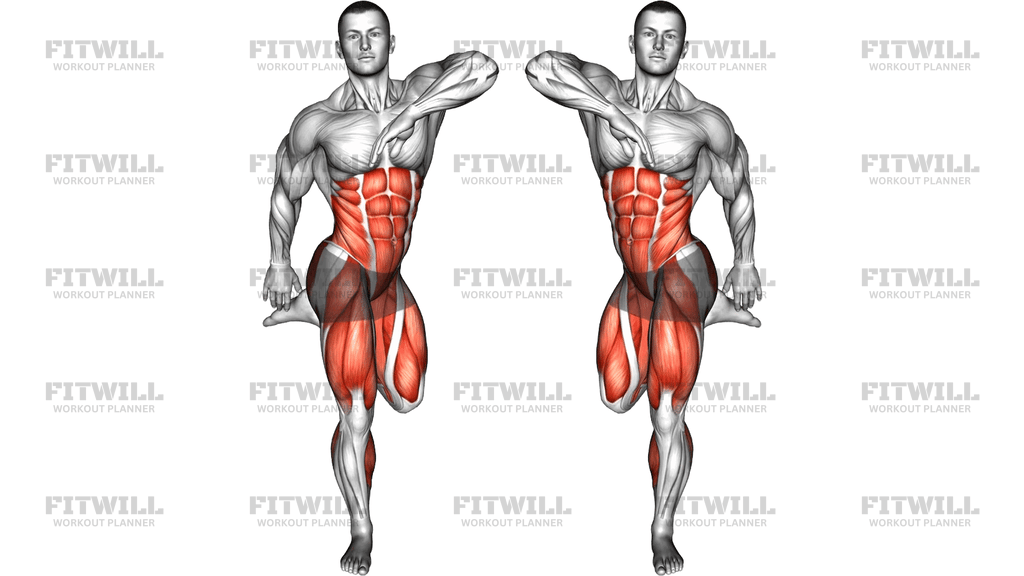
The highlighted working areas are the trunk and thighs. The obliques drive each twist, the rectus abdominis bracing through the hop keeps the ribcage from flaring, and the hip rotators and glutes turn the legs side to side. The calves and quads work on every landing, which is why this move feels like core work and light cardio at the same time.
Setup matters here because the arms act as your rotation reference. Holding them straight out at shoulder height creates a visible line of rotation; if they drop or bend, it usually means the torso is collapsing instead of twisting. A narrow stance and soft knees let the legs pivot freely so the twist comes from the hips and trunk rather than grinding through the knees.
To execute it well, keep the hops low and the twists crisp. Rotate fully from side to side with each contact, letting the opposite arm sweep across the front of your body as the trunk turns, then reset immediately into the next hop. Breathe steadily throughout rather than holding your breath, and stop once your rotations lose their snap — sloppy, half-hearted twists train nothing useful.
You will see this movement in athletic warm-ups, martial arts and combat sport preparation, general fat-loss circuits, and core-focused group sessions. It needs no equipment and very little space, which makes it a practical go-to when you want to raise your heart rate and wake up your rotational pattern before heavier training.
Fitwill
Log Workouts, Track Progress & Build Strength.
Achieve more with Fitwill: explore over 9600 exercises with images and videos, access built-in and custom workouts, perfect for both gym and home sessions, and see real results.
Start your journey. Download today!




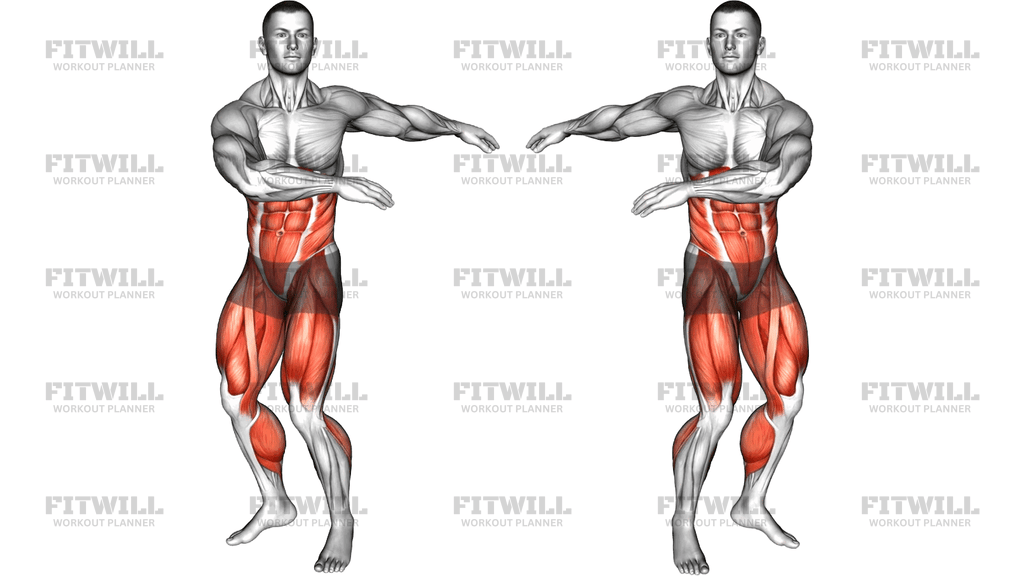
Instructions
- Stand with your feet roughly hip-width apart or slightly closer, knees soft, and your weight balanced over the balls of your feet.
- Raise both arms straight out to your sides at shoulder height, hands open and relaxed, so they form a horizontal line you can track as you rotate.
- Brace your trunk lightly, as if bracing for a light push, and keep your chest tall and eyes forward.
- Hop a few inches off the floor and rotate your legs and hips to one side while your arms swing with the turn, letting one arm sweep across the front of your chest.
- Land softly on the balls of both feet with your knees bent, absorbing the impact through your calves and quadriceps.
- Immediately hop again and rotate your legs and hips to the opposite side, keeping the arms extended and the twist coming from the trunk, not just the shoulders.
- Continue alternating sides with a quick, even rhythm, one full rotation per hop, keeping each hop low and controlled.
- Exhale sharply on each twist and inhale briefly as you pass back through center or reset between reps.
- When you finish, stop hopping, settle into a standing position, and let your arms drop so your trunk can settle before the next set.
Tips & Tricks
- Keep the hops genuinely small — a couple of inches is plenty. High jumps turn this into a leg exercise and steal tension away from the obliques.
- If your arms sag toward your waist mid-set, that is a sign of trunk fatigue and loss of rotation quality. Rest briefly instead of continuing with a drooping arm line.
- Land toe-to-heel softly. Heavy, flat-footed landings are the most common mistake in the Trunk Twist Hop and put unnecessary shock through the knees and lower back.
- Rotate from the ribcage and hips together. If only your shoulders are swinging while your hips stay square, you lose most of the core demand.
- Do not let your knees twist hard inward on the landing; drive the rotation from the hips so the knees follow as passengers.
- Start slower than feels natural. Speed should come from control of the twist, and rushing usually means you cut the range of rotation short on each side.
- On a hard floor, a thin mat or a surface with some give makes the repeated low-impact landings more comfortable over longer sets.
- If balance wobbles as you tire, widen your stance slightly before abandoning the set — a slightly wider base often restores control immediately.
Frequently Asked Questions
What muscles does the Trunk Twist Hop work?
The obliques on both sides of your trunk drive the rotation, supported by the rectus abdominis, hip rotators, and glutes. Your calves and quadriceps work on every landing, giving the legs steady but light involvement.
Is the Trunk Twist Hop suitable for beginners?
Yes, as long as you keep the hops very low and prioritize full rotation over speed. Beginners can also perform the same twist without leaving the floor for the first few sessions to learn the pattern.
Should I hop in the Trunk Twist Hop or keep my feet on the ground?
The hop is what separates this from a standard standing trunk twist, adding a landing and balance demand. Start with the grounded version if coordination is new to you, then add the small hop once the twist feels smooth.
Why do my arms drop during the set?
Fatiguing trunk and shoulder muscles let the arm line collapse, which shortens your rotation. Treat dropping arms as a signal to rest, or consciously re-lift them to shoulder height before continuing.
How can I avoid knee discomfort during this exercise?
Keep the rotation coming from your hips and ribcage, land on the balls of your feet with bent knees, and avoid letting the knees snap inward on the twist. If discomfort persists, reduce hop height or return to the grounded twist.
Is the Trunk Twist Hop cardio or core training?
It sits between the two. Longer, continuous sets raise your breathing and heart rate noticeably, while the rotational demand makes it a legitimate dynamic core exercise, which is why it appears in both warm-ups and conditioning circuits.
What can I substitute if hopping is not appropriate for me?
A standing trunk twist with the same extended arm line and full side-to-side rotation trains the same pattern without ground contact. Step the feet side to side instead of hopping to keep some of the rhythm.
How many repetitions should I perform?
Twists to each side count as one rep, and sets of 15 to 30 total rotations work well for warm-ups or circuits. Stop the set when your rotation range or arm height starts to noticeably drop.
Can the Trunk Twist Hop help with rotational power for sports?
It develops rotational coordination and rhythm under light load, which supports rotational movement patterns used in swinging and throwing actions. It works best as a supplement to, not a replacement for, loaded rotational training.