Sitting Alternate Knee To Elbow Twist
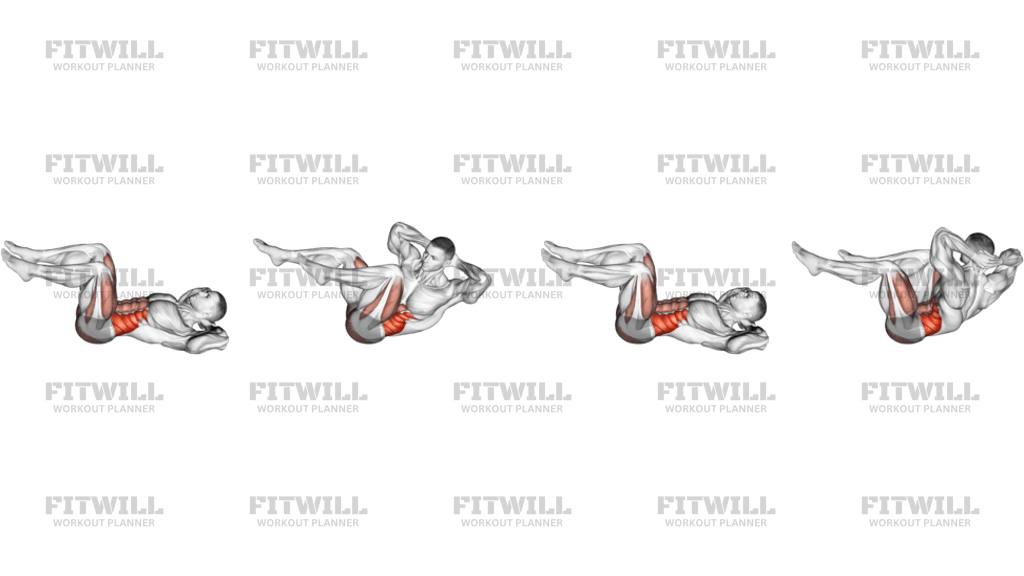
The Sitting Alternate Knee To Elbow Twist is a body weight core exercise performed from a seated position on the floor. You lean your torso back to roughly 45 degrees, place your hands lightly behind your head, and repeatedly twist your ribcage so one elbow drives toward the opposite knee while the other leg extends slightly forward. You then switch sides in a smooth, alternating rhythm, so the twisting and lifting demand never fully leaves your midsection.
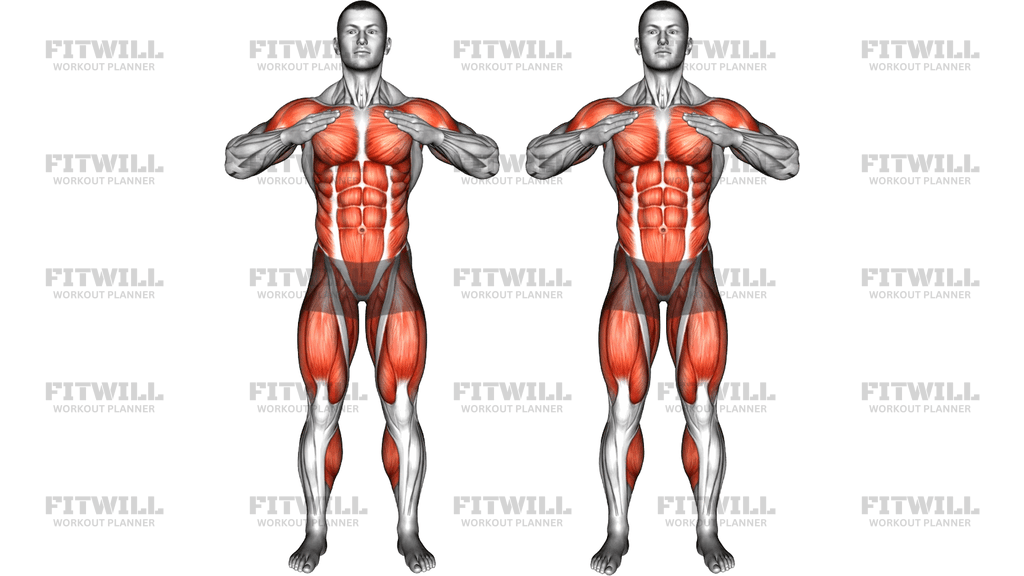
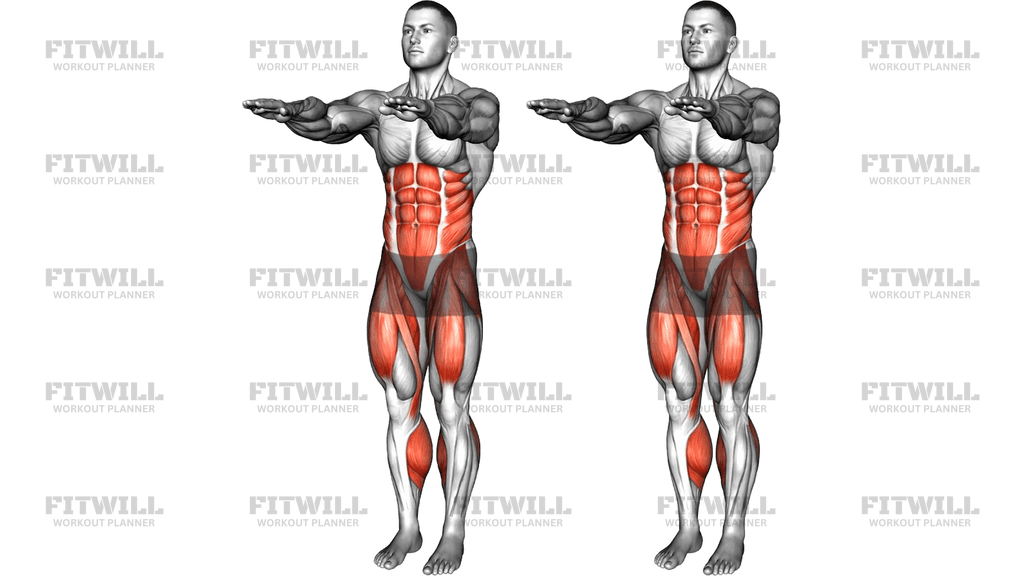
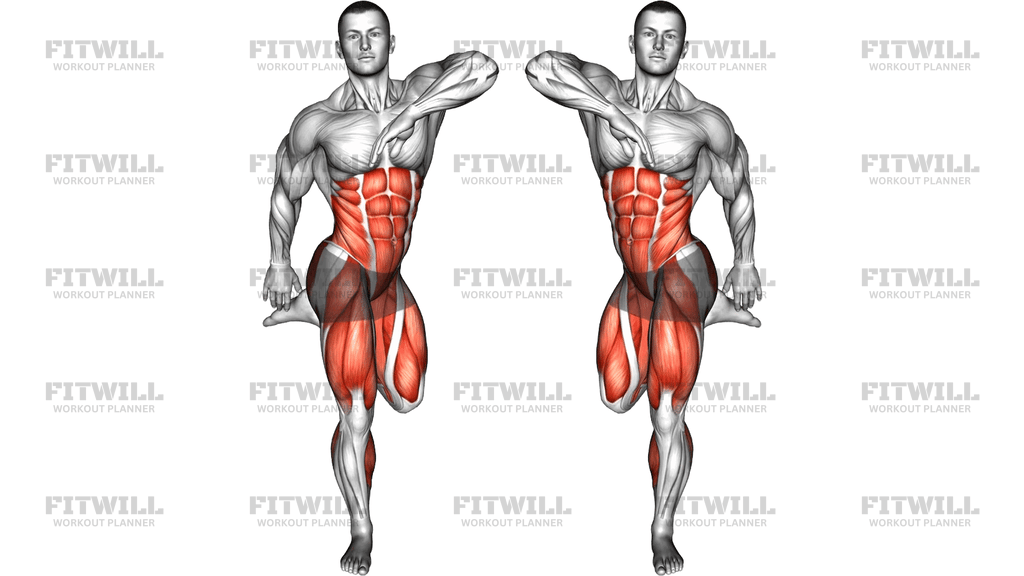
This movement targets the obliques along the sides of your waist, which are responsible for rotation and anti-extension of the trunk. Because you hold a leaned-back seated position for the entire set, your rectus abdominis works hard just to keep your spine from collapsing, and your hip flexors stay active to control the bent legs. It is essentially a seated variation of the bicycle crunch idea, but with the feet staying close to the floor, which makes the pace easier to manage.
The seated setup matters more than most people expect. Sitting on the floor with knees bent and heels lightly touching the ground shifts your center of gravity backward, so your abdominals must hold your torso upright against gravity before any twisting even begins. If you sit too upright, the abs get a break and the movement becomes an empty arm swing; if you lean back too far, your lower back tends to round and grip. The 45-degree lean is the productive middle ground.
To execute it well, think of the twist coming from your ribcage rather than from your arms. The elbow is just a passenger; the rotation should come from rotating your torso while your knees and elbows converge toward each other. Keep your chin a fist's distance from your chest, avoid pulling on your neck, and let each repetition finish with a brief squeeze at the point where elbow and knee meet before you rotate to the other side.
This exercise suits people who train at home with no equipment, lifters looking for a finishing move after heavier compound work, and anyone who finds floor crunch variations too repetitive. Because it requires no setup and no gear beyond a bit of floor space, it also works well in warm-ups to wake up the trunk before squats or deadlifts. Start with controlled reps of ten to twenty per side, and only speed up once you can keep your lower back long and your neck relaxed through the whole set.
The main safety point is protecting your neck and lower back. Never interlace your fingers and yank your head forward to force the twist, and stop short of any range where your tailbone tilts under and your spine rounds sharply. If sitting on the floor bothers your sit bones or lower back, place a folded mat or towel under your hips, which raises them slightly and makes it easier to keep a neutral spine.
[ Workout Log & Planner ]
Put your next workout in Fitwill
Keep your plan and training log ready when you are.


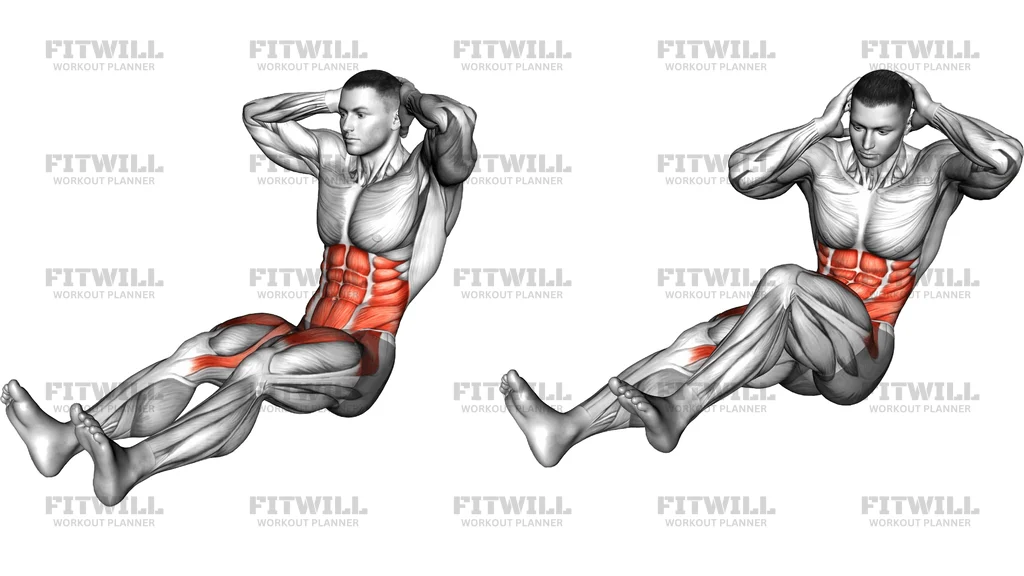
Instructions
- Sit on the floor with your knees bent and your feet flat, about hip-width apart, heels resting lightly on the ground.
- Lean your torso back to roughly a 45-degree angle and place your hands lightly on the sides of your head with elbows pointing outward, fingers loose rather than locked behind the skull.
- Brace your abs as if bracing for a light push, and lift your chest so your spine stays long instead of rounding.
- Twist your ribcage to the right while drawing your left knee up and in, bringing your right elbow toward the outside of the left knee so they converge.
- Pause for a beat where elbow and knee meet, feeling the squeeze along the left side of your waist.
- Rotate back through the center and immediately switch, bringing your left elbow toward the right knee as the left leg extends slightly forward.
- Keep the alternating rhythm steady and controlled, letting your feet hover or lightly skim the floor between reps rather than slamming down.
- Exhale as each elbow and knee converge, and inhale as you rotate back toward center.
- Complete all reps on a steady count or finish your target reps per side, then sit upright slowly and shake out your hips before the next set.
Tips & Tricks
- The most common fault is doing all the work with your arms. If your elbows are swinging but your ribcage is not rotating, slow down and consciously turn your chest toward the knee you are meeting.
- Watch for your tailbone tucking under as you fatigue. When your lower back starts to curl and your sit bones slide forward, either reduce the lean angle slightly or end the set rather than grinding through sloppy reps.
- Keep your fingers resting on the sides of your head instead of lacing them behind your skull. If you catch yourself pulling your neck forward, reset your hands at the temples before continuing.
- Your heels can rest on the floor between reps, but letting them hover a couple of centimeters increases the abdominal demand. Earn the hover version gradually instead of jumping straight to it.
- If your hip flexors cramp before your abs feel anything, your legs are probably pulling too actively. Let the knees come to the elbows rather than driving the knees hard on their own.
- Breathe on every rep. Holding your breath through a long set of twists is a common reason people lose the brace halfway through and feel it in their lower back.
- A folded towel or thin mat under the sit bones makes long sets far more comfortable on a hard floor and helps you hold a taller spine.
- Keep the movement smooth from side to side. Bouncing off the end range to gain momentum shifts the work away from the obliques and makes the twist shallower, not deeper.
Frequently Asked Questions
What muscles does the Sitting Alternate Knee To Elbow Twist work?
The obliques on the sides of your waist are the primary movers, since they drive the rotation. Your rectus abdominis holds the leaned-back torso position, and your hip flexors assist as the knees draw up toward the elbows.
Is the Sitting Alternate Knee To Elbow Twist suitable for beginners?
Yes, with two adjustments: keep the heels resting on the floor instead of hovering, and lean back only slightly so the twist stays comfortable. Beginners should prioritize slow, deliberate rotation over speed.
How is this different from a bicycle crunch?
The bicycle crunch is done lying on your back with both legs cycling through the air, while the Sitting Alternate Knee To Elbow Twist keeps you seated with feet near the floor. The seated position adds a constant anti-gravity demand on the abs and makes the pace easier to control.
Should my hands be locked behind my head during the Sitting Alternate Knee To Elbow Twist?
No. Rest your fingertips or palms lightly on the sides of your head without interlacing your fingers, and never pull your head forward to force the elbow closer to the knee. The twist should come from rotating your torso, not from your arms.
How many reps should I do per side?
Ten to twenty controlled reps per side is a solid working range. Once you can complete those with a tall spine and no neck tension, add reps or add a second and third set before making the movement harder.
Why do I feel the Sitting Alternate Knee To Elbow Twist in my lower back?
That usually means your torso has leaned back too far and your spine is rounding, or your abs have fatigued and stopped bracing. Sit slightly more upright, shorten the set, and keep your chest lifted so the rotation happens through the ribcage rather than by collapsing the lower back.
Can I do this exercise without any equipment?
Yes, it is a pure body weight movement that only needs floor space. A thin mat or folded towel under your hips is optional and simply makes longer sets more comfortable on a hard surface.
What can I use as a substitute if sitting on the floor is uncomfortable?
Standing cross-body elbow-to-knee taps train a very similar rotation pattern without any floor work. Seated Russian twist variations on a bench are another option, though they change the leg movement entirely.
Should my feet stay on the floor throughout the set?
In the base version, yes, let your heels rest or lightly skim the floor between reps. Hovering the feet is a progression that raises the demand on your abs and hip flexors, so add it only once the standard version feels easy.
How fast should I alternate sides?
Slow enough that each elbow and knee actually meet and you can feel the squeeze at the point of contact. Fast, shallow swings turn the exercise into a momentum drill and reduce the work your obliques actually do.