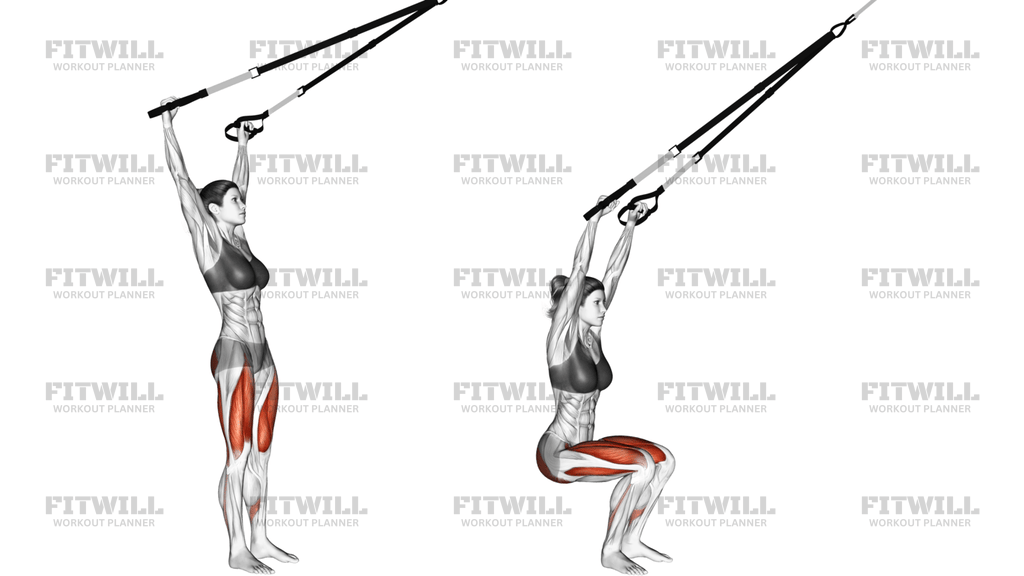
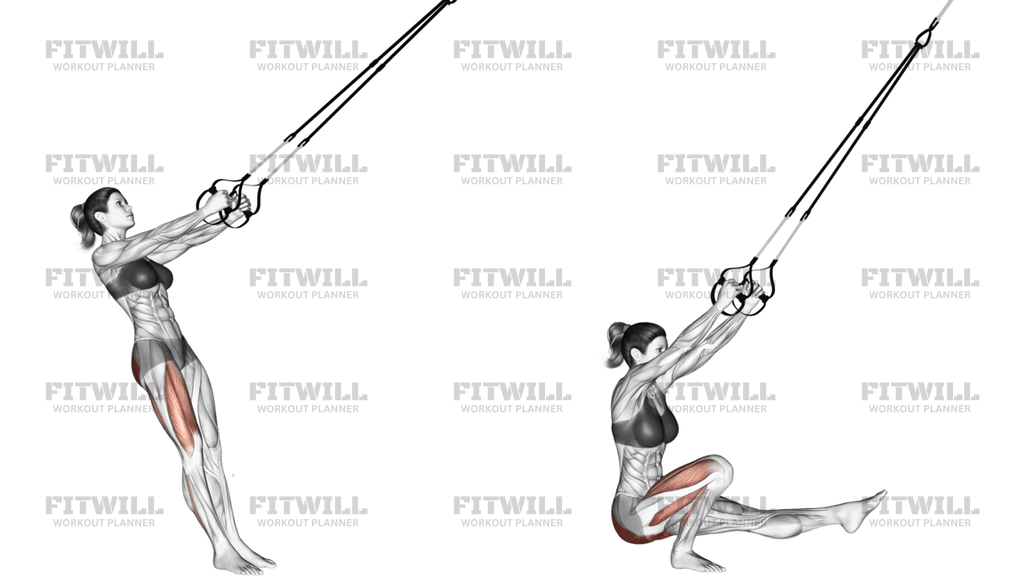
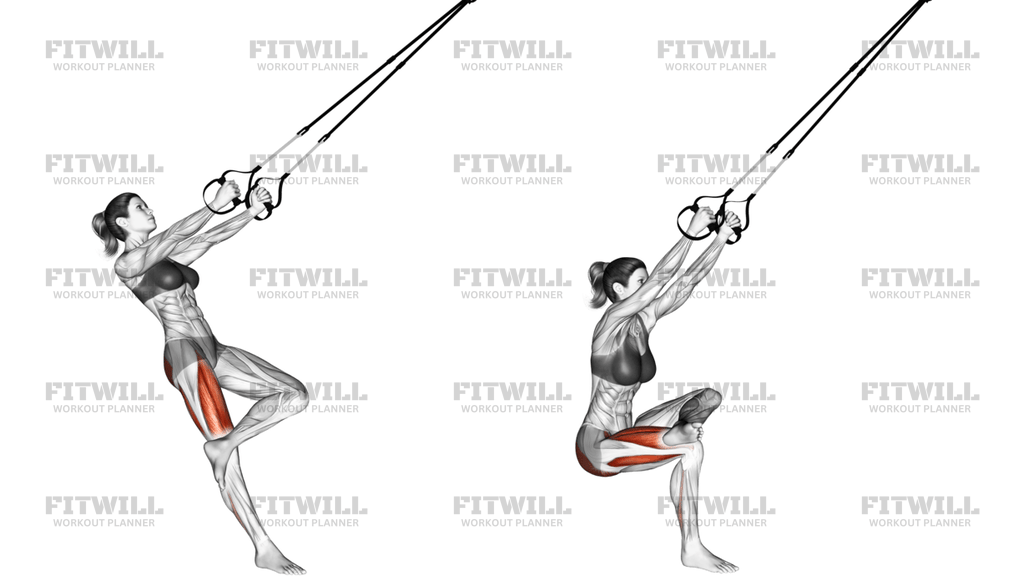
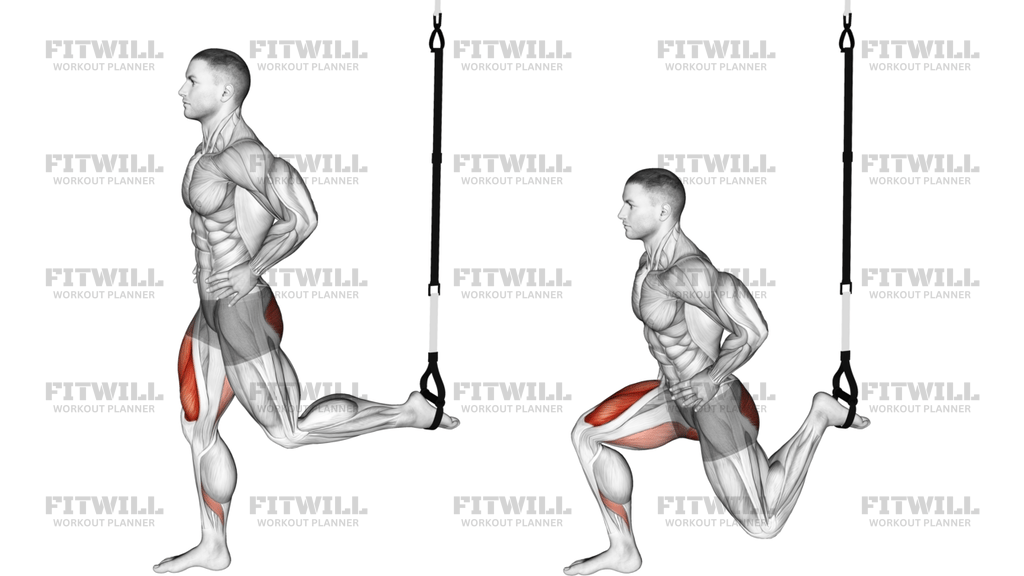
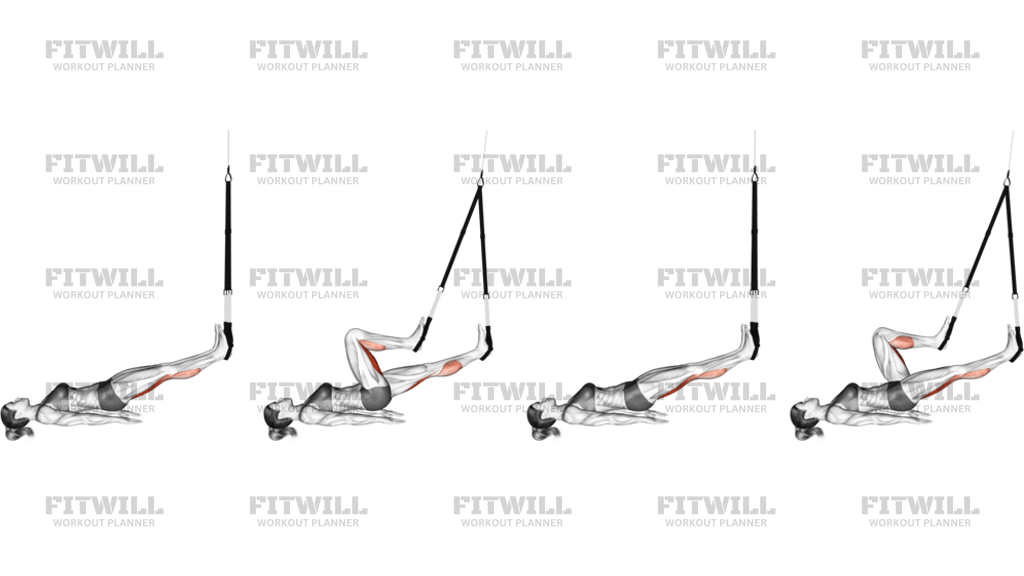
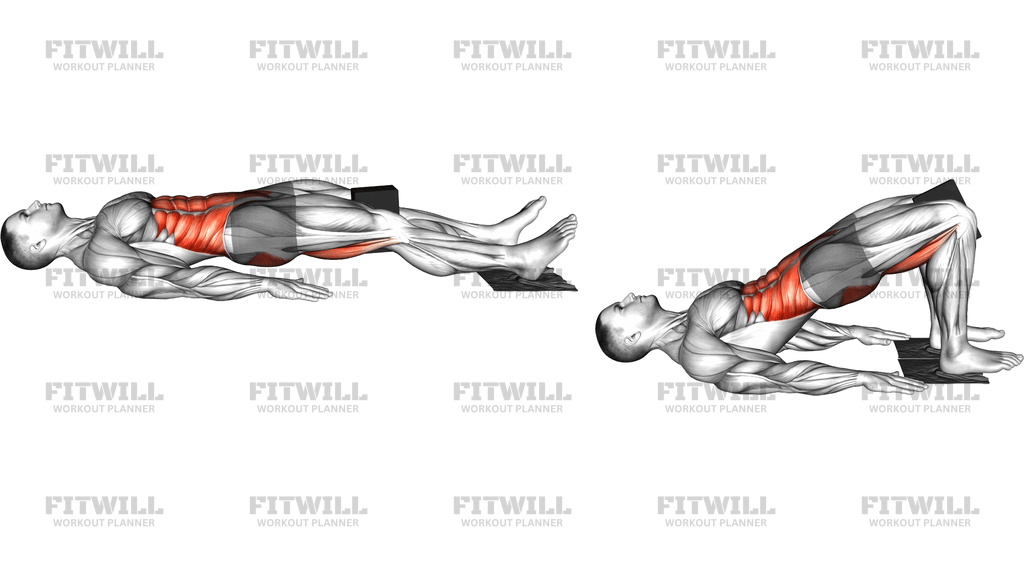
Ring Single Leg Curl (Version 2)
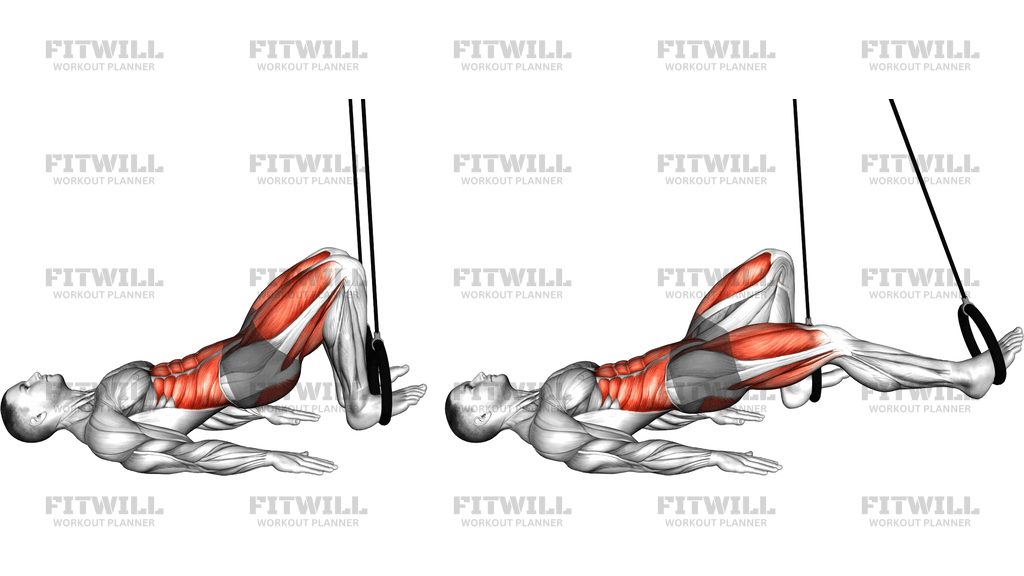
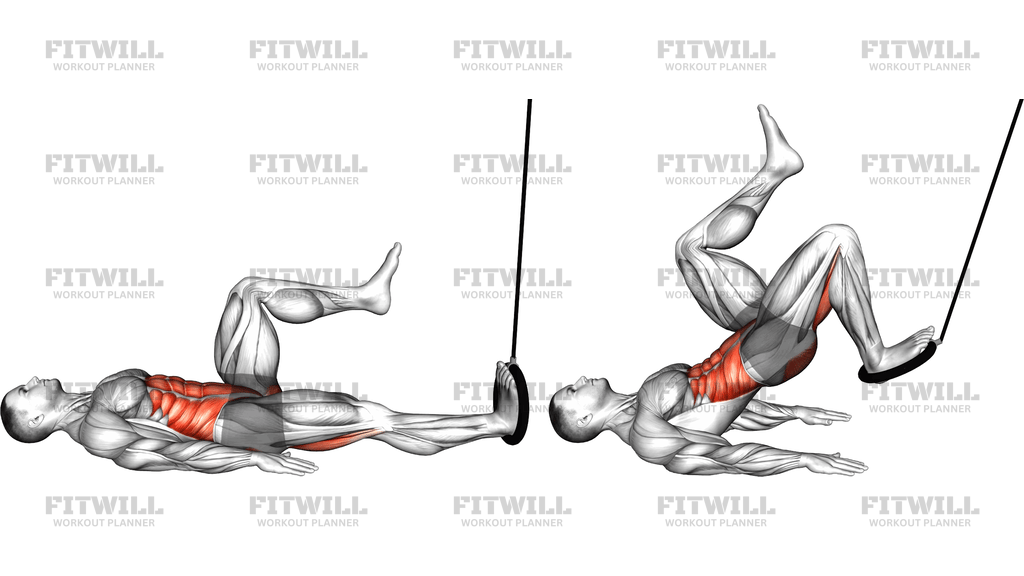
The Ring Single Leg Curl (Version 2) is a suspension trainer exercise performed from your back, with one heel resting in the hanging ring while you curl that leg in and drive your hips up into a bridge. Because only one leg works at a time and the ring is free to move in any direction, the hamstring on the working side has to control both the knee flexion and the stability of the strap. The non-working leg bends with the foot on the floor to support your torso, which makes this version slightly more accessible than doing the movement with the free leg extended.
This exercise trains the hamstrings primarily through knee flexion, but unlike a machine leg curl, your hips also extend against the strap tension, so the glutes get real work too. Your core stays braced the entire time to stop your pelvis from tipping or rotating, which is why you often feel your abdominals working hard as well. The single-leg format also exposes side-to-side differences in hamstring strength and control that a bilateral curl can hide.
The setup matters more here than in most floor exercises. The strap should hang roughly perpendicular to your body so the ring sits where your heel can press straight down into it, and your arms stay flat on the floor beside you for balance. If the anchor point is too far behind your head or too far out to the side, the strap pulls at an angle and the working leg drifts, which wastes effort and makes the curl feel unstable.
To perform it well, think of the movement as two actions happening together: the heel pulls down and toward your hips while the hips lift until your torso and thigh form a straight line. At the top, your knee should be bent close to fully flexed with the ring pulled in near your glutes. The lowering phase is where most of the benefit lives — extend the knee slowly and resist the strap as your hips lower back toward the floor rather than dropping them in one piece.
This movement suits lifters who train at home or travel with a suspension trainer, athletes looking for unilateral hamstring work without a leg curl machine, and anyone rehabilitating balance between legs after a layoff. It pairs naturally with squats, hinges, or single-leg deadlifts as supplementary hamstring work. Because load is limited to body weight and strap angle, progress comes from slowing the tempo, extending the lowering phase, or moving your body closer to the anchor to increase resistance.
Keep a few safety points in mind: make sure the ring and anchor are rated for your body weight and secured before you load the strap, and never let your lower back arch hard off the floor as you curl in — if your hips can't stay level, shorten the range. Stop the set when the working leg starts shaking sideways or the heel slips in the ring; that wobble is your signal that stability, not strength, is now the limiting factor.
[ Workout Log & Planner ]
Put your next workout in Fitwill
Keep your plan and training log ready when you are.


Instructions
- Anchor your suspension trainer overhead and adjust the ring so it hangs a few inches above the floor within easy reach while you lie on your back.
- Lie face up with your head away from the anchor, place one heel inside the ring, and bend your other knee so that foot rests flat on the floor for support.
- Extend your arms out to your sides at about 45 degrees with palms down, and press them lightly into the floor for balance.
- Point the working knee up toward the ceiling and take up the strap tension until your leg is roughly straight and the strap is taut.
- Brace your abdominal wall and squeeze the glutes so your pelvis is level before you start the rep.
- Exhale and pull your heel down and in toward your hips, flexing the knee fully while lifting your hips until your torso and thigh line up.
- Pause briefly at the top with the ring pulled in close to your glutes and your hips lifted.
- Inhale and extend the knee slowly, lowering your hips under control until the leg nears straight again, keeping tension in the strap the whole way.
- Complete all repetitions on one leg, then switch the opposite heel into the ring and match the rep count.
- At the end of the set, lift your hips slightly, slip the heel out of the ring, and let the strap settle before standing up.
Tips & Tricks
- If the ring slides around on your heel or the strap twists, re-center the ring across the middle of your heel rather than the arch or ankle.
- A common mistake is yanking the heel in with a hip thrust and no knee bend — the knee should actually flex, bringing the ring toward your glutes, not just push your body up.
- Watch that the working knee doesn't flare out to the side; keep it tracking roughly over the hip so the adductors and hamstrings stay in line.
- If your supporting foot keeps sliding on a smooth floor, place it against a wall or use a mat with more grip.
- Don't let the pelvis rotate toward the working side as you curl — imagine a glass of water balanced on both hip bones staying level.
- Strap slack is the silent rep-killer here: if the strap goes loose at the bottom, scoot your body an inch closer to the anchor so tension stays constant.
- Slow the lowering phase to three or four seconds before adding reps — the eccentric is where this exercise builds the most hamstring strength.
- If your hamstrings cramp near the knee, you're likely curling too fast from a cold start; do a few easy half-range reps first.
- Keep your neck relaxed and eyes on the ceiling — craning forward to watch the leg shifts load onto the upper traps.
Frequently Asked Questions
Which muscles does the Ring Single Leg Curl (Version 2) work?
The hamstrings are the primary movers as they flex the knee against the strap, with the glutes assisting as the hips lift into the bridge. Your core works isometrically to keep the pelvis level, and the adductors help stabilize the working leg.
Why does one foot stay on the floor in this version?
The bent supporting leg helps hold your torso and pelvis steady, so you can focus on curling with the ring leg instead of fighting to stabilize your whole body. Once both legs feel controlled, you can progress by extending the non-working leg.
Can beginners do the Ring Single Leg Curl (Version 2)?
Yes, as long as the strap is secure and the range starts modest. Beginners should curl only partway and keep the hips lower, building to the full bridge-and-curl as hamstring control improves.
How is this different from a machine leg curl?
A machine leg curl fixes your torso and pads your body in place, while here the strap is unstable and your hips move, so your glutes, core, and hip stabilizers share the work. The trade-off is less precise loading but more total-body demand.
What should I do if my hips drop before my leg extends at the bottom?
That usually means the rep is too long for your current control. Shorten the range so the knee only extends halfway, or curl in without lifting the hips as high, and rebuild the full range over a few sessions.
How far should my body be from the anchor point?
Lie far enough back that the strap hangs vertically over the ring with steady tension when your working leg is extended. If the strap goes slack mid-rep, scoot closer; if it drags your body toward the anchor, scoot back.
Is it safe to put my full body weight into the ring?
Yes, provided the suspension trainer is anchored to a rated overhead structure and the strap is inspected for wear. Test the setup by pressing your heel into the ring gradually before committing to full repetitions.
What can I substitute if I don't have a suspension trainer?
A sliding disc, towel on a smooth floor, or stability ball single-leg curl trains the same knee-flexion pattern with the hips bridging. The ring simply adds directional instability that those options approximate to a lesser degree.
How many reps and sets should I use for the Ring Single Leg Curl (Version 2)?
Start with two or three sets of six to ten controlled reps per leg, prioritizing a slow lowering phase. Because the load is limited by body position, adding tempo and range is more productive than chasing high rep counts.