Twist Knee Drive
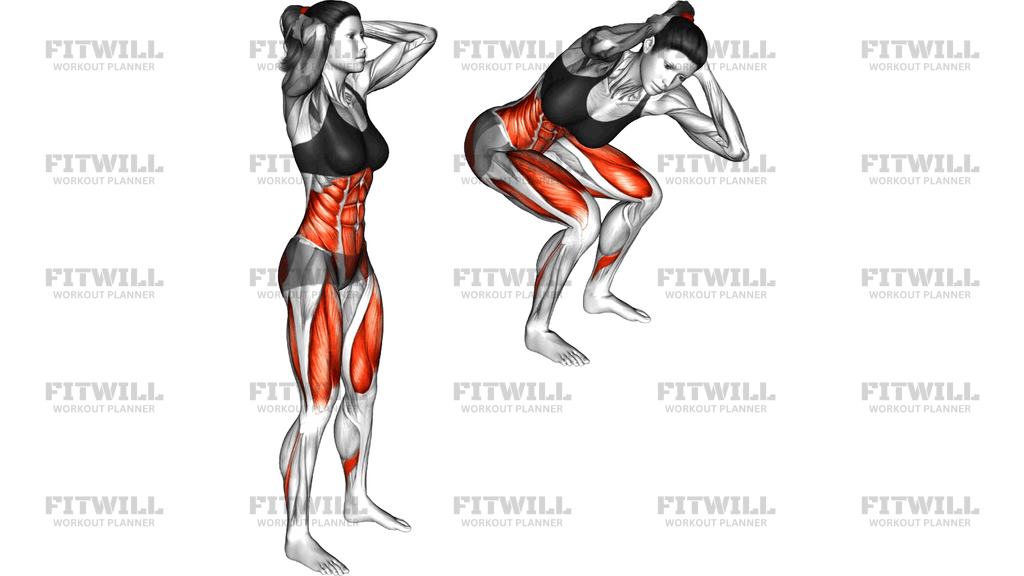
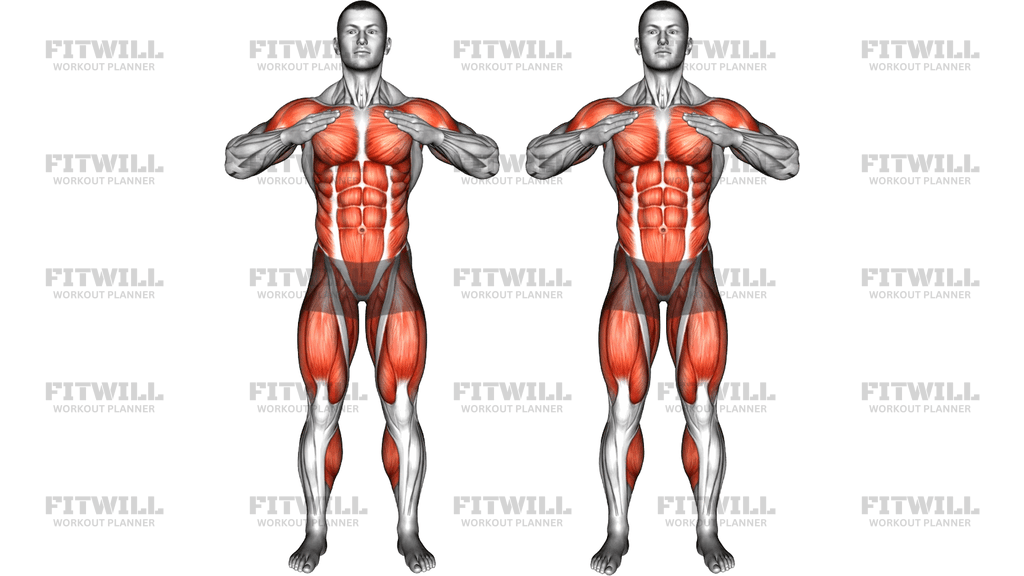
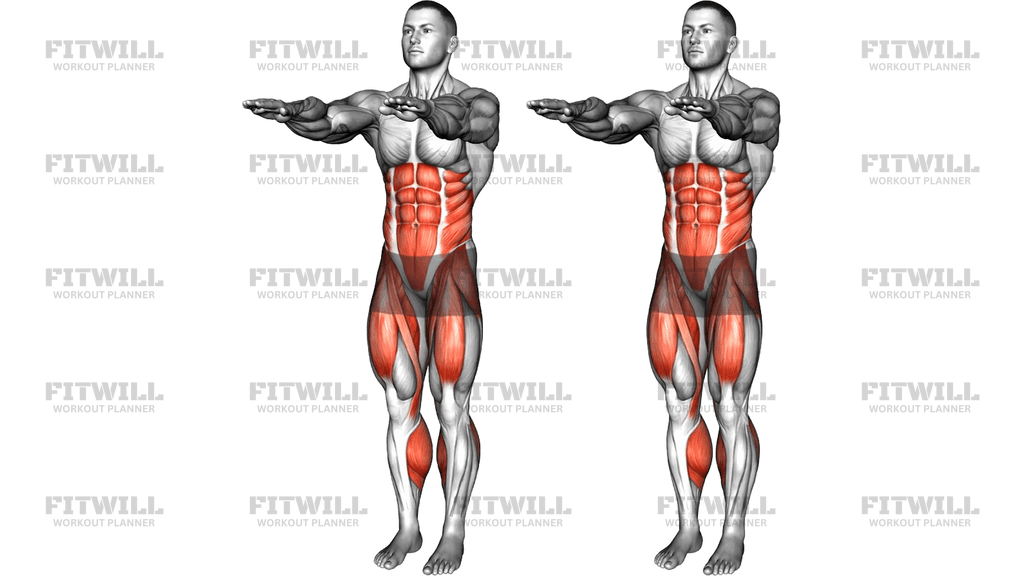
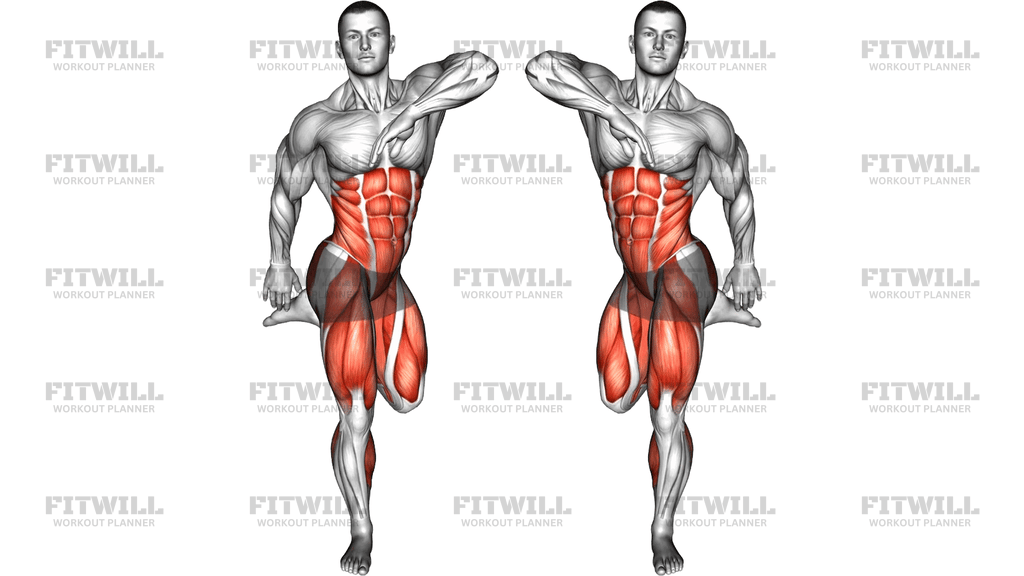
The Twist Knee Drive is a standing bodyweight movement that combines a diagonal knee raise with an upper-body rotation, so your knee and hands meet in the middle of your torso rather than in a straight line. From an upright stance, you drive one knee up and across your body while pulling your elbows down and toward that knee, then return to a tall standing position and repeat on the other side. The result is a controlled, rotating knee strike pattern that trains the trunk to twist while the hip lifts — a combination most straight-line ab exercises never touch.
This movement earns its place in a workout because it forces the obliques, deep core, and hip flexors to work together under balance demands. The rotation component loads the obliques through their natural diagonal sling, while the knee drive challenges the hip flexors and the standing leg has to stabilize the whole time. That standing balance element is a quiet bonus: the foot, ankle, and hip of the support leg stay switched on through every rep.
It suits a wide range of trainees. Combat athletes and field-sport players use it because rotating and lifting the knee is a fundamental athletic pattern — think clinch work, changing direction, or throwing across the body. General lifters use it as a warm-up activation or as a finishing core drill that does not require any equipment or floor space. Because it is low-load, it is also approachable for beginners, provided the rotation comes from the trunk and not from sloppy arm swinging.
Setup matters more than it looks. Stand tall with feet roughly hip-width apart, hands raised in front of your chest, and keep your ribs stacked over your pelvis. If you start with an arched lower back or arms flung wide, the twist turns into a shoulder movement and the knee drive loses its core involvement. Brace your midsection lightly before each rep so the rotation is produced by controlled trunk musculature.
To execute well, drive the knee up and slightly across the midline while your elbows travel down and toward the knee, letting the shoulders rotate naturally. Aim for the knee and hands to arrive at the same moment at or just above navel height. Lower the leg with control rather than letting it drop, and alternate sides or complete all reps on one side before switching, depending on your goal.
Two practical points keep this exercise safe and effective. First, keep the movement brisk but never jerky — the twist should feel like a deliberate rotation, not a whip. Second, if balance is shaky, slow the tempo down and focus on a fixed point forward; speed magnifies every wobble. Done consistently, the Twist Knee Build builds rotational core control that transfers directly to throwing, striking, sprinting, and everyday twisting movements.
Fitwill
Log Workouts, Track Progress & Build Strength.
Achieve more with Fitwill: explore over 9600 exercises with images and videos, access built-in and custom workouts, perfect for both gym and home sessions, and see real results.
Start your journey. Download today!




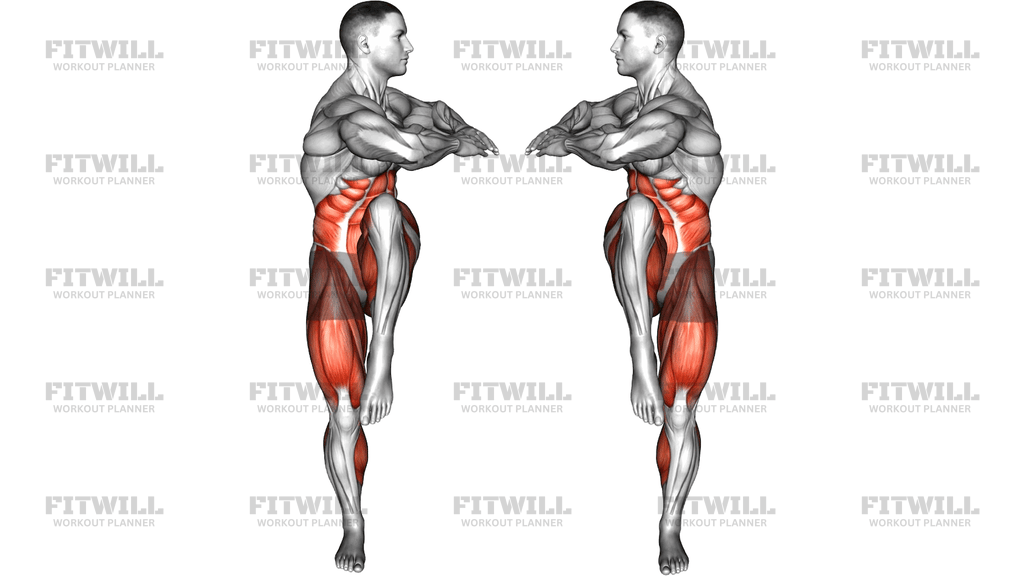
Instructions
- Stand tall with your feet about hip-width apart, weight spread evenly across both feet, and your arms raised in front of your chest with elbows bent.
- Brace your abdominal wall lightly and pull your ribs down so your pelvis and ribcage are stacked; keep a soft bend in both knees.
- Shift your weight slightly onto one leg to create a stable base for the standing side.
- Drive your opposite knee up and across the midline of your body toward the center of your torso.
- At the same time, rotate your shoulders and pull both elbows down and inward so your hands move toward the rising knee; the knee and hands should meet at roughly navel height.
- Squeeze the twist briefly at the top, keeping your torso upright — do not collapse your chest toward the knee.
- Lower the leg under control back to the floor and let your shoulders rotate back to the square starting position.
- Exhale as you drive the knee up, inhale as you return it down.
- Repeat on the same side for your target reps, or alternate legs each rep, keeping every rep crisp and controlled.
Tips & Tricks
- The most common error is swinging the arms in a wide arc instead of rotating from the trunk — if your shoulders are doing all the work, cut the range and think about pulling the elbows toward the knee.
- Avoid leaning your upper body backward as the knee rises; if you keep your ribs stacked over your pelvis, the hip flexors and lower abs stay involved instead of the lower back taking over.
- Keep the driving foot relaxed and let the knee lead; pointing the toes or clenching the foot usually signals you are muscling the movement from the hip instead of coordinating the twist.
- If you wobble on the standing leg, slow the tempo down and fix your gaze on one spot at eye level rather than increasing speed to mask the instability.
- Do not force the knee far across the body — a modest crossing of the midline is enough; chasing a big twist usually collapses the torso and rounds the lower back.
- Warm up the hips with a few slow straight knee raises before adding the rotation; the diagonal pattern is harder to coordinate when the hip flexors are cold.
- For conditioning, alternate sides continuously at a steady rhythm; for strength and control, complete all reps on one side and then switch, pausing at the top of each twist.
- Stay on the balls of both feet with a slight knee bend rather than locking the knees — locked knees make the rotation feel stiff and jar the joints at the top of the drive.
Frequently Asked Questions
Which muscles does the Twist Knee Drive work the most?
The obliques on both sides of your waist drive the rotation, with strong support from the hip flexors lifting the knee. The lower abs, glutes, and standing-leg stabilizers work continuously to keep you upright.
Is the Twist Knee Drive suitable for beginners?
Yes, because it uses no equipment and the load is your own body. Beginners should start with a smaller twist and a lower knee height, focusing on smooth coordination before adding speed or reps.
How high should I drive the knee in the Twist Knee Drive?
Aim for the knee to reach roughly navel height, just enough to meet your hands at the center of your torso. Going higher usually forces your lower back to arch and reduces core control.
Why do my arms feel like they are doing the exercise instead of my core?
That happens when the elbows swing in a big arc instead of the trunk rotating. Keep the hands close to your chest at the start and focus on pulling the elbows down and inward so the shoulders turn from the waist.
Should I alternate sides or do all reps on one leg?
Both work. Alternating sides keeps a steady conditioning rhythm and mimics athletic movement, while completing all reps on one side makes it easier to feel and correct left-right imbalances.
Can the Twist Knee Drive replace crunches for ab training?
It trains the obliques and hip flexors in a rotational, standing pattern that crunches do not cover, but it is not a direct substitute for flexion work. Using both gives you more complete core development.
Is this a cardio exercise or a strength exercise?
Performed slowly with pauses, it is a strength and control drill for the core and hips. Performed continuously with alternating knees at a brisk tempo, it doubles as a low-impact conditioning movement.
Is it safe for my lower back?
When you keep your torso tall, brace your midsection, and rotate from the waist rather than rounding the spine, the movement is generally well tolerated. If twisting causes discomfort, reduce the range and slow the tempo, and stop if pain persists.
What can I do if I lose balance during the Twist Knee Drive?
Widen your stance slightly, slow each rep down, and fix your eyes on a stationary point in front of you. You can also place one hand on a wall for support while you build coordination.