Standing Crossover Crunch
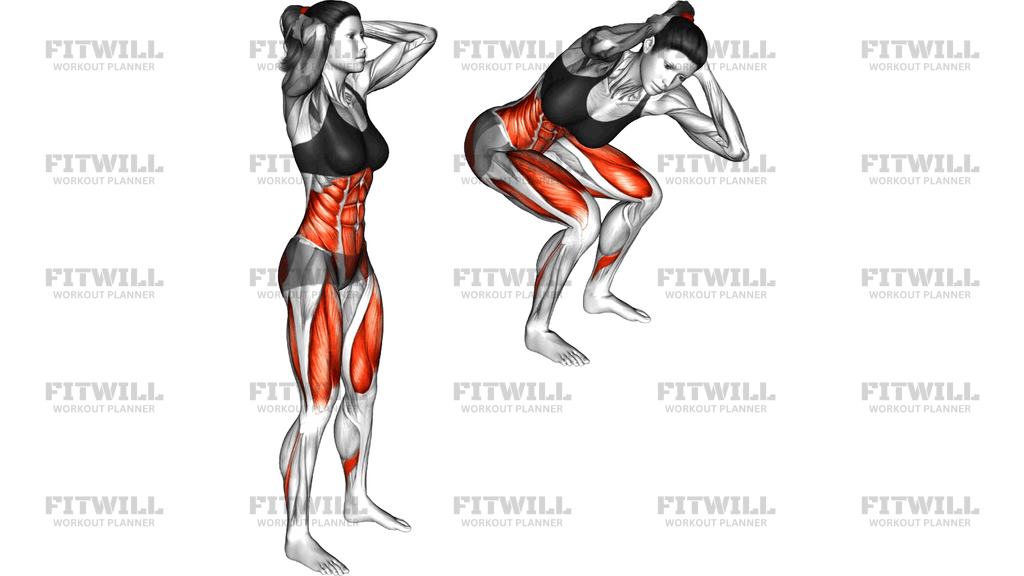
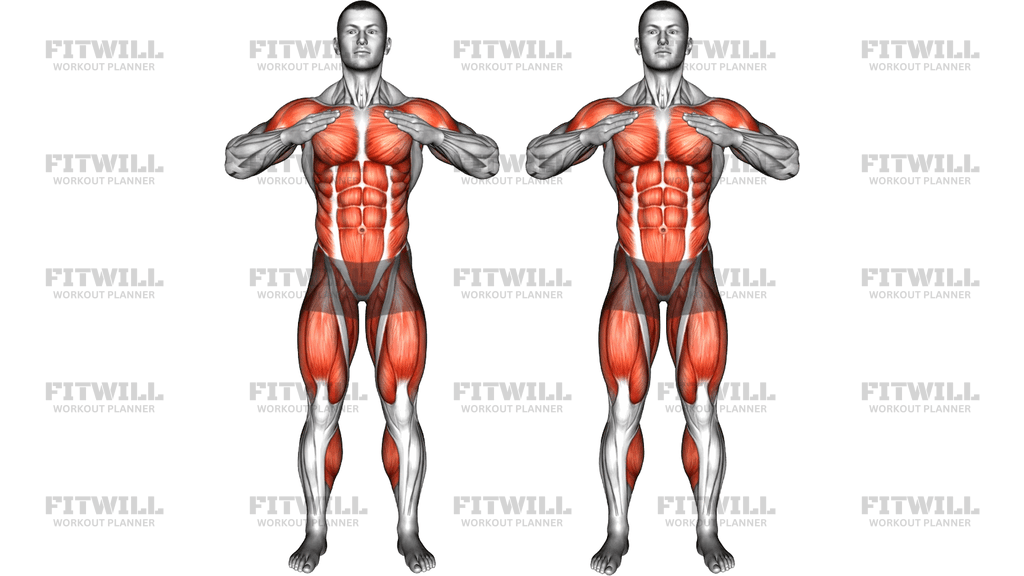
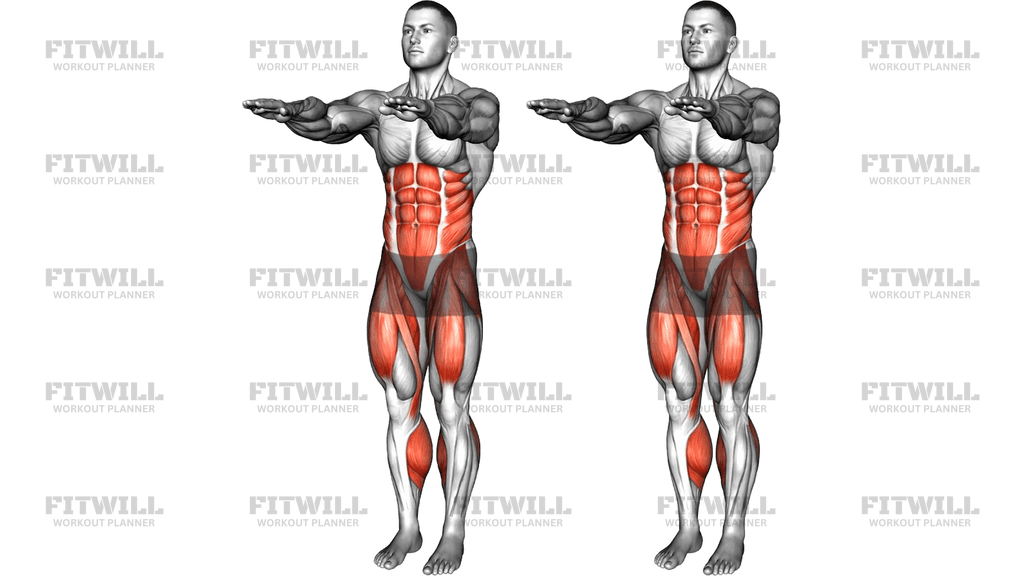
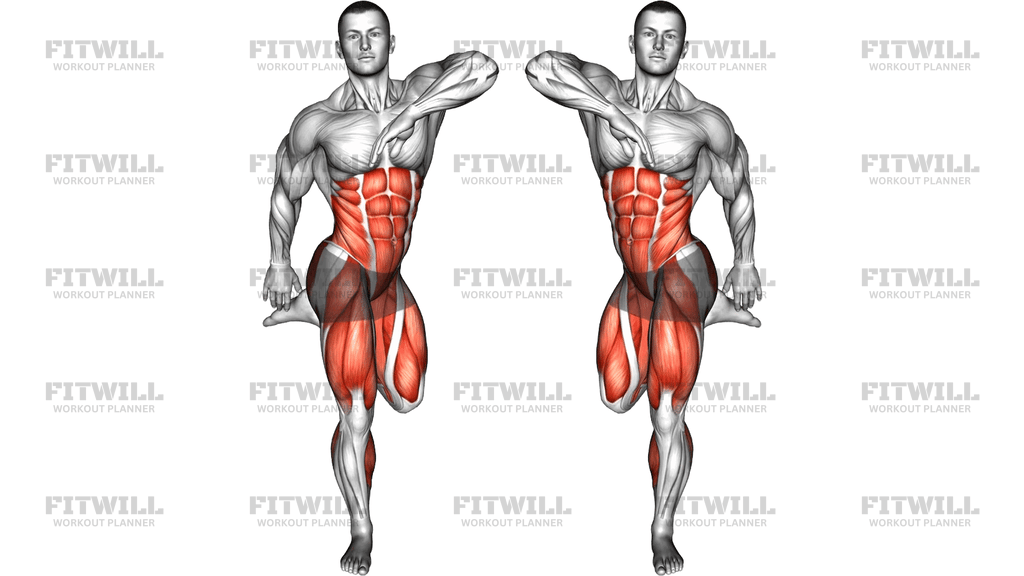
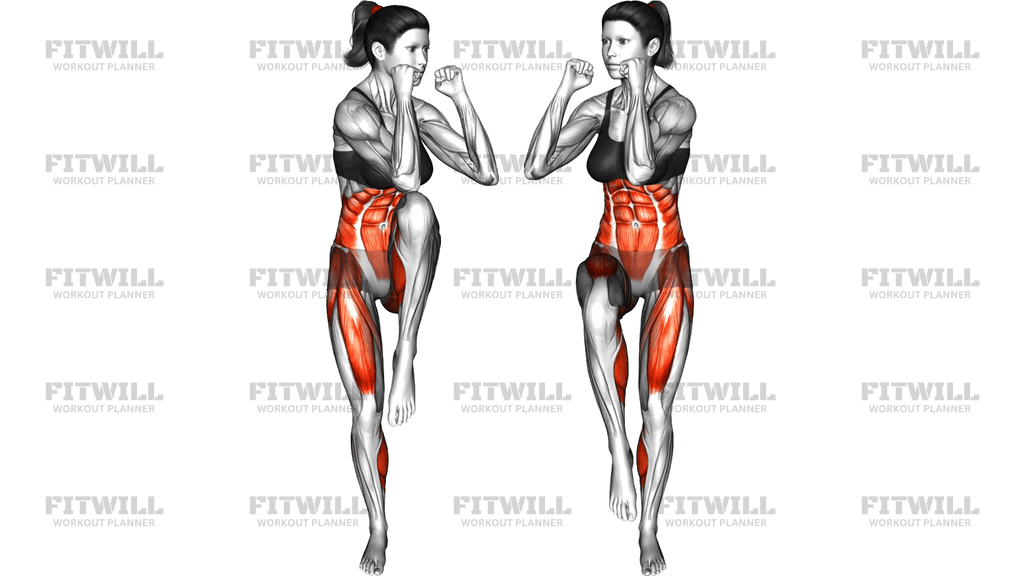
The Standing Crossover Crunch is a bodyweight core exercise that combines a knee raise with a cross-body crunch, bringing one elbow down toward the opposite knee while you balance on the standing leg. Unlike floor crunches, it trains your midsection from an upright position, which makes it a practical choice for anyone who wants core work without getting down on the ground. The highlighted anatomy in the demonstration reflects exactly where the work happens: the abdominal wall, with strong emphasis on the obliques as you rotate and crunch across the midline of your body.
This movement is especially useful for people who find traditional crunches uncomfortable on the neck or lower back, since the standing position removes the repeated spinal flexion against the floor that often irritates those areas. It also challenges your balance and single-leg stability, so your hips and deep core have to work together to keep you steady each time you lift a knee. That combination makes it a common inclusion in warm-ups, circuit training, and home workouts where no equipment is available.
Setup matters more than most people expect. Because you are balancing on one leg while crunching, your stance width, your foot placement, and where you hold your hands all influence how much tension stays on the abs versus how much you drift or wobble. Keep your hands raised near your face in a loose guard position, brace your torso before you lift a knee, and let the knee and elbow meet in front of your body rather than swinging them sideways.
To execute it well, think of it as a crunch, not a knee drive. The knee lifts to roughly hip height, and your upper body curls and rotates down to close the distance toward it. Pull your ribs toward your pelvis as your shoulder turns across your torso, squeeze briefly at the point where elbow and knee meet, then lower your leg and torso back to the tall standing position under control. Repeat on one side for a set, or alternate sides rep by rep, depending on how you want to structure the work.
Common use cases include core finishers, active warm-ups before lifting, and standing ab circuits for beginners or older trainees who want effective abdominal work without floor contact. Because it requires no equipment and little space, it also fits easily into hotel-room or travel routines. Practically speaking, the main safety points are to keep the movement smooth rather than ballistic, avoid yanking your head forward with your hands, and reduce your range if you find yourself losing balance or leaning heavily to one side.
[ Workout Log & Planner ]
Put your next workout in Fitwill
Keep your plan and training log ready when you are.


Instructions
- Stand tall with your feet roughly hip-width apart and shift your weight onto one leg, keeping a soft bend in the standing knee.
- Raise both hands to the sides of your face in a loose guard position, elbows bent and pointing down, without gripping your head or neck.
- Brace your abdominal wall as if bracing for a light push, and keep your chest lifted before you start the rep.
- Lift the knee of your free leg up and slightly across your body toward the opposite elbow, aiming for about hip height.
- At the same time, crunch your upper body down and rotate your shoulder across the midline so your elbow travels down toward the raised knee.
- Squeeze briefly at the point where your elbow and knee meet, feeling the crunch through your abs and the side of your waist.
- Lower your leg and uncurl your torso in a controlled motion back to the tall standing position, keeping your hands raised throughout.
- Exhale as you crunch the elbow and knee together, and inhale as you return to the start of each rep.
- Complete your reps on one side, then switch legs, or alternate knee-to-elbow sides rep by rep for an even workload.
Tips & Tricks
- The most common mistake is turning this into a fast knee drive with a lazy upper body — if your torso never curls down, your hip flexors do the work instead of your abs. Slow the crunch down and let the ribs move toward the pelvis.
- Do not let your hands pull on your head. Your fists stay near your face and the elbows do the traveling, which protects your neck from strain.
- If you wobble badly on the standing leg, widen your stance slightly and hold your free-side hand near a wall or chair for balance until your single-leg stability improves.
- Avoid letting the raised knee swing straight up in front of you — it should travel slightly across the midline so the obliques get the rotational crunch.
- Keep the standing knee soft. Locking it out makes balancing harder and shifts tension away from your core.
- Shorten the range rather than rounding your whole back to force contact. A strong crunch with elbow and knee close together is enough; they do not need to touch.
- Alternate sides rep by rep if one side feels noticeably weaker — most people have an asymmetry between left and right obliques that alternating helps even out.
- Breathe out sharply at the top of each crunch. Holding your breath through the rotation is a frequent cause of early fatigue and dizziness in standing ab work.
Frequently Asked Questions
What muscles does the Standing Crossover Crunch work?
It primarily targets the abs with strong emphasis on the obliques, which contract as you rotate your elbow across your body toward the opposite knee. The hip flexors assist with lifting the knee, and your standing leg works to keep you balanced.
Is the Standing Crossover Crunch good for beginners?
Yes, it is beginner-friendly because it requires no equipment and the range is easy to adjust. New trainees can use a smaller knee lift or hold a wall for balance while still getting meaningful abdominal work.
Why does my hip flexor feel it more than my abs?
That usually means your torso is staying upright while your knee does all the moving. Focus on curling your ribs down toward your pelvis and rotating your shoulder across your body so the crunch comes from your abdominal wall, not just the leg lift.
Should my elbow actually touch my knee?
Contact is not required. What matters is a strong cross-body crunch where the elbow and knee come close together; chasing the touch by rounding or twisting forcefully often costs you more in form than it gains in range.
How is the Standing Crossover Crunch different from a regular floor crunch?
A floor crunch flexes your spine against the ground and works the abs in isolation, while the standing version adds rotation, single-leg balance, and hip flexion. It also avoids the repeated back-against-floor position that some people find uncomfortable.
Should I alternate sides or do all reps on one side?
Both work. Alternating sides rep by rep keeps the workload even and adds a rhythmic flow, while completing a full set on one side first makes it easier to feel and correct imbalances between your left and right obliques.
How many reps should I do?
For general core conditioning, 10 to 15 controlled reps per side works well, focusing on a deliberate crunch and squeeze at the top. Since it is a balance-dependent movement, prioritize quality over speed or volume.
Can I do this exercise if I struggle with balance?
Yes. Stand next to a wall, counter, or sturdy chair and lightly touch it with one hand for support while the other side does the crunch. As your single-leg stability improves, gradually reduce how much you rely on the support.
What can I use as a substitution?
Standing cross-body knee-to-elbow marches, bicycle crunches on the floor, or standing oblique crunches without the knee lift all hit similar territory. Choose based on whether you want more or less balance demand.
Is it safe for my lower back?
For most people it is a low-strain option because you stay upright and control the rotation yourself. Keep the movement smooth, avoid jerking the knee up, and stop if the twisting motion produces any discomfort rather than muscular effort.