Standing Spine Imbalance And Forward Head Posture
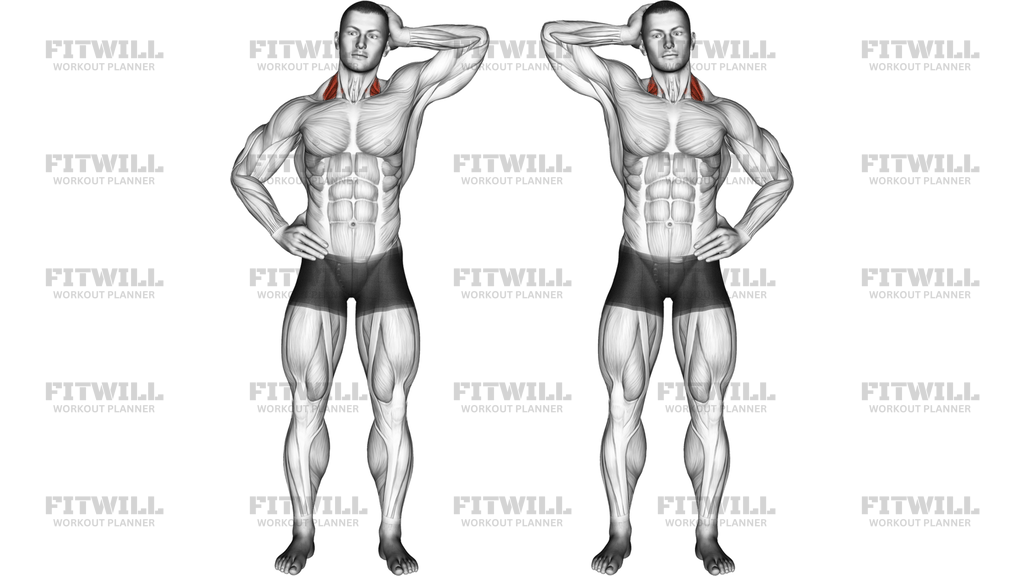
The Standing Spine Imbalance And Forward Head Posture stretch is a self-applied neck stretch performed without any equipment. You stand tall, anchor one arm behind your head with the elbow raised, and use that hand to gently guide your head sideways and slightly down. The small muscle group highlighted along the side of the neck — chiefly the levator scapulae and upper trapezius — is the target, and these are exactly the tissues that shorten when the head drifts forward over the shoulders.
This stretch earns its name from the problem it addresses. Forward head posture rarely shows up evenly on both sides; most people carry tension asymmetrically because they favor one side when working at a desk, holding a phone, or carrying a bag. Stretching one side at a time lets you feel the difference between left and right and gives the tighter side extra hold time, which is how you gradually rebalance the muscles that pull the neck out of line.
Because it is done standing, the stretch also reinforces good habits from the feet up. You have to stack your ribs over your pelvis and keep your standing shoulder level while your arms create the stretch — that combination trains posture rather than just releasing tightness. Anyone who sits long hours, looks down at screens, or notices one shoulder riding higher than the other will find this useful as a daily reset.
The setup matters more than the pull. The working arm goes up and over so the palm rests on the side of the head near the ear, fingers pointing toward the back of the skull, with the elbow lifted toward the ceiling. This elbow position angles the stretch toward the side and back of the neck instead of yanking the head flat sideways. The stretch should be a mild, even pull through the neck and upper shoulder — never sharp, never radiating, and never forced.
Execution is simple but slow. Exhale, guide the head diagonally toward the elevated elbow, and let the opposite shoulder sink toward the floor. Hold for twenty to thirty seconds, breathe steadily, and let the tissue release on its own timeline rather than cranking further into range. A common practical cue is to imagine the head moving toward the armpit, not straight toward the shoulder.
Use this stretch between work blocks, after training sessions, or as part of a morning posture routine. Two to three rounds per side is plenty. If you have any history of neck injury, dizziness, or nerve symptoms like tingling into the arm, check with a qualified professional before adding sustained neck stretches to your routine.
[ Workout Log & Planner ]
Put your next workout in Fitwill
Keep your plan and training log ready when you are.


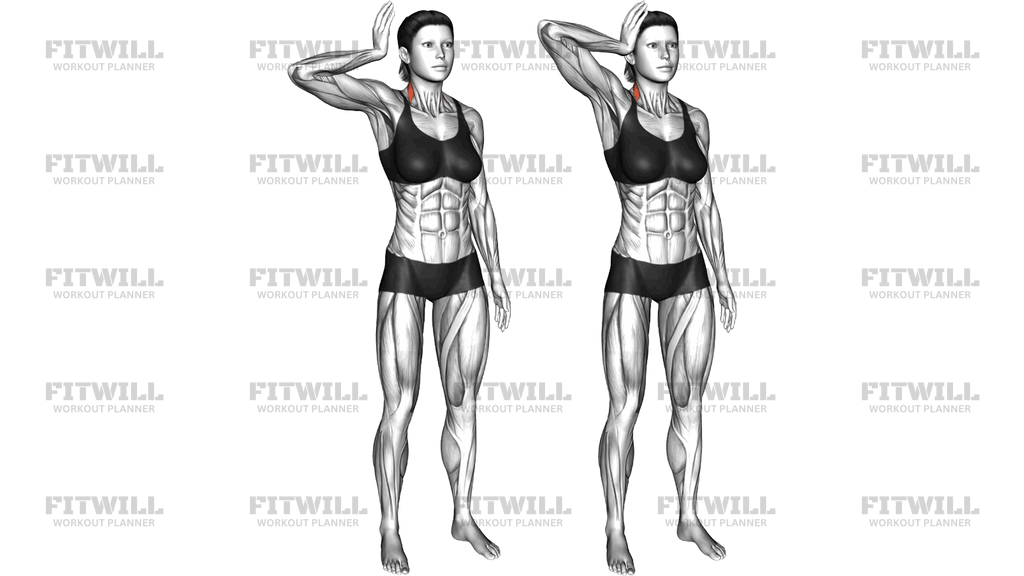
Instructions
- Stand with your feet hip-width apart, weight even across both feet, and ribs stacked over your pelvis.
- Brace your core lightly and level your shoulders before starting — do not begin the stretch from a tilted or slouched stance.
- Raise your right arm up and over your head, bend the elbow, and place your palm on the left side of your head just above the ear, fingers pointing toward the back of your skull with the elbow lifted high.
- Let your left arm hang relaxed at your side, then actively drop your left shoulder toward the floor to lengthen the target muscles before any pulling begins.
- Exhale and gently guide your head diagonally toward your right armpit, adding a slight downward angle so you feel the stretch along the left side and back of the neck.
- Hold the end position for twenty to thirty seconds at a mild, comfortable intensity — the sensation should sit in the neck and upper shoulder, not the jaw or arm.
- Breathe slowly and evenly throughout the hold; with each exhale, let the muscle soften rather than increasing the pull.
- Release slowly by easing the hand's pressure first, then lowering the arm under control — never snap the head back to center.
- Return your head to neutral, reset your posture, and repeat on the opposite side.
- Perform two to three rounds per side, giving the tighter side an extra hold if you notice a left-right imbalance.
Tips & Tricks
- Lift the elbow before you pull — a low elbow turns this into a flat sideways neck tilt and loses the diagonal line that reaches the levator scapulae.
- The most common mistake is pressing hard with the hand. Let the opposite shoulder's drop do most of the work and use the hand only for gentle guidance.
- If you feel the stretch in the jaw or behind the ear instead of the neck, you are rotating the head too much; reduce the rotation and keep the pull more lateral.
- Keep the standing shoulder on the stretching side down and away from the ear — shrugging it up shortens the very muscle you are trying to lengthen.
- Avoid holding your breath during the hold; exhaling slowly as you deepen is what allows the muscle to release.
- Do not chase a huge range of motion. The neck only needs a few degrees of side flexion to reach the relevant tissue, and forcing more risks irritation.
- If one side feels much tighter, spend more total hold time there, but always stretch both sides to maintain balance.
- Some people feel a faint pulling sensation into the shoulder blade — that is the levator scapulae doing its job. Tingling or numbness down the arm means back off immediately.
- Warm the area first with a few gentle shoulder rolls if you are stretching first thing in the morning or straight out of a long sitting block.
Frequently Asked Questions
Which muscles does the Standing Spine Imbalance And Forward Head Posture stretch target?
The primary targets are the levator scapulae and upper trapezius along the side and back of the neck, with secondary involvement of the upper back muscles that attach near the neck. These are the tissues that commonly tighten with forward head posture.
Why is one arm placed overhead with the hand on the side of the head?
Raising the elbow high angles the pull diagonally toward the armpit, which lengthens the levator scapulae along its fiber direction. A flat sideways tilt with a low elbow mostly stretches the upper trapezius and misses much of that tissue.
Is the Standing Spine Imbalance And Forward Head Posture stretch safe for beginners?
Yes, as long as the pull stays gentle and pain-free. Beginners often apply too much hand pressure, so start with light guidance and let the dropped shoulder create most of the stretch.
How long should I hold each side?
Twenty to thirty seconds per hold works well, repeated two to three times per side. If one side is noticeably tighter, add a hold on that side rather than stretching only the tight spot.
Can this stretch fix forward head posture on its own?
Stretching tight neck muscles is only half the picture — you also need to strengthen the deep neck flexors and mid-back muscles and adjust the habits that push the head forward. Use this as one piece of a fuller posture routine.
Why do I feel the stretch more on one side than the other?
Asymmetry is common and usually reflects how you sit, carry bags, or hold your phone. That imbalance is exactly what this stretch is designed to address, so give the tighter side extra holds while still stretching both sides.
What should I do if I feel tingling into my arm during the stretch?
Stop immediately and return the head to neutral. Tingling or numbness suggests the stretch is irritating nerve tissue, so reduce the range and pressure substantially or consult a professional before continuing.
Can I do the Standing Spine Imbalance And Forward Head Posture stretch seated?
You can, but standing forces you to level the hips and stack the spine, which makes the stretch more consistent. If you sit to perform it, choose a firm chair without a backrest lean so your torso stays tall.
Should the head rotate during the pull, and how much?
A slight rotation of the chin away from the stretching side deepens the levator scapulae stretch, but keep it small. If you feel the pull behind the jaw or ear instead of the neck and shoulder blade, you have rotated too far.
How often should I perform this stretch?
Daily is reasonable for desk workers, especially in short bouts between work sessions. Muscles in the neck respond better to frequent, gentle holds than to occasional aggressive stretching.