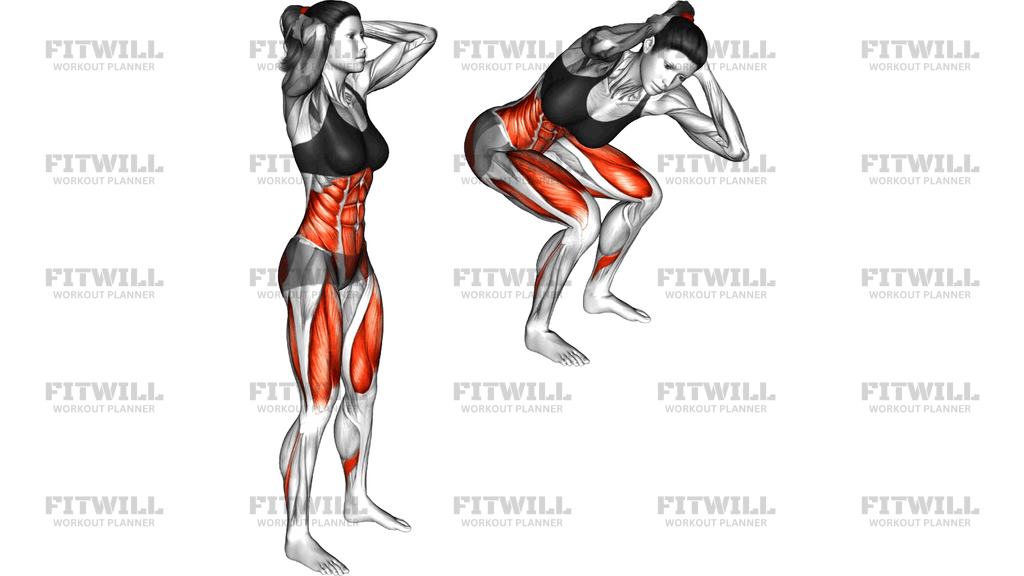
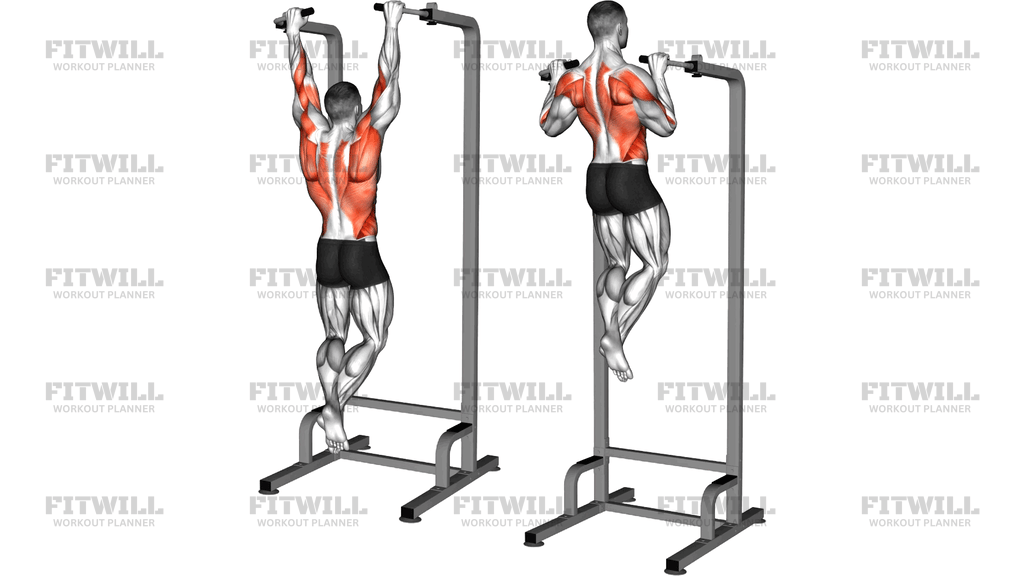
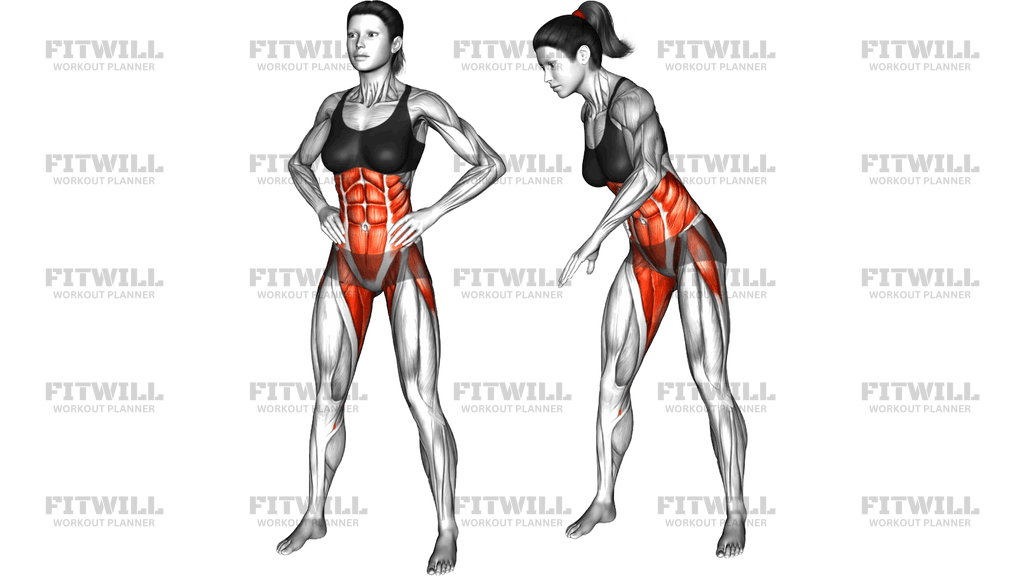
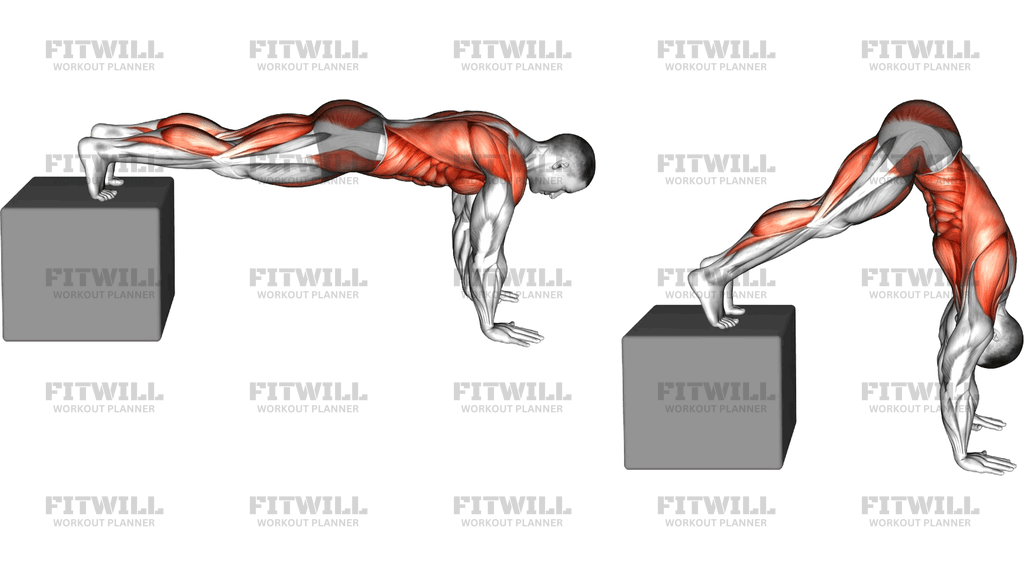
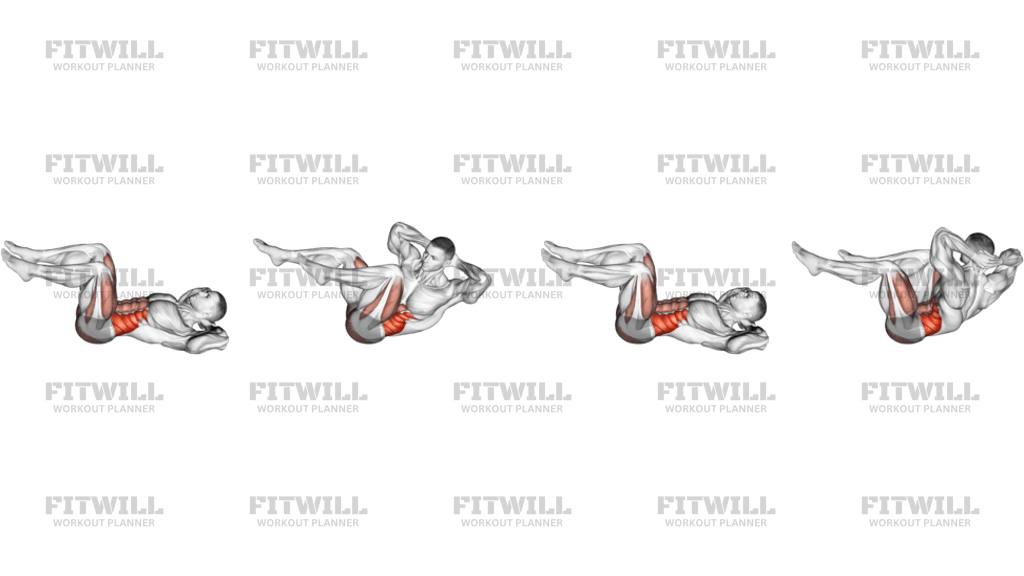
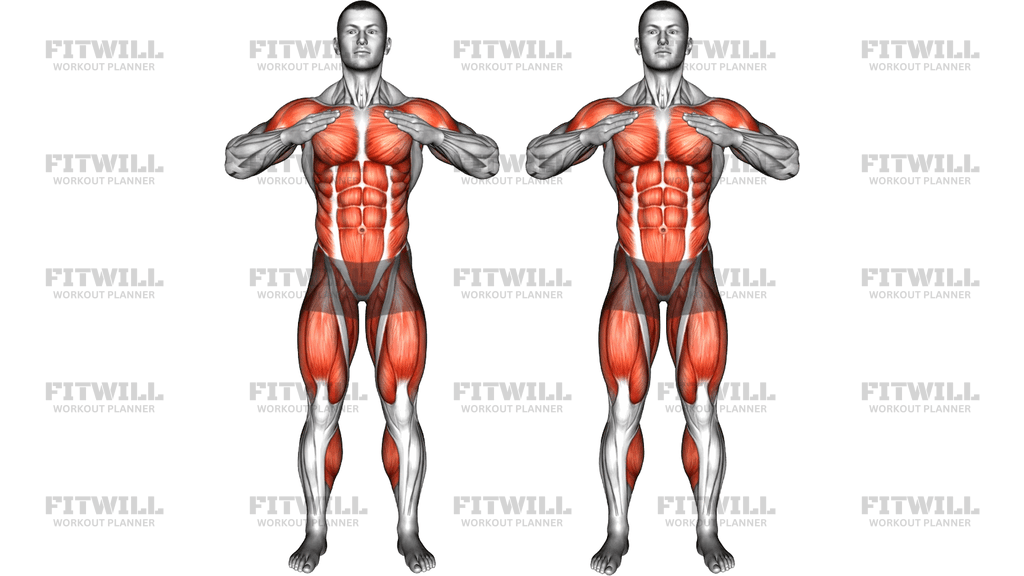
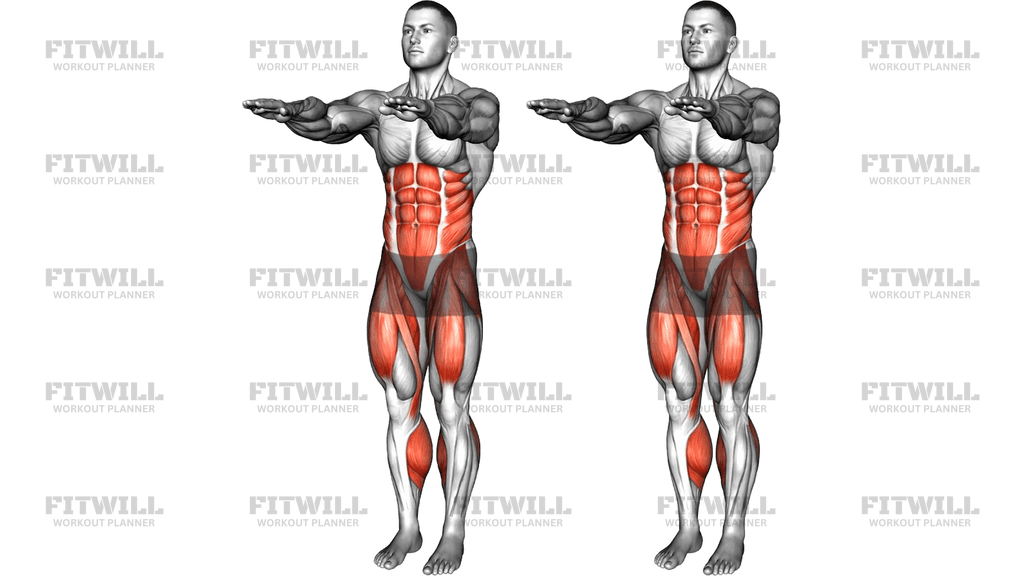
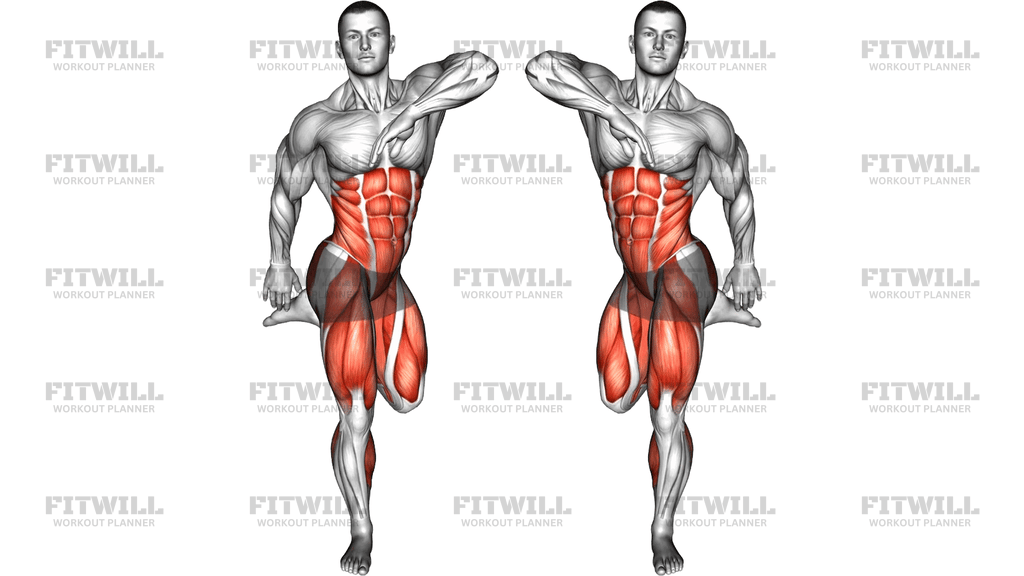
Twist Knee Up Punch
The Twist Knee Up Punch is a standing body weight movement that combines three actions into one rep: a rotation of the torso, a driving knee lift, and a punch across the body. You start in a fighting-style guard with both fists at chin height, feet spread wider than shoulder width, then pivot, twist your trunk, pull one knee up toward the opposite side of your body, and throw a punch across the midline as the knee rises. Each rep finishes with a controlled return to the guard stance before you repeat on the other side.
Because the movement forces your upper and lower body to coordinate through the trunk, it hits the obliques and deep core harder than a plain crunch or a plain knee raise. The twisting knee drive loads the hip flexors and inner thighs, the punch brings the shoulders and arms into play, and the single-leg balance moment at the top of each rep challenges the glutes and stabilizers of the standing leg. It is essentially a rotating knee strike with a punch attached, which is why it shows up so often in combat sports conditioning and cardio kickboxing formats.
This exercise suits anyone who wants core work with a metabolic kick. Boxers and kickboxers use it to groove the hip rotation that powers hooks and knee strikes, while general trainees use it as a low-equipment conditioner that raises the heart rate quickly without any jumping. It is also a practical choice for home workouts, warm-ups, or circuit finishers, since all you need is floor space to stand with a wide, stable stance.
Setup matters more than people expect. A stance that is too narrow will make you wobble when the knee comes up, and fists held low will pull your shoulders forward and round your upper back. Set your feet wide, soften the knees, keep the guard tight at chin level, and brace the trunk as if bracing for a light contact. From that position, the rotation should come from the ribcage and hips working together, not from swinging the arms independently of the torso.
To execute well, think of the knee and the punch meeting at the same moment. As you drive one knee up and across, rotate the opposite shoulder forward and extend that fist across your body, keeping the other hand glued to your chin. Exhale sharply as the knee and punch reach their highest point, then lower the foot under control and reset the guard before alternating sides. Rushing the return is the most common flaw; the lowering phase is where you keep tension on the obliques and protect the standing knee.
Keep the movement honest: stop the range where you can stay tall through the spine. If you find yourself leaning far back or collapsing the chest to get the knee higher, reduce the height of the knee lift and rebuild the range gradually. Done with clean tempo, the Twist Knee Up Punch delivers rotational core strength, hip mobility, balance, and conditioning in a single drill you can do anywhere.
[ Workout Log & Planner ]
Put your next workout in Fitwill
Keep your plan and training log ready when you are.


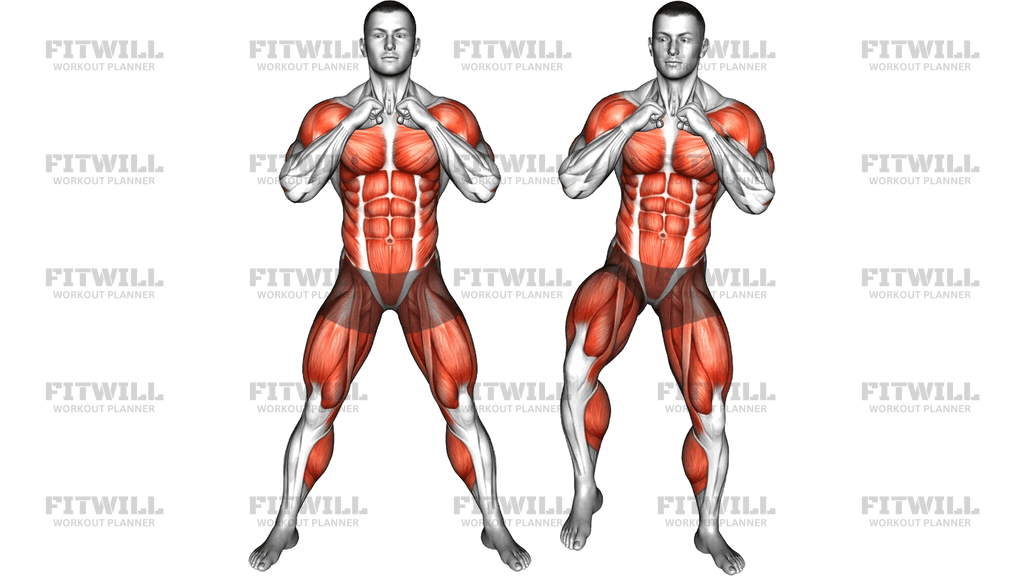
Instructions
- Stand with your feet roughly twice shoulder width apart, toes turned slightly out, and soften both knees into an athletic stance.
- Raise both fists to chin level in a guard position, elbows tucked close to the ribs, and keep your gaze forward with the chest tall.
- Brace your core and shift a small amount of weight onto the leg that will stay planted.
- Pivot the hips and rotate your ribcage to the same side as the working knee, keeping both fists tight to the chin as you turn.
- Drive one knee up and across your body toward the opposite elbow line, rising onto the ball of the standing foot as the knee lifts.
- At the top of the knee lift, extend the opposite fist across your midline in a punch, rotating the shoulder forward with the ribs.
- Exhale sharply as the knee and punch peak, then inhale as you lower the foot back to the floor under control.
- Return the fists to the guard position and re-settle into the wide stance before repeating the rep on the other side.
- Alternate sides for the desired number of reps, keeping the tempo even so the rotation never turns into a swing.
Tips & Tricks
- The most common mistake is letting the punch fly ahead of the knee. Time them so the fist and knee arrive together; otherwise the rotation comes from the arm instead of the obliques.
- If you wobble at the top of the knee lift, widen your stance and keep a slight bend in the standing knee rather than locking it straight.
- Do not drop the non-punching hand during the strike. Keeping it at the chin stops your shoulders from rotating unevenly and preserves the trunk twist.
- Keep the lift in the knee, not the lower back. If your torso leans back to gain height, shorten the range and focus on pulling the ribs and hip toward each other.
- Push off the ball of the planted foot as the knee rises. This lets the hips rotate fully instead of forcing the twist purely through the spine.
- Exhale with each rep rather than holding your breath. A sharp exhale at the peak also helps the core contract more forcefully.
- Avoid letting the working knee drift straight up in front of you. The value of this drill is the diagonal path across the body, which is what separates it from a standard knee raise.
- Land softly and quietly each time the foot returns. Heavy, uncontrolled landings usually mean you are rushing the lowering phase and losing core tension.
Frequently Asked Questions
What muscles does the Twist Knee Up Punch work?
The primary work comes from the obliques, which rotate the trunk as the knee rises. The hip flexors lift the knee, the shoulders and arms drive the punch, and the glutes and stabilizers of the standing leg keep you balanced.
Is the Twist Knee Up Punch suitable for beginners?
Yes, as long as the range is scaled first. Beginners should start with a modest knee height and slower tempo, then build the rotation and speed once the balance feels solid.
Why does the knee travel across the body instead of straight up?
The diagonal path is what forces the obliques and hips to rotate together, training the same twisting pattern used in punches, throws, and knee strikes. A straight knee raise would remove most of the rotational demand.
How do I stop from losing balance when the knee comes up?
Widen your stance, keep a soft bend in the standing knee, and rise onto the ball of the planted foot as you twist. Looking at a fixed point ahead of you also helps a great deal.
Can I use the Twist Knee Up Punch as cardio instead of strength work?
Yes. Performed at a faster tempo for higher reps or in intervals, it works well as a conditioning drill, since it raises the heart rate while still demanding controlled rotation.
How many reps should I do per side?
For core strength, aim for 8 to 12 controlled reps per side with a deliberate tempo. For conditioning, work in timed intervals of 20 to 40 seconds and let the pace rise only when your form holds.
What is a good substitution if I cannot balance on one leg?
Hold onto a sturdy support with the non-punching hand and perform the twisting knee lift and punch one side at a time. This removes the balance demand while keeping the rotation pattern intact.
Should my back foot stay flat during the movement?
No. As the knee drives up and across, the heel of the planted foot should lift so you pivot on the ball of the foot. Keeping the heel glued down blocks hip rotation and stresses the knee.
Is it safe for my knees and lower back?
When performed with a soft standing knee, a braced trunk, and a controlled lowering phase, it is generally well tolerated. Avoid locking the support leg, arching backward for extra knee height, or twisting with a loose, unbraced torso.
How is this different from a standing twist or a plain knee raise?
A standing twist isolates rotation and a knee raise isolates hip flexion, while the Twist Knee Up Punch blends both with a coordinated punch. That combination trains rotation, single-leg balance, and timing in one repetition.