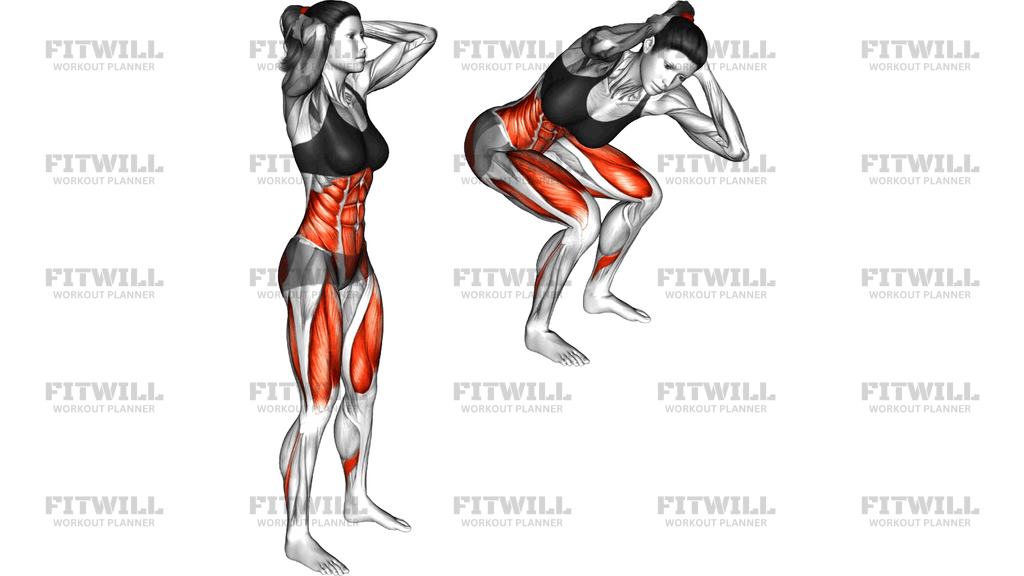
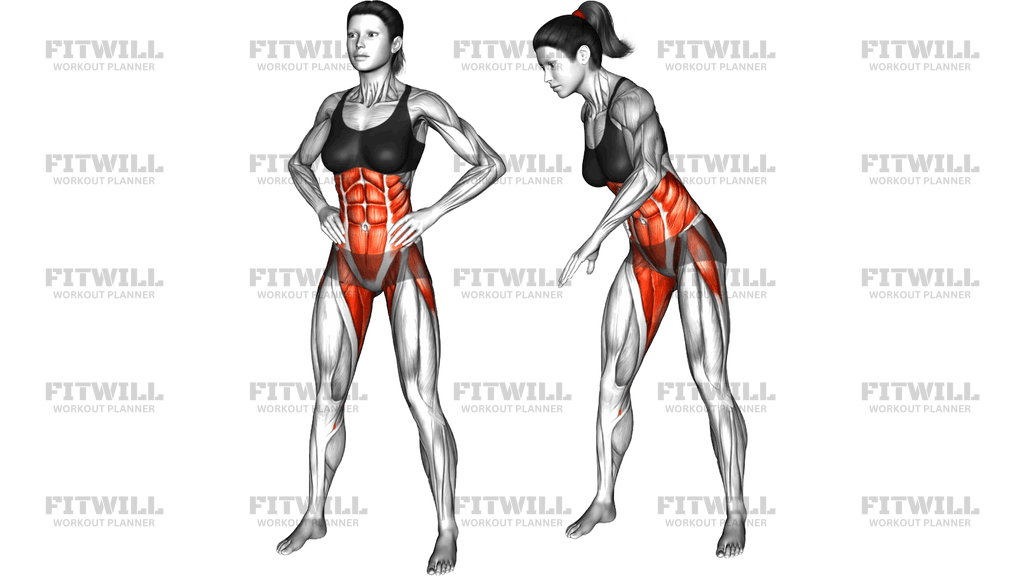
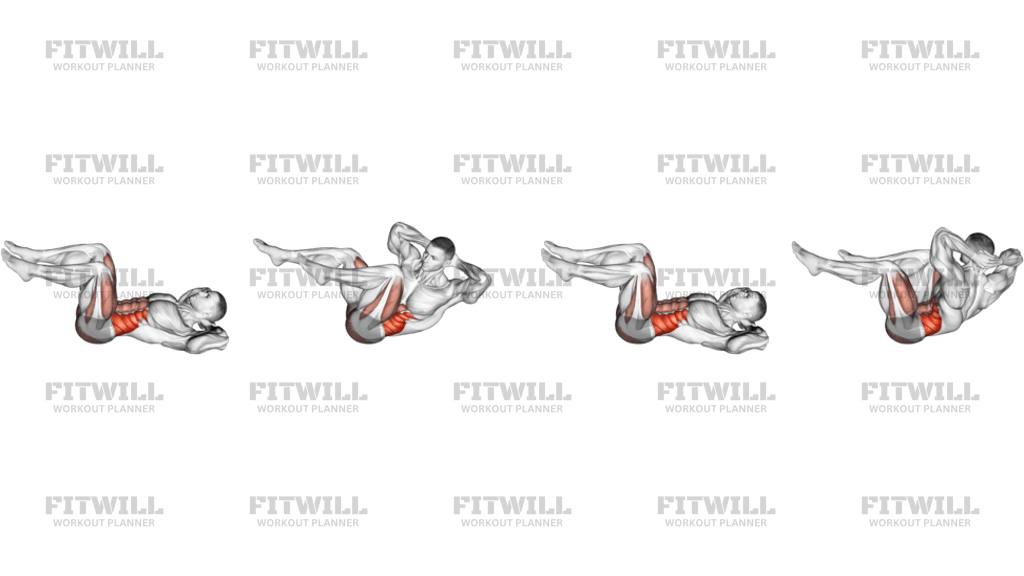
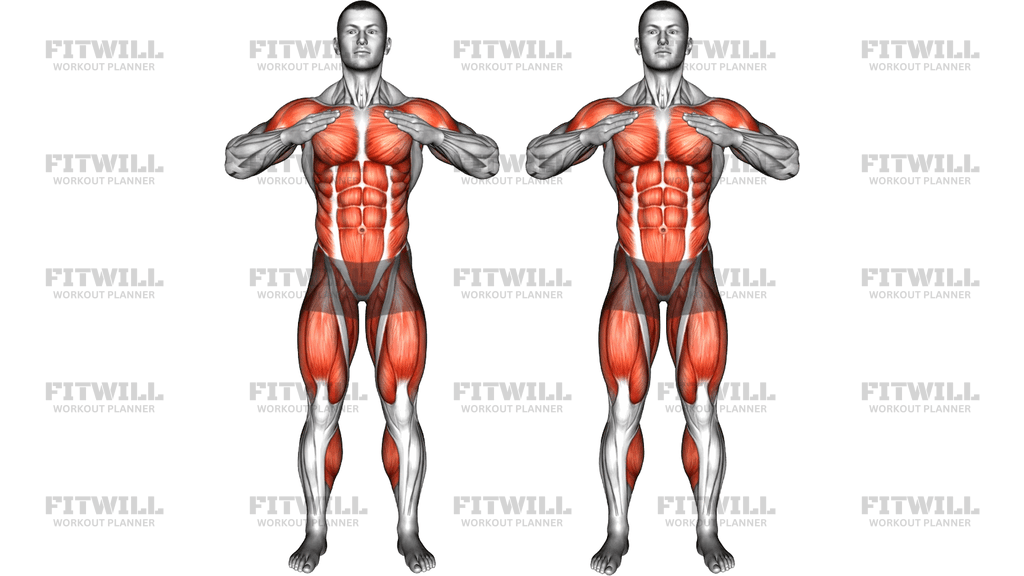
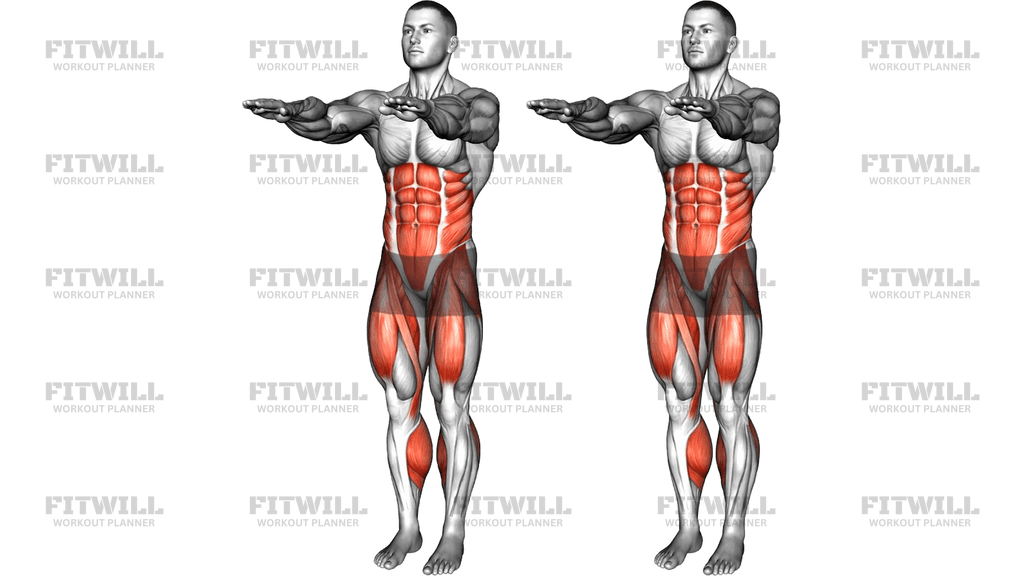
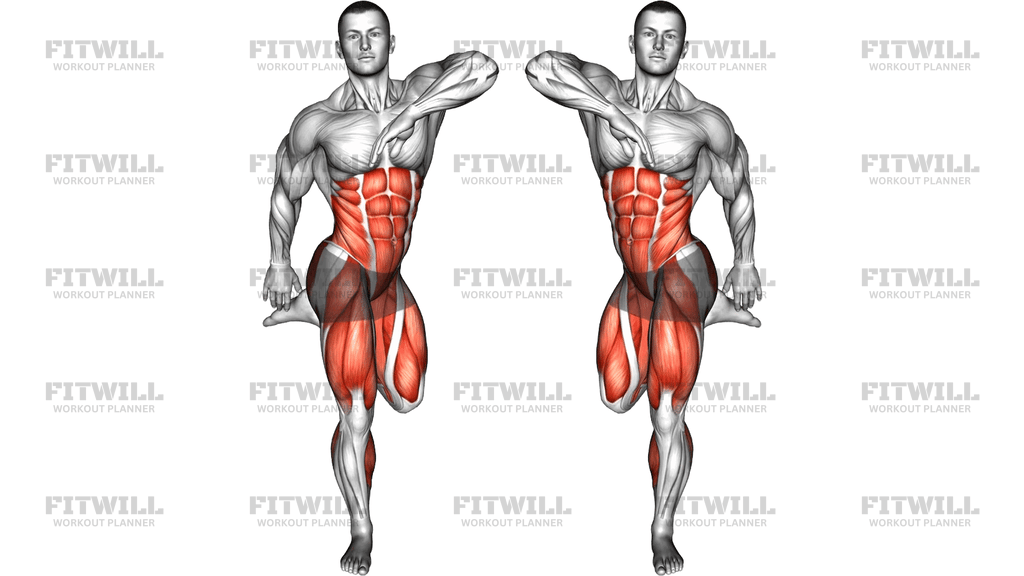
Lateral Shuffle Crunches
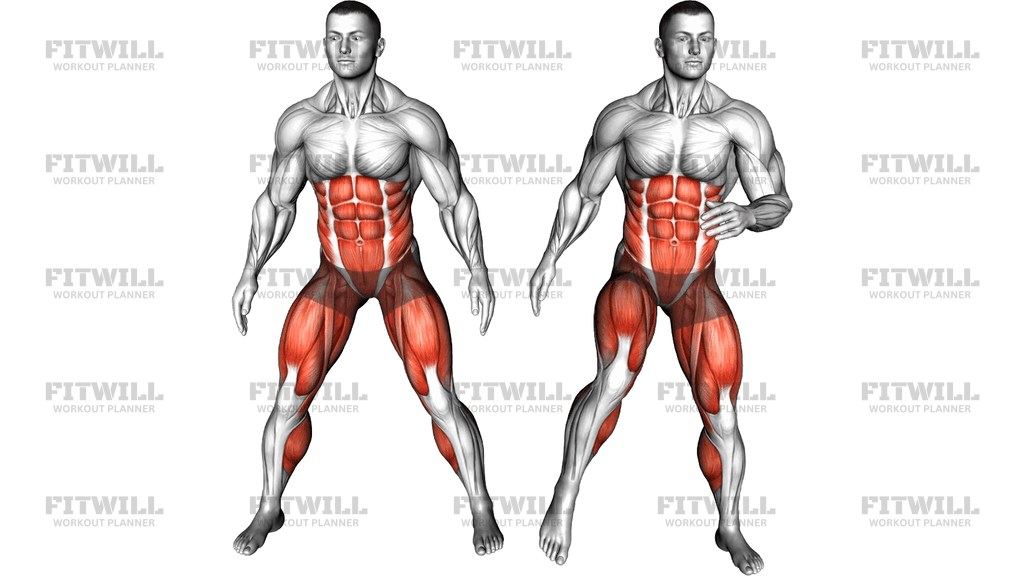
Lateral Shuffle Crunches combine two jobs in one drill: a quick side-to-side foot pattern that raises your heart rate, and a standing crunch in which you drive one knee up and across while pulling your elbow down to meet it. Instead of lying on the floor, you stay on your feet the whole time, which makes the movement feel closer to how your core actually works during running, cutting, and changing direction.
This is a great choice for warm-ups, conditioning circuits, and core finishers. Because the shuffle keeps you moving between reps, your calves, quads, and glutes stay involved and your breathing climbs, so you get a modest conditioning effect along with targeted work for the obliques. It suits beginners who find floor crunches awkward as well as athletes who want core work that transfers to field and court sports.
Setup matters more than it looks. A wide, soft stance with knees slightly bent gives your hips room to shuffle and gives the crunch a stable base. Your torso should start tall, and your hands can rest lightly by your shoulders or in front of your chest. If your stance is too narrow or your legs are locked straight, the shuffle becomes sloppy and the crunch loses its rotation.
To execute well, shuffle two or three quick steps to one side, then in one fluid motion lift the opposite knee up and across your body while drawing the same-side elbow down toward it, letting your ribs rotate slightly. The crunch should feel like your lower ribs are folding toward your hip, not like you are simply raising a knee. Lower the foot back under control, shuffle to the other side, and repeat on the opposite arm and leg.
The most common issue is rushing the crunch so the knee comes straight up without rotation, which shifts work to the hip flexors and away from the waist. Another is leaning the whole torso sideways instead of crunching, which takes tension off the obliques. Keep your chest up, keep the elbow-to-knee contact deliberate, and let the shuffle stay light on the balls of your feet.
Use this exercise two to four times per week, either as a warm-up activation drill or as part of a core circuit. Start with twenty to thirty seconds per set and build toward longer intervals or slower, more deliberate crunches once the pattern feels natural. No equipment is needed, so it works in a gym, at home, or in an open hallway with a few meters of side-to-side space.
[ Workout Log & Planner ]
Put your next workout in Fitwill
Keep your plan and training log ready when you are.


Instructions
- Stand tall with your feet wider than hip width, knees slightly bent, and your weight on the balls of your feet.
- Bring your hands up by your shoulders or in front of your chest, elbows out, and brace your core as if preparing for a light nudge to the stomach.
- Take two or three quick shuffle steps sideways, keeping your chest up and your feet low to the floor.
- As you plant your outside foot, lift your opposite knee up and across your body toward the side you just came from.
- Simultaneously crunch your same-side elbow down and in to meet the raised knee, letting your ribs rotate slightly rather than bending sideways at the waist.
- Squeeze the crunch briefly at the top so you feel the contraction along the side of your waist.
- Lower the knee back down with control, set your foot under your body, and immediately shuffle back in the opposite direction.
- Repeat the crunch on the other side with the opposite elbow and knee, and continue alternating for your target time or rep count.
- Exhale sharply as you crunch, inhale as you lower the leg and shuffle, and reset your stance and brace if your form starts to slip.
Tips & Tricks
- If your knee comes straight up in front of you instead of across, aim it toward the opposite hip so the obliques do the pulling rather than the hip flexors alone.
- A common mistake is collapsing the torso sideways like a side bend. Think of bringing your lower ribs toward your hip bone instead.
- Keep the shuffle quiet. Loud, flat-footed steps usually mean your weight has dropped back into your heels and your rhythm is gone.
- Do not lock your knees during the shuffle; soft knees act as shock absorbers and keep you ready to change direction.
- If you lose balance on the crunch, slow the knee lift down rather than widening your feet further — the control, not the speed, is the training effect.
- Keep your neck relaxed and your gaze forward. Pulling your head toward the knee is a common way to strain the neck on standing crunches.
- Shorter, faster shuffle steps work better than long lunging steps, which make it hard to plant and crunch cleanly.
- Place your hands lightly rather than interlocking them behind your head, so you are not tempted to yank on your neck during the crunch.
- If your lower back feels irritated, reduce how high you lift the knee and focus purely on the rib-to-hip rotation.
Frequently Asked Questions
Which muscles do Lateral Shuffle Crunches work?
The obliques along the sides of your waist are the main movers, supported by the rectus abdominis during the crunch. The shuffling keeps the quads, glutes, and calves active and adds a light conditioning demand.
Are Lateral Shuffle Crunches good for beginners?
Yes, as long as you start with a slow knee lift and a short shuffle. Beginners often benefit from doing the crunch without the shuffle first, then adding the side steps once the elbow-to-knee pattern feels natural.
Why does the elbow meet the opposite side of the body in this exercise?
Bringing the elbow of the same side down toward the knee as it drives across forces your trunk to rotate and flex, which is what loads the obliques. Without that cross-body reach, the move becomes mostly a hip flexor exercise.
How is this different from a regular standing crunch?
A regular standing crunch happens in place, while Lateral Shuffle Crunches add side-to-side footwork between reps. The shuffle keeps your heart rate higher and trains direction changes that are useful for field and court sports.
How much space do I need for Lateral Shuffle Crunches?
A clear area of about two to three meters side to side is enough for two or three shuffle steps in each direction. A hallway or open patch of gym floor works fine.
How many reps or how long should I do this exercise?
Start with twenty to thirty seconds per set or about ten crunches per side. As the pattern becomes comfortable, extend the interval or slow the crunch down to make each rep harder.
My lower back feels tight during this movement — what should I change?
Lower the height of the knee lift and focus on the rotation of your ribs toward your hip rather than forcing the knee up. Also make sure your lower back is not arching as the foot returns to the floor.
Can I add resistance to Lateral Shuffle Crunches?
The body weight version is enough for most people, but you can hold a light medicine ball and bring it across with the crunch once your form is solid. Keep the load modest so the shuffle stays quick and controlled.
Should I do this exercise before or after my main workout?
It works well as a warm-up drill because it raises your heart rate and activates your core with light load. It also fits at the end of a session as a core and conditioning finisher.
Is it safe for my knees?
For most people, yes, provided you keep the knees slightly bent, land softly on the balls of your feet, and avoid twisting the planted leg. If knee discomfort appears, shorten the shuffle range and reduce the speed.