Standing Ballerina Alternate Side Knee Drive
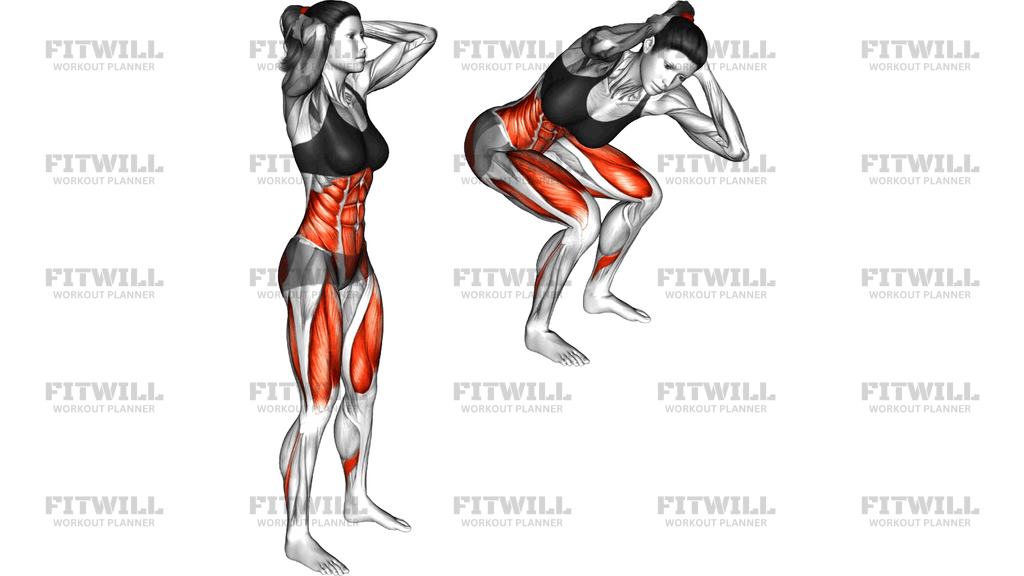
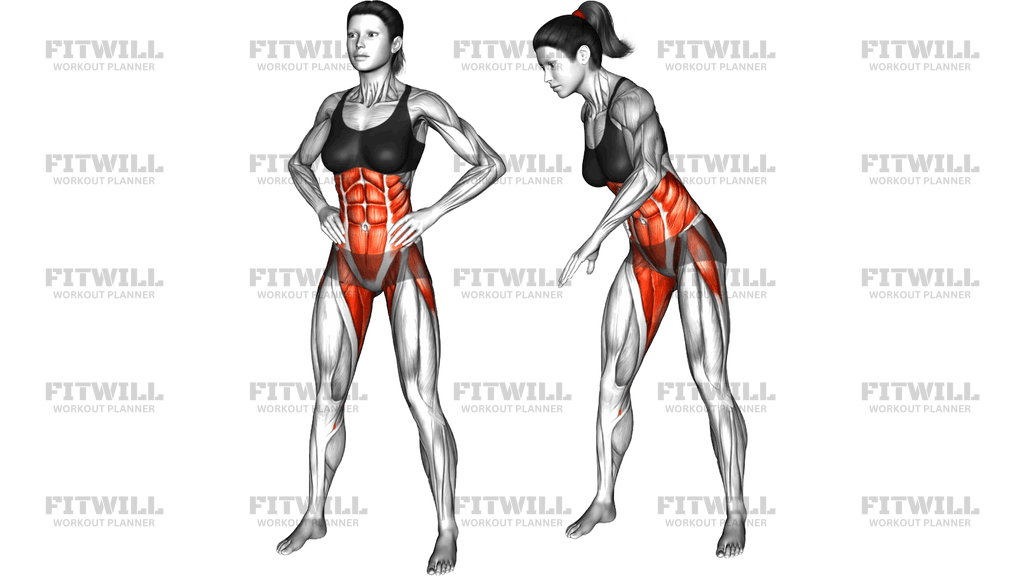
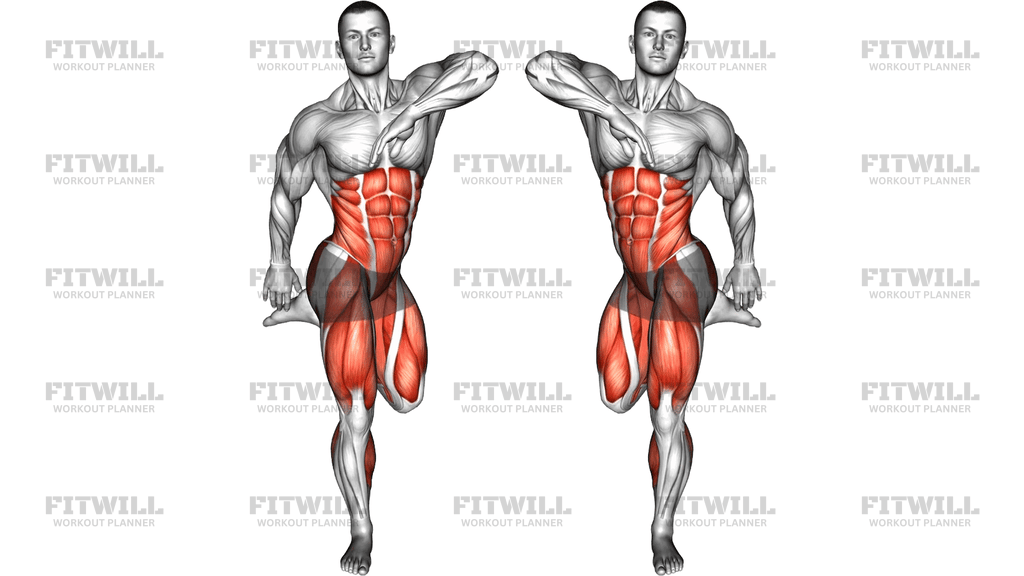
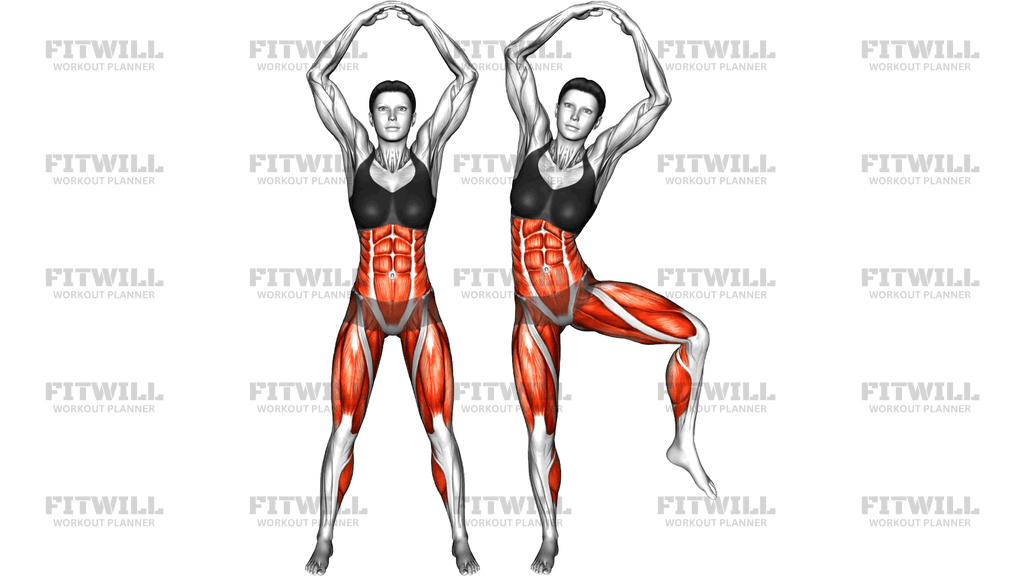
The Standing Ballerina Alternate Side Knee Drive is a body weight core exercise performed from a tall standing position with both arms raised overhead. From there, you lift one knee out to the side while leaning your torso into a lateral bend over the standing leg, then return to center and repeat on the other side. The exaggerated, graceful arm position and turned-out knee give the movement its ballet-inspired name, but the demand is very real: your waist, hips, and standing leg all have to cooperate to keep you balanced.
This exercise trains the obliques through a combination of side bending and anti-rotation control, while the driving leg works the outer hip and glute muscles and the hip flexors bring the knee up. Because you balance on one leg at a time, the ankle and hip stabilizers on the supporting side are constantly working. The overhead arms lengthen your lever, which makes the lateral bend feel considerably harder than a hands-at-chest version would.
The setup matters because everything flows from a tall, quiet base. Feet roughly hip-width apart, ribs stacked over the pelvis, arms overhead with soft elbows. If you let your chest collapse or your hips shift sideways as you bend, the obliques stop doing the work and your lower back takes over. The bend should feel like it happens along the side of your waist, not by hinging forward or rounding back.
To execute it well, drive one knee up and out to the side to roughly hip height, and at the same time lean your torso sideways away from the driving knee, reaching through the overhead arm on the same side as your standing leg. Think of creating a long arc from the standing foot to the fingertips. Pause briefly at the top, then return to center with control before switching sides. Moving slowly is what separates this from a sloppy standing crunch.
This movement suits warm-ups, home workouts, and any circuit where you want core work without equipment or floor contact. It is especially useful for people who spend long hours seated, since standing lateral bending and hip abduction address positions the body rarely gets into during a normal day. Dancers, skaters, and field-sport athletes also benefit from the lateral hip control it builds.
Keep the range honest rather than chasing a big lean. A controlled bend with a stable pelvis beats a dramatic sway every time. If balance is the limiting factor early on, stand near a wall or chair and use one fingertip for light support until the single-leg position feels secure.
[ Workout Log & Planner ]
Put your next workout in Fitwill
Keep your plan and training log ready when you are.


Instructions
- Stand tall with your feet about hip-width apart and your weight spread evenly across both feet.
- Raise both arms overhead, hands lightly touching or fingertips reaching, with elbows soft rather than locked.
- Brace your core gently, pull your ribs down over your pelvis, and pick a fixed point ahead of you to help with balance.
- Shift your weight onto one leg and let the opposite heel lift slightly as you prepare to move.
- Drive the free knee up and out to the side to about hip height, keeping the torso facing forward.
- As the knee rises, bend your torso sideways over the standing leg, reaching through the overhead arm on that side so your body forms a long arc.
- Pause for a beat at the top, feeling the contraction along the side of your waist and the outer hip of the lifted leg.
- Lower the knee and return your torso to a tall, centered position under control, then repeat the drive on the other side.
- Exhale as you drive the knee and bend, inhale as you return to center.
- Complete your reps alternating sides, resetting your balance and posture between each repetition.
Tips & Tricks
- A common mistake is bending forward instead of sideways. Face a mirror from the front and check that your chest stays pointed ahead and the bend happens purely in the frontal plane.
- If your torso swings toward the lifted knee, you are rotating rather than side bending. Keep the knee driving out wide and imagine a wall in front of you preventing any forward lean.
- Do not let the standing hip push sideways or sag. Keep the standing leg stacked under your shoulder and squeeze the glute on that side to hold the pelvis level.
- Lower the knee to hip height or below if the lean collapses. Range you can hold with a tall spine beats a higher knee with a tipped pelvis.
- Keep the overhead elbows slightly bent. Locked elbows strain the shoulders and shorten the reach that makes the lateral bend effective.
- If you wobble badly, tap one fingertip against a wall on the bending side for the first week, then progress to unsupported reps.
- Move at a two-count up, one-beat hold, two-count down tempo. Rushing turns this into a momentum-driven leg swing that barely challenges the obliques.
- Watch for the ribs flaring as you bend. Keeping the abs gently braced stops the lower back from arching and keeps the work on the waist.
- Alternate which leg starts each set so both sides develop evenly.
Frequently Asked Questions
Which muscles does the Standing Ballerina Alternate Side Knee Drive work?
The main muscles are the obliques on the side of the waist, which control the lateral bend. The outer hip and glute muscles lift the knee, the hip flexors assist the drive, and the standing leg works through the ankle and hip to keep you balanced.
Is the Standing Ballerina Alternate Side Knee Drive suitable for beginners?
Yes, provided the range is kept modest. Beginners can reduce the knee height and the depth of the lean, or stand near a wall for light fingertip support until single-leg balance improves.
Why are the arms overhead during the Standing Ballerina Alternate Side Knee Drive?
The overhead arms lengthen your body's lever, so the side waist muscles have to work harder to bend and control the torso. The raised arms also encourage a tall spine, which keeps the bend lateral instead of forward.
How high should I drive my knee in the Standing Ballerina Alternate Side Knee Drive?
About hip height is a good target, but stop at whatever height lets you keep your chest facing forward and your pelvis level. If your torso twists or the standing hip drops, lower the knee.
What is the most common mistake in the Standing Ballerina Alternate Side Knee Drive?
Leaning forward or twisting toward the knee instead of bending straight sideways. This shifts work away from the obliques and strains the lower back, so keep the movement in a single side-to-side plane.
Can I substitute the Standing Ballerina Alternate Side Knee Drive with a floor exercise?
Standing side bends, standing oblique crunches, or side planks cover similar territory. What you lose is the single-leg balance demand, so if that matters to your training, choose a standing alternative.
How many reps should I do of the Standing Ballerina Alternate Side Knee Drive?
Eight to twelve controlled drives per side works well for strength and control, or fifteen to twenty per side at a steady pace as a warm-up or circuit finisher.
Is the Standing Ballerina Alternate Side Knee Drive safe for people with lower back sensitivity?
The controlled, lateral nature of the bend is generally easier on the spine than loaded side bends, but keep the lean shallow, brace the abs throughout, and stop if you feel any pinching or pain rather than muscular effort.
Should I hold onto anything during the Standing Ballerina Alternate Side Knee Drive?
Only if balance is the limiting factor. A light fingertip touch on a wall or the back of a chair is enough to steady yourself; avoid gripping hard, as that removes the stabilizing work from the standing leg.