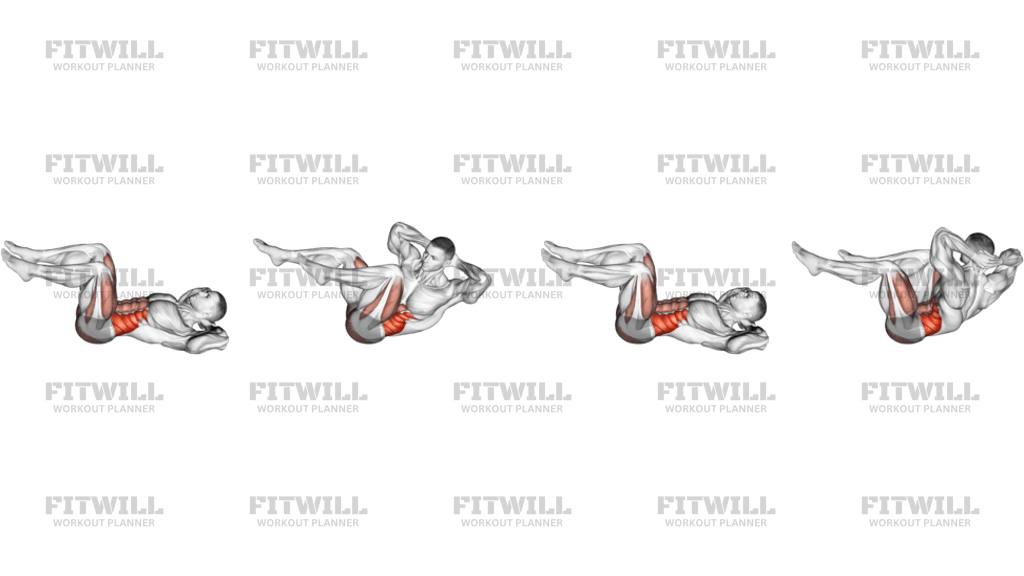
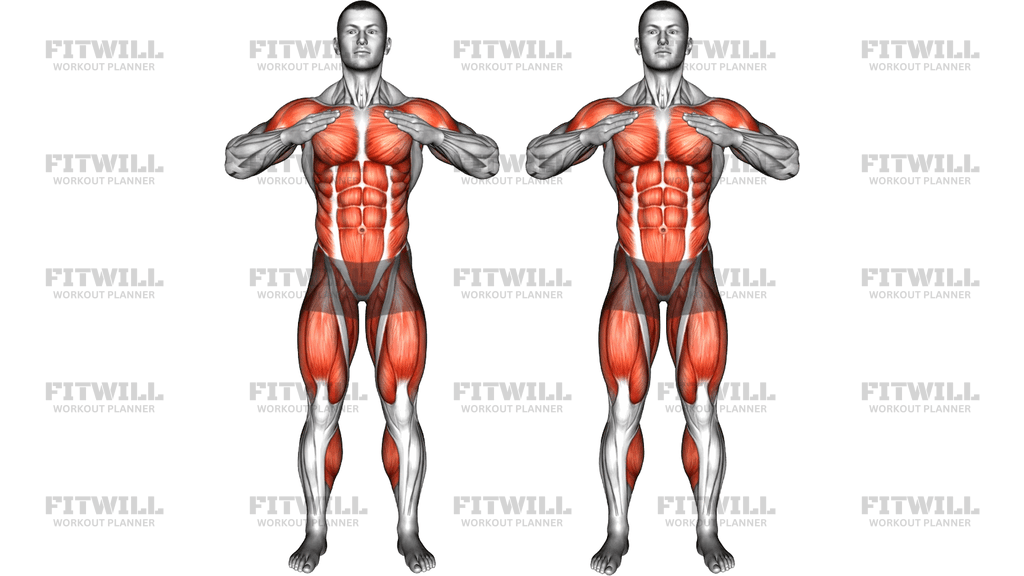
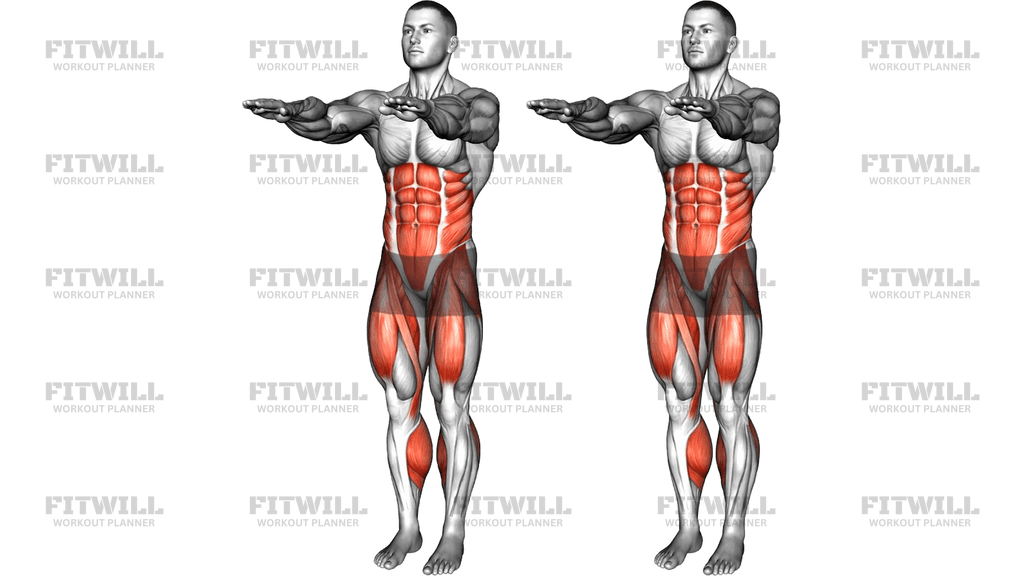
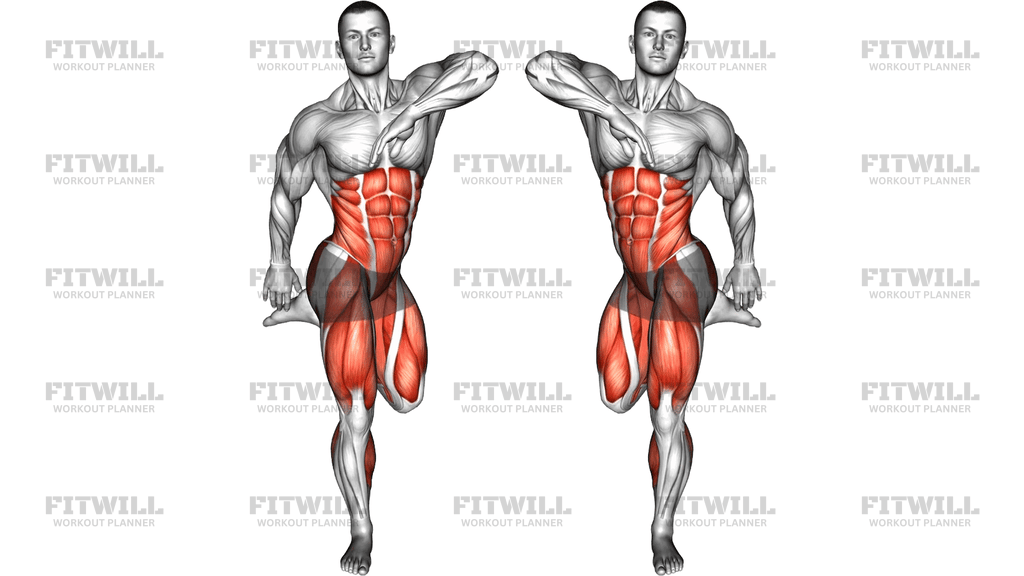
Side Shuffle Obliques Twist
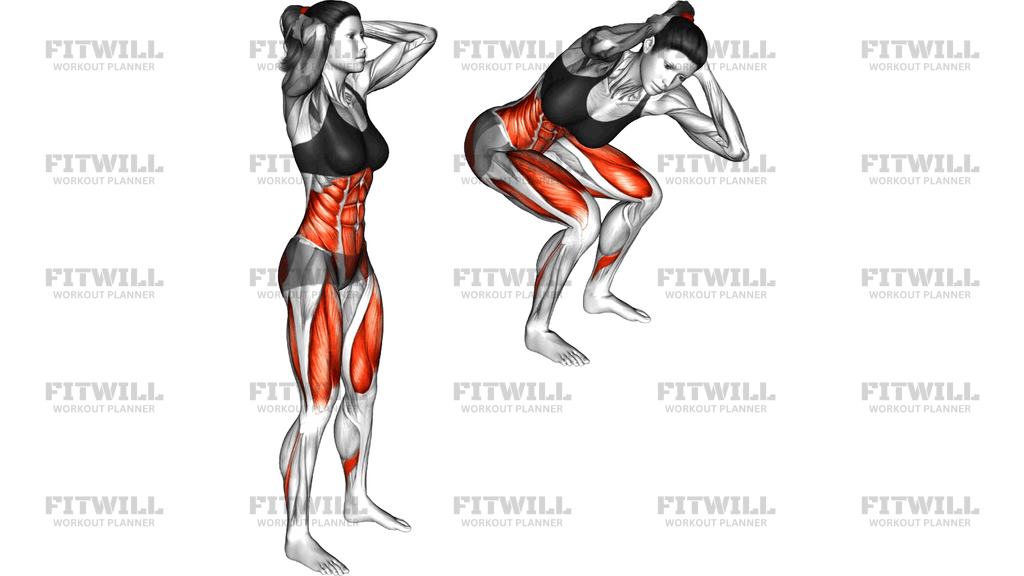
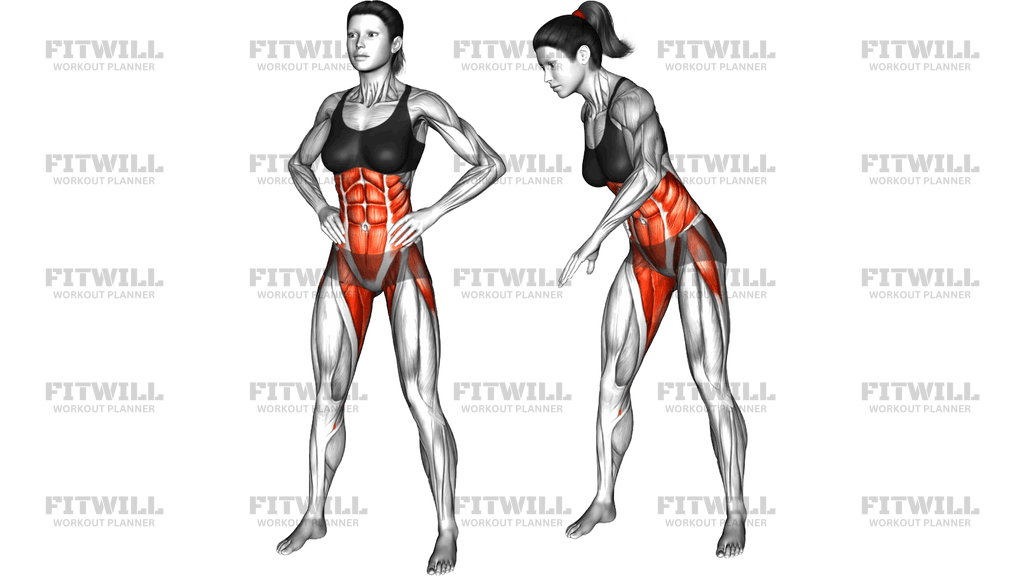
The Side Shuffle Obliques Twist is a bodyweight conditioning move that pairs a lateral shuffle stance with a deliberate rotational twist of the torso. You drop into a quarter squat with a wide stance, clasp your hands in front of your chest, and shuffle side to side while rotating your shoulders and ribcage with each step. The result is a movement that trains the obliques dynamically while your legs and hips handle the footwork.
This exercise earns its place in warm-ups, circuit training, and athletic conditioning blocks because it mimics how the trunk actually works in sport: rotating against a moving base of support. Basketball, tennis, and racquetball players all change direction and rotate at the same time, and this drill rehearses that pattern with no equipment. It is also a solid choice for anyone who wants to wake up the midsection before heavier lifting without loading the spine.
The main muscles at work are the obliques on the sides of your waist, which drive and control the rotation. The rectus abdominis helps brace the trunk, while the glutes, quads, and hip stabilizers keep you balanced through every shuffle step. Because you are moving laterally the whole time, the smaller muscles around the hips and ankles get plenty of low-grade work too.
Setup matters more than people expect. A stance that is too narrow turns this into a twist with no leg involvement, and hands that drift away from the chest make the rotation loose and sloppy. Keep the feet wide, knees tracking over the toes, and the hands clasped tightly at chest height so the twist comes from the ribcage rather than from swinging the arms.
To execute well, shuffle two or three steps to one side, twist the torso toward the direction of travel as you plant, then shuffle back and twist the other way. Stay low in the quarter squat for the entire set, and let the twist happen on each plant rather than continuously spinning. The tempo should be quick enough to raise your breathing but controlled enough that your feet never cross and your knees never cave inward.
Practically, this movement fits at the start of a workout as an activation drill, in the middle of a fat-loss circuit where it adds rotational work without equipment, or at the end of a leg session as a finisher. If your knees complain about the squat depth, rise slightly and shorten the shuffle distance. Stop if you feel any twisting pain in the lower back rather than muscular effort in the waist.
[ Workout Log & Planner ]
Put your next workout in Fitwill
Keep your plan and training log ready when you are.


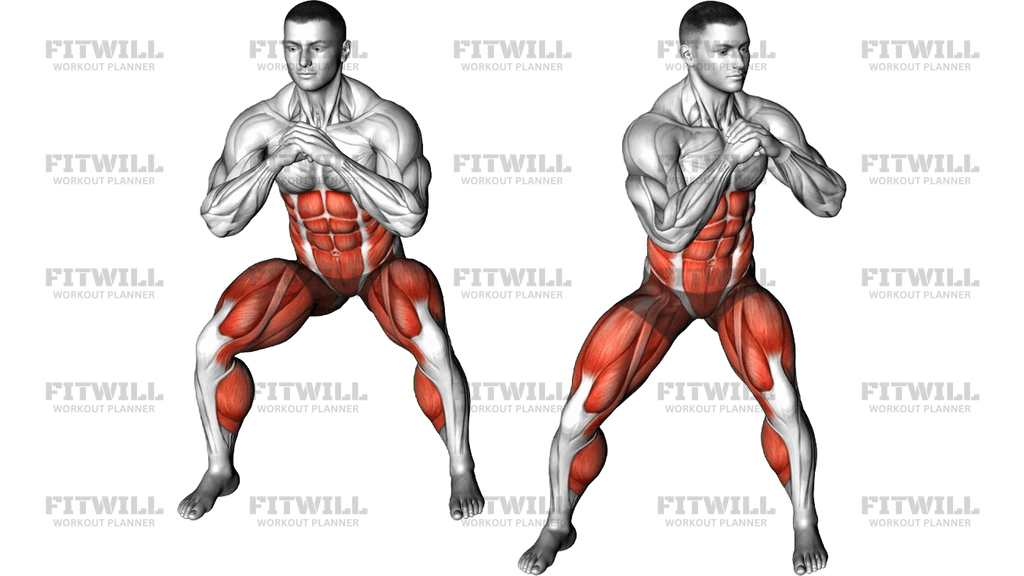
Instructions
- Stand with your feet roughly twice shoulder-width apart and turn your toes out slightly.
- Sit your hips back into a quarter squat so your knees are bent, your weight is on the balls of your feet, and your chest stays tall.
- Clasp your hands together in front of your sternum with elbows bent and tucked toward your ribs.
- Brace your core as if bracing for a light push, and keep your gaze forward.
- Shuffle two or three steps to the right, staying low the entire time and letting your feet stay wide as you move.
- As you plant your final step, rotate your shoulders and ribcage to the right so your clasped hands travel across your body toward that side.
- Shuffle back to the left and twist your torso to the left on the plant, keeping the rotation driven by your waist, not by swinging your arms.
- Exhale sharply on each twist and inhale during the shuffle steps between twists.
- Keep your knees pushed out over your toes and never let them collapse inward as you change direction.
- Continue alternating sides for time or reps, then stand fully upright between sets to reset your squat position.
Tips & Tricks
- The most common mistake is rotating from the arms instead of the trunk. If your hands are whipping around, squeeze them tighter against your chest and let the ribcage do the turning.
- Do not rise out of the quarter squat as you fatigue. A shallow, consistent squat depth keeps the glutes and quads engaged and makes the twist harder to cheat.
- If your knees drift inward on the plant, think about spreading the floor with your feet on every shuffle step.
- Twist toward the direction you are shuffling, not away from it. Rotating against the travel direction puts a wrenching stress on the lower back with no benefit.
- Start with a slower shuffle for the first set. The coordination of stepping and twisting is harder than it looks, and speed added on top of poor control reinforces bad habits.
- Keep your heels hovering just off the floor rather than slamming down flat; staying on the balls of your feet makes the lateral steps quicker and quieter.
- On soft flooring or carpet the shuffle gets sticky. Either use a firmer surface or pick your feet slightly higher so your toes do not drag.
- If your lower back takes over near the end of a set, shorten the rotation angle instead of stopping entirely. A smaller clean twist beats a large sloppy one.
Frequently Asked Questions
Which muscles does the Side Shuffle Obliques Twist work the most?
The obliques along the sides of your waist are the prime movers for the twist. The abs brace the trunk, while the glutes, quads, and hip stabilizers handle the shuffle and the quarter squat position.
Is the Side Shuffle Obliques Twist suitable for beginners?
Yes, because it uses only body weight and the range of twist is self-selected. Beginners should start with a smaller rotation and a slower shuffle, then build speed once the footwork feels natural.
Why do I keep my hands clasped at my chest during the Side Shuffle Obliques Twist?
Clasping the hands at the sternum ties the arms to the ribcage, which forces the rotation to come from your torso instead of from arm swinging. It also keeps the twist tight and easier to control.
Should I twist toward or away from the direction I am shuffling?
Twist toward the direction of travel. Rotating against the shuffle direction wrenches the lumbar spine and reduces the oblique involvement you are training for.
How low should my squat be during this exercise?
A quarter squat is enough, meaning your knees are bent and hips are back but your thighs are nowhere near parallel to the floor. The goal is an athletic stance you can hold for the whole set, not a deep squat.
Can I do the Side Shuffle Obliques Twist every day?
Because it is low load and bodyweight only, frequent use is generally fine, especially as a warm-up. If your obliques or hips are sore from the previous session, reduce the volume or depth for a day or two.
What can I substitute if I do not have space to shuffle?
Stand in one spot and step one foot out to the side and back while twisting, or perform standing torso twists with the same hand-clasped position. The oblique stimulus is similar without the lateral travel.
Why do my knees cave inward when I plant to twist?
That usually means the hip stabilizers are tired or the stance has narrowed as you fatigue. Widen your feet, consciously push your knees out over your toes, and shorten the set if it keeps happening.
Is the Side Shuffle Obliques Twist cardio or strength work?
It sits between the two: the twist provides rotational strength for the waist, while the continuous shuffling raises your heart rate. Longer timed sets push it toward conditioning, while short crisp sets keep it more strength-focused.