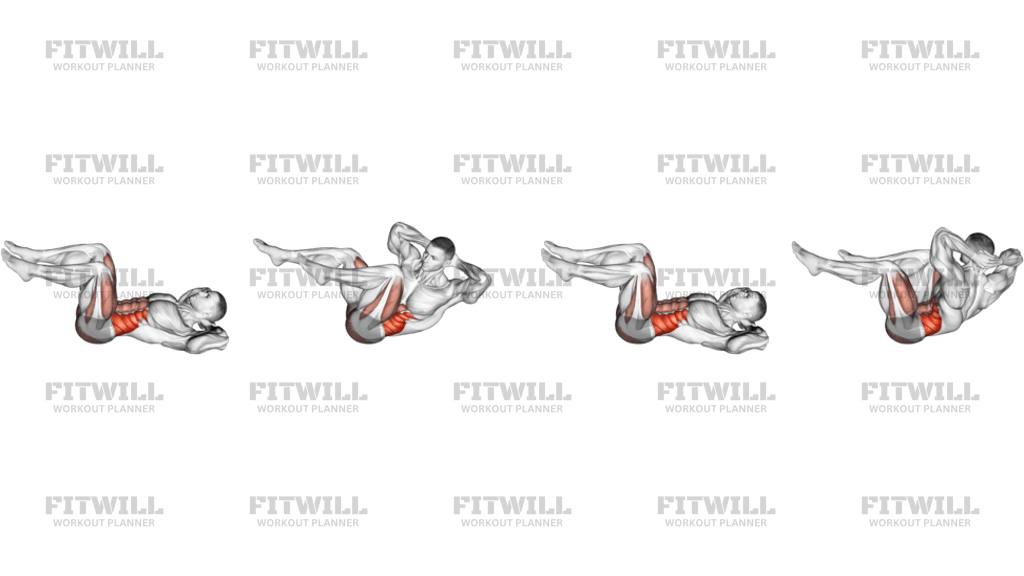
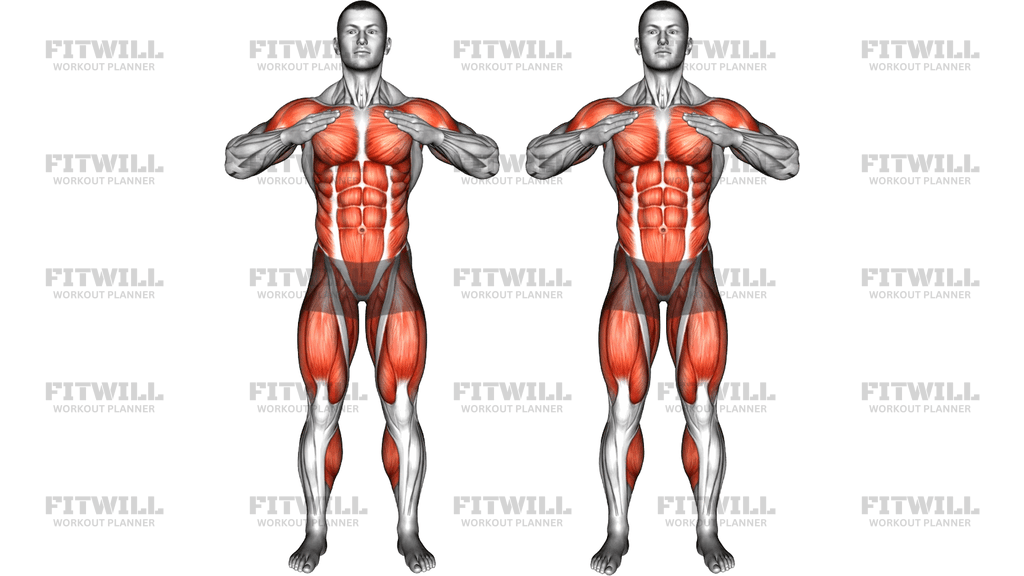
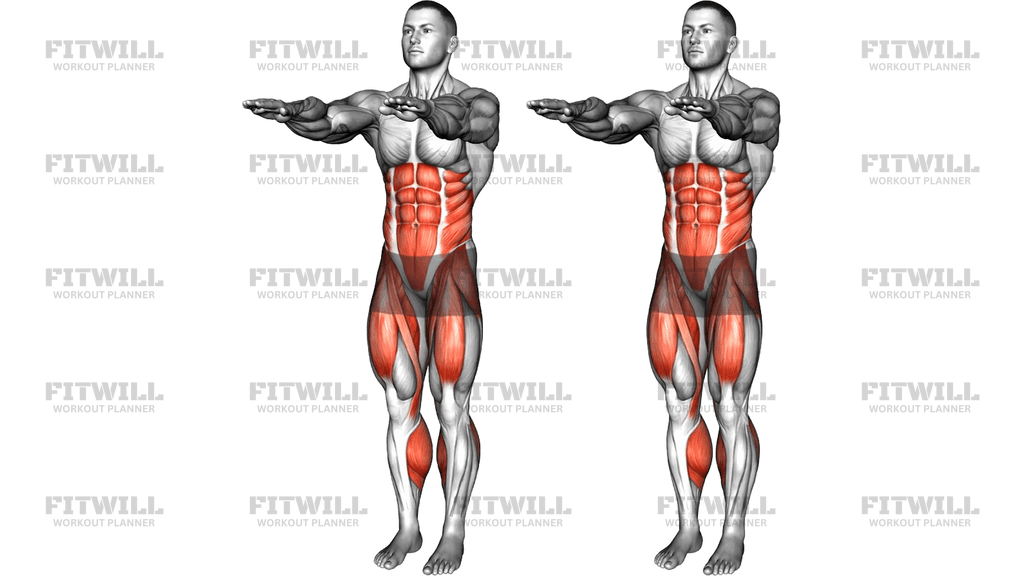
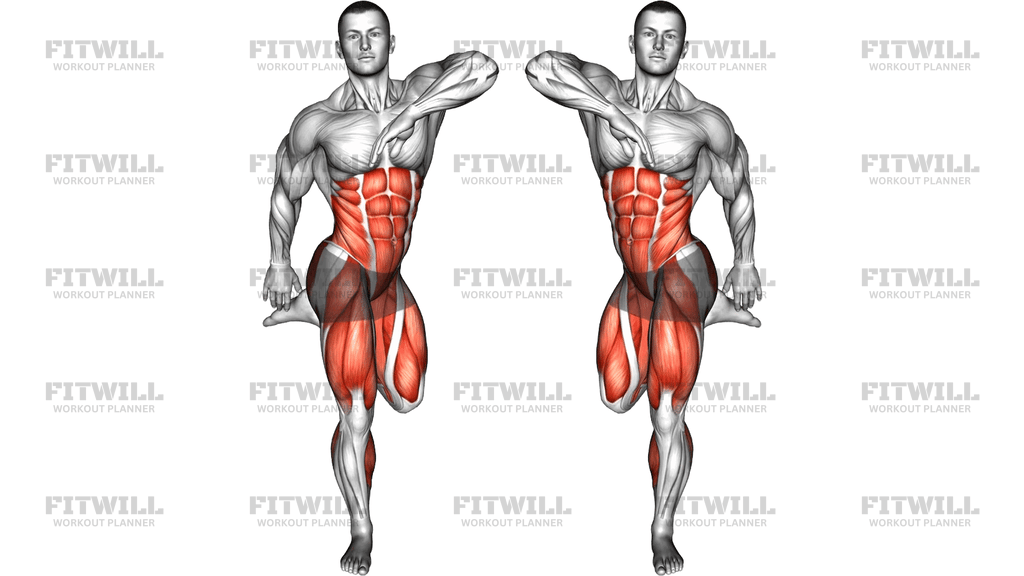
Diagonal Claps Woodchopper
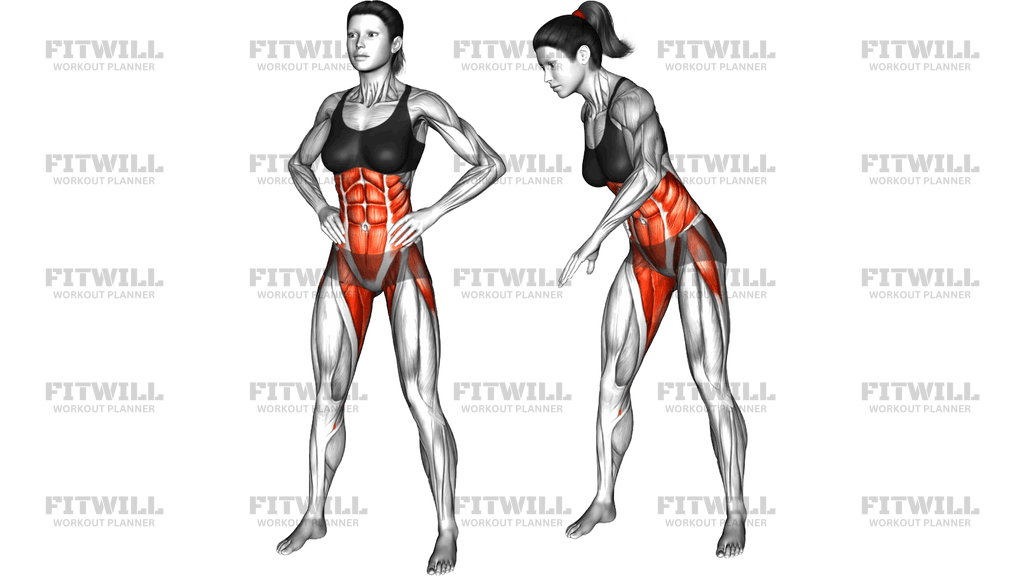
The Diagonal Claps Woodchopper is a bodyweight rotational exercise that mimics the motion of swinging an axe diagonally across your body. You start with both hands pressed together overhead on one side, then sweep them down and across to the opposite hip in one controlled, powerful arc, adding a clap at the top of each rep to keep the hands connected and the path honest. Because there is no load to swing, the entire challenge comes from controlling your own torso rotation and maintaining tension through the trunk.
This movement is especially useful for anyone who wants to train rotation without equipment. The obliques on the side you chop toward do most of the work, while the deep core stabilizes the spine, the shoulders drive and guide the arc, and the legs absorb and redirect force as you shift into a staggered or split stance at the bottom. It also teaches coordination between the upper and lower body, which is what separates a good woodchopper from an arm swing.
Setup matters more than it looks. A stance that is too narrow makes the diagonal path awkward and pulls you off balance, while a stance that is too wide limits your hip rotation. Your feet should allow the back heel to lift naturally as you rotate, so the movement comes from the hips and waist rather than forcing the knees to twist. Pressing the palms together firmly throughout gives the arms a fixed structure, so the rotation originates in the trunk instead of the elbows drifting apart.
To execute it well, think of the hands as one unit traveling along a fixed diagonal line from above one shoulder to beside the opposite knee. Keep the chest tall on the way up, hinge slightly at the hips as the hands sweep down, and let the eyes follow the hands, which keeps the neck in a safe position. The clap at the top serves as a consistent end point for every rep and reinforces the pressed-palm position.
This exercise fits well into warm-ups, core circuits, and conditioning work, and it is a common choice in group training precisely because it needs no setup time. Do equal reps on both sides to keep the waist working evenly. If you feel the movement only in your arms, slow down and focus on turning the ribcage and hips together, because that is where the real effort should come from.
[ Workout Log & Planner ]
Put your next workout in Fitwill
Keep your plan and training log ready when you are.


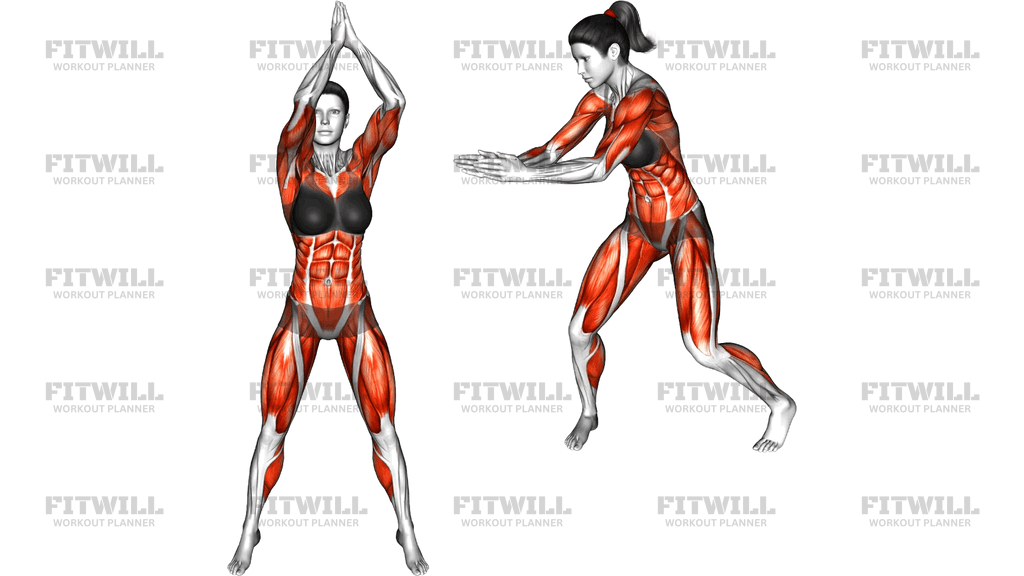
Instructions
- Stand with your feet about shoulder-width apart or slightly wider, toes angled slightly outward so your hips can rotate freely.
- Press your palms together firmly and raise both straight arms up and to the right side so your hands are above your right shoulder, turning your torso slightly in that direction.
- Brace your core and pull your ribs down before starting the rep so your lower back does not arch as the arms travel overhead.
- Inhale at the top, then sweep both pressed hands diagonally down and across your body toward the outside of your left knee, rotating your torso and letting your left back heel lift as you turn.
- Allow a slight hinge at the hips and a small bend in the knees as the hands reach the low point beside the opposite hip.
- Keep the eyes following your hands the whole way so the neck stays neutral and the rotation stays smooth.
- Exhale as you chop down, then inhale again as you drive the hands back up along the same diagonal to the starting position above the right shoulder.
- Clap or press the hands together firmly at the top of each rep to confirm the arms stayed connected throughout the arc.
- Complete all repetitions on the right-to-left diagonal, then switch sides and chop from the left shoulder down to the right hip for the same number of reps.
Tips & Tricks
- If your lower back aches instead of your waist, you are most likely arching at the top when the arms go overhead; pull the ribs down and brace before each rep begins.
- The clap should happen with the arms still fully straight. If you clap with bent elbows, the arms are doing the work the trunk should be doing.
- Do not let the front knee cave inward as you rotate. Push it slightly outward over the toes so the knee and hip stay aligned.
- Move faster on the way down and more controlled on the way up if your goal is power; reverse that ratio if your goal is core control.
- Keep both feet flat until the hands pass waist height, then let the back heel lift naturally. Lifting the heel too early shortens the rotation.
- If your balance wobbles at the bottom, widen your stance slightly before making any other adjustment, because a narrow base is the most common cause.
- Chop across the body, not around it. If your hands end up in front of your chest instead of beside the opposite hip, lengthen the diagonal.
- Match sides exactly. Count reps per side rather than total reps so your weaker rotation side gets the same volume.
Frequently Asked Questions
What muscles does the Diagonal Claps Woodchopper work?
The obliques are the main drivers, supported by the deep core, shoulders, and glutes as they control the diagonal rotation. The legs work isometrically to stabilize the stance at the bottom of each chop.
Do I need any equipment for the Diagonal Claps Woodchopper?
No. It is performed entirely with body weight, with the hands pressed together throughout the arc. That makes it easy to use anywhere as a warm-up or core finisher.
Why does the Diagonal Claps Woodchopper include a clap at the top?
The clap keeps the palms pressed together and gives every rep a clear finish point overhead. It also prevents the hands from drifting apart, which would let the elbows take over the movement.
Is the Diagonal Claps Woodchopper good for beginners?
Yes, because there is no external load and the speed is fully self-determined. Beginners should start slow, use a moderate range, and prioritize rotating from the waist rather than swinging the arms.
Should I do the Diagonal Claps Woodchopper on both sides?
Always. Chopping only on one diagonal creates uneven development in the obliques and can reinforce rotational asymmetry. Do the same number of reps from each shoulder.
Can I add resistance to the Diagonal Claps Woodchopper?
Yes, once the bodyweight version feels controlled you can hold a light medicine ball or a single dumbbell with both hands along the same diagonal path. Keep the load modest, because rotation with heavy weight puts more demand on the spine.
Why do I feel the Diagonal Claps Woodchopper mostly in my arms?
That usually means the shoulders and elbows are leading the sweep while the trunk stays passive. Slow the tempo and focus on turning your ribcage and hips together so the waist initiates the chop.
How fast should I perform the chopping phase?
For conditioning and power, accelerate through the downward diagonal and decelerate smoothly at the bottom. For core control and warm-up purposes, keep the whole rep moderate and even.
Is it safe for my lower back and knees?
It is generally well tolerated when you brace the core, avoid forcing extra rotation at the end range, and keep the knees tracking over the toes. If any movement causes sharp discomfort, reduce the range or stop and reassess your setup.