Side Step Diagonal Reaches
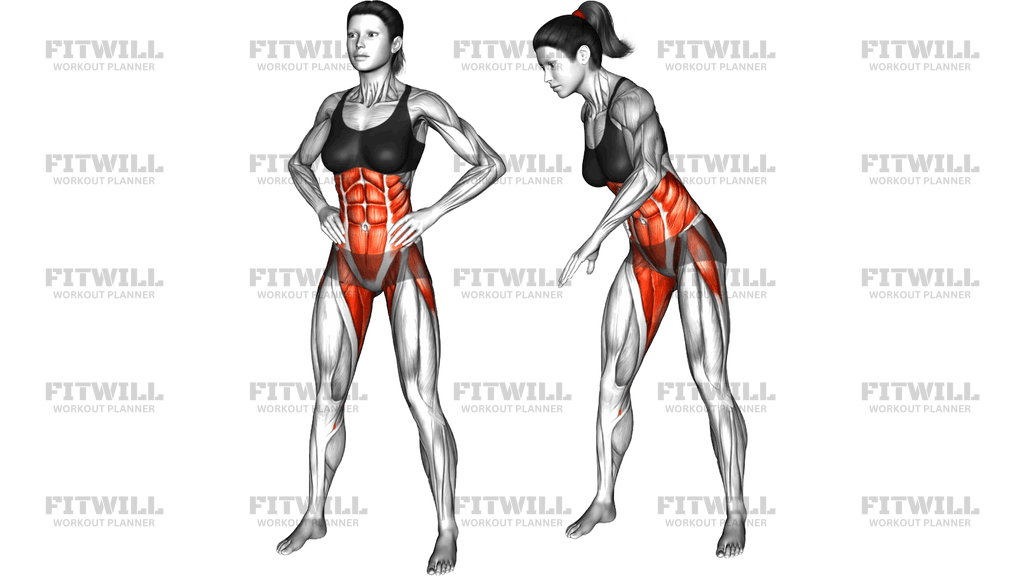
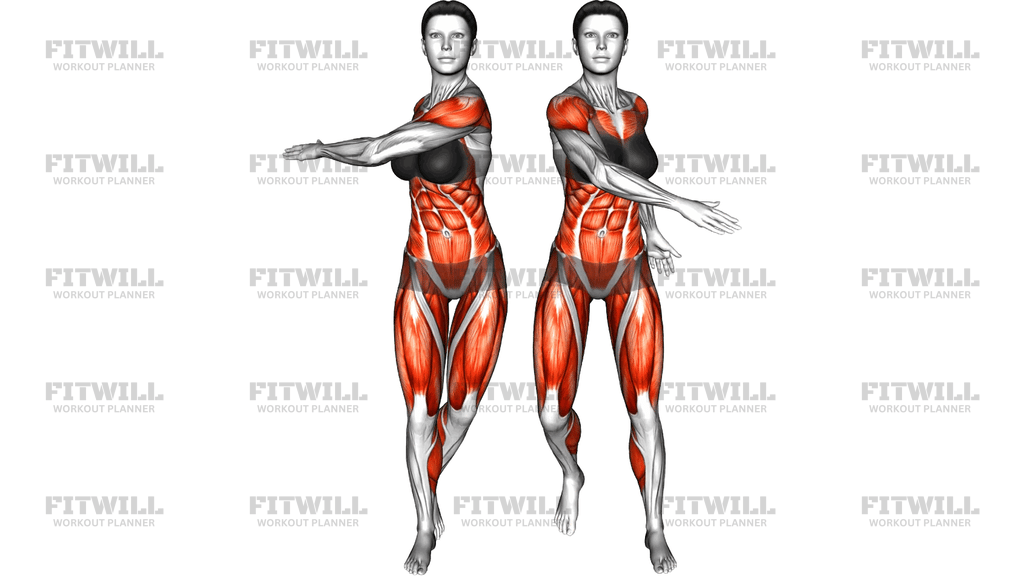
Side Step Diagonal Reaches combine a lateral step with a sweeping, diagonal arm reach across your body, so every rep trains rotation, side-to-side footwork, and cross-body coordination at the same time. You stand tall, step one foot out to the side (often letting the other foot tap behind or across), and swing both arms from low on one side of your body up across your torso toward the opposite shoulder. Then you reverse the pattern and repeat on the other side, alternating back and forth.
This movement is a favorite in warm-ups, group classes, and low-impact conditioning circuits because it hits so many systems at once. The stepping leg and hips work through the frontal plane, challenging the glute medius and outer hip to control your width of stance, while the diagonal reach demands that the obliques and deep core manage rotation instead of letting your lower back do all the twisting. The raised arms also wake up the shoulders and upper back in a way straight-plane exercises rarely do.
Because Side Step Diagonal Reaches are standing, equipment-free, and easy to scale, they suit beginners learning rotational control, older adults working on lateral confidence and balance, and athletes who need cross-body patterns for throwing, swinging, or changing direction. The alternating rhythm also lifts your breathing rate, which is why the exercise often appears in dynamic warm-up sequences before heavier lower-body or core training.
Setup matters more than it looks. A narrow, tall starting stance with soft knees gives you room to step genuinely sideways, and reaching from the hips rather than collapsing at the waist keeps the work in the obliques and hips where it belongs. If your step is too short or your arms swing without your trunk following, you lose most of the rotational benefit.
Execute the reach with intent: let the torso rotate slightly as the arms travel diagonally, keep your eyes forward or follow your hands lightly, and press through the stepping foot to return. The movement should feel smooth and rhythmic, not rushed. Land each step quietly and keep your weight balanced over the whole foot rather than dumping into the toes.
For safety, keep the range moderate at first — a controlled reach at hip-to-shoulder height is plenty until your hips and spine feel comfortable with the rotation. If you have sensitive knees or a history of lower back irritation, slow the tempo down, shorten the step, and reduce the reach height so the pattern stays comfortable before you add speed or range.
[ Workout Log & Planner ]
Put your next workout in Fitwill
Keep your plan and training log ready when you are.


Instructions
- Stand tall with your feet together or hip-width apart, arms hanging relaxed at your sides, and your gaze forward.
- Soften your knees slightly and brace your core as if preparing for a light tap to the stomach.
- Step your right foot out to the side about shoulder-width to hip-width beyond your start, keeping your weight balanced over the stepping foot.
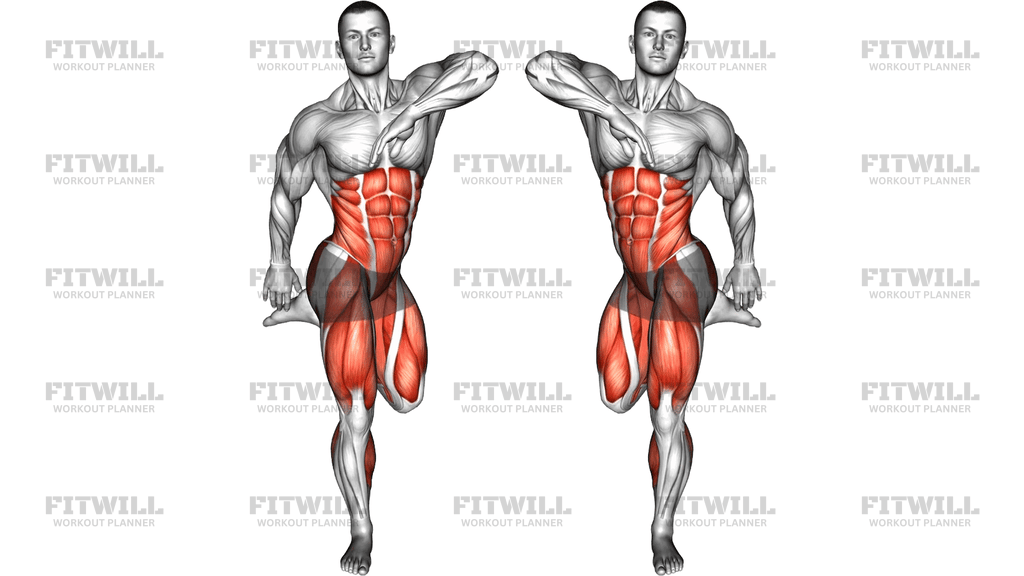
- As you plant the right foot, swing both arms up and diagonally across your body, finishing with your hands reaching toward the upper right, past your right shoulder, while your torso rotates slightly to follow.
- Let your left foot follow with a light tap behind or beside your right foot so the move has a natural rhythm.
- Press through the right foot to push back to the center, lowering your arms as you return to the tall starting stance.
- Repeat the step and diagonal reach to the left side, swinging your arms toward the upper left across your torso.
- Breathe in on the reach and out as you step back to center, keeping a steady breathing rhythm throughout.
- Continue alternating sides for the desired number of repetitions or time, keeping the tempo controlled and the steps quiet.
Tips & Tricks
- Reach with your whole torso, not just your arms — if your shoulders move but your ribcage stays frozen, you are missing the rotational point of the exercise.
- Avoid letting your knees cave inward on the step; think of pushing the stepping knee slightly out over the pinky toe as you plant.
- If your lower back complains, shorten the reach and rotate from the mid-back and hips rather than bending sideways at the waist.
- Keep your heels down on the stepping leg; rising onto the toes every rep turns a hip-control drill into a calf exercise and destabilizes the reach.
- A common mistake is stepping too narrow — give yourself a genuinely wide base on the reach side so your hips, not your spine, absorb the sideways shift.
- Follow your hands lightly with your eyes to encourage smooth neck and upper-back rotation, but keep your head from whipping.
- Slow the tempo down before speeding it up; the cross-body pattern only pays off when the arms and step stay synchronized.
- If you feel wobbly, hold your arms slightly lower and closer to your body until the footwork feels secure, then extend the reach gradually.
- Use this before squats, lunges, or rotational core work to prime the hips and obliques rather than grinding it to fatigue as a finisher.
Frequently Asked Questions
What muscles do Side Step Diagonal Reaches work?
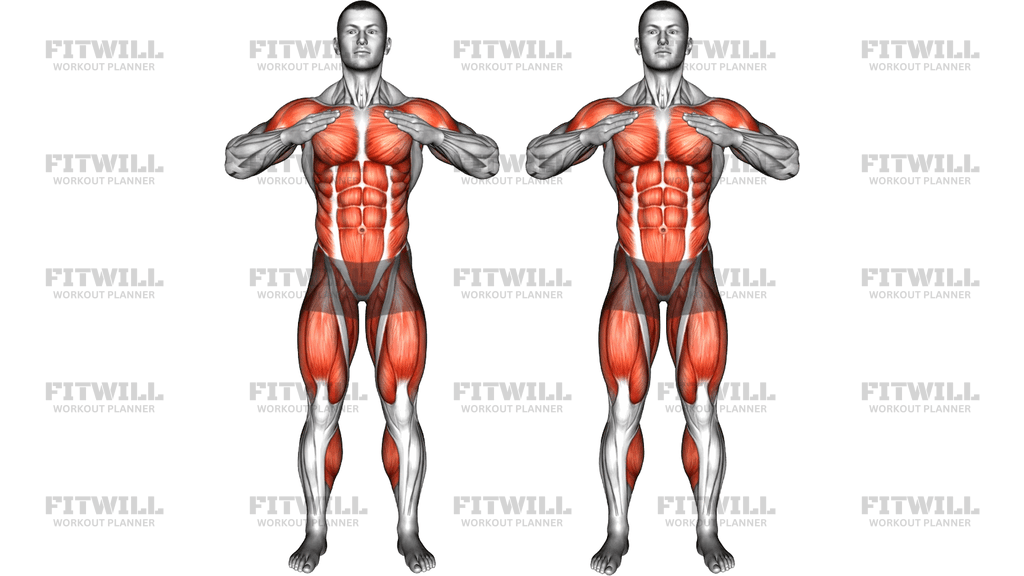
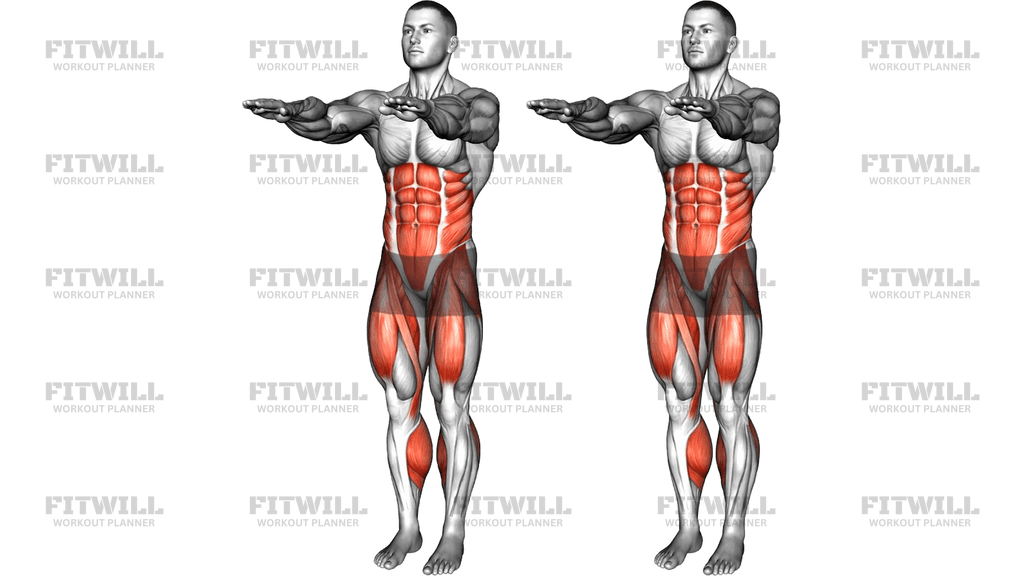
The primary work comes from the obliques and deep core controlling the diagonal rotation, with the glutes and outer hips stabilizing each lateral step. The shoulders and upper back assist the arm swing, and the quads help control the stepping and return.
Are Side Step Diagonal Reaches good for beginners?
Yes — they are low-impact, require no equipment, and the range is easy to adjust. Beginners should start with a short step and a reach to about chest height before extending the arms fully overhead.
Should my back foot tap behind me or stay planted during the reach?
A light tap behind or beside the stepping foot keeps the rhythm natural and helps you load the working hip. If balance is a challenge, let the trailing foot stay closer to the floor or skip the tap entirely until you feel steadier.
Why do my arms swing but my torso stay still during Side Step Diagonal Reaches?
That usually means the rotation is happening only at the shoulders. Cue yourself to let your ribcage turn toward the reaching side so the obliques do the work, and slow the arm swing down until the trunk follows.
Can I do Side Step Diagonal Reaches as a warm-up?
They work very well early in a warm-up because they raise your heart rate while taking the hips, spine, and shoulders through rotation. Two or three alternating sets of ten to twenty steps is usually enough before lower-body or core training.
What can I substitute if stepping sideways is uncomfortable?
Stand in place and perform the same diagonal arm reaches with a gentle torso rotation, letting one heel lift slightly to mimic the weight shift. This keeps the cross-body pattern without the lateral step.
How do I keep my knees safe during the side step?
Keep the knees softly bent and track the stepping knee over the toes rather than letting it drift inward. A moderate step width and a quiet, flat-footed landing also reduce stress on the knee joint.
How fast should I perform Side Step Diagonal Reaches?
Start at a controlled pace where the step, reach, and return all stay smooth, then gradually add speed once the pattern feels automatic. Rushing usually causes a narrow step and a stiff torso, which defeats the purpose.
Do I need to hold weights during Side Step Diagonal Reaches?
No — the exercise is designed around body-weight coordination and rhythm. If you want more challenge, increase the step width, reach height, or pace before considering any external load.