Seated Neck Stretch
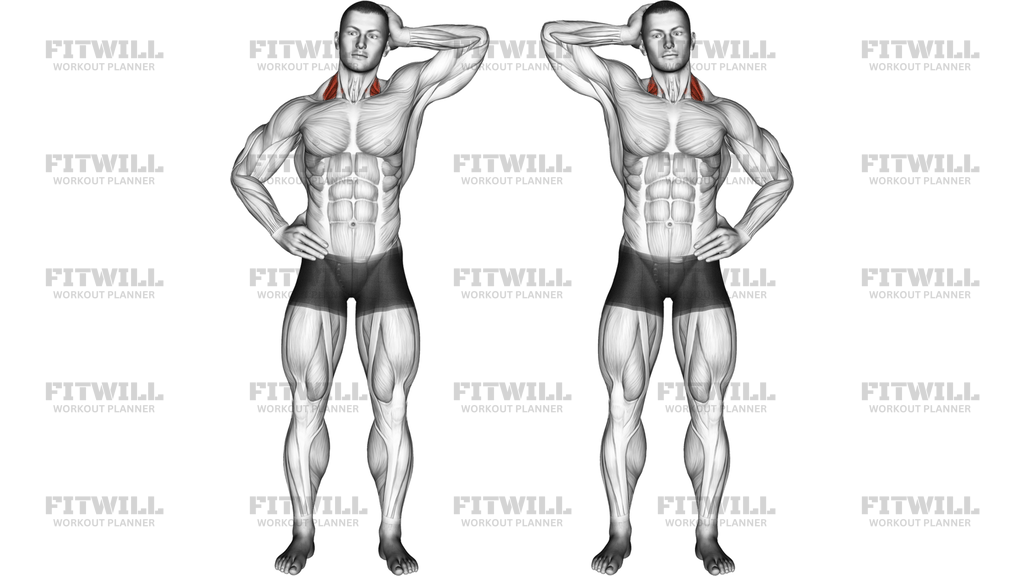
The Seated Neck Stretch is a gentle lateral stretch that targets the muscles running along the side and top of the neck, especially the upper trapezius and levator scapulae. You sit cross-legged on the floor with a tall spine, drop one ear toward the same-side shoulder, and gently assist the stretch by resting the same-side hand over the top of your head. The opposite arm stays relaxed and heavy by your side, which helps anchor the shoulder down and lengthen the tissue on the stretched side.
This stretch is one of the most practical mobility drills for anyone who carries tension in the neck and shoulder region. Desk workers, drivers, students, and people who hold a phone between their ear and shoulder all tend to accumulate tightness in the upper traps. It is also commonly used after upper-body training days, particularly after pressing, pulling, or carrying work, and as part of a wind-down routine before bed because of its calming, low-effort nature.
The setup matters more than most people expect. Sitting cross-legged gives you a stable base so your torso does not twist or lean to fake extra range. Keeping your chest lifted and your gaze forward ensures the stretch stays in the neck rather than turning into a shoulder or upper-back side bend. The anchoring arm does quiet but important work: when that shoulder creeps up toward the ear, the upper trapezius shortens and the stretch loses most of its effect.
To perform it well, tilt your head sideways slowly and let gravity do most of the work before adding any assistance from the overhead hand. The pull should come from the weight of your arm, not a yank. You should feel a clean line of stretch from the top of the shoulder up the side of the neck toward the base of the skull. Hold for twenty to thirty seconds while breathing steadily, then switch sides and repeat.
Because the cervical spine is mobile and delicate, the golden rule is to stay well inside your comfort range. Never bounce, never force the head deeper, and stop if you feel tingling, dizziness, or pain that radiates into the arm. When performed patiently, the Seated Neck Stretch is a simple, reliable way to restore comfort and mobility to an area that quietly absorbs stress all day long.
Fitwill
Log Workouts, Track Progress & Build Strength.
Achieve more with Fitwill: explore over 9600 exercises with images and videos, access built-in and custom workouts, perfect for both gym and home sessions, and see real results.
Start your journey. Download today!




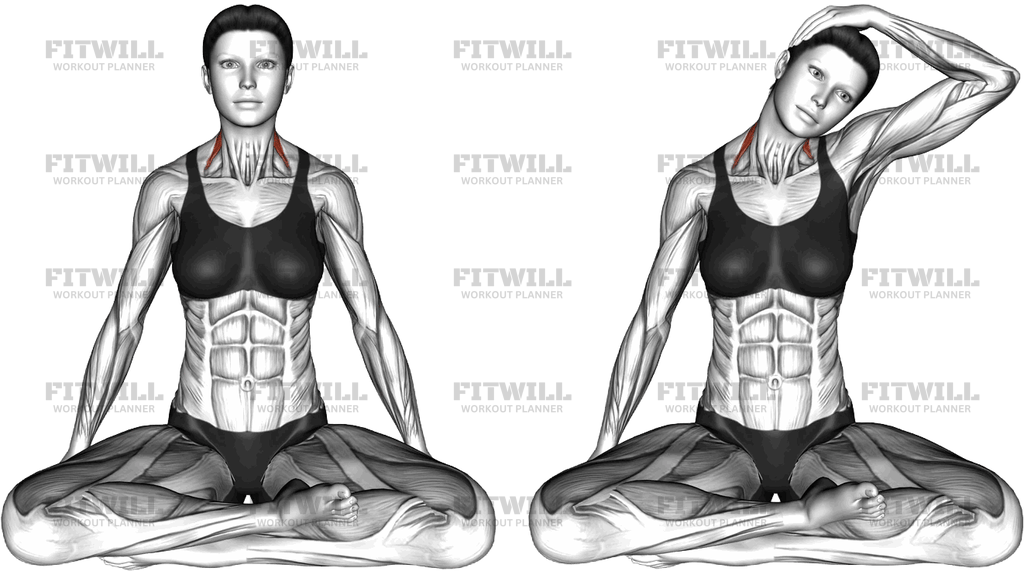
Instructions
- Sit on the floor in a comfortable cross-legged position, or on a mat if the floor is hard, with your sitting bones grounded and your spine tall.
- Rest your hands on your knees to start, relax your shoulders away from your ears, and set your gaze straight ahead.
- Choose the side to stretch first and let that arm go completely slack, letting it hang heavy at your side or rest on the floor beside your hip.
- Inhale, then as you exhale, slowly tilt your head so your ear moves toward the shoulder on the same side as the resting arm.
- Reach the opposite arm up and over your head, placing the palm lightly on the side of your head just above the ear, letting the arm's weight deepen the tilt without pulling.
- Keep the stretching-side shoulder pressed down and back so the stretch runs from the top of the shoulder up the side of the neck.
- Hold the end position for 20-30 seconds, breathing slowly and letting the tension ease with each exhale.
- To release, lift the overhead arm away first, then use your neck muscles to slowly bring your head back to center.
- Pause for a breath with your head neutral, then repeat the stretch on the opposite side.
- Complete 2-3 rounds per side if the area feels particularly tight.
Tips & Tricks
- The most common mistake is shrugging the shoulder on the stretching side toward the ear. Check it before you add hand assistance; if that shoulder lifts, press it down and restart the tilt.
- Do not pull with the hand. The palm should act like a light weight resting on the head, guiding rather than dragging. If your neck feels compressed, take the hand away and use gravity alone.
- Avoid combining the side tilt with rotation early on. Keep your nose pointing forward so the stretch targets the upper trapezius cleanly; rotating turns it into a different stretch.
- If you cannot sit cross-legged comfortably, sit on the edge of a chair with both feet flat. The stretch works the same way as long as your torso stays upright.
- Jutting the chin forward or letting the head drift down takes tension off the target muscles. Keep your face pointing forward and the movement purely sideways.
- Exhale as you tilt into the stretch and keep your breath slow during the hold. Holding your breath tends to tighten the very muscles you are trying to lengthen.
- Expect the two sides to feel different; most people have a tighter side from sleeping position or mouse-hand habits. Spend an extra round on the tighter side.
- Warm the area first if you are coming straight from sitting all day. A few slow shoulder rolls before the stretch make the tissue more responsive.
- Stop if you feel tingling, numbness, or lightheadedness. Reduce the tilt range or perform the stretch without hand assistance on future attempts.
Frequently Asked Questions
What muscles does the Seated Neck Stretch target?
It primarily targets the upper trapezius and levator scapulae along the side and top of the shoulder girdle, with secondary involvement of the smaller lateral neck muscles. The highlighted tension typically runs from the top of the shoulder up toward the base of the skull.
Why does the opposite arm need to stay relaxed and low?
The shoulder on the stretching side must stay anchored down for the upper trapezius to lengthen. If that shoulder rides up toward the ear, the muscle shortens and you lose most of the stretch.
Is the Seated Neck Stretch suitable for beginners?
Yes, it is one of the most beginner-friendly stretches because it requires no equipment and a small, slow movement. Beginners should start without using the hand at all and let gravity provide the tilt.
Should I pull my head with my hand during the stretch?
No. Rest the palm lightly on the side of your head and let the weight of your arm do the work. Actively pulling the cervical spine deeper is the most common way this stretch goes wrong.
Can I do the Seated Neck Stretch on a chair instead of cross-legged on the floor?
Absolutely. Sit on the front edge of a firm chair with both feet flat and your torso upright. The neck position and stretch are identical.
How long should I hold each side?
Twenty to thirty seconds per side is a solid standard, repeated two to three times. Shorter holds of ten to fifteen seconds work well as a quick reset during a workday.
Why do I feel the stretch more on one side than the other?
Side-to-side differences are very common and usually reflect daily habits like phone use, sleeping position, or carrying a bag on one shoulder. Simply spend an extra hold on the tighter side.
Can I add rotation to deepen the Seated Neck Stretch?
Turning the nose away from the stretching side shifts emphasis toward the levator scapulae, which can be useful, but learn the straight lateral version first. Add rotation only after you can keep the shoulder anchored and the movement pain-free.
When is the best time to use this stretch?
It works well after upper-body training, during breaks from desk work, and as part of an evening wind-down routine. Avoid doing it as an aggressive stretch immediately before heavy lifting, when relaxed neck muscles are less desirable.
Is it safe if I have a neck injury?
If you have a recent injury, disc issue, or any history of radiating pain or dizziness with head movements, check with a qualified professional before doing this stretch. When cleared, keep the range small and skip the hand assistance until your provider says otherwise.