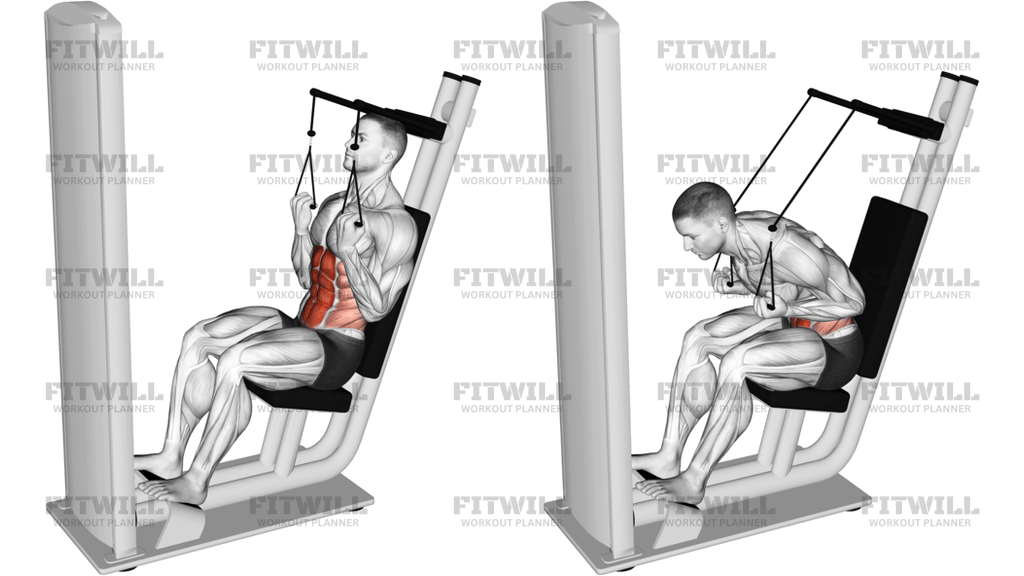
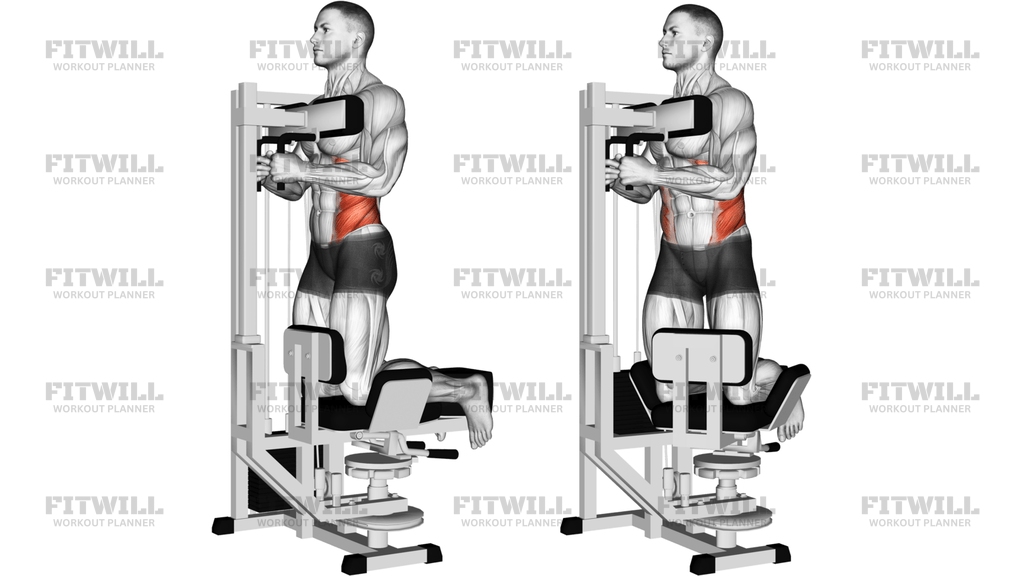
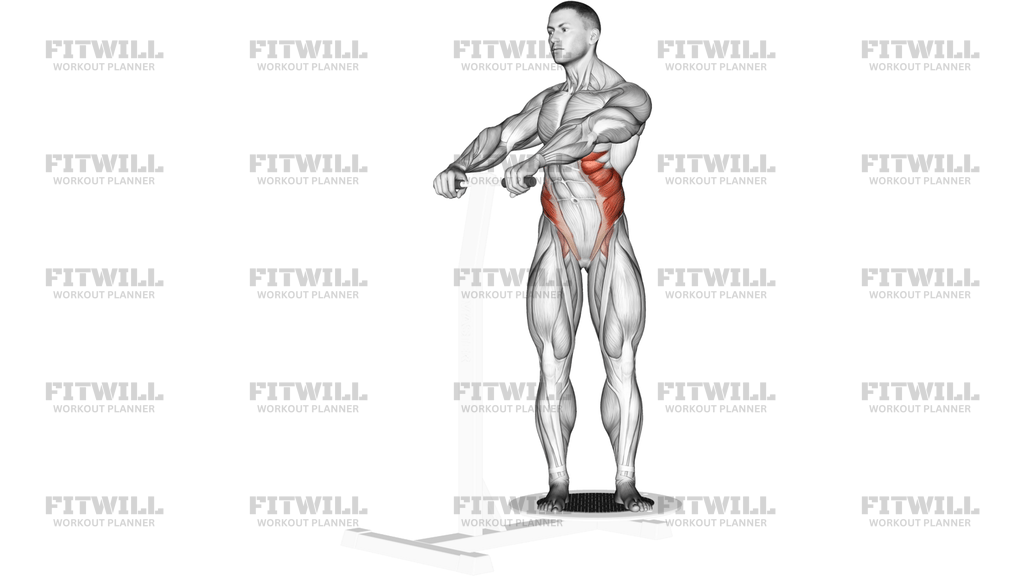
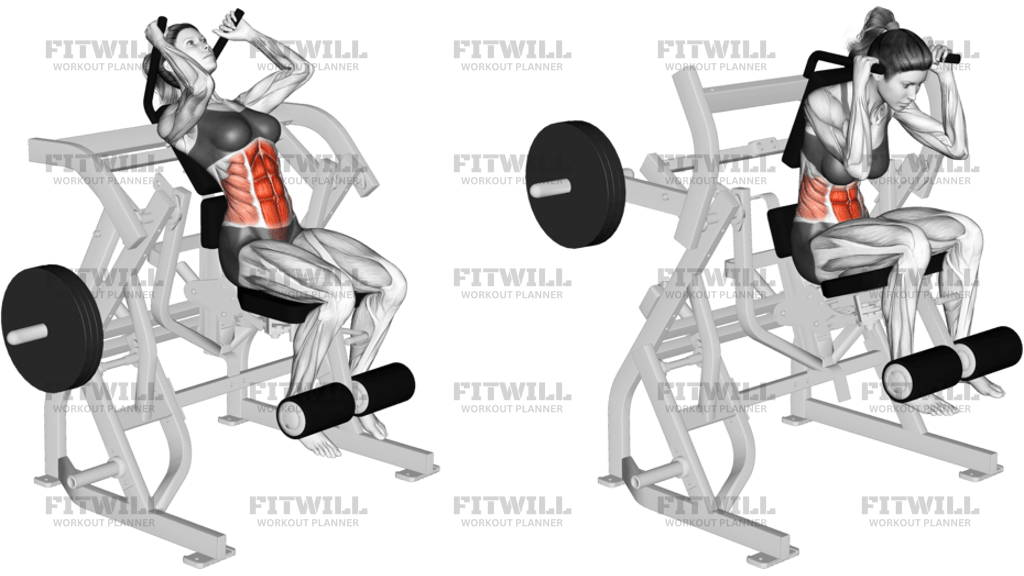
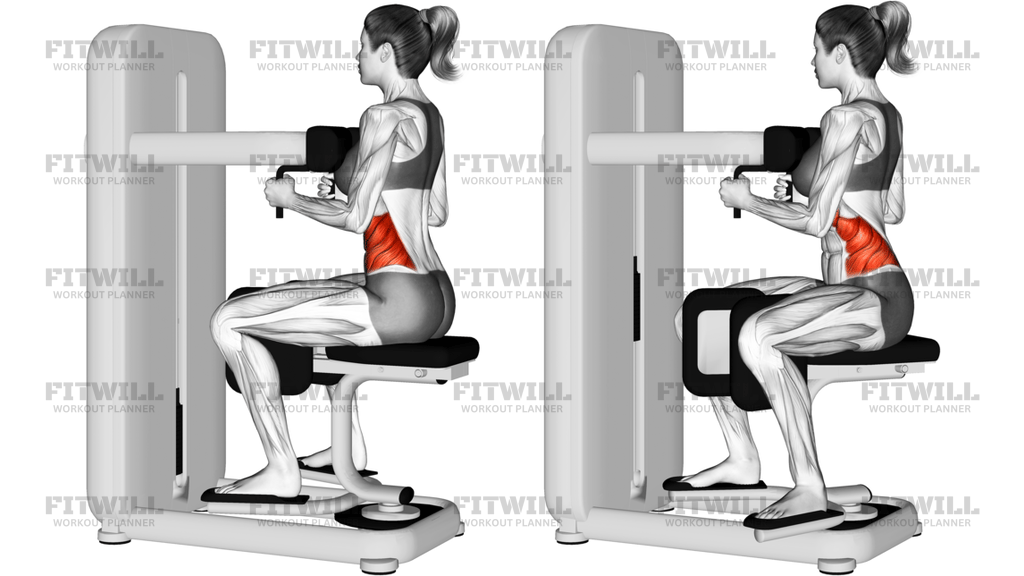
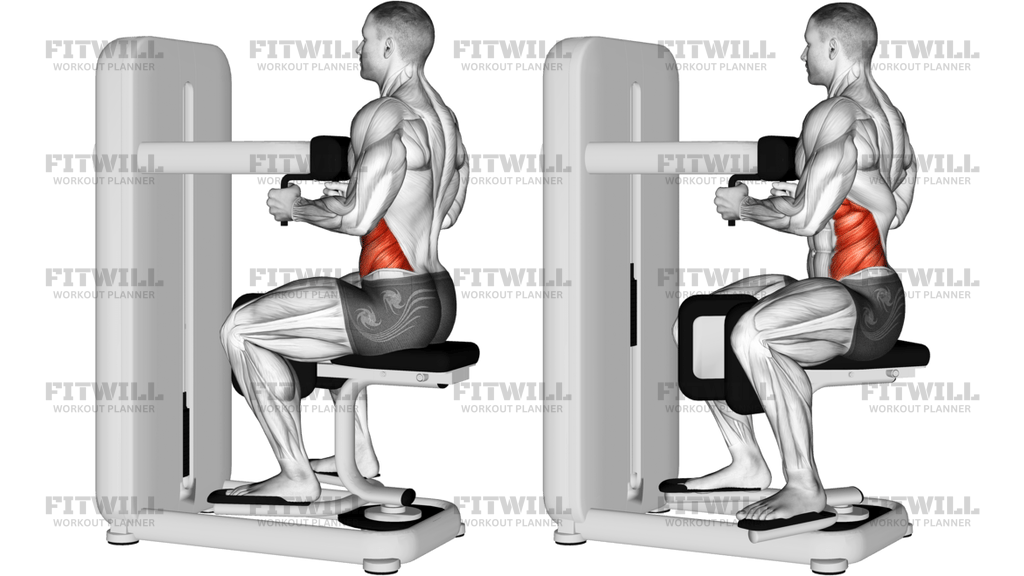
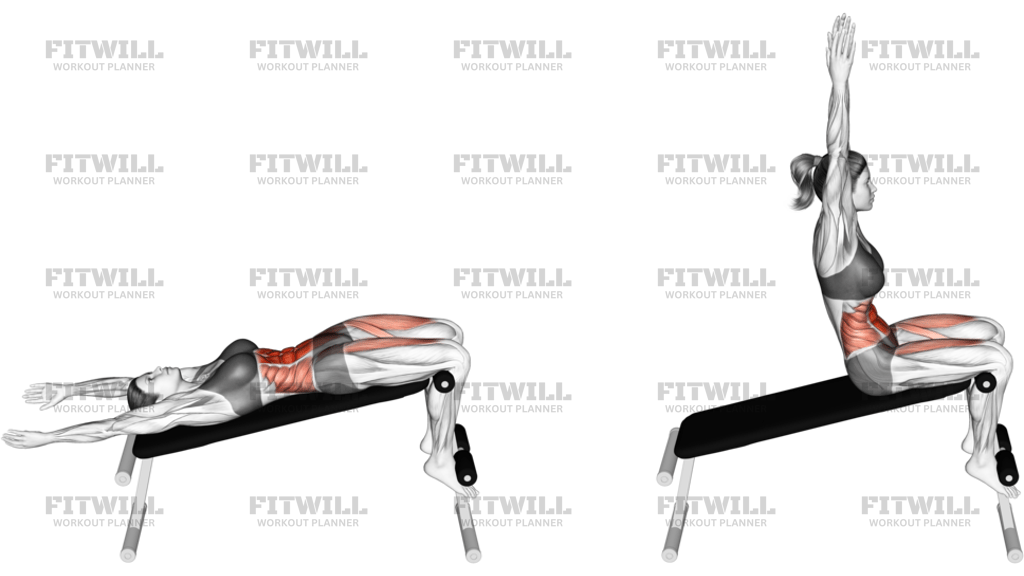
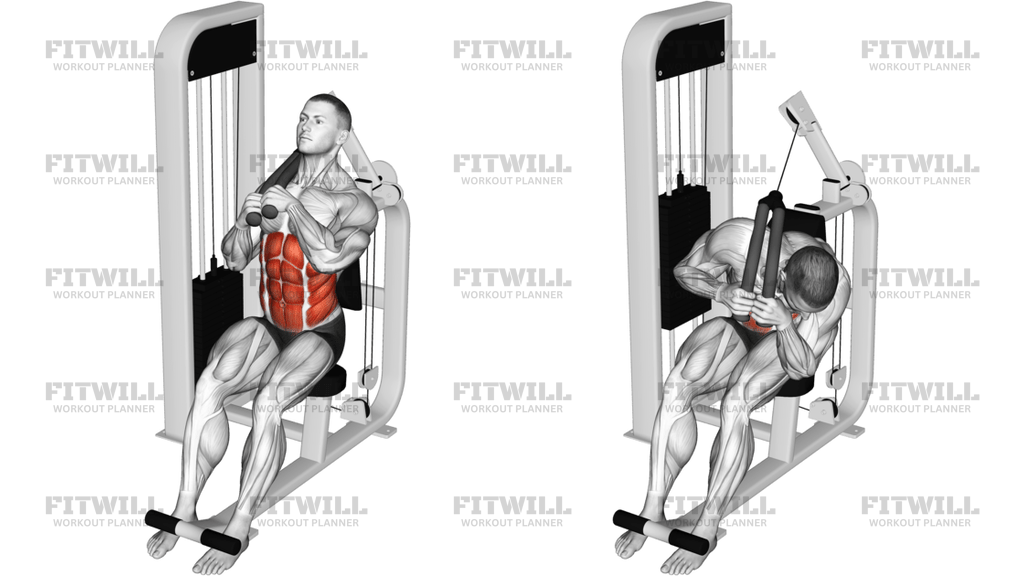
Lever Ab Coaster Oblique Crunch
The Lever Ab Coaster Oblique Crunch is performed on an ab coaster-style machine, where you kneel on a padded carriage that slides along a fixed curved track while your forearms rest on upper pads and your hands grip the vertical handles. In the oblique version, you drive the knees up and off to one side rather than straight up, so the crunch happens with a twist through the trunk. That fixed arc is what makes this movement stand out: the machine controls the path, so your energy goes into controlling your trunk instead of balancing.
The main targets are the obliques on the side of the waist you are crunching toward, with strong support from the lower abs and hip flexors as the knees travel up the arc. Because the knees are drawn toward one hip, the ribs and pelvis rotate slightly toward each other, which is exactly the action the obliques are designed for. People who struggle to feel their obliques in floor exercises often feel this one immediately, since the knees provide load and the machine gives constant tension through the whole curved path.
Setup matters a lot on this machine. Your forearms should sit flat on the arm pads with your shoulders directly over your elbows, and your knees should rest centered on the carriage before each rep. If you let your shoulders drift forward or your hips shift, the movement turns into a shoulder press or a hip swing instead of a trunk crunch. Start light on the resistance if the machine has a loading pin, and treat the first few sessions as practice for feeling the side of your waist shorten.
To execute it well, brace your trunk before you move, then curl the knees up and sideways toward the same-side elbow, letting the spine flex and rotate slightly rather than just flinging the hips. Think about pulling your ribs toward your hip bone, not just lifting your knees. Pause briefly at the top, then lower the carriage back down the track slowly and with control before starting the next rep. Complete all repetitions on one side, then switch and match the work on the other.
This exercise fits well into core-focused sessions, ab circuits, or as a finishing movement after heavier lower body work. It is especially practical for anyone who finds hanging leg raises hard on the shoulders or grip, since the machine supports your upper body throughout. The main safety points are simple: keep the movement smooth rather than jerky, avoid pushing down hard through your forearms to lift the knees, and stop short of any range where your lower back feels pinched. Controlled reps on both sides will do far more for your waist than fast, swinging ones.
[ Workout Log & Planner ]
Put your next workout in Fitwill
Keep your plan and training log ready when you are.


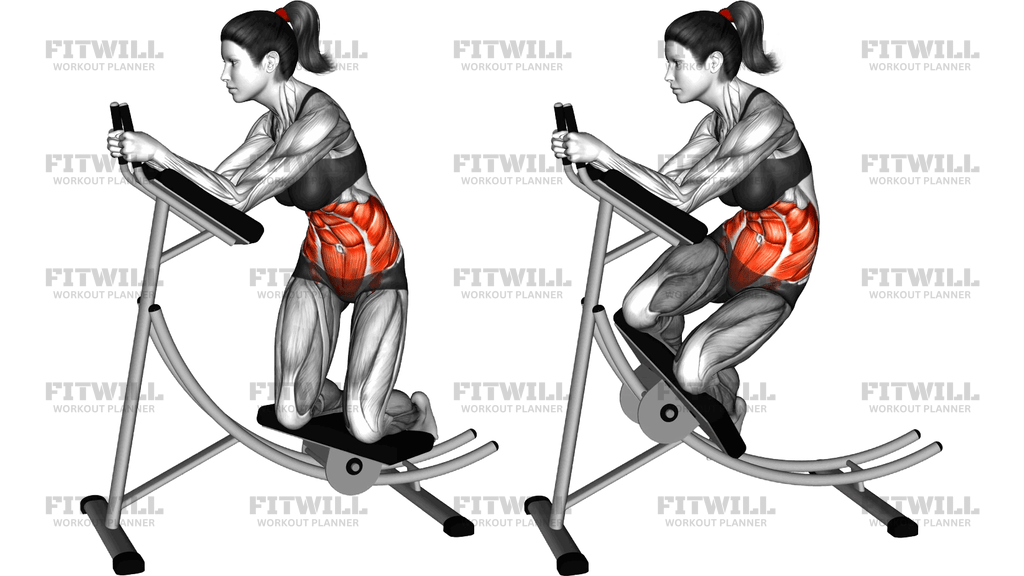
Instructions
- Kneel on the machine's knee pad so both knees rest centered on the carriage, with your shins relaxed behind you.
- Place your forearms flat across the upper arm pads and grip the vertical handles, positioning your shoulders directly over your elbows.
- Brace your trunk lightly and let the carriage settle at the bottom of the curved track so your body hangs in a neutral line.
- Pull your knees up along the arc and out to one side, curling them toward the elbow on that same side.
- Keep your upper body still on the pads and let your trunk flex and rotate slightly as the knees rise, as if shortening the distance between your ribs and hip bone.
- Pause for a moment at the top when the knees are close to the end of the arc and you feel the side of your waist tighten.
- Lower the carriage back down the track slowly, resisting the carriage's weight rather than dropping it to the start.
- Exhale as you crunch the knees up and to the side, and inhale as you lower back down.
- Finish all repetitions on one side, then re-center your knees and repeat the same number on the opposite side.
Tips & Tricks
- A common mistake is pressing down hard through the forearms to hoist the knees; the arms should support you, not lift you. If you feel it in your shoulders or triceps, lighten the load and focus on the waist.
- Swinging the hips to start the rep steals the work from the obliques. Begin each crunch from a still carriage at the bottom of the track.
- Keep your head neutral between your arms. Craning your neck up or dropping your chest toward the pads usually means the trunk is not doing the crunching.
- Twist slightly at the end of the knee lift rather than keeping everything squared. Even a small rotation of the ribs toward the hip makes the oblique contraction noticeably stronger.
- If the machine lets you add resistance, start lighter than you think you need. The curved track adds leverage on the way up, and too much weight encourages jerky reps.
- Match reps and effort exactly on both sides before moving on. Doing the stronger side first and more often builds a visible imbalance over time.
- Do not let the carriage slam into the bottom of the arc on the way down. Catching it just before the end keeps constant tension and protects the lower back.
- Keep your knees together throughout the lift. Letting them split apart turns the crunch into a hip adduction move and blurs the feel in your waist.
Frequently Asked Questions
Which muscles does the Lever Ab Coaster Oblique Crunch work?
The obliques on the side you crunch toward are the prime movers, with the lower abs and hip flexors assisting strongly as the knees travel the arc. The arms and shoulders work only to hold your position on the pads.
How is the oblique version different from the regular Lever Ab Coaster Crunch?
Instead of driving the knees straight up the track toward your chest, you curl them up and out to one side toward the same-side elbow, adding trunk flexion with rotation. This shifts the emphasis from the front of the abs to the side of the waist.
Is this machine suitable for beginners?
Yes, it is one of the more beginner-friendly ways to train the obliques because the curved track fixes the movement path and the pads support your upper body. Start with bodyweight or light resistance and focus on feeling one side of your waist shorten on each rep.
Should I alternate sides every rep or complete all reps on one side?
Complete all your reps on one side before switching. Side-to-side alternating makes it easy to rush and lose the pause at the top, while doing one side at a time lets you match the work evenly.
Why do I feel this more in my hip flexors than my obliques?
That usually means the knees are lifting without the trunk curling. Slow the reps down and imagine pulling your ribs toward your hip bone as the knees rise, so the spine flexes and rotates instead of the hips doing all the work.
What can I substitute if my gym has no ab coaster machine?
Hanging or captain's chair knee raises with a twist to one side are the closest match, since they combine knee lift with trunk rotation. Side plank hip lifts or cable woodchoppers also train the obliques with a comparable rotation pattern.
How should I breathe during the Lever Ab Coaster Oblique Crunch?
Exhale as you pull the knees up and to the side, and inhale on the controlled way down. Exhaling at the top naturally helps the trunk curl a little deeper.
Is it safe for the lower back?
For most people yes, because the machine supports the upper body and the track limits the path. Keep the reps smooth, avoid swinging into the start position, and stay within a range where your lower back stays comfortable rather than pinched.
How many reps and sets should I do?
Two to three sets of 10 to 15 controlled reps per side works well for most trainees. Since the obliques respond to quality of contraction more than sheer speed, err on the side of fewer, slower reps.