Dumbbell Goblet Squat Side Shuffle
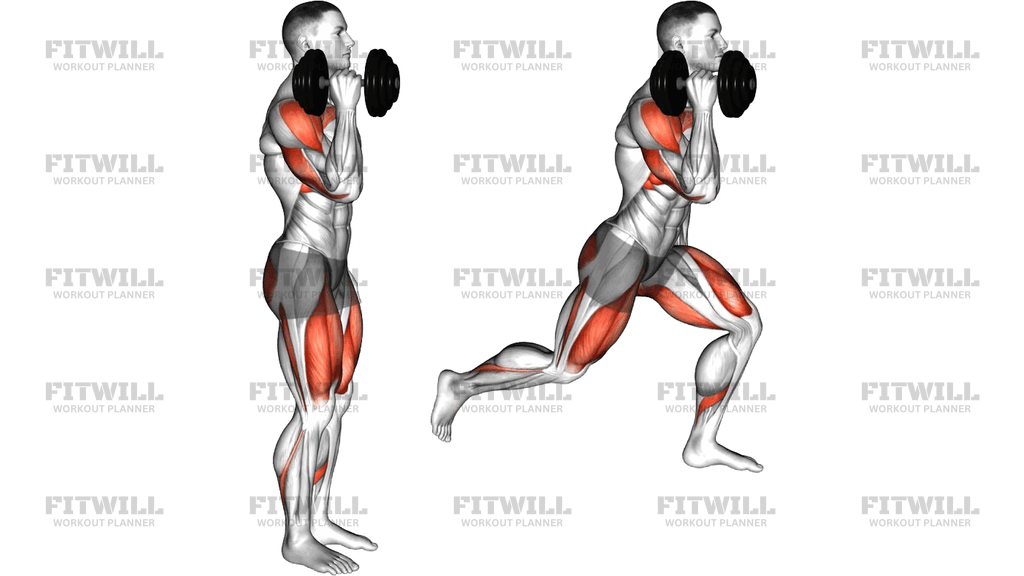
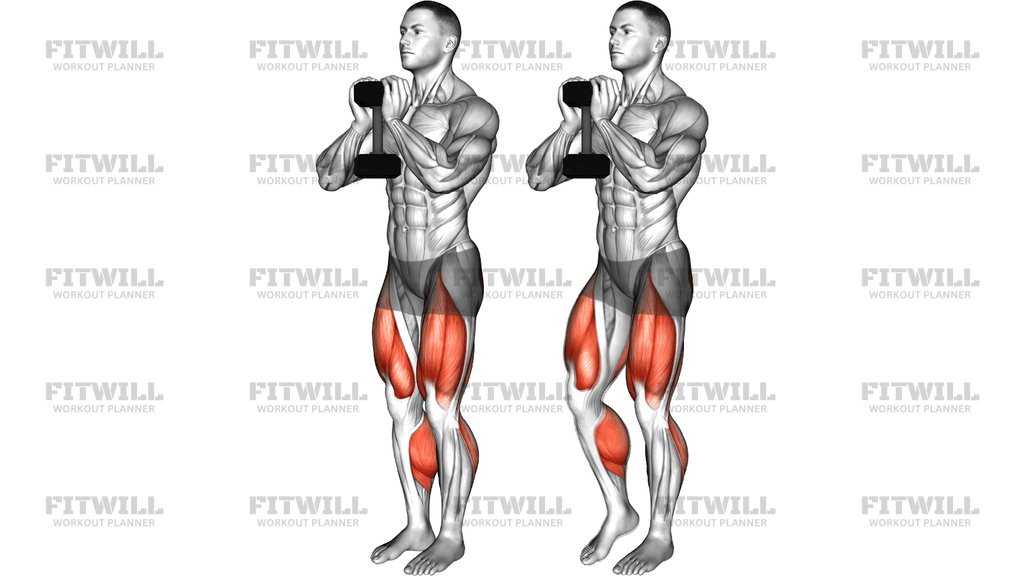
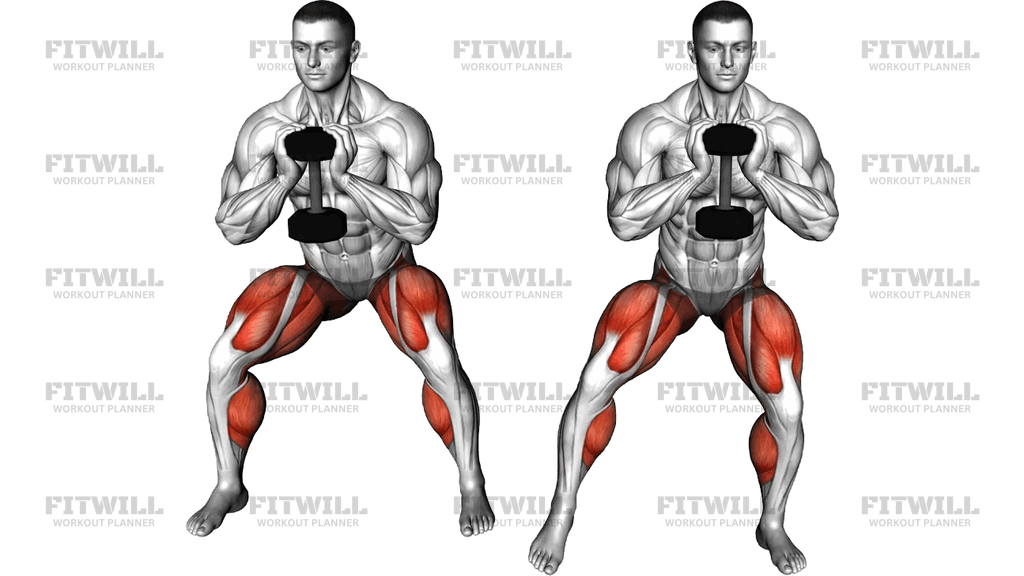
The Dumbbell Goblet Squat Side Shuffle is a loaded lateral movement where you hold a single dumbbell against your chest in the goblet position, drop into a partial squat, and travel sideways in that low position without standing up between steps. Unlike a standard goblet squat, which is a vertical, up-and-down pattern, this variation keeps your hips and knees flexed for the entire set, turning every shuffle step into a separate effort for your quads, glutes, and inner thighs.
This exercise is especially useful for anyone who wants to build squat-endurance and lateral control at the same time. Because the weight stays anchored at your chest, your torso has to resist collapsing forward while your legs handle the shifting load from step to step. That combination makes it a strong choice for lifters who want better hip and knee stability for sports that involve cutting, changing direction, or holding a low athletic stance, such as basketball, tennis, or skiing.
The main work comes from the quadriceps, which stay under continuous tension while you sit into the shallow squat and move side to side. The glutes drive each lateral step and control the deceleration as you plant each foot, and the adductors on your inner thighs work hard to stabilize the wide, bent-knee position. Your calves and ankle stabilizers manage the constant small balance corrections, and your core braces the whole time to keep the dumbbell level and your spine neutral.
Setup matters here more than in most squat variations, because a low, wide shuffle position puts real demands on your knees and hips. Your feet need enough width to let you sink into a comfortable partial squat with your knees tracking over your toes, but not so wide that the shuffle steps become awkward hops. The dumbbell should rest snugly against your sternum with your elbows tucked down, so it moves with you rather than swinging or pulling you forward.
To execute it well, sink into your half-squat first, then lead with a sideways step of the working leg and follow with the trailing leg, keeping your hips at the same height the entire time. Resist the urge to bob up and down with each step, and keep your chest tall and shoulders back. A controlled pace with deliberate foot plants beats fast, sloppy shuffling every time.
Practically, this movement fits well as a finisher after heavier leg work, as a warm-up activation drill before lower-body training, or as a conditioning tool in circuit-style sessions. Because one dumbbell is enough, it also works well in small home gym setups where loaded lateral travel is otherwise hard to train. Start with a light weight and short distances, since the sustained low position is far more fatiguing than most people expect, and prioritize knee alignment over speed throughout.
[ Workout Log & Planner ]
Put your next workout in Fitwill
Keep your plan and training log ready when you are.


Instructions
- Hold a dumbbell vertically with both hands under the top head, cupping it against your sternum with your elbows pointing down and tucked close to your ribcage.
- Set your feet roughly one and a half shoulder-widths apart, toes turned slightly outward, then lower your hips into a comfortable partial squat with your knees stacked over your toes.
- Brace your core and pull your shoulders back so your chest stays tall and the dumbbell stays in contact with your body before you take any steps.
- Shift your weight fully over one leg, then lead sideways with the opposite foot, planting it a comfortable stride-length away while staying at the same squat depth.
- Bring the trailing foot toward the lead foot to reset your stance, keeping your hips low and your weight on the working leg throughout the step.
- Continue shuffling sideways for your target distance or number of steps, then reverse direction and travel back to cover the same distance on the other side.
- Exhale steadily as you step and plant; avoid holding your breath through the whole set, and take small re-bracing breaths between direction changes.
- Keep your heels flat and your knees pressed outward over your toes on every plant rather than letting them cave inward toward your midline.
- When you finish the set, stop shuffling first, settle your stance to hip width, then stand up fully before lowering the dumbbell from your chest.
- Reset your grip and brace at the top before sinking back into the squat for the next set, rather than starting steps from a loose or rounded position.
Tips & Tricks
- If your torso starts leaning heavily over the dumbbell, you have probably sunk too deep for your mobility; raise your hip height slightly so your chest can stay proud.
- Watch for the trailing knee diving inward as you pull that foot toward the lead foot. Actively push the knee outward on every step, since this is the most common breakdown point in the wide, bent-knee position.
- Keep the dumbbell glued to your sternum. If it drifts forward or away from your body, your elbows have flared or your upper back has rounded, and both will pull you off balance.
- Choose a lighter dumbbell than you would use for a standard goblet squat. The continuous time under tension in the low position fatigues your legs much faster than a single squat rep.
- Keep your hips at one consistent height from the first step to the last. Bobbing up and down between steps turns the drill into partial squats and loses the sustained leg tension that makes it effective.
- Move your feet, not just your weight. A common mistake is swaying side to side with only small weight shifts instead of taking real, planted lateral steps.
- If your calves or ankles feel tight and your heels want to lift, widen your stance slightly and reduce the squat depth until your mobility improves.
- Shorter, quicker steps in the shuffle are usually cleaner than long lunging steps, which can pull your knee past your toes and round your lower back.
- Pause for a beat each time the trailing foot meets the lead foot. This small pause re-centers your balance and stops the shuffle from turning into a rushed, momentum-driven drift.
Frequently Asked Questions
What muscles does the Dumbbell Goblet Squat Side Shuffle work?
The quadriceps take the primary load because they stay under continuous tension in the bent-knee position. The glutes and adductors work hard to drive and stabilize each lateral step, with the calves and core supporting balance and posture.
How deep should I squat during the Dumbbell Goblet Squat Side Shuffle?
Aim for roughly a quarter to half squat depth where your knees stay comfortably over your toes and your heels remain flat. If your chest collapses forward or your heels rise, the position is too deep for your current mobility.
Is the Dumbbell Goblet Squat Side Shuffle good for beginners?
Yes, provided you start with a very light dumbbell or no weight at all and keep the travel distance short. Many beginners find the sustained low position challenging at first, so build up gradually before adding load.
How far should I shuffle in each direction?
A practical starting point is 5 to 10 steps per direction, matching the distance on the way back. If your form or hip height breaks down before you reach the other side, shorten the distance.
Why do my inner thighs burn during this exercise?
The wide, bent-knee stance places constant stabilizing demand on your adductors, and every lateral step adds to it. That burn is normal and typically eases as your inner-thigh strength and control improve.
What is the most common mistake in the Dumbbell Goblet Squat Side Shuffle?
Letting the knees cave inward and bobbing up and down between steps. Both issues reduce the leg work and put unnecessary stress on the knees, so fix them by keeping depth constant and actively pushing your knees outward.
Can I substitute anything if I do not have a dumbbell?
Yes. A kettlebell held by the horns works identically, and a light weight plate or even a body-weight version is a valid starting point. The lateral shuffle pattern matters more than the specific implement.
How heavy should the dumbbell be for this exercise?
Use noticeably less weight than your normal goblet squat, often 30 to 50 percent of it, because you are holding the low position for the whole set. If you cannot keep your chest tall and heels flat for all steps, drop the weight.
Is the Dumbbell Goblet Squat Side Shuffle safe for my knees?
It is generally knee-friendly when you keep your knees tracking over your toes, your heels down, and your depth within a comfortable range. Start unloaded and shallow, and reduce depth or distance if you feel any sharp discomfort.
Where should this exercise fit in my workout?
It works well as a finisher after your main squat or leg press work, or as an activation drill early in a lower-body session. It also fits into circuits when you want a leg-focused movement with a conditioning element.