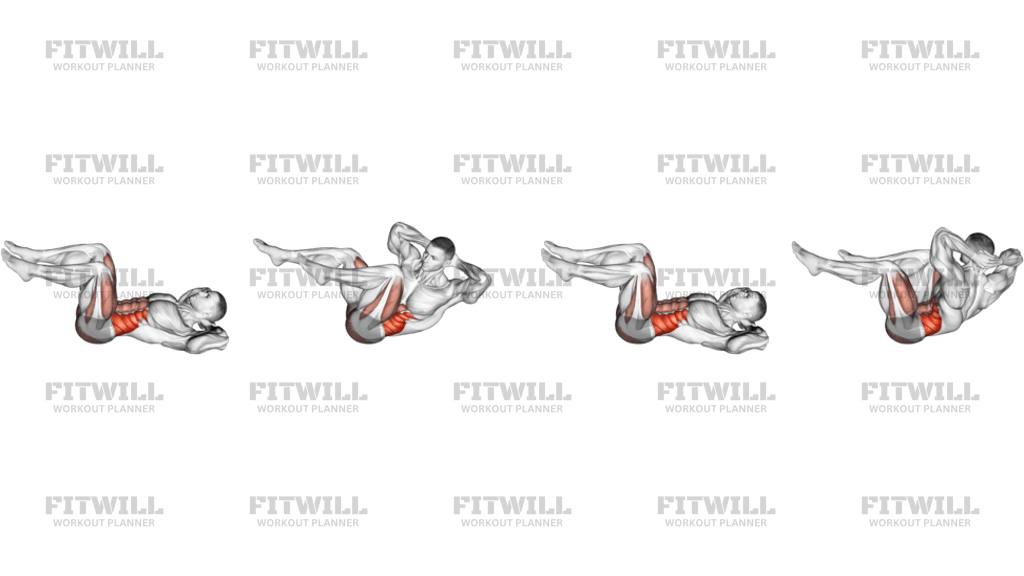
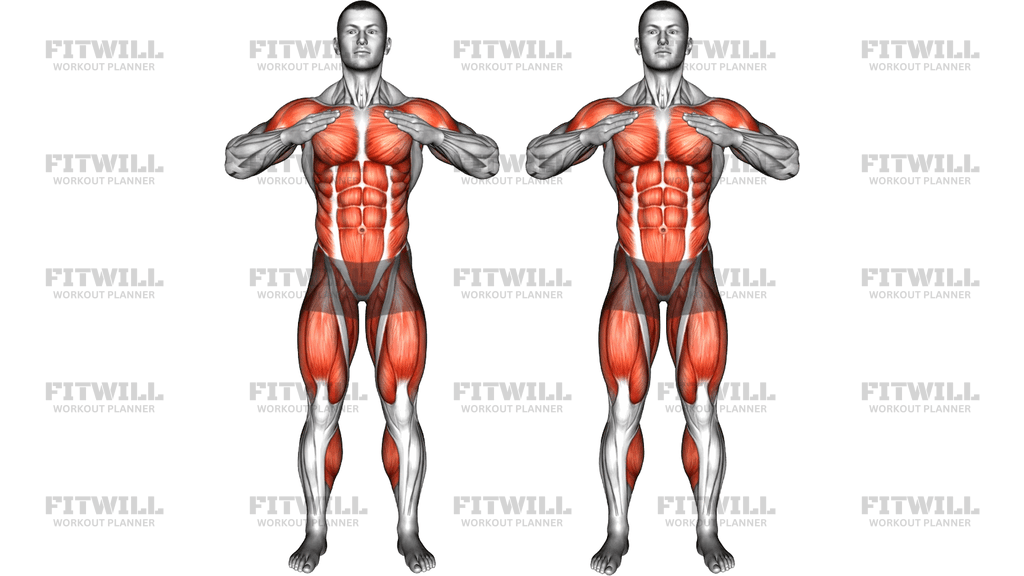
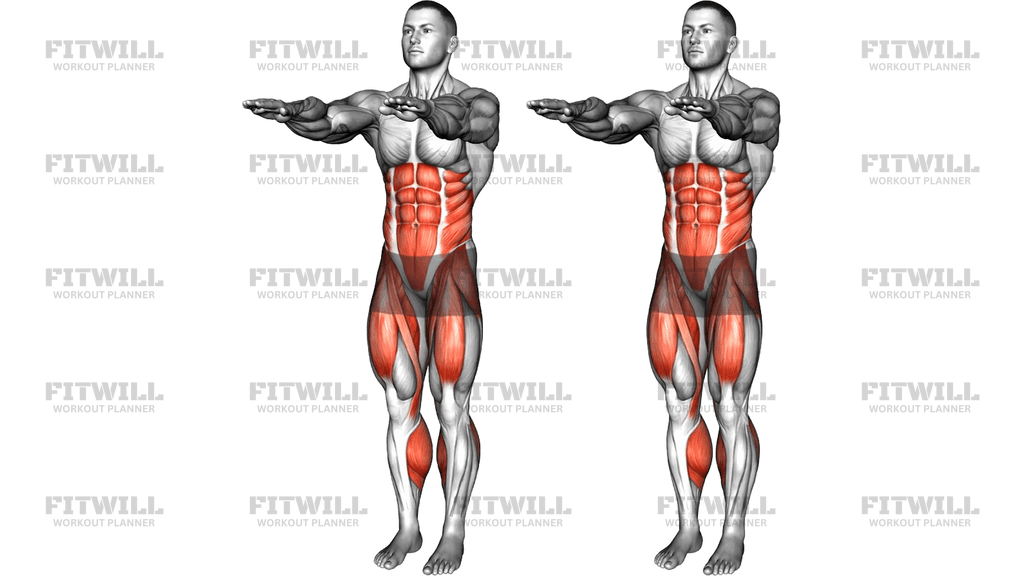
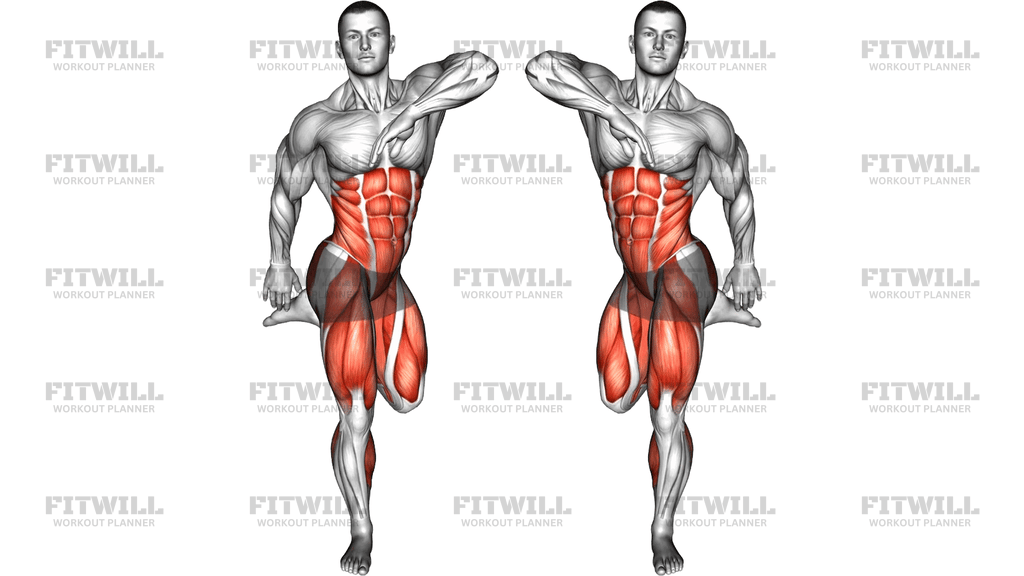
Straight Arm Side Plank
The Straight Arm Side Plank is an isometric core exercise where you hold your body in a straight line on its side, supported by one fully extended arm with the palm flat on the floor and the feet stacked. Unlike the forearm side plank, the straight-arm version raises your torso higher off the ground and shifts more demand onto the shoulder stabilizers and wrist, while the obliques work hard to keep your hips from sagging.
This movement is useful for anyone who wants a stronger, more resilient midsection without equipment. It is especially valuable for athletes in rotational sports, lifters who want to protect their spine under heavy loads, and desk workers whose lateral trunk muscles tend to be undertrained. Because the support arm is locked out, it also builds shoulder stability and teaches you to hold a rigid line from head to heels.
The main muscles working are the obliques on the side facing the floor, along with the deep core muscles that brace the trunk. The glute on the lower side helps keep the pelvis level, the legs stay active to hold the stacked position, and the supporting shoulder, triceps, and wrist handle the overhead angle of the straight arm. Holding still is the point: the exercise trains endurance and control, not movement through a range.
Setup matters more than duration. If your hand is placed too far from your body or your hips drift backward, the position loses its challenge to the lateral core and starts stressing the shoulder or lower back. Aim for the support hand directly under the shoulder, the body in one straight diagonal from head to feet, and the edge of the bottom foot pressed into the floor.
To execute it well, press the floor away, lift the hips until they line up with the shoulders and ankles, and hold that line with steady breathing. A common cue is to imagine pushing the bottom hip toward the ceiling the entire time. Most people should start with 15 to 30 second holds per side and progress gradually rather than chasing long, sloppy holds.
You will see this exercise in core circuits, warm-ups for strength training, and rehabilitation-style programs that emphasize trunk stability. If the straight-arm position bothers your wrist or shoulder, drop to the forearm version or place a mat under your hand. Stop the set as soon as your hips start to sink or rotate, because holding a collapsed position trains the wrong pattern.
[ Workout Log & Planner ]
Put your next workout in Fitwill
Keep your plan and training log ready when you are.


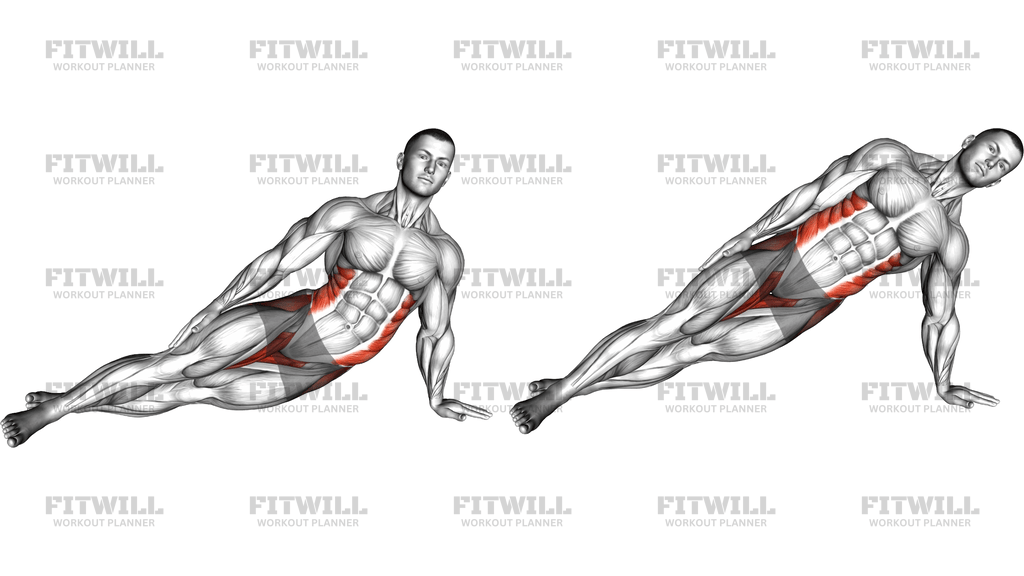
Instructions
- Lie on your right side on a mat with your legs extended and your left leg stacked directly on top of the right.
- Place your right palm flat on the floor directly beneath your right shoulder with the arm fully straight, fingers pointing away from your feet or slightly out to the side.
- Cross your left arm over your chest or rest it along the top of your left thigh, and brace your abdominal wall as if preparing for a light push.
- Press your palm into the floor and lift your hips off the ground until your body forms one straight line from your head through your ankles.
- Stack your feet so the inner edge of the bottom foot and the side of the top foot carry your lower body, and squeeze your glutes to lock the pelvis in place.
- Push the floor away with the supporting arm, keeping the elbow straight but not hyperlocked, and hold your head in line with your spine rather than dropping it toward the floor.
- Hold the top position for your target time, breathing smoothly through your nose and mouth without letting the brace collapse.
- Lower your hips back to the mat under control, then reset your brace before repeating on the left side.
Tips & Tricks
- If your wrist aches during the hold, spread your fingers and grip the mat slightly, or shift your weight toward the heel of the palm instead of the wrist crease.
- Sagging hips are the most common failure point in this exercise; once your hip line drops below your shoulders and ankles, end the set rather than grinding through.
- Avoid letting your top shoulder roll forward and your chest face the floor; keep your torso squared to the side to keep the load on the obliques.
- Pushing the supporting hand actively into the floor, rather than just resting on it, protects the shoulder and keeps the straight arm from collapsing.
- If you cannot hold a full straight-arm plank for 20 seconds, bend the bottom knee to 90 degrees and support on the knee and hand while you build strength.
- Do not hold your breath; long breath-holds make the brace stiffen and then suddenly fail, so aim for slow, even breathing throughout the hold.
- Check your hand position before each set: a hand placed ahead of or behind the shoulder changes the leverage and turns the exercise into a shoulder strain.
- Keep the neck long by fixing your eyes on a point straight ahead, not down at your feet, which helps prevent the upper spine from rounding.
- Time your sets and switch sides at the same duration; most people have a weaker side, and matched holds keep the lateral core balanced.
Frequently Asked Questions
Which muscles does the Straight Arm Side Plank work?
The obliques on the lower side of the trunk do most of the work, supported by the deep core muscles that brace the torso. The glutes keep the pelvis level, while the straight supporting arm loads the shoulder stabilizers, triceps, and wrist.
How is the Straight Arm Side Plank different from a forearm side plank?
The straight arm raises your torso higher, shortens the lever of the support arm, and places more demand on the shoulder and wrist. The forearm version is easier on the shoulder joint and lets most people hold longer.
Is the Straight Arm Side Plank suitable for beginners?
Yes, but beginners should start with short holds of 10 to 20 seconds per side or use the bent-knee variation. Once a clean 30-second hold feels solid, progress to the full version with stacked feet.
Should my supporting elbow be completely locked out?
The arm should be essentially straight with the elbow softly extended, pressing the floor away. Do not sink into the shoulder or hyperlock the elbow, as both shift stress into the joint instead of the muscles.
Why do my hips sag or rotate during the hold?
Hip sag is a sign the obliques and glutes have fatigued or were never fully engaged at the start. Squeeze the glutes before lifting, push the bottom hip toward the ceiling, and end the set when the line breaks.
How long should I hold the Straight Arm Side Plank?
Aim for 20 to 45 seconds per side with strict form, and progress time gradually. Multiple crisp sets are more useful than one long hold where the hips slowly sink.
What can I do if my wrist hurts in the straight-arm position?
Press through the heel of the palm, spread the fingers, and use a mat or folded towel under the hand. If discomfort persists, switch to the forearm side plank, which trains the same lateral core muscles without loading the wrist.
Can I make the Straight Arm Side Plank harder once it feels easy?
Yes. Raise the top arm straight up toward the ceiling, lift the top leg parallel to the floor, or place the top foot on a bench. Each option increases the leverage demand on the obliques and hip stabilizers.
Is it safe for my lower back?
When the body stays in a straight line and the hips do not sag, the spine is held neutrally by muscle bracing rather than passive stress. If you feel pinching or sharp pain, lower to the knee-supported version and rebuild the hold gradually.