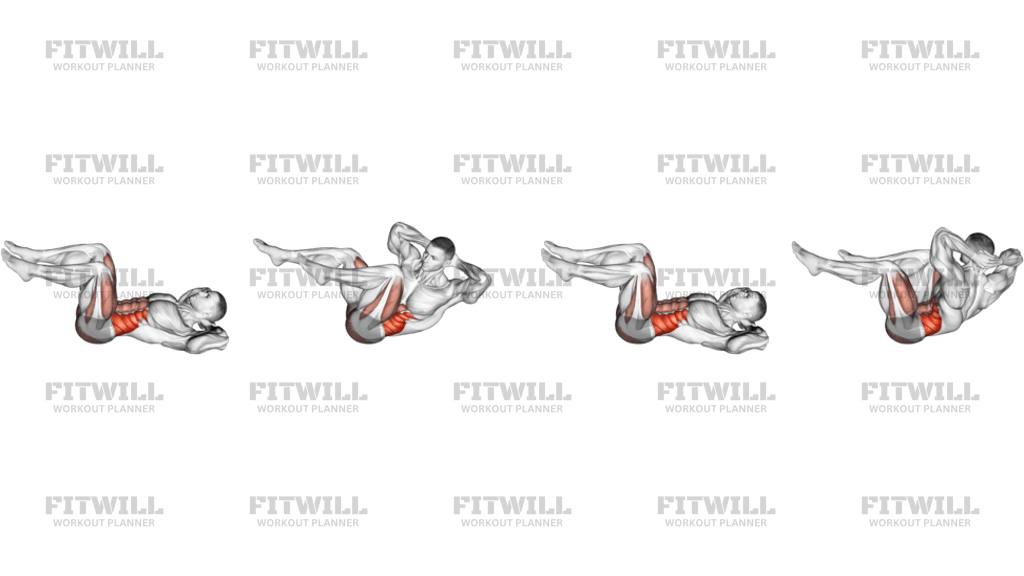
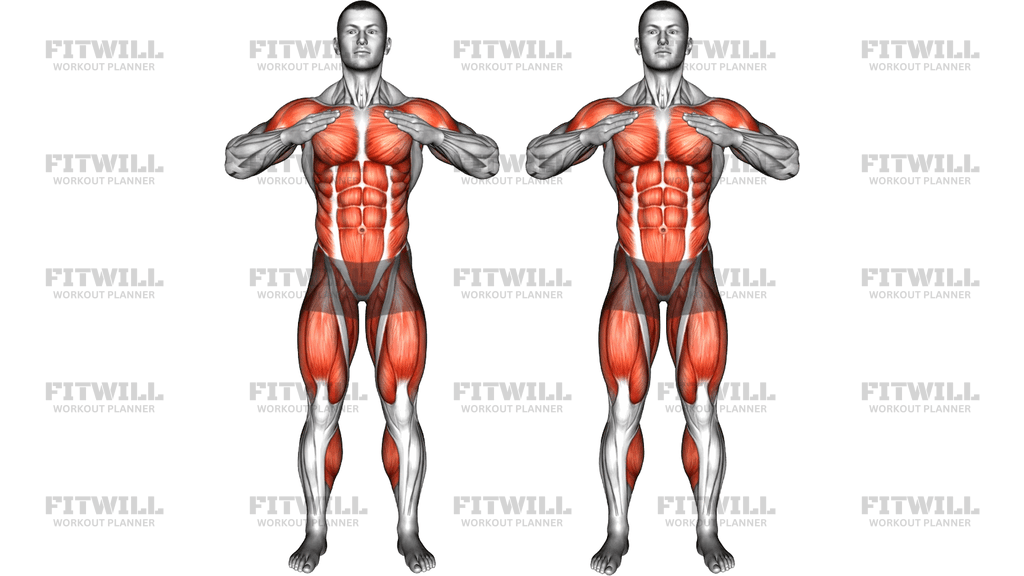
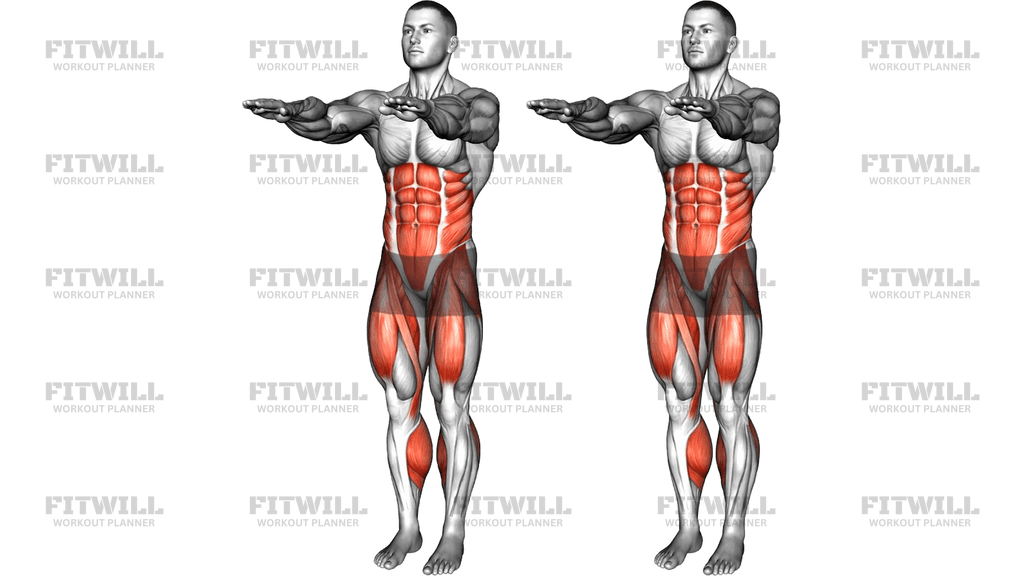
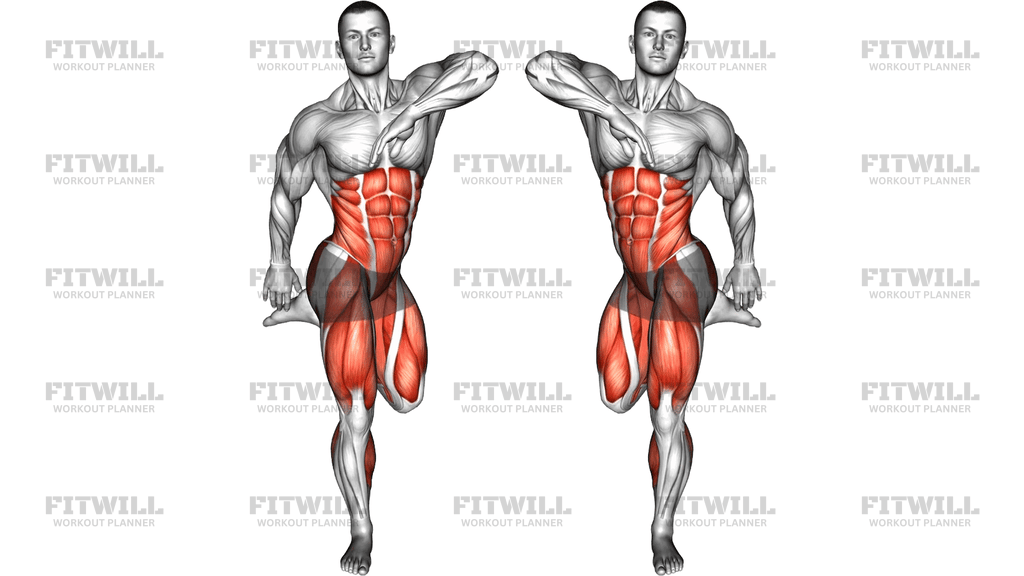
Side Step Knee Reach
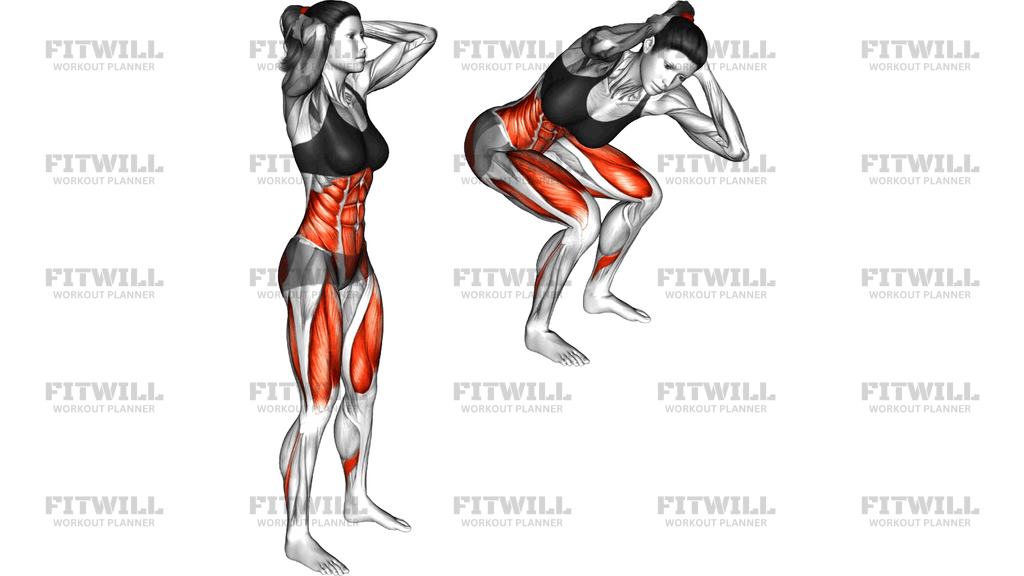
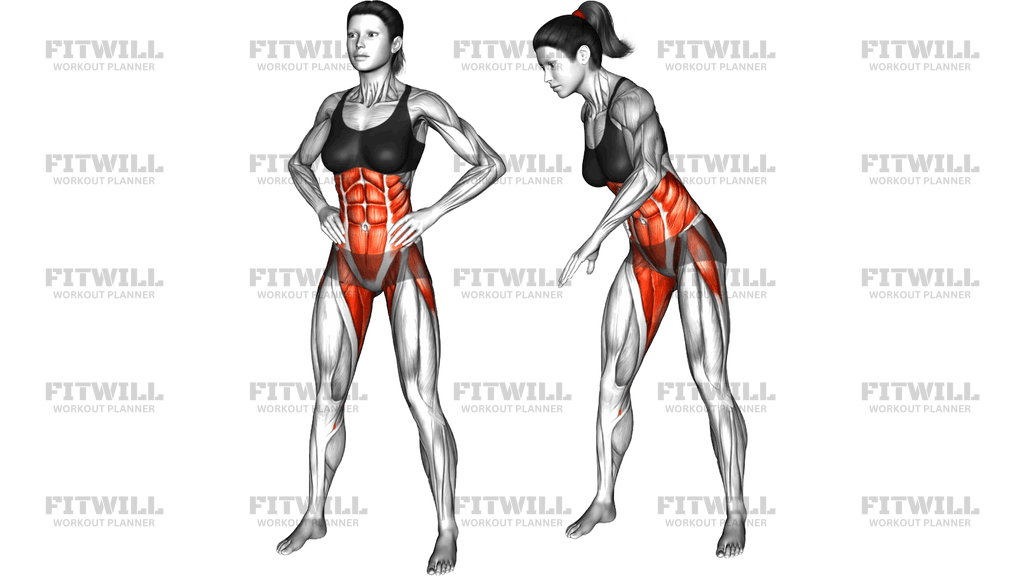
The Side Step Knee Reach is a standing body weight movement that combines a lateral step with an upward knee drive while the arms stay extended overhead. From a tall stance, you step one foot out to the side, then lift the opposite knee up and across as the torso leans slightly toward that knee, creating a side-bending crunch against gravity. Because the arms remain raised throughout, the shoulders and trunk stabilizers have to work the entire time, which is what separates this from a simple standing knee raise.
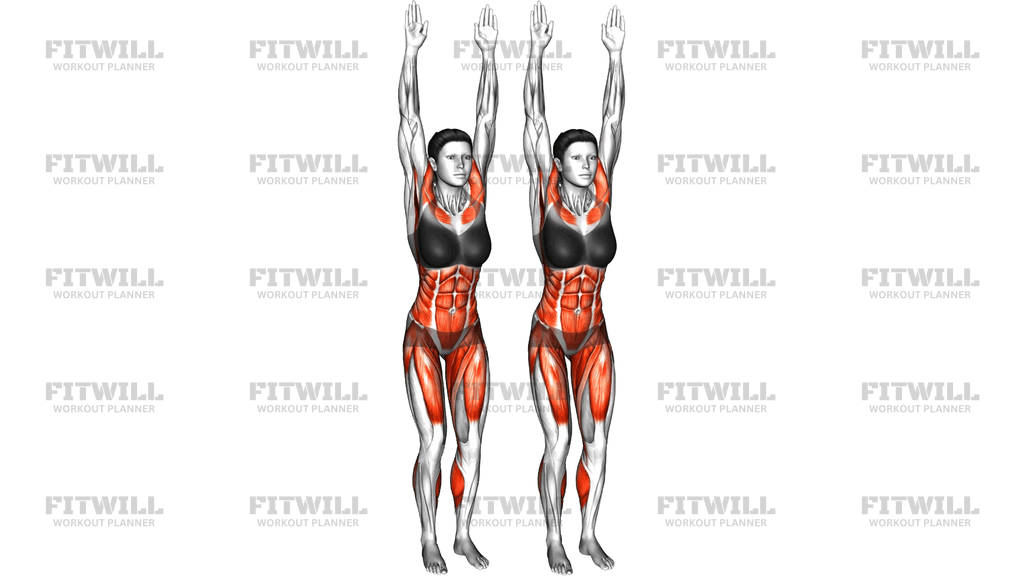
The main demand lands on the obliques, the muscles running along the sides of your waist that control side bending and rotation. The lifted knee brings the hip flexors into play, the standing leg has to stay stable through the hip, and the raised arms keep the shoulders and upper back engaged. It trains the core in a way that mirrors real movement: one side of the body shortens while the other lengthens, all while you balance on a single leg.
This exercise suits a wide range of people. Beginners can use it as a low-impact introduction to standing core work, since the tempo is fully under your control and nothing about it requires equipment or floor work. It also fits well into warm-ups, circuit training, and general conditioning sessions, where it raises the heart rate a little while rehearsing the cross-body coordination that walking, running, and climbing all depend on.
Setup matters more than it looks. If your torso collapses forward or your ribs flare when the arms go overhead, you lose the side-bend action that makes the exercise effective and the work shifts into the lower back. Standing tall with the ribs stacked over the pelvis keeps the crunch happening at the waist, where you want it.
To execute it well, keep each repetition deliberate: step out, lift the knee with control, squeeze the side of your waist at the top, then lower the foot back down before switching sides. Rushing turns it into a sloppy march, so favor a pace you can hold for clean, identical reps on both sides.
A few practical safety points will keep it productive. Hold onto nothing if you can, but stand near a wall for a light fingertip touch if balance is a struggle. Keep the standing knee soft rather than locked, and if you feel any pinching in the lower back, reduce how far you lean and focus on lifting the knee instead.
[ Workout Log & Planner ]
Put your next workout in Fitwill
Keep your plan and training log ready when you are.


Instructions
- Stand upright with your feet about hip-width apart and both arms fully extended straight overhead, palms facing each other.
- Brace your abdominals lightly and stack your ribs over your pelvis so your lower back is not already arched before you move.
- Shift your weight onto your right foot and step your left foot out to the side a little wider than hip width, keeping a soft bend in both knees.
- Drive your right knee up and slightly across your body toward the opposite side, staying tall through your chest.
- As the knee rises, bend your torso sideways toward that knee so the arm on the same side reaches closer to it, keeping both arms extended overhead.
- Squeeze the side of your waist at the top of the lift and pause for a brief moment with your standing leg stable.
- Lower the knee back down under control and bring your stepping foot back so both feet are together again.
- Exhale as you lift the knee, inhale as you lower it back to the floor.
- Repeat on the other side, stepping with the right foot and lifting the left knee, and keep alternating for equal reps on both sides.
Tips & Tricks
- The most common mistake is bending forward at the chest instead of sideways at the waist. If your shoulders round toward your knee, imagine sliding your shoulder blade down toward your hip to keep the crunch purely lateral.
- Watch that the overhead arms do not drift forward as the knee lifts. If your arms keep falling in front of your ears, press them gently back and think of reaching toward the ceiling on every rep.
- Do not lock the knee on your standing leg. A soft, slightly bent knee absorbs the shift of weight and keeps the hip doing the stabilizing instead of the joint hanging on the ligaments.
- If the knee lift is hard to control, reduce the height rather than leaning further. A lower knee with a clean side bend works the obliques more than a high knee with a collapsed torso.
- Keep your hips level. Many people let the hip on the lifting side drop, which shortens the range on the obliques and stresses the standing hip instead.
- Move at a tempo of roughly one second up, one second down. Fast marching turns this into a cardio drill and lets momentum do the waist work for you.
- For an extra balance challenge, pause with the knee up for two seconds without letting your stepping foot touch down between reps.
- If your shoulders tire before your core, that is normal at first. Lower the arms to a hands-at-chest position temporarily and build overhead endurance over time.
Frequently Asked Questions
What muscles does the Side Step Knee Reach work?
The obliques along the sides of your waist do the main work during the side bend, supported by the abs. The hip flexors lift the knee, the glutes and outer hip stabilize the standing leg, and the shoulders hold the arms overhead throughout.
Is the Side Step Knee Reach good for beginners?
Yes. It requires no equipment, the range is easy to adjust, and you can stand near a wall for balance support. Start with a lower knee lift and shorter sets until the movement feels steady.
Should my arms stay overhead during the whole exercise?
Yes, the extended overhead arms are part of what makes this movement distinct, because they force your trunk to stabilize while the knee drives up. If shoulder fatigue breaks your posture, temporarily lower the arms to shoulder height rather than letting them drift forward.
Why does my lower back feel this instead of my waist?
That usually means your ribs are flaring and your lower back is arching to fake the side bend. Re-stack your ribs over your pelvis, brace your abs, and lean sideways from the waist rather than tipping your whole torso.
How many reps of the Side Step Knee Reach should I do?
For core conditioning, aim for 10 to 15 knee reaches per side for 2 to 3 rounds. For a warm-up, 6 to 8 slow reps per side is enough to wake up the hips and waist.
How far should I step to the side?
A step slightly wider than hip width is enough. The lateral step mainly sets your base and loads the standing hip; going much wider makes the knee drive awkward without adding core benefit.
Can I replace this with a standing knee raise or a side crunch?
Those are reasonable substitutes if balance or shoulder mobility is limited, but they train only part of the pattern. A standing knee raise misses the side bend, and a side crunch misses the single-leg stability, so use this exercise when you want both together.
Do I need to hold my breath at the top of the knee lift?
No. Exhale as the knee rises, which naturally helps the abs contract, then inhale as the foot returns to the floor. Breath holding usually causes the ribs to flare and the lower back to arch.
Is it a problem if I wobble on my standing leg?
Some wobble is expected early on because the exercise challenges single-leg balance. Lightly touch a wall or the back of a chair with your fingertips for support, and keep the standing knee softly bent rather than locked.