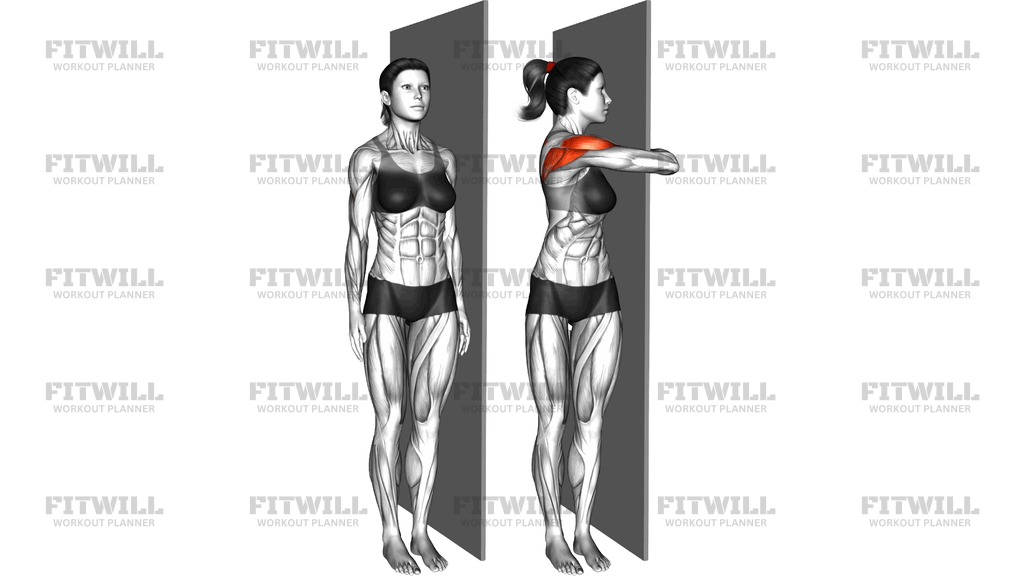
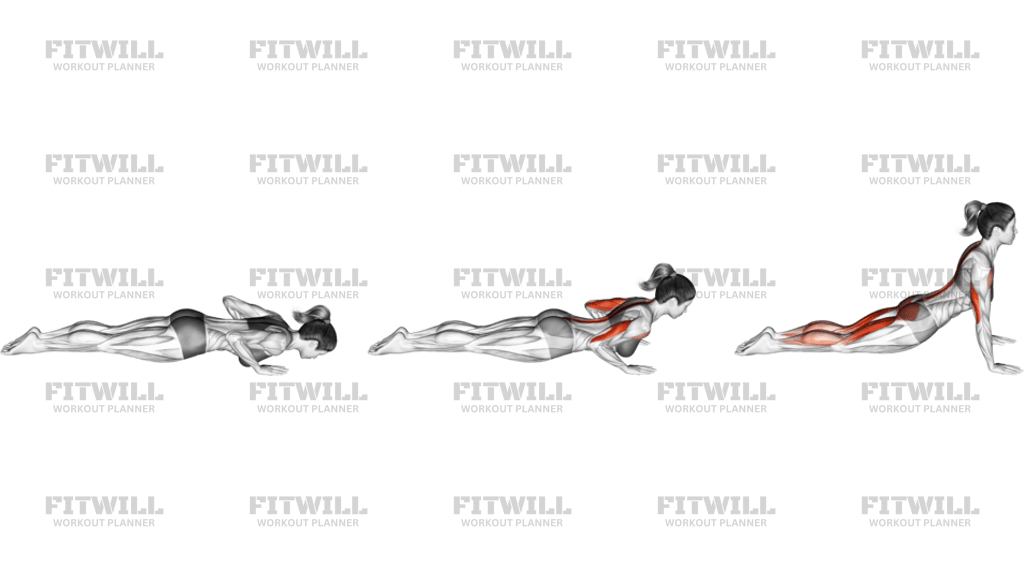
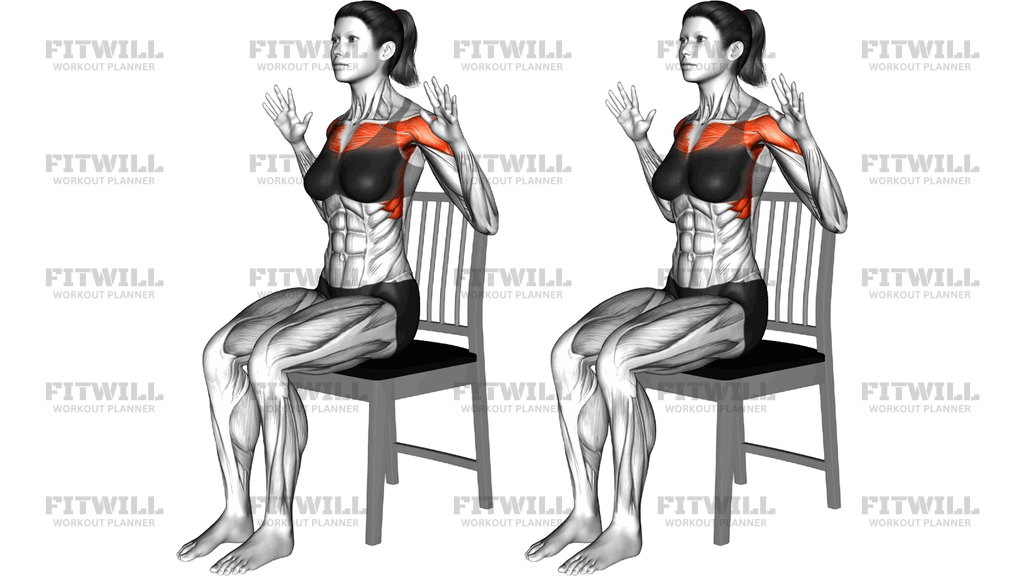
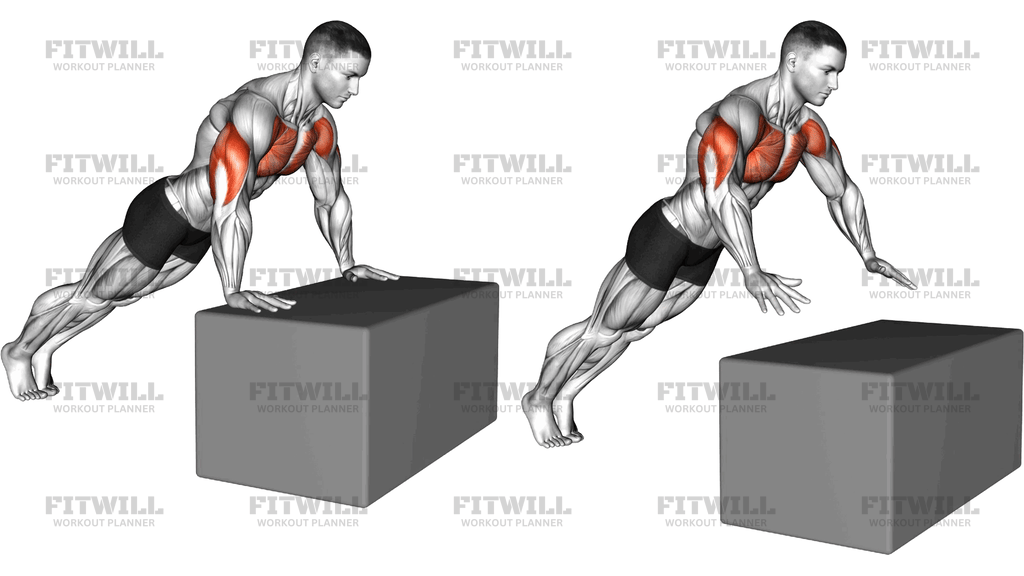
Palms To Head Chest Fly
Palms To Head Chest Fly is a standing, bodyweight fly variation that uses self-generated resistance instead of weights. You start with your palms pressed together overhead in a prayer position, elbows flared out wide, then lower your still-pressed hands down in front of your face and toward your chest while actively squeezing them against each other. The pressing force between the palms is what creates the load, so the exercise works as a moving isometric contraction for the chest rather than a traditional fly against external weight.
The upper chest, specifically the clavicular portion of the pectoralis major, does most of the work here. With the arms overhead and the hands traveling down toward the head and face, the arms sit above the line of the shoulders, which biases the fibers of the upper chest. The front shoulders assist throughout, and the triceps and inner arm muscles stay busy keeping the palms pressed together, which is what generates the resistance in the first place.
This movement suits people who train at home without equipment, beginners learning what a chest contraction is supposed to feel like, and lifters who want a light activation or burnout set around their pressing work. Because you control the intensity entirely by how hard you squeeze, it scales naturally: a gentle press makes it a warm-up drill, and a hard press turns it into a surprisingly demanding contraction that many people underestimate the first time they try it.
Setup matters more than it looks. Stand tall with feet about hip-width apart and your ribs stacked over your pelvis, then bring your palms together overhead with elbows pointing out to the sides rather than forward. If the elbows drift forward or the shoulders shrug up toward the ears, the shoulders and neck take over and the chest loses tension. Keeping the spine neutral and the head level as the hands descend in front of the face is also important, since the hands pass close to the head and it is tempting to crane the neck or jut the chin to follow them.
To execute it well, press the palms together firmly before you start moving, and keep that pressure constant from the top all the way down. Lower the joined hands slowly in front of the face, letting the elbows spread out and down as the hands travel toward chest height, and pause briefly where you feel the strongest squeeze across the upper chest. Reverse the path under control back overhead. Two or three sets of slow, deliberate reps, roughly ten to fifteen, is a sensible starting point.
From a safety standpoint, the main risks are minor but worth respecting: straining the wrists by pressing too aggressively with bent hand position, or letting the lower back arch as fatigue sets in. Keep the squeeze strong but pain-free, stop if you feel pinching in either shoulder, and remember that because the resistance comes from your own hands, there is no reason to rush the reps to make them harder.
[ Workout Log & Planner ]
Put your next workout in Fitwill
Keep your plan and training log ready when you are.


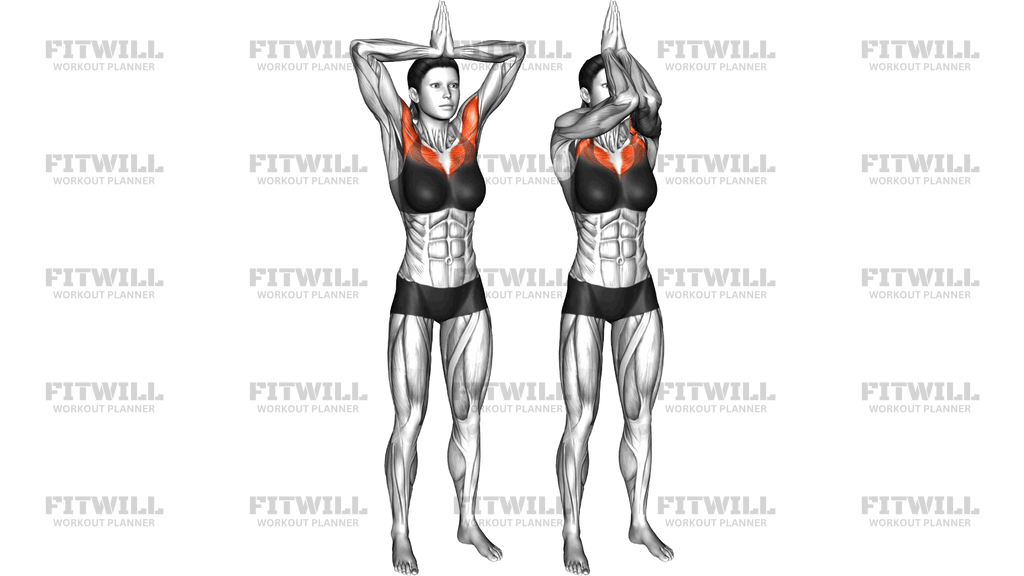
Instructions
- Stand upright with your feet about hip-width apart, knees soft, and your weight evenly distributed across both feet.
- Raise both arms overhead and press your palms together in a prayer position, fingers pointing up, with your elbows spread out wide to the sides.
- Squeeze your palms firmly against each other before you start moving; this press is the resistance for the whole set.
- Draw your shoulder blades down slightly so they are not shrugged up toward your ears, and brace your core to keep your ribs from flaring.
- Keeping the palms pressed together, slowly lower your joined hands down in front of your face, letting the elbows bend and spread outward as the hands descend.
- Continue until your hands reach roughly forehead or chin height in front of your head, and pause for a beat where you feel the strongest contraction across the upper chest.
- Reverse the path with control, pressing the palms together the entire way, until your arms are extended overhead again in the starting position.
- Exhale as you lower the hands toward the head and inhale as you return them overhead, keeping the breathing steady.
- Complete your reps at a slow tempo, then release the palm pressure and shake out the arms and shoulders before the next set.
Tips & Tricks
- The most common mistake is letting the palms slide or lose pressure partway down; if the hands separate, the chest load disappears entirely. Re-press at the top and use a lighter squeeze you can hold for every rep.
- If your elbows point forward instead of out to the sides, the shoulders take over. Widen them until the upper arms form roughly a line out from the shoulders at the start.
- Watch the neck: because the hands pass directly in front of the face, many people tip the chin up to follow them. Pick a fixed spot straight ahead and keep the head level for the whole set.
- Aim to feel the work in the area just below your collarbones. If you only feel it in the shoulders or arms, soften the palm press slightly and focus on drawing the elbows down and together as the hands lower.
- Do not rush the tempo. Because the resistance is self-generated, momentum does nothing for you; a two- to three-second descent makes the contraction far more noticeable than fast reps.
- If your wrists ache from pressing, adjust the hand position slightly so the heels of the palms and the base of the fingers meet, rather than forcing the fingers back.
- Keep the lower back quiet. If it starts to arch as the hands come down, tighten the abs lightly and imagine the ribs moving down toward the hips.
- This pairs well as a burnout after presses or as a warm-up before them; use a moderate squeeze when warming up and save the hardest presses for the end of the session.
Frequently Asked Questions
What muscles does Palms To Head Chest Fly work?
The primary muscle is the upper chest, specifically the clavicular head of the pectoralis major. The front shoulders assist, and the triceps and forearm muscles work hard to keep the palms pressed together throughout.
Why does the exercise start with the palms overhead instead of at chest height?
Starting overhead and lowering the hands toward the head keeps the arms above shoulder level, which biases the upper chest fibers. The path of the hands toward the face is what gives this version its upper-chest emphasis.
How hard should I press my palms together?
Press hard enough that the squeeze feels clearly challenging but you can maintain it without pain in the wrists or shoulders for every rep. Since the press is the only resistance, harder squeezes make the set more intense.
Is Palms To Head Chest Fly good for beginners?
Yes. It teaches what a chest contraction feels like with zero equipment and very low injury risk, which makes it a useful learning drill before moving on to dumbbell or cable fly variations.
Can this build muscle without any equipment?
It provides a light-to-moderate stimulus that works well for activation, warm-ups, and burnouts, but it will not replace loaded pressing and fly work for significant chest development. Use it alongside weighted exercises rather than instead of them.
My palms keep sliding apart during the descent. What should I do?
Reduce the downward speed and slightly lighten the squeeze so you can maintain contact for the whole rep. Dry or sweaty hands make it worse, so wiping your palms beforehand helps.
How many reps and sets should I do?
Start with two to three sets of ten to fifteen slow reps, pausing briefly at the bottom of each rep. If the squeeze fades before you reach ten reps, the press is too hard for now.
What can I use instead if pressing my palms is uncomfortable for my wrists?
A standard standing chest fly with a light resistance band around the back, or a cable fly set low to high, trains the same upper-chest pattern without requiring the hands to press against each other.
Should I feel this in my shoulders instead of my chest?
Some front shoulder involvement is normal, but if the shoulders dominate, widen the elbows, relax the traps, and focus on drawing the elbows down and toward each other as the hands lower in front of the face.
When should I avoid Palms To Head Chest Fly?
Skip it if you currently have shoulder pain, especially pinching at the front of the shoulder with overhead positions, or an irritated wrist that pressing aggravates. Keep the arm angle pain-free or choose a different chest exercise.