Dumbbell Single Leg Hip Thrust
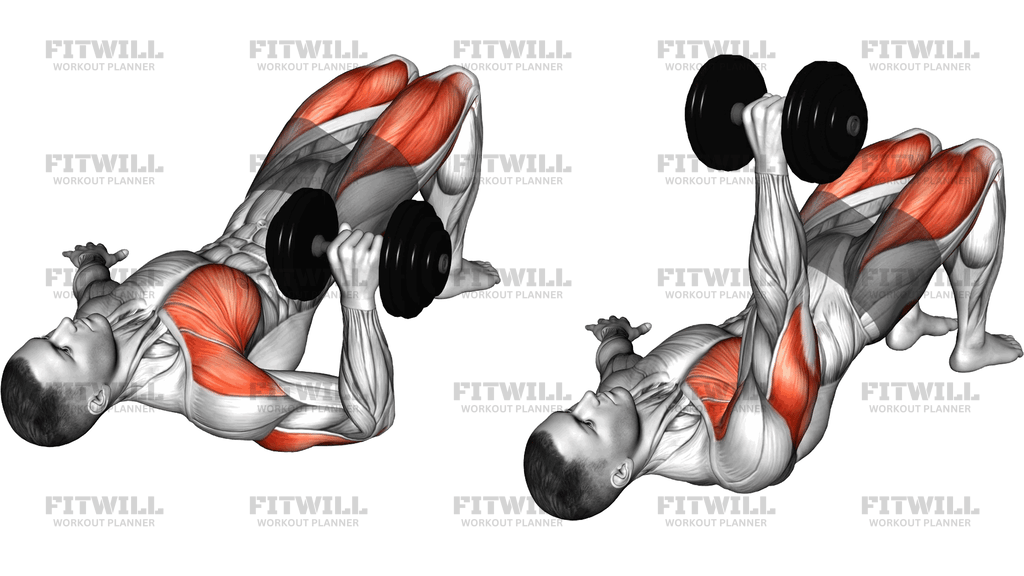
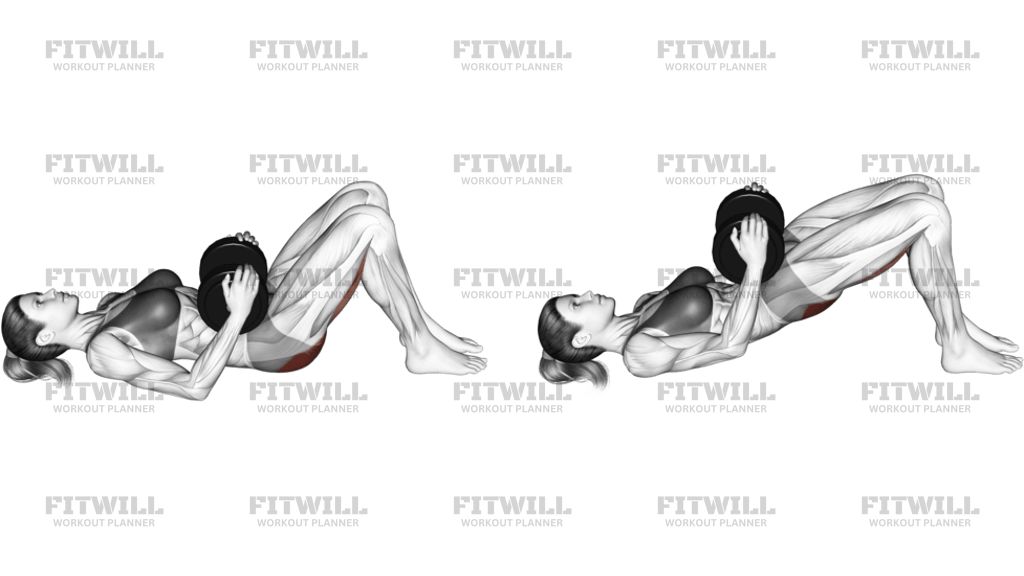
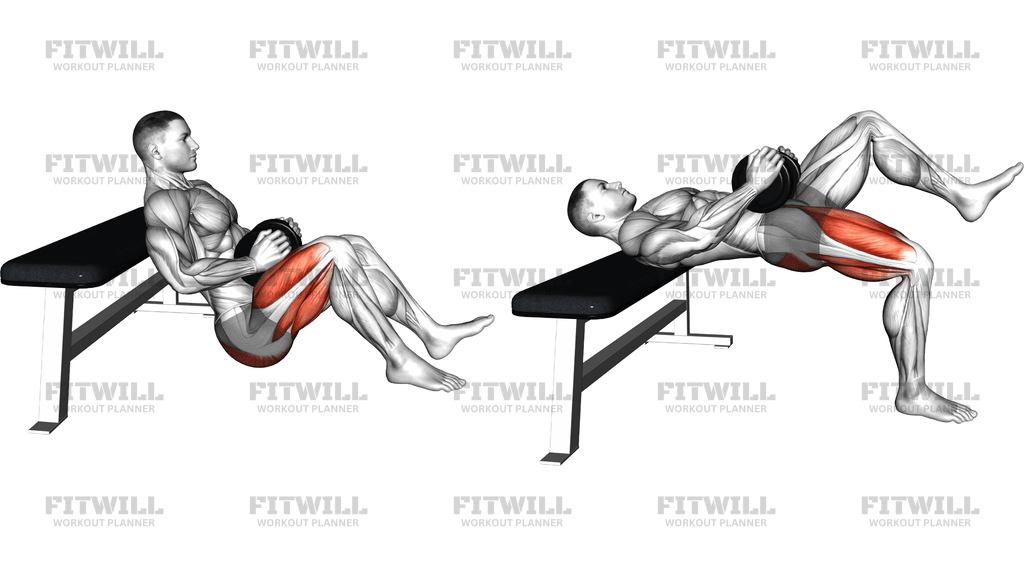
The Dumbbell Single Leg Hip Thrust is a unilateral hip extension exercise performed with your upper back supported on a flat bench, one foot planted on the floor, and a dumbbell held against the front of your working hip. You drive through the planted heel to lift your hips until your torso and front thigh form a straight line, then lower back down under control. Because only one leg works at a time, each side has to produce the full force needed to raise your bodyweight plus the load, which makes this a demanding glute builder without requiring heavy external weight.
This movement is especially useful for lifters who have noticed a strength or size difference between their left and right glutes, and for anyone whose lower back tends to take over during bilateral hip thrusts or deadlifts. The single-leg setup also challenges your pelvis to stay level, so the gluteus medius and deep core muscles work hard to stop your hips from tilting or rotating. Runners, cyclists, and field sport athletes benefit from this because sprinting and jumping are inherently single-leg actions.
The primary muscles trained are the glutes, mainly the gluteus maximus, with the hamstrings assisting as you extend the hip. The quadriceps of the working leg help stabilize the knee, while the obliques and lower back muscles resist rotation as your hips rise. The elevated foot position and bench support let you focus entirely on hip extension rather than balance, which is what separates this from a single-leg glute bridge done flat on the floor.
Setup details matter a lot here. Position the bench so it sits firmly against the bottom of your shoulder blades, not your mid-back, and keep the dumbbell centered over the crease of your working hip so it does not slide toward the unsupported side. Your planted foot should be far enough forward that at the top of the rep your shin is roughly vertical, allowing a strong glute contraction rather than a hamstring-dominant push.
You will see this exercise used as a primary glute movement in lower-body sessions, as an accessory after squats or deadlifts, or as a regression-friendly option for lifters building toward heavy barbell hip thrusts. Start with a light dumbbell or even bodyweight to learn the pattern, since the single-leg version amplifies any wobble in your pelvis. If your hip flexor of the non-working leg cramps, reduce how tightly you pull that knee toward your chest and focus on keeping the movement smooth.
For safety, keep the load moderate until you can complete every rep without your hips dropping or twisting, and make sure the bench cannot slide away from you as you drive upward. Stop the set if you feel the work shifting into your lower back rather than your hip.
[ Workout Log & Planner ]
Put your next workout in Fitwill
Keep your plan and training log ready when you are.


Instructions
- Sit on the floor with a flat bench behind you and place a dumbbell on the crease of one hip, holding it steady with both hands.
- Walk your feet forward and lean back so your upper back rests firmly on the edge of the bench, with the bench pad contacting just below your shoulder blades.
- Plant your working foot flat on the floor with the knee bent, and bend the opposite knee, keeping that leg lifted off the ground for the whole set.
- Brace your core and squeeze your glutes to lift your hips upward, pushing the dumbbell against your hip so it stays in place.
- Drive through the heel of the planted foot until your hips are fully extended and your shoulders, hips, and knee of the working leg form a straight line.
- Pause for a moment at the top and squeeze the glute of the working side hard.
- Lower your hips back toward the floor in a slow, controlled motion until your glute is close to the ground without resting or losing tension.
- Exhale as you thrust up, and inhale as you lower back down.
- Complete all reps on one side, then reposition the dumbbell on the other hip and repeat with the opposite leg.
Tips & Tricks
- Keep the dumbbell pressed into the hip crease with both hands; if it slides toward the bench side mid-set, your torso is rotating and you need to slow the tempo down.
- If your planted foot is too close to the bench, your knee will travel past your toes and the quads take over; slide the foot forward until the shin is vertical at the top.
- Watch that your hips stay square to the ceiling. A common mistake on the single-leg version is letting the unsupported side of the pelvis sag, which shortens the range on the working glute.
- Do not hyperextend by arching your lower back at the top. Stop when your torso and thigh are in line and let the glute, not the spine, finish the rep.
- The non-working leg should stay lifted and relatively still. If it keeps dropping toward the floor, your core is fatiguing faster than your glutes, which is a sign to lighten the load.
- Use a flat, stable bench and check that it does not rock or slide; the leverage in this position pushes your upper back into the pad with real force.
- A pad or folded towel between the dumbbell and your hip bone makes heavier sets far more comfortable.
- Keep the descent slower than the lift, roughly two to three seconds down, since the eccentric is where the glute gets most of the growth stimulus in this exercise.
- If you cannot feel the glute working, add a one-second squeeze at full extension before adding any weight.
Frequently Asked Questions
What muscles does the Dumbbell Single Leg Hip Thrust work?
The gluteus maximus of the working leg is the prime mover, with the hamstrings assisting hip extension. Your core and hip stabilizers also work hard to keep the pelvis level while only one leg is planted.
Why hold the dumbbell on one hip instead of across both?
In a single-leg thrust there is only one working hip, so centering the dumbbell over that hip keeps the load driving straight down into the glute. Holding it across both hips would pull you toward the non-working side and force your core to fight the imbalance the whole set.
Is the Dumbbell Single Leg Hip Thrust good for beginners?
Yes, but start with no weight at all. The single-leg balance and pelvic control take a few sessions to learn, and once you can perform clean bodyweight reps, adding a light dumbbell is a natural progression.
How does this differ from a two-leg dumbbell hip thrust?
Each glute handles your full bodyweight plus the dumbbell on its own, so the demand on each side is much higher without using a heavy load. It also exposes and helps correct side-to-side differences in strength and hip extension.
My hips keep tilting to one side during the lift. How do I fix it?
Slow the tempo, reduce the weight, and consciously think about driving both sides of your pelvis toward the ceiling together. Strengthening the gluteus medius with side-lying abductions or banded work also helps stabilize the pelvis in this position.
Where exactly should my upper back sit on the bench?
The pad should contact your back just below the shoulder blades. If it sits too low toward your mid-back, your range of motion shrinks; too high near the shoulders and your neck takes on unnecessary strain.
What can I use instead of a dumbbell for this exercise?
A weight plate or a weighted vest works the same way, and a resistance band looped over the working hip and anchored down adds tension without needing to hold anything. With no equipment, the bodyweight single-leg hip thrust is still an effective glute exercise.
How high should my hips go at the top of the Dumbbell Single Leg Hip Thrust?
Lift until your shoulders, hips, and the knee of your working leg form a straight line, then stop. Pushing higher by arching the lower back adds no extra glute work and only loads the spine.
Is it safe for the lower back?
When performed with a braced core and a controlled range ending at neutral hip extension, it is generally a lower-back-friendly way to load the glutes. Discomfort usually means the weight is too heavy or you are arching past the straight-line top position.
How many reps and sets should I do?
Work in the range of 8 to 15 reps per leg for 2 to 4 sets, resting long enough between sides that your pelvic control does not break down. Because each side works alone, treat left and right as separate sets rather than pairing them back to back when fatigued.