Bottle Weighted Front Squat
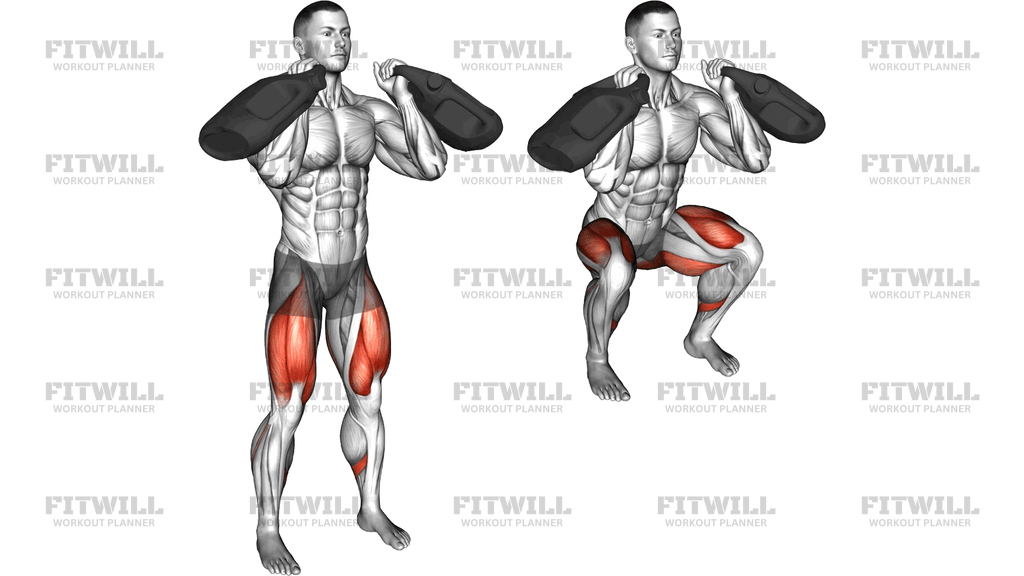
The Bottle Weighted Front Squat is a front-loaded squat performed while holding a weighted bottle, such as a large water jug, in each hand at shoulder height. Your hands support the bottles just in front of your shoulders with elbows lifted, which keeps the load sitting on the front of your torso rather than your back. This front-loaded position is what separates the exercise from a back squat: it forces you to stay upright, challenges your core to resist collapsing forward, and shifts more of the work onto the quadriceps.
This variation is especially useful for home training or travel, when a barbell and rack are not available. Heavy water bottles or jugs are inexpensive, easy to scale by changing the fill level, and their slightly unstable load adds a small extra demand on your grip and shoulder stabilizers. The exercise suits beginners learning an upright squat pattern, as well as more experienced lifters who want a quad-focused squat day without maximal spinal loading.
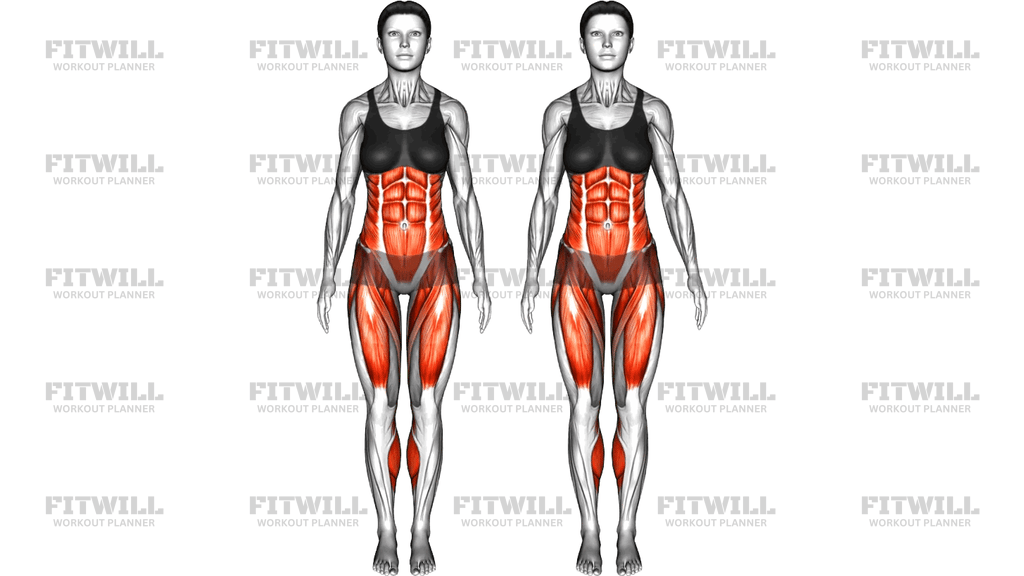
The main muscles working are the quadriceps, which extend the knees as you rise from the bottom. The glutes and hamstrings assist at the hips, and your entire trunk, especially the abdominals and upper back, works hard to keep your chest tall and the bottles from pulling you forward. Your forearms and grip also stay engaged for the whole set, since you cannot rest the weight on your spine the way you would with a barbell.
Setup matters more than it might seem. Because the bottles sit at your shoulders, any forward lean immediately multiplies the leverage against you, so establishing a braced torso and an upright chest before your first rep is essential. Set your feet about shoulder-width apart with toes turned out slightly, and keep the bottles resting against the front of your shoulders rather than held out in front of your chest.
To perform the movement, brace your core, then squat by pushing your hips back and bending your knees, letting them travel over or slightly outside your toes. Descend until your thighs are at least parallel to the floor or as deep as you can maintain a neutral spine, then drive through your whole foot to stand back up. Exhale on the way up and keep your elbows high the entire time, since dropped elbows are the most common reason the torso tips forward in this variation.
Use the Bottle Weighted Front Squat as your main lower-body lift in home workouts, as an accessory after barbell squats, or as a teaching tool for the upright front squat position. Start with a moderate fill level and higher reps while you confirm your depth and balance, and only progress the weight when you can keep your chest and elbows up through every rep without your heels lifting or your lower back rounding at the bottom.
[ Workout Log & Planner ]
Put your next workout in Fitwill
Keep your plan and training log ready when you are.


Instructions
- Fill two bottles or jugs with an equal amount of water and place them on the floor in front of your feet.
- Stand with your feet about shoulder-width apart, toes turned out slightly, and lift one bottle to each shoulder, letting the body of the bottle rest against the front of your shoulders with your fingers wrapped under or around the handle.
- Raise your elbows so they point forward and slightly up, squeeze your shoulder blades gently, and look straight ahead at a fixed point.
- Take a deep breath into your belly, brace your abs and lower back as if preparing for a light push to the chest.
- Push your hips back and bend your knees together, descending in a controlled line while keeping your chest tall and elbows high.
- Lower until your thighs are parallel to the floor or slightly below, as long as your heels stay down and your lower back stays neutral.
- Drive through your whole foot, pushing the floor away, and stand up until your hips and knees are fully extended.
- Exhale as you rise, then take a fresh breath and rebrace before starting the next repetition.
- After your final rep, hinge slightly at the hips and lower the bottles back to the floor with a flat back rather than rounding over to set them down.
Tips & Tricks
- If your chest starts tipping forward at the bottom, your elbows have probably dropped — lift them back toward horizontal before your next rep, even if that means using lighter bottles.
- Keep the bottles resting on your shoulders, not floating in front of your chest; holding them out turns the set into a front raise endurance test for your shoulders.
- If your heels lift as you descend, widen your stance a few centimeters and turn your toes out a little more rather than forcing depth.
- Because jugs slosh, brace harder at the top of each rep and choose bottles with a secure cap — a leak mid-set is both a mess and a distraction.
- Rounding your lower back at the bottom usually means you went deeper than your hips allow; cut the depth back until you can keep a neutral spine consistently.
- Wipe the bottles if they are slippery, since a slipping grip forces your elbows down and disrupts the whole front-loaded position.
- Keep your knees tracking in line with your toes; letting them cave inward under load is the most common knee stress point in this squat.
- Adjust the water level between sets rather than between exercises — small fill changes let you land on a weight you can control for all reps.
- Pause for one second at the bottom if you struggle to feel your quads working; the front-loaded position makes paused reps very demanding on the trunk.
Frequently Asked Questions
Which muscles does the Bottle Weighted Front Squat work the most?
The quadriceps are the primary movers, with strong assistance from the glutes and hamstrings as you stand up. Because the load sits in front of your torso, your abdominals, lower back, and upper back also work continuously to keep you upright.
How is the Bottle Weighted Front Squat different from a back squat?
The weight is held at the front of your shoulders instead of on your upper back, which forces a more upright torso and places greater emphasis on the quads. It also reduces compression on the spine, making it friendlier for people without a barbell setup.
Is the Bottle Weighted Front Squat suitable for beginners?
Yes, it is one of the better beginner squat variations because the front load encourages an upright chest and makes poor form immediately noticeable. Start with lightly filled bottles and practice depth before adding water.
How full should the bottles be?
Fill them to a level where you can complete all planned reps with your elbows high and heels flat, typically 8 to 15 reps per set at first. One advantage of water is that you can fine-tune the load in small increments.
Why do my elbows keep dropping during the Bottle Weighted Front Squat?
Dropping elbows usually means the bottles are held too far in front of the shoulders, or your grip and shoulders are fatiguing. Rest the bottles firmly on your shoulders, adjust your hand position, or reduce the fill level until you can keep the elbows up.
Can I do this exercise with one bottle instead of two?
You can, but a single bottle held at one shoulder creates side-to-side imbalance, so you would need to brace your core harder to stay square. Starting with two evenly filled bottles is simpler and keeps the movement symmetrical.
What can I use if I do not have large bottles?
The same front-loaded pattern works with two dumbbells resting on the shoulders, kettlebells in a clean position, or a sandbag hugged at the chest. Choose whatever lets you keep the weight high and close to your torso.
How deep should I squat while holding the bottles?
Aim for thighs at least parallel to the floor, but only go as deep as you can keep your heels down and lower back neutral. If your pelvis tucks under at the bottom, reduce the depth and work on hip mobility over time.
Is it safe for my knees and lower back?
When performed with controlled depth, tracked knees, and a braced neutral spine, it is a joint-friendly squat variation with the load held in front rather than on the spine. Stop and lighten the load if you feel sharp pain rather than normal muscle effort.