Sitting Neck Stretch Circle
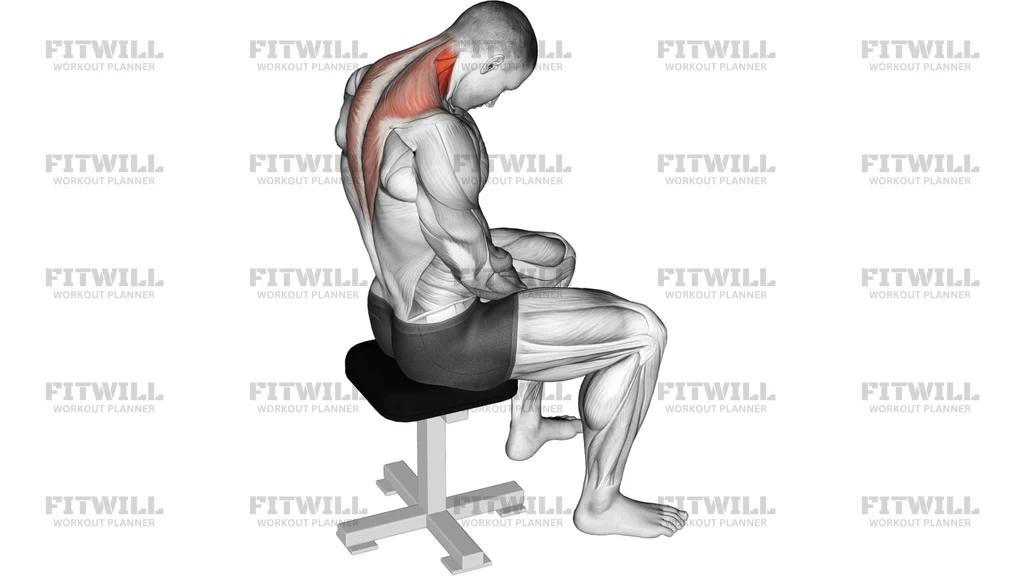
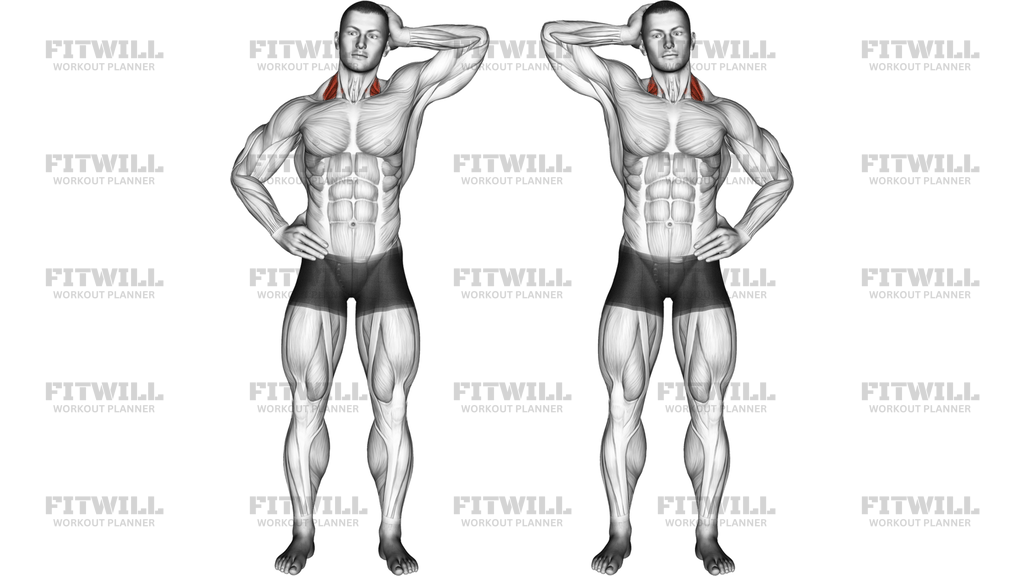
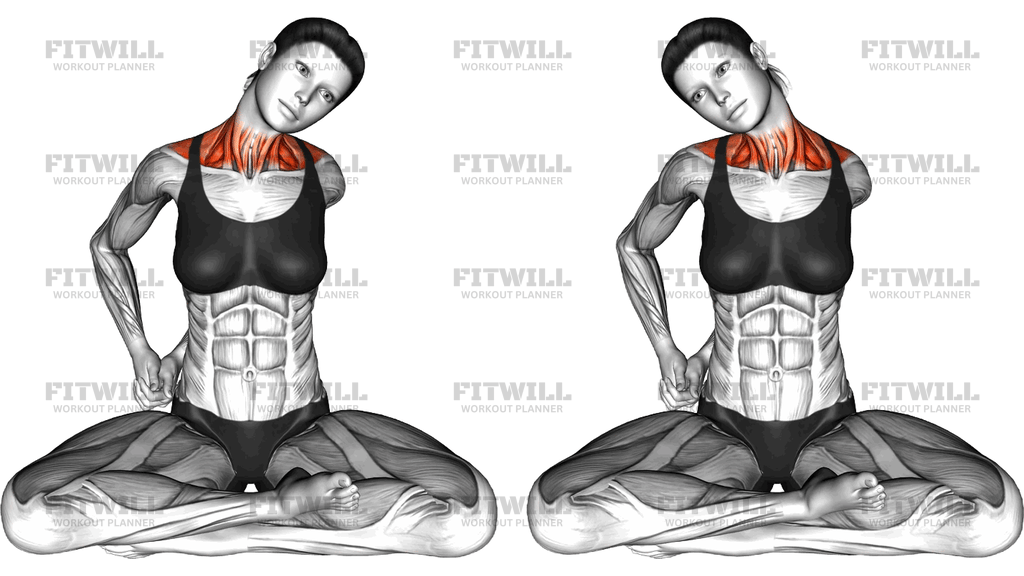
The Sitting Neck Stretch Circle is a gentle mobility stretch performed seated on the floor with the legs crossed, targeting the sides and back of the neck along with the top of the shoulders. You sit tall, anchor one arm behind your back, and guide your head through a slow semicircular arc from one shoulder toward the other, letting the tilted position deepen the stretch along the opposite side of the neck. It is one of the simplest ways to release tension in the upper trapezius and levator scapulae, the two areas that collect stress from desk work, phone use, and heavy training.
This stretch is especially useful for anyone who spends long hours at a computer, carries tension headaches at the base of the skull, or feels tight across the tops of the shoulders after upper-body sessions. Office workers, drivers, students, and lifters who do frequent shrugs, overhead presses, or pulling work all tend to accumulate stiffness in exactly these muscles. Because it requires no equipment and very little space, it fits easily into a morning routine, a workday break, or a cool-down.
The setup matters more than it looks. Sitting cross-legged gives you a stable base so your torso stays quiet while the head moves, and placing one hand behind your back gently pins the shoulder blade down. Without that anchor, the shoulder rides up to meet the tilting head and the stretch loses most of its effect. Keeping the chest lifted and the spine neutral ensures the stretch lands in the neck rather than being absorbed by a rounded upper back.
Execution should feel like tracing a slow, deliberate arc. You drop the ear toward one shoulder, sweep the chin forward and across the front of the chest, and continue up to the opposite shoulder, then reverse the path. The movement is continuous and controlled, never forced, and the stretch stays comfortable the entire time. Breathing should stay calm and steady throughout.
A key safety point with any neck work is restraint: the neck responds best to light, sustained, pain-free ranges. Never pull the head aggressively, and avoid full backward bending of the neck. If you have a history of neck injury, dizziness, or nerve symptoms such as tingling into the arm, check with a qualified professional before adding this stretch to your routine.
[ Workout Log & Planner ]
Put your next workout in Fitwill
Keep your plan and training log ready when you are.


Instructions
- Sit on the floor with your legs crossed and your sitting bones grounded, spine tall and shoulders relaxed.
- Place your right hand behind your back with the palm facing out or down, letting that arm gently anchor the right shoulder blade downward.
- Rest your left hand lightly on your left thigh or at your side, and soften your gaze so your eyes are not straining to look anywhere in particular.
- Take a slow breath in, then exhale as you tilt your head to the left, bringing your left ear toward your left shoulder until you feel a comfortable stretch along the right side of the neck.
- Begin the circular path: sweep your chin forward and down across the front of your chest, rolling the stretch through the front and opposite side of the neck.
- Continue the arc up until your right ear reaches toward your right shoulder, feeling the load shift to the left side of the neck.
- Reverse the circle smoothly, tracing the same semicircular path back to the starting tilt, keeping the motion continuous rather than stopping at each point.
- Breathe slowly and evenly the whole time, exhaling as you move into the tighter part of the arc and never holding your breath.
- Complete several circles in one direction, then switch your anchored arm to the left hand behind your back and repeat the circles the other way.
- When finished, bring the head back to neutral, release both arms, and sit quietly for a breath or two before standing up.
Tips & Tricks
- The most common mistake is letting the anchored shoulder creep up toward the ear. If your right shoulder lifts as the head tilts left, press the hand behind your back more firmly into the floor or hold the edge of a cushion to keep the blade pinned down.
- Keep the torso still. If your ribcage leans sideways to help the head reach further, the neck stops doing the work and the stretch becomes a side-bend of the spine. Sit taller and accept a smaller arc.
- The circle should be wide enough to feel the sides of the neck but never so wide that you push into the end range. Stop the arc where the stretch is a mild pull, not a sharp or radiating sensation.
- Avoid dumping the head straight backward through the middle of the circle. Tuck the chin slightly as you sweep across the front so the curve passes through the chest rather than hanging into the back of the neck.
- If the cross-legged position bothers your knees or hips, sit on a folded blanket or a firm cushion to raise the hips, or do the same neck circles seated on a chair with feet flat.
- Move slower than feels necessary. Most people rush the transition across the front of the chest, which is exactly where the deep neck flexors and front-of-neck tissues get their turn to lengthen.
- Keep the jaw relaxed and the mouth unclenched. Tension in the face often mirrors tension in the neck, and a soft jaw helps the whole arc stay smooth.
- If one side is noticeably tighter, spend an extra breath or two hovering in that part of the arc instead of forcing a bigger circle.
Frequently Asked Questions
Which muscles does the Sitting Neck Stretch Circle target?
It primarily lengthens the upper trapezius and levator scapulae along the side and back of the neck, with some involvement of the scalenes and other small neck muscles as the head sweeps through the arc. The anchored arm also gives the shoulder blade area a light release.
Why is one hand placed behind the back during this stretch?
The arm behind the back holds the shoulder blade down so it cannot rise to meet the tilting head. Without that anchor, the upper trapezius stays shortened and the stretch loses most of its depth.
Is the Sitting Neck Stretch Circle suitable for beginners?
Yes, it is very beginner friendly because the resistance comes only from gravity and your own controlled motion. Beginners should simply keep the circle small and stay well short of any sharp or radiating sensation.
How many circles should I do on each side?
Three to five slow circles in each direction is plenty for most people. Because the neck responds better to gentle repetition than to aggressive end-range work, favor more repetitions of a smaller arc over fewer forced ones.
Do I have to sit cross-legged on the floor?
No. The cross-legged seat gives a stable base, but the same neck circles work just as well on a chair with feet flat on the floor, which is a good option if your hips or knees dislike floor sitting.
Should I pull my head with my free hand to deepen the stretch?
It is safer not to. Letting the weight of the head and the circular path create the stretch keeps the load gentle and controlled; hand pressure makes it easy to overshoot and irritate the neck.
When is the best time to use the Sitting Neck Stretch Circle?
It works well as a morning wake-up, a mid-workday reset for desk stiffness, or part of a cool-down after upper-body training. Avoid doing it right before heavy pressing or shrugging work, when slightly loosened neck muscles are better left alone.
What should I do if I feel tingling or dizziness during the stretch?
Stop immediately and return the head to neutral, then shorten the arc or reduce the tilt on future attempts. Persistent tingling, numbness into the arm, or recurring dizziness is a reason to consult a qualified health professional before continuing.
Can I hold the stretch at one point of the circle instead of moving?
Yes. Pausing with the ear toward one shoulder for two or three calm breaths is a useful variation when one side feels especially tight, then resume the circle once the pull eases.