Sphynx Cat Cow Stretch
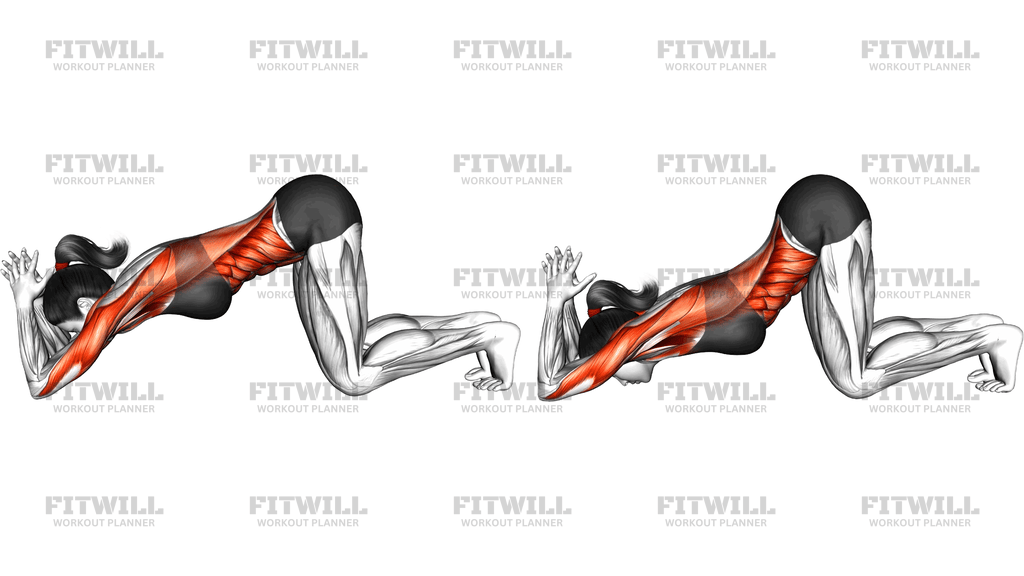
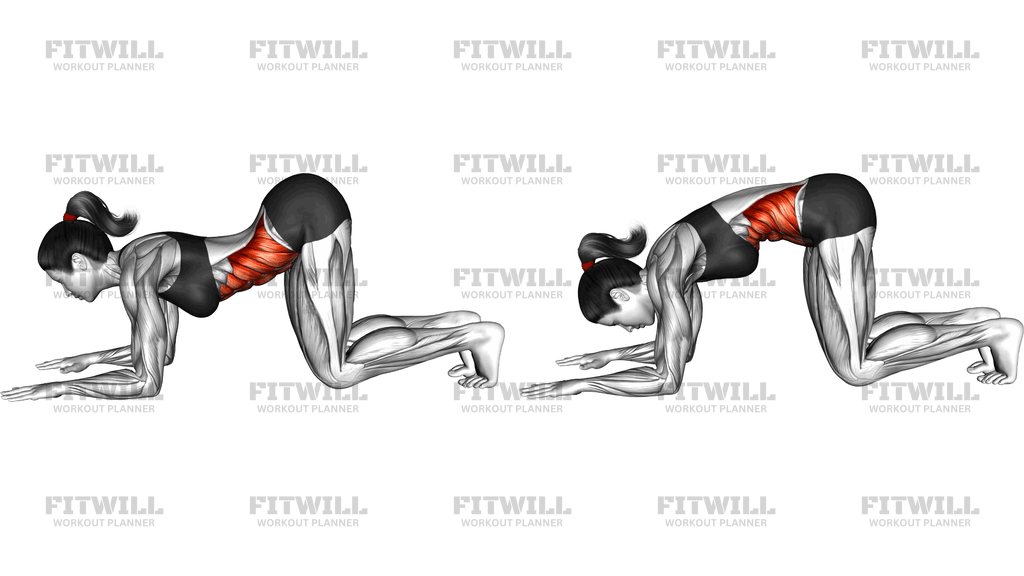
The Sphynx Cat Cow Stretch is a floor-based spinal mobility drill performed from a forearm kneeling position, sometimes called the sphinx or prone forearm support. Instead of the traditional hands-and-knees cat cow, your weight rests on your forearms with the elbows stacked under the shoulders, which changes the angle of the movement and adds a gentle extension bias through the mid and lower back. From there, you alternate between letting the chest sink and the spine arch down, and rounding the back up toward the ceiling while tucking the chin and tailbone.
This version is especially useful for people who spend long hours sitting, because the forearm setup lets the lumbar spine move through flexion and extension without loading the wrists the way a standard cat cow does. It gently targets the erector spinae along the spine, encourages segmental movement through the thoracic and lumbar regions, and asks the abdominal muscles to round the back on the exhale phase. The hips stay low and the knees stay down, so it is a low-effort drill that fits well in warm-ups, cool-downs, or desk-break routines.
Setup matters more than most people expect. Because the elbows sit ahead of or directly under the shoulders and the hips stay behind the knees, the position already places the lumbar spine in a mild extension. That means the arching phase needs very little force — most of the work is learning to feel the difference between the low back, mid back, and neck moving together versus one area doing everything. Rushing the reps usually turns the drill into a rocking motion from the shoulders instead of a true spinal wave.
To perform it well, keep the forearms planted and let the spine be the only moving part. On the extension phase, ease the chest toward the floor and let the low back settle into a gentle arch while the gaze stays soft and forward or slightly down. On the flexion phase, press the forearms lightly into the floor, exhale, and push the mid back up toward the ceiling while tucking the pelvis under. The transition should feel like a slow ripple traveling through the spine, not a jerk between two shapes.
Common use cases include morning stiffness relief, pre-workout spinal preparation for lifting or running, post-workout recovery, and reintroducing pain-free movement after long periods of sitting. Move slowly, stay well within a comfortable range, and stop if any position produces sharp or radiating sensations — a gentle stretch sensation is the goal, never pain.
Fitwill
Log Workouts, Track Progress & Build Strength.
Achieve more with Fitwill: explore over 9600 exercises with images and videos, access built-in and custom workouts, perfect for both gym and home sessions, and see real results.
Start your journey. Download today!




Instructions
- Kneel on an exercise mat and lower onto both forearms so the elbows sit roughly under the shoulders and the forearms point forward, hands relaxed on the floor.
- Settle the hips back slightly so the knees stay under or just behind the hips and the low back rests in a neutral, gently arched position.
- Let the shoulders relax away from the ears and soften the neck so the head hangs in line with the spine rather than craning upward.
- Inhale, then slowly ease the chest toward the floor, letting the belly drop and the low back arch down into extension while the tailbone lifts slightly.
- Hold the arched position for a beat, feeling the stretch spread through the mid and lower back.
- Exhale, press the forearms lightly into the mat, tuck the tailbone under, and round the spine up toward the ceiling, letting the head drop between the arms.
- Pause in the rounded position and feel the abdominal muscles and the muscles along the spine lengthen and engage.
- Flow slowly between the arched and rounded positions, letting the movement travel segment by segment through the lower, middle, and upper back.
- Keep breathing steadily throughout, inhaling on the arch and exhaling on the round, for 8 to 12 controlled repetitions.
- Finish by returning to a neutral spine, then sit back onto the heels to reset before standing or moving to the next exercise.
Tips & Tricks
- If you feel the movement only in the shoulders, focus on tilting the pelvis instead of pushing with the arms — the forearms are anchor points, not levers.
- A common mistake is cranking the head back hard during the arch phase; think of lengthening the crown of the head forward rather than lifting the chin.
- Keep the elbows from sliding wider or wandering forward as you round the back — drifting elbows turn the stretch into a shoulder exercise.
- If the low back feels pinched in the arched position, shift the hips slightly farther back toward the heels to reduce the extension angle before adding any movement.
- Moving too fast is the most frequent error; if you cannot feel which part of your spine is moving, slow the tempo down to roughly four seconds per direction.
- Let the knees and shins stay heavy on the mat so the hips do not lift and steal the motion from the lumbar spine.
- On the rounding phase, imagine pushing the floor away with the forearms and reaching the mid back toward the ceiling to get more from the flexion portion.
- A folded towel under the knees or elbows makes longer holds more comfortable if the mat is thin.
- Pair the drill with slow nasal breathing — the flexion phase on a full exhale tends to feel noticeably deeper.
Frequently Asked Questions
What does the Sphynx Cat Cow Stretch target?
It primarily mobilizes the spine, working the erector spinae along the lower back while the abdominal muscles round the back on the flexion phase. The forearms, shoulders, and hips act as stable anchors rather than prime movers.
How is the Sphynx Cat Cow Stretch different from a regular Cat Cow?
Instead of supporting yourself on your hands, you rest on your forearms with the elbows under the shoulders. This removes wrist strain, biases the stretch slightly toward lumbar extension, and often makes it easier to feel the lower back moving.
Is the Sphynx Cat Cow Stretch good for beginners?
Yes. The floor supports most of your weight and the range of motion is self-determined, so beginners can start with small, gentle movement and gradually increase the arc as comfort improves.
How many repetitions of the Sphynx Cat Cow Stretch should I do?
Eight to twelve slow, controlled repetitions is a solid dose, either as a warm-up before training or as a standalone mobility break. Quality of the spinal wave matters far more than rep count.
Why does my lower back feel pinched during the arched phase?
Your hips are probably positioned too far forward, which deepens the lumbar extension beyond a comfortable range. Shift the knees slightly back or reduce how far the chest sinks, and keep the arch gentle rather than maximal.
Can I do the Sphynx Cat Cow Stretch if I have wrist pain?
That is one of its main advantages — because you bear weight on the forearms instead of the palms, it is a common substitute for the traditional cat cow when extended wrists are uncomfortable.
Should my head move during the Sphynx Cat Cow Stretch?
Yes, but gently. The head follows the spine, dropping toward the floor as you round and staying in line with the neck as you arch, without forcing the chin up or tucking it aggressively.
When is the best time to use this stretch?
It works well first thing in the morning to ease overnight stiffness, before lower body or lifting sessions to prepare the spine, and after long sitting periods to restore movement through the mid and lower back.
Is it safe to do the Sphynx Cat Cow Stretch with back discomfort?
Gentle, pain-free spinal movement is generally well tolerated, but stay within a comfortable range and avoid pushing into sharp, stabbing, or radiating sensations. If symptoms persist or worsen, consult a qualified professional before continuing.
Do I need any equipment for the Sphynx Cat Cow Stretch?
An exercise mat is the only equipment needed to cushion the knees, shins, and forearms. A folded towel works as a substitute on a firm floor.