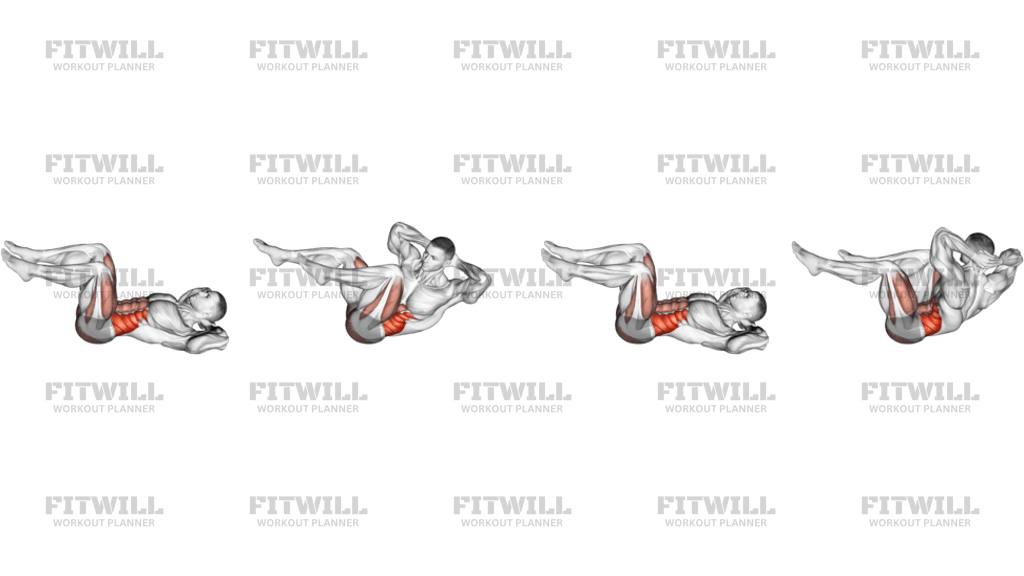
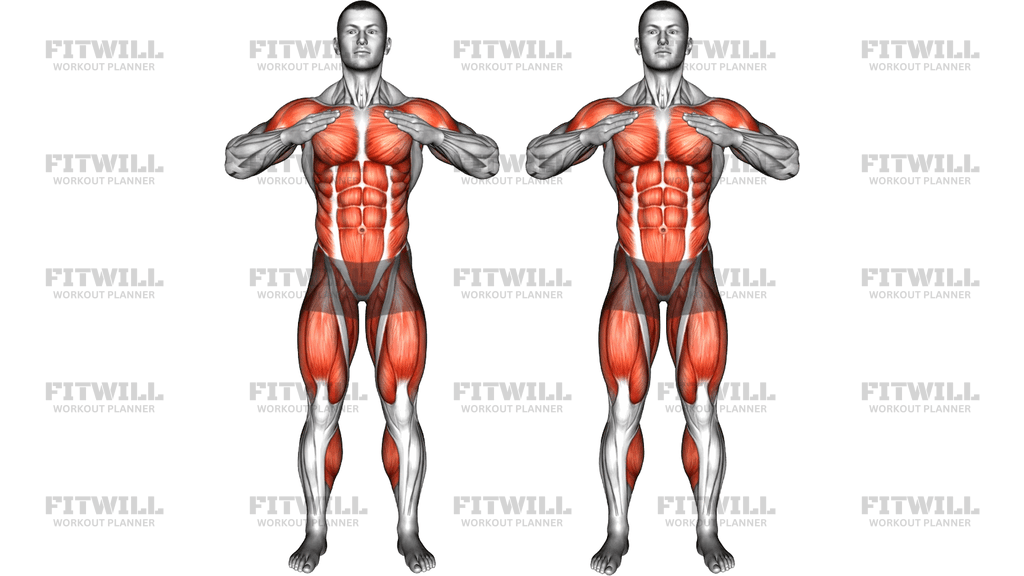
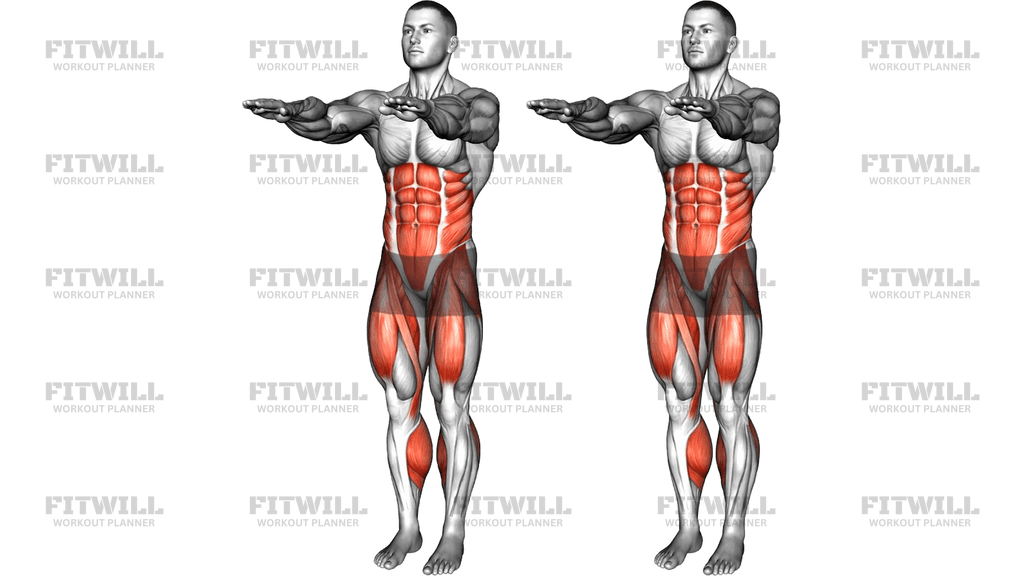
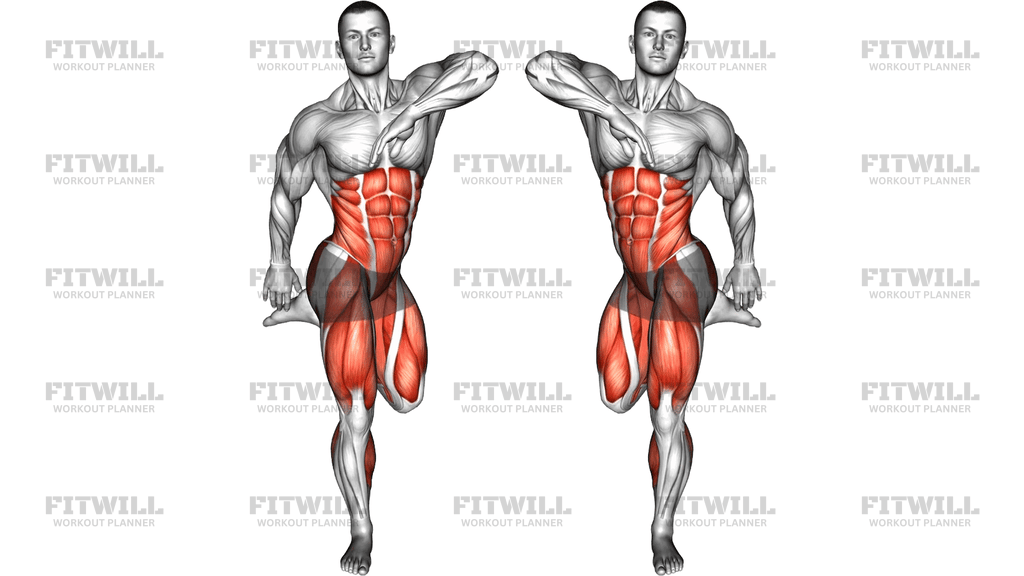
Sitting Opposite Touch On A Chair
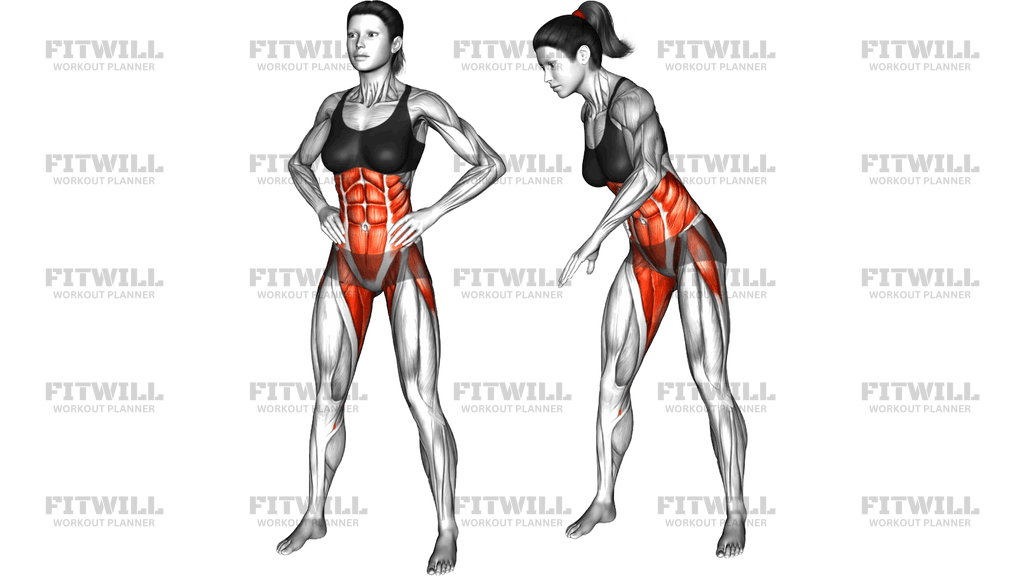
Sitting Opposite Touch On A Chair is a seated core exercise where you keep both arms extended straight out to your sides at shoulder height and alternately reach one hand down to touch the opposite foot, which you lift slightly off the floor to meet it. Because you are sitting upright on a chair with no back support doing the work for you, every rep forces your trunk to rotate, side-bend, and stay controlled at the same time. The obliques along the sides of your waist do most of the driving, while the abs brace to keep your torso from collapsing and the hip flexors lift each leg into position.
The setup is simple, which is exactly why this movement is worth keeping in your routine. A sturdy chair, a bit of floor space, and your body weight are all you need, making it a practical choice for home workouts, office breaks, warm-ups, or active recovery days. It is also a solid option for beginners who are learning to feel their obliques work without loading the spine, and for anyone rehabilitating back to rotational movement who wants a low-load way to practice controlled twisting.
What makes the exercise effective is the combination of rotation and opposite-side coordination. When your right hand travels toward your left foot, the left obliques contract hard while the right side lengthens under control, and lifting the left foot recruits the hip flexors on that side. Because the arms stay wide like a T, you cannot cheat the reach by just rounding forward; the torso has to genuinely rotate and side-flex, which is where the waist muscles earn their work.
To get the most from the movement, sit tall on the front half of the chair with your feet flat and your ribs stacked over your pelvis before each rep. Move with intent rather than speed: a slow, deliberate touch with a brief pause beats twenty fast swings that rely on momentum. Keep the non-working arm level at shoulder height the whole time, because letting it drop turns the exercise into a lazy forward lean.
A few practical points will keep this safe and productive. Choose a stable chair that will not tip or slide, and keep both sitting bones in contact with the seat throughout. If touching the foot is too demanding at first, touch the opposite knee instead and progress to the foot as your control improves. Stop the set when your reach becomes sloppy or your lower back starts doing the work instead of your waist.
[ Workout Log & Planner ]
Put your next workout in Fitwill
Keep your plan and training log ready when you are.


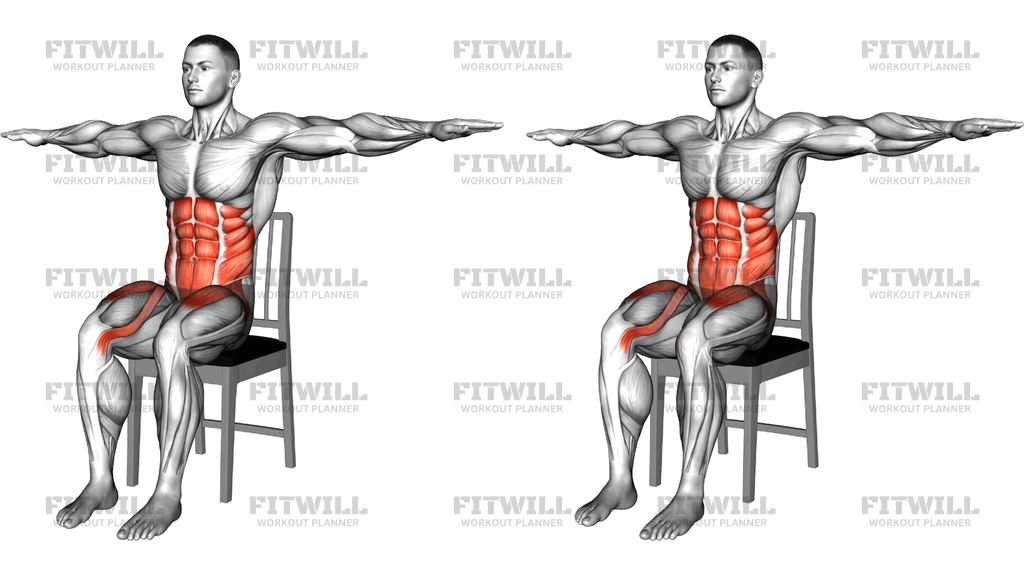
Instructions
- Sit on a sturdy chair with both sitting bones firmly on the seat, feet flat on the floor about hip-width apart, and your torso tall.
- Extend both arms straight out to your sides at shoulder height, palms facing down, forming a T shape with your upper body.
- Brace your abs gently and keep your ribs stacked over your pelvis so your lower back is not arched or rounded at the start.
- Exhale and lift your left foot a few centimeters off the floor, keeping the knee bent, while rotating your torso slightly to the left.
- Reach your right hand down and across to touch the top of your lifted left foot, letting your torso rotate and side-bend while the left arm stays extended at shoulder height.
- Pause for a beat at the touch and squeeze the obliques on the working side rather than collapsing forward.
- Inhale as you slowly return your right arm to the T position and lower your left foot back to the floor under control.
- Repeat on the other side by lifting the right foot and reaching your left hand toward it, completing one full repetition.
- Continue alternating sides for the desired number of reps, resetting your tall seated posture whenever you feel yourself slumping.
Tips & Tricks
- If your hand cannot comfortably reach your foot, touch the opposite knee first; forcing a deep reach usually rounds the lower back instead of working the waist.
- Watch the non-working arm: it tends to drop toward your lap as you reach. Keeping it level at shoulder height is what maintains the rotational demand on the obliques.
- Do not yank the leg up with momentum. Lift the foot deliberately so the hip flexors work through the range instead of swinging.
- Keep both sitting bones on the seat. Rocking onto one cheek is a sign the reach is too aggressive or you are moving too fast.
- Exhale on the reach and inhale on the return. Holding your breath makes the trunk stiffen in the wrong way and drains you quickly.
- Move at roughly a two-second lift, one-second touch, two-second return tempo; this exercise rewards control far more than speed.
- If the chair has wheels or a soft cushion, swap it for a stable, firm seat so your base does not shift underneath you mid-rep.
- Keep your neck relaxed and eyes forward. Craning the head toward the touching hand usually means the shoulders are creeping up toward your ears.
Frequently Asked Questions
Which muscles does Sitting Opposite Touch On A Chair work?
The obliques on the sides of your waist do the main work of rotating and side-bending the trunk, while the abs brace to hold your posture. Lifting the foot also brings the hip flexors and quads of the moving leg into play.
Is this exercise suitable for complete beginners?
Yes. It is body-weight only, performed seated, and the range can be scaled easily by touching the opposite knee instead of the foot. Beginners should prioritize a slow tempo over a deep reach.
Why do my arms stay extended out to the sides during the movement?
The T-shaped arm position prevents you from cheating the reach with a simple forward lean and forces the torso to genuinely rotate and side-bend. If the free arm drops, the oblique engagement drops with it.
Should I lift the opposite foot, or keep it planted?
Lifting the foot is what makes it an opposite touch and adds the hip flexor component. If balance is a challenge at first, keep the toe lightly touching the floor while you practice the reach.
What kind of chair works best for Sitting Opposite Touch On A Chair?
A stable, armless chair with a firm seat and no wheels. An armless seat gives your elbows clearance, and stability matters because the chair should not tip or slide as you rotate.
My lower back feels strained when I reach. What am I doing wrong?
You are most likely rounding forward or arching to extend the reach instead of rotating from the waist. Sit taller, reduce the reach distance, and let the ribs stay stacked over the pelvis throughout the rep.
How many reps and sets should I do?
Two to three sets of 10 to 16 total touches, alternating sides, works well for most people. Since this is a control-focused movement, end the set when your posture or reach quality starts to slip.
Can I substitute this if I do not have a chair?
Yes. Sitting Opposite Touch On A Chair translates well to a bench, a sturdy ottoman, or even the edge of a bed with a firm mattress, as long as your hips are stable and your feet can move freely.
Is it normal to feel one side more than the other?
A slight side-to-side difference is common. Do an equal number of touches on each side, and if one side feels much weaker, start your sets with that side while you are freshest.