Seated Forward Reach
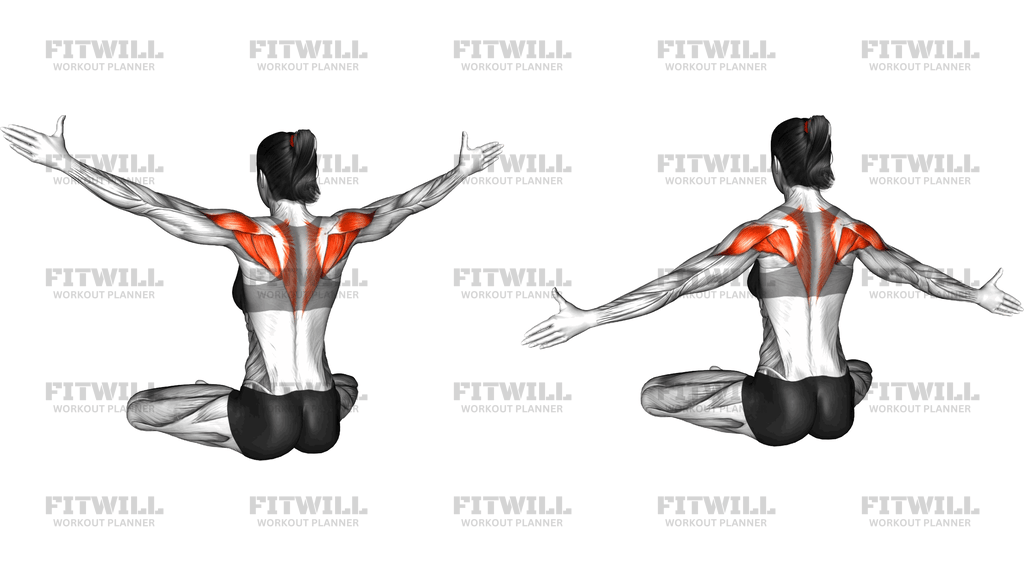
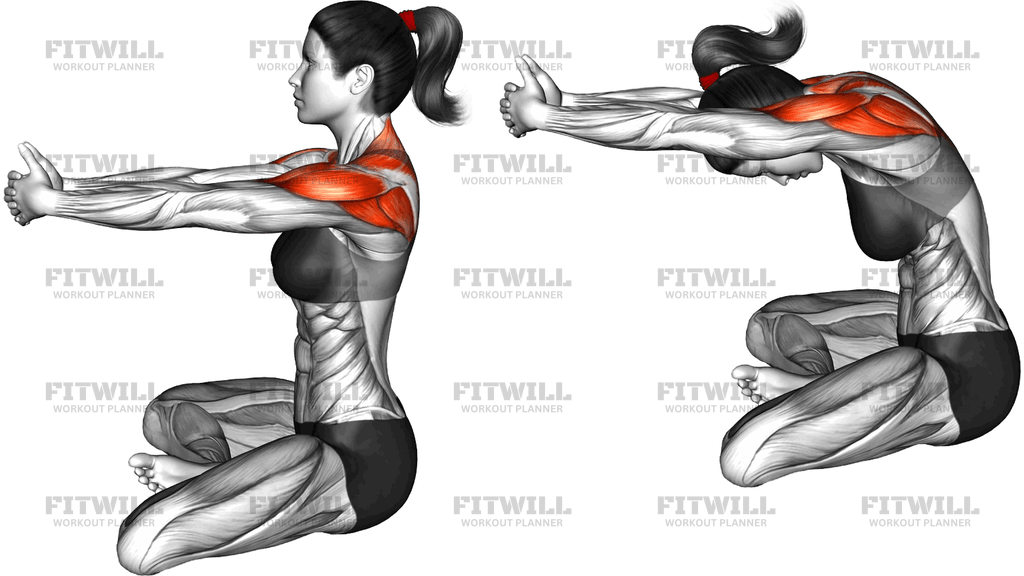
The Seated Forward Reach is a body-weight stretch performed from a kneeling, sit-back-on-your-heels position. You extend both arms straight out in front of you at shoulder height, then round your upper back and reach forward, letting the shoulder blades spread apart as the arms travel as far from the torso as possible. The stretch targets the rear shoulders first and foremost, with the upper back, lats, and the muscles along the spine picking up the tension as you round further.
This movement is especially useful for anyone whose shoulders and upper back feel locked down from desk work, driving, or pressing-heavy training. Because you are seated on your heels with your hips anchored, there is no way to cheat by arching your lower back or shrugging the weight around — the position itself forces the stretch into the exact area where most people are tight. It is a common inclusion in cooldowns, mobility warm-ups, and yoga-style floor sequences.
Setup matters more than it looks. Sitting tall with the arms level and the shoulders relaxed gives you a clean starting line; if you begin with your arms low or your chest already collapsed, you will just fold at the waist and miss the shoulder stretch entirely. Keep the hips glued to the heels throughout so the rounding happens in the thoracic spine and shoulders rather than turning into a hip hinge.
To execute well, think of pushing the floor away with your fingertips. As you exhale, let the chest sink toward the thighs while the arms stay long and the head drops gently between them. The end position looks like a rounded shell: arms extended forward, upper back curved, hips still planted. Hold there, breathe, and let the range grow slightly with each breath rather than forcing it.
Because it requires no equipment and very little space, the Seated Forward Reach is easy to slot in anywhere — after upper-body sessions, between long stretches of sitting, or as part of an evening unwind routine. Move into it slowly and never bounce; the goal is a steady, tolerable stretch across the back of the shoulders and between the shoulder blades, not a maximal reach at any cost.
[ Workout Log & Planner ]
Put your next workout in Fitwill
Keep your plan and training log ready when you are.


Instructions
- Kneel on the floor and sit your hips back onto your heels, resting your hands loosely on your thighs to settle into the position.
- Sit tall through the spine and draw the shoulders back and down so you start from a neutral, upright posture.
- Raise both arms straight forward to shoulder height, palms facing each other or turned slightly inward, with the elbows fully extended.
- Brace lightly through the core and keep your hips pressed into your heels so they stay anchored for the whole stretch.
- Exhale and round your upper back, pushing the arms further forward and letting the shoulder blades spread wide apart.
- Continue reaching until your chest sinks toward your thighs and your head hangs relaxed between your extended arms.
- Hold the end position for 20 to 30 seconds, feeling the stretch across the rear shoulders and upper back.
- Inhale and slowly unroll the spine, bringing the torso back upright while keeping the arms extended at shoulder height.
- Lower the arms to your thighs, reset your posture, and repeat for a second round if needed.
- Breathe steadily throughout — exhale as you reach forward, and use each breath to soften a little deeper into the hold.
Tips & Tricks
- The most common mistake is hinging at the hips instead of rounding the upper back — if your chest just falls toward your thighs with a flat back, you have lost the shoulder stretch. Think 'push the arms away' rather than 'bend down.'
- Keep the hips in contact with the heels at all times. Lifting the hips turns the movement into a forward fold and unloads the rear shoulders entirely.
- Do not shrug. If your shoulders creep up toward your ears as you reach, drop them back down; the stretch should sit across the back of the shoulder, not the neck.
- Let the head hang naturally rather than craning to look forward. A lifted head flattens the upper back and shortens the stretch.
- If kneeling is uncomfortable on your knees or ankles, place a folded towel or mat under your shins or a pad under the knees before settling back onto your heels.
- The reach should feel like a 5 to 7 out of 10 intensity. If you are grimacing or holding your breath, back off — the range improves with repetition, not force.
- Sync the movement with your breath: round deeper on each exhale and hold steady on each inhale. This usually buys a few extra degrees without any extra effort.
- Keep the elbows locked out but not straining. Soft, bent elbows let you fake the reach with the arms instead of earning it from the shoulders and upper back.
- Avoid bouncing at the end range. This stretch works best as a long, quiet hold rather than a rhythmic pulse.
Frequently Asked Questions
Which muscles does the Seated Forward Reach stretch?
It primarily targets the rear shoulders, with strong stretch through the upper back and the muscles between the shoulder blades. As you round further, the lats and the muscles along the spine join in.
Why do I need to sit on my heels for this stretch?
Sitting back onto the heels anchors your hips so you cannot swing or hinge your way into the reach. That锁定 forces the rounding and stretch into the shoulders and upper back, which is exactly where it belongs.
Is the Seated Forward Reach good for beginners?
Yes — it is low-load, requires no equipment, and is easy to scale by adjusting how far you reach. Beginners should focus on keeping the hips down and the shoulders relaxed rather than chasing maximum range.
Should my back be flat or rounded during the Seated Forward Reach?
The upper back should round deliberately — that rounding is what spreads the shoulder blades and stretches the target muscles. Aim to keep the rounding in the mid and upper spine rather than collapsing from the lower back.
How long should I hold the Seated Forward Reach?
Hold the end position for 20 to 30 seconds and repeat one to three rounds. For a cooldown after training, longer holds of 45 to 60 seconds work well.
My knees hurt when kneeling — can I still do this stretch?
Yes. Slide a folded towel, cushion, or exercise mat under your knees and shins, or sit on a low block between your heels instead. The stretch does not change as long as your hips stay anchored and your arms reach forward.
Can I do the Seated Forward Reach every day?
Absolutely. It is gentle enough for daily use and is a good break from prolonged sitting. Just keep the intensity moderate and avoid forcing deeper range on stiff days.
What can I use instead if I cannot kneel at all?
Sit on the edge of a chair or bench with your feet flat, sit tall, and perform the same arm reach and upper-back rounding. The stretch on the rear shoulders and upper back is very similar.
Should I feel this in my neck?
No — neck tension usually means you are shrugging or holding your head up. Drop the shoulders away from the ears and let the head hang heavy between your arms as you reach.
When is the best time to use the Seated Forward Reach?
It works well as a cooldown after pressing or pulling sessions, as a mid-day reset if you sit a lot, or at the end of the day to release the shoulders and upper back. Move into it slowly whenever your muscles are cold.