Child Pose Cat Cow
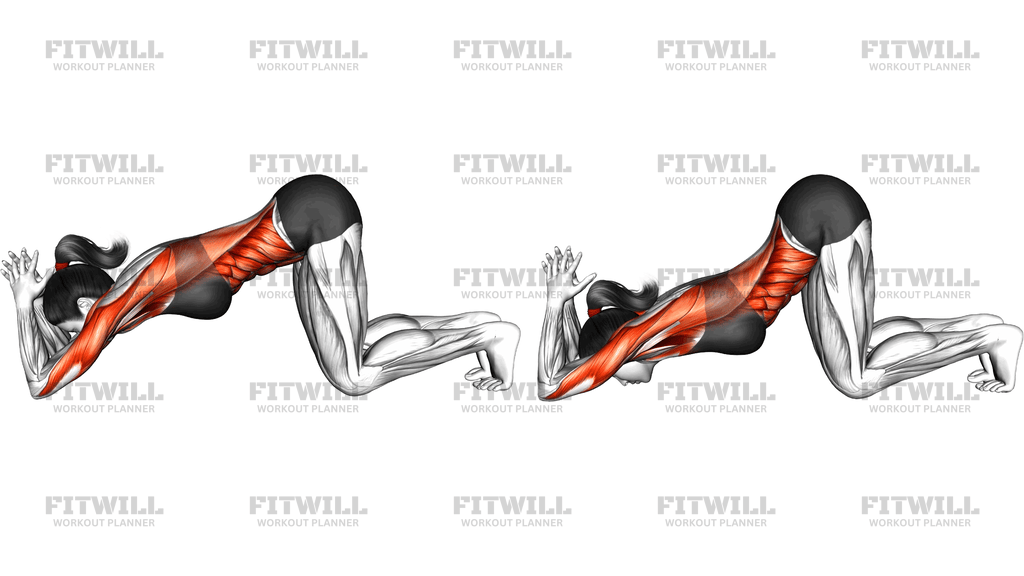
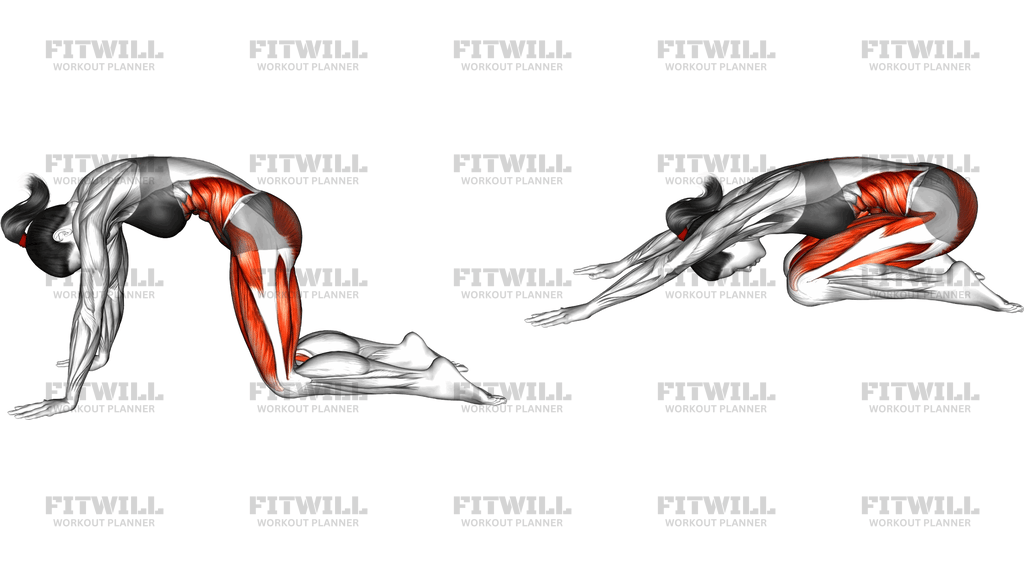
Child Pose Cat Cow is a flowing mobility drill that links two familiar floor positions into one continuous rhythm: a rounded quadruped cat position and a folded child's pose with the arms stretched long overhead. You begin on all fours, round the spine toward the ceiling while easing the hips back, then sweep forward and down into child's pose, letting the chest sink between the extended arms before reversing the path. The whole sequence repeats smoothly with the breath, which is what separates it from a static stretch held in one spot.
This movement is useful for nearly anyone who spends time sitting, lifting, or training hard. Desk workers often lose the ability to articulate the spine segment by segment, and lifters who squat, deadlift, or press frequently tend to carry stiffness through the mid back and lats. Because the drill moves between flexion, neutral, and gentle overhead reach, it mobilizes the erector spinae, lats, and shoulder extensors while sequentially loading and unloading the abdominals and the muscles around the hips.
The setup matters more than it looks. Knees and hands placed correctly on the mat determine whether the transition between the two positions feels fluid or jammed. Hands should be far enough forward that you can travel into child's pose without lifting them or collapsing the wrists, and knees should sit roughly under the hips so the pelvis can rock back toward the heels freely. A folded towel under the knees makes the position comfortable if kneeling on a firm floor bothers you.
To execute it well, think of the spine as moving one segment at a time rather than hinging from one place. In the cat phase, push the floor away, tuck the tailbone, and let the head drop so the back rounds into a smooth arch. Moving into child's pose, keep the arms reaching as the hips travel back toward the heels and the chest lowers toward the floor, feeling a lengthening line from the fingertips through the lats and along the spine. Reverse by pressing into the hands and gliding the chest forward, restacking shoulders over wrists before the next round.
Breathe with the movement: exhale as you round and fold, inhale as you return toward the quadruped position. That pairing keeps the pace honest and stops you from rushing. Eight to ten slow cycles is usually enough to feel the back release, and it slots naturally into a warm-up, a cool-down, or a mid-day reset at home. Move within a comfortable range; the goal is a flowing, pain-free wave through the spine, not forcing the deepest possible fold.
[ Workout Log & Planner ]
Put your next workout in Fitwill
Keep your plan and training log ready when you are.


Instructions
- Kneel on an exercise mat and place your hands flat on the floor, shoulder-width apart, with your knees under your hips and your arms straight.
- Settle into a neutral spine with shoulders stacked over wrists, neck relaxed, and eyes toward the mat.
- Exhale as you round your spine toward the ceiling, tucking the tailbone under and letting your head drop between your arms.
- From the rounded position, begin shifting your hips back toward your heels while keeping your palms planted.
- Continue sinking into child's pose: chest lowering toward the mat, arms extended long in front of you, forehead close to or lightly touching the floor.
- Pause briefly at the bottom of the fold, feeling the stretch travel from your fingertips through your lats and along your spine.
- Inhale and press through your palms to glide your chest forward, returning shoulders over wrists and finding the rounded cat shape again.
- Move with your breath the whole time: exhale on the round and fold, inhale on the return forward.
- Complete 8-10 slow cycles, then rest on your heels for a few breaths before standing or moving on.
Tips & Tricks
- If your knees ache on the mat, fold a towel or pad under them before starting; discomfort there will make you rush the transition and shorten the flow.
- Do not lift your hands off the floor as you travel back into child's pose. If you have to pick them up, they were set too close to your knees at the start.
- Round the spine by pushing the floor away through the palms and tucking the pelvis, not just by dropping the head. The head follows the spine; it does not lead it.
- Avoid dumping all your weight onto the wrists during the return. Press actively through the floor and spread your fingers to share the load.
- If the overhead reach in child's pose pinches your shoulders, walk your hands slightly wider instead of forcing them together overhead.
- Keep the hips moving back evenly. Letting one side lag turns the fold into a twist and shifts the stretch away from the spine.
- Slow down if you find yourself bouncing between positions. The value comes from the segment-by-segment rolling of the spine, not the number of reps.
- Let your forehead rest on the mat or a small block at the bottom of the fold; holding the head up keeps tension in the neck and defeats the release you are after.
Frequently Asked Questions
Which muscles does Child Pose Cat Cow work?
It is primarily a mobility drill for the erector spinae along the spine, with the lats, abdominals, glutes, and the muscles around the hips assisting and lengthening as you flow between positions.
Is Child Pose Cat Cow suitable for beginners?
Yes, it is one of the most accessible floor mobility drills because it uses only body weight on a mat and moves within a range you naturally control. Beginners should simply keep the fold shallow at first.
How is Child Pose Cat Cow different from a regular Cat Cow?
A regular Cat Cow stays in quadruped, arching and flattening the spine in place, while this version adds the travel back into child's pose, which adds a stretch through the lats, hips, and thighs that the stationary version does not reach.
Why do my hands have to slide or lift when I fold back?
That usually means your hands were placed too close to your knees at setup. Start with them a hand-length further forward so your arms can extend fully overhead as the hips reach your heels without lifting.
Should I breathe in or out during each phase?
Exhale as you round the spine and sink into child's pose, and inhale as you press forward to return. Linking breath to movement keeps the rhythm slow and controlled.
What can I use instead of an exercise mat?
A thick towel, a folded blanket, or soft carpet works fine. You just need enough cushioning for the knees during the kneeling phases.
Can I do Child Pose Cat Cow with knee or wrist discomfort?
Pad the knees with a towel, and if wrists are the issue, make fists and bear weight on the knuckles or use angled push-up handles. Skip the movement and consult a professional if either joint produces sharp pain.
How many reps should I do and when should I do them?
Eight to ten slow, breath-paced cycles work well as a warm-up before lifting, a cool-down after training, or a standalone reset during the day. Stop once the back feels loose rather than grinding out extra reps.
Is it safe to round the lower back in this exercise?
For a healthy spine, controlled flexion like this is a normal movement and part of what the drill trains. Stay within a comfortable range, avoid jerking into the positions, and seek guidance if you have a known back condition.