Quadruped Shoulder Cars
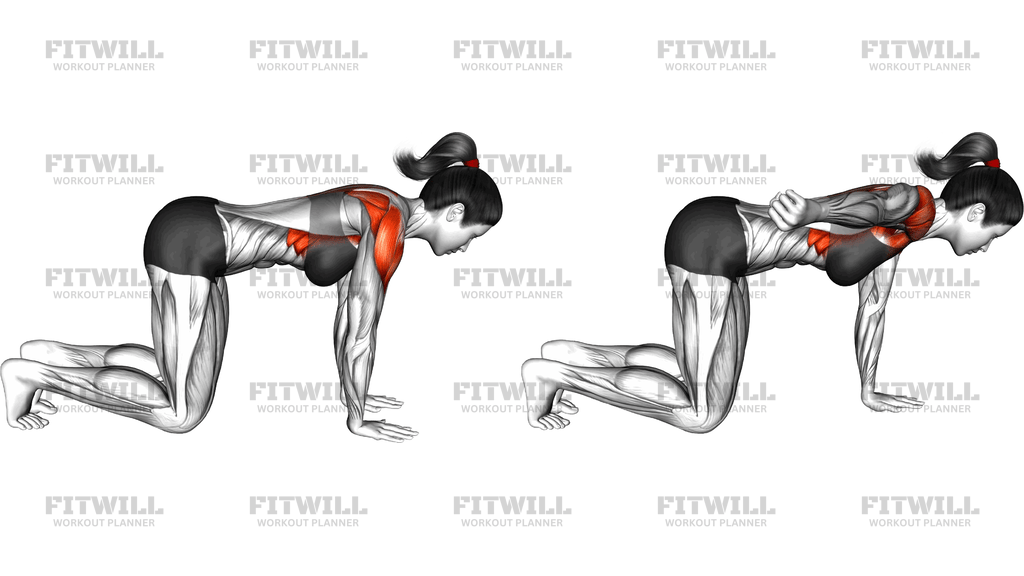
Quadruped Shoulder Cars are a shoulder mobility drill performed from an all-fours position, where CAR stands for Controlled Articular Rotation. From a stable kneeling setup with hands under the shoulders and knees under the hips, you lift one hand just off the floor and slowly sweep that arm through the largest circular path it can travel without the torso twisting or the ribs flaring. The circle typically starts by drawing the hand toward the opposite hip with the elbow bent, then rotating the arm outward and up through a wide arc before bringing it back to the floor.
This drill is aimed at the shoulder joint itself rather than any single muscle. The rotator cuff muscles guide the rotation, the deltoids help move the arm through the arc, and the muscles around the shoulder blade, including the lower traps and serratus anterior, work to keep the blade controlled while the arm travels. Because your weight is spread across three contact points instead of two, the quadruped position gives you just enough challenge to stay honest: any cheating shows up immediately as a shift in the torso or a dump of weight into the supporting hand.
The setup matters more than it looks. Wrists stacked under the shoulders and knees under the hips create a level, square base, and a neutral spine with a gentle brace keeps the rotation happening at the shoulder instead of leaking into the lower back. If the trunk rotates, the moving arm gets a slightly easier job, and you lose the point of the drill. Slow is not optional here; the deliberate tempo is what forces the rotator cuff to control the whole range rather than coast through it.
Quadruped Shoulder Cars fit well as a warm-up before pressing, pulling, or overhead work, and they are equally useful as a standalone daily maintenance drill for anyone whose shoulders feel stiff from desk work, swimming, throwing, or long sessions of holding a barbell. People working on overhead mobility often use them alongside wall slides and band rotations.
Keep the effort at a level you could hold a conversation through. You should feel work in the shoulder muscles and a stretch through part of the arc, but never pinching, clicking with pain, or strain in the neck. If one direction of the circle is much smaller than the other, spend a little extra time there over the coming weeks rather than forcing it in a single session.
[ Workout Log & Planner ]
Put your next workout in Fitwill
Keep your plan and training log ready when you are.


Instructions
- Kneel on an exercise mat and place your hands on the floor directly under your shoulders, knees under your hips, shins and the tops of your feet resting on the mat.
- Set a neutral spine with a long neck, eyes down at the floor, and gently brace your trunk so your back is flat rather than sagging or rounded.
- Shift slightly of your weight into the support hand and opposite knee so the working side is light but the torso stays square to the floor.
- Lift your right hand a few centimeters off the floor, keeping the arm relaxed and shoulder blade still to start.
- Bend the elbow and draw your hand in toward your opposite hip, rotating the shoulder internally as the hand crosses behind your body.
- From there, sweep the arm outward and up in the widest arc you can control, rotating the shoulder externally as the hand travels around toward the front.
- Complete the circle and place the hand back on the floor in the starting position, then repeat for the desired number of slow rotations in that direction before reversing the circle if desired.
- Breathe steadily throughout, inhaling as the arm opens up and exhaling as it sweeps back in, and avoid holding your breath.
- Keep the hips, ribs, and head from rotating with the arm; if the torso starts twisting, shrink the circle until you can keep it still.
- Finish all reps on one side, reset your brace, then switch to the other arm and match the tempo and range.
Tips & Tricks
- The most common mistake is turning this into a torso rotation exercise. Watch that your belt buckle and the back of your head stay pointed at the floor; if they swing with the arm, the shoulder is outsourcing its work to the trunk.
- Shrink the circle before you lose position. A smaller, perfectly controlled rotation trains the rotator cuff more effectively than a big sloppy one.
- Keep the working elbow fairly soft as the hand draws toward the opposite hip, then let the arm lengthen as it opens through the wide part of the arc. A stiff locked elbow shortens the path the shoulder can travel.
- Do not dump your weight into the supporting wrist. Spread the fingers, press the floor away lightly, and keep that shoulder stacked over the hand so the support side does not fatigue first.
- If your wrist or forearm on the working arm complains, make a light fist instead of an open hand; the path of the shoulder does not change.
- Expect the two directions of the circle to feel different. Internal rotation toward the opposite hip is usually tighter for most people, so move slower through that half rather than skipping it.
- Avoid shrugging the moving shoulder up toward the ear as the arm rises. Think of keeping space between the shoulder blade and the ear while the arm travels.
- Treat tempo as the load. Count two to three seconds per half of the circle; if you can move faster than that comfortably, the rotation is probably too small or too loose.
- Two or three slow circles per side before upper body training is usually enough for a warm-up. Doing dozens of fast reps turns a control drill into an endurance exercise and defeats the purpose.
Frequently Asked Questions
What does CAR stand for in Quadruped Shoulder Cars?
CAR means Controlled Articular Rotation, a slow, deliberate circular movement of the joint through its available range. The goal is active control of the shoulder, not stretching or moving quickly.
Which muscles do Quadruped Shoulder Cars work?
The rotator cuff muscles steer the rotation, the deltoids move the arm through the arc, and the muscles around the shoulder blade, such as the lower traps and serratus anterior, keep the blade steady. The trunk also works lightly to stop the torso from rotating.
Are Quadruped Shoulder Cars good for beginners?
Yes, they are a low-load way to learn shoulder control and suit most beginners. Start with a smaller circle and fewer reps, and prioritize keeping the torso square over reaching a large range.
Why is the quadruped position used instead of standing for Shoulder Cars?
Kneeling on all fours removes the balance demand of standing and gives you a stable base, so attention stays on the shoulder. It also makes any torso cheating easy to feel and correct.
How big should the circle be?
As large as you can make it while the hips, ribs, and head stay completely still. If your torso twists or your ribs flare, the circle is bigger than your current control allows.
My supporting wrist aches during Quadruped Shoulder Cars. What should I change?
Spread your fingers, press the floor away gently, and check that the support hand is still stacked under the shoulder. If it still bothers you, do the drill from a tall kneeling or seated position instead.
Should I do Shoulder Cars before or after my workout?
They work best as a warm-up before pressing, pulling, or overhead training, when you want the shoulder moving well under control. They can also be done on their own as daily maintenance.
One shoulder has a noticeably smaller circle than the other. Is that a problem?
Some side-to-side difference is normal. Work both sides equally, spend a little extra slow attention on the restricted side, and expect differences to narrow over weeks rather than in one session.
Is a clicking or popping sound in the shoulder during Quadruped Shoulder Cars harmful?
Painless clicking is common and usually nothing to worry about, especially at slower speeds. If the movement comes with pain, pinching, or discomfort, reduce the range and consult a qualified professional before continuing.
Can I use Quadruped Shoulder Cars if I am returning from a shoulder issue?
They are gentle and often suitable during return-to-training phases, but you should clear the movement with your physical therapist or doctor first. Start with a small, slow circle and stay well below any painful range.