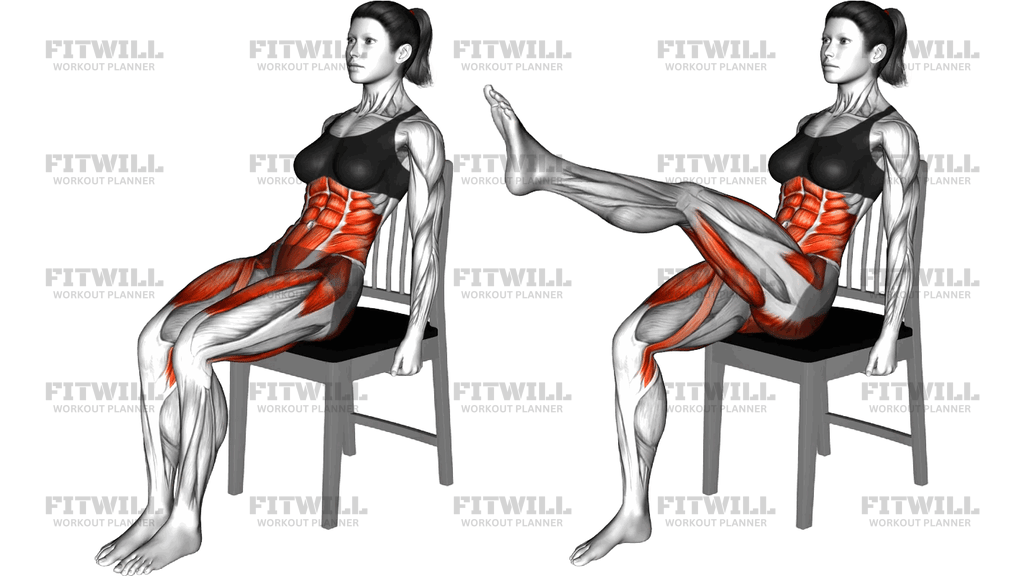
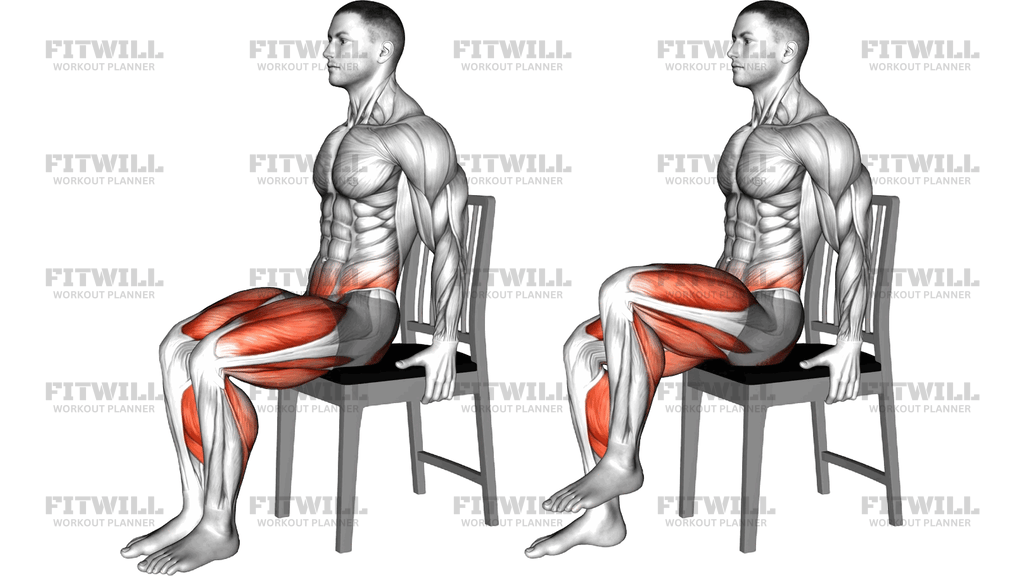
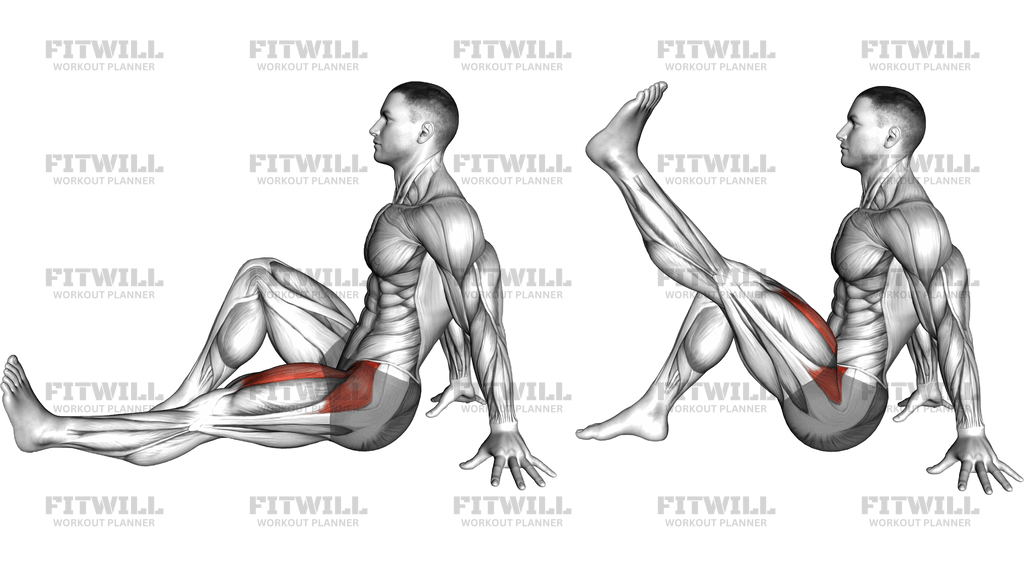
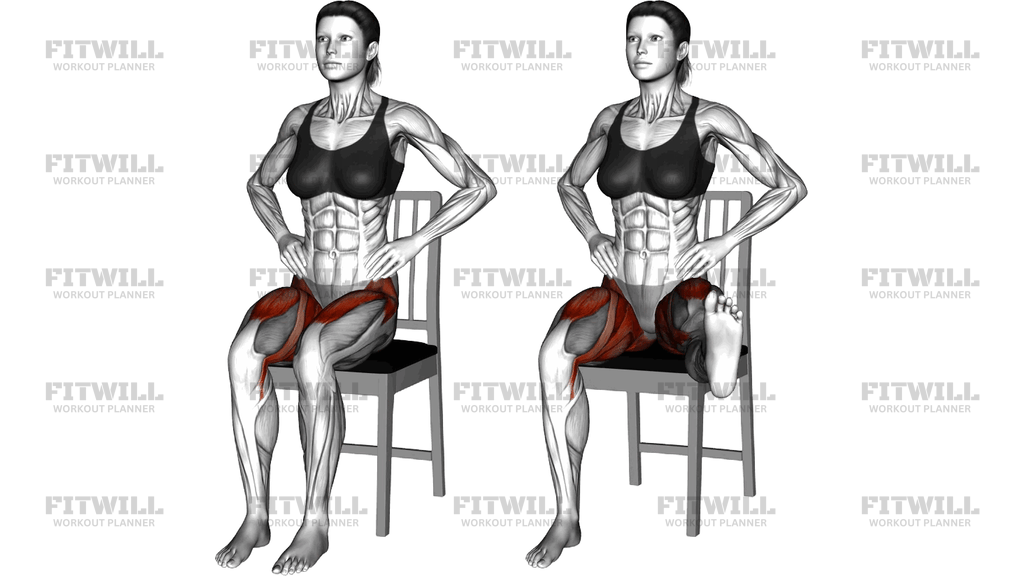
Seated Knee Thrust On A Chair
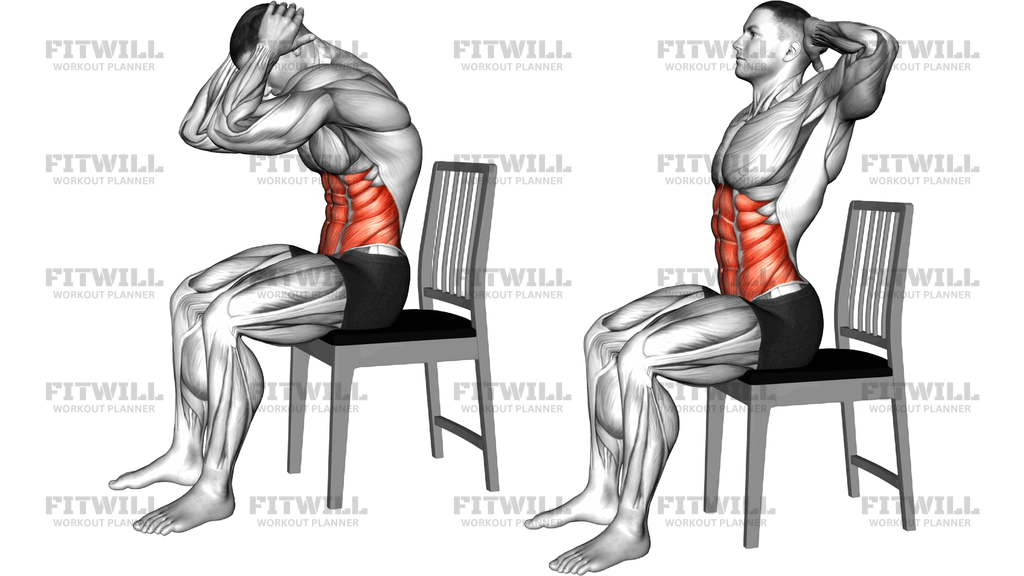
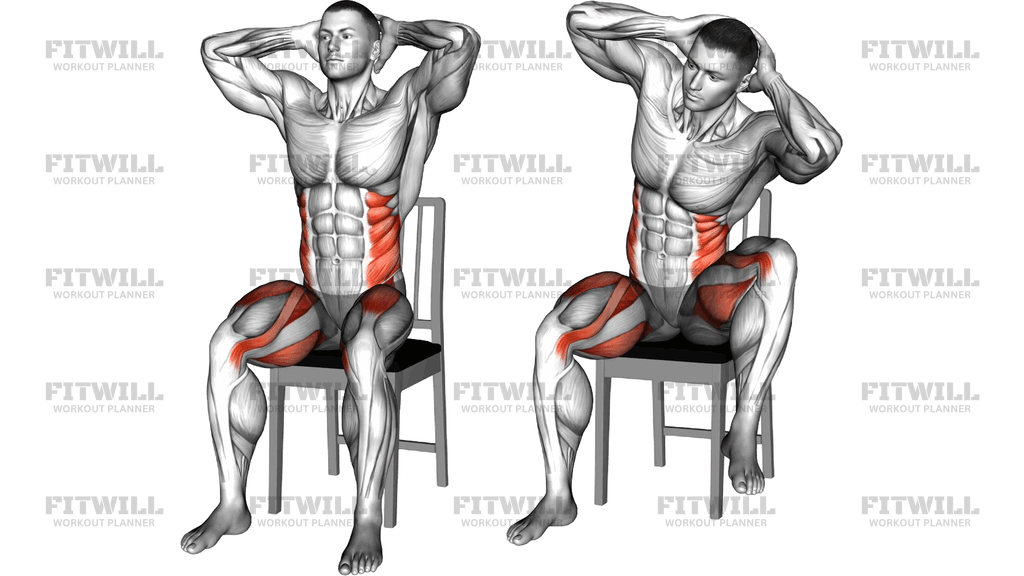
The Seated Knee Thrust On A Chair is a beginner-friendly core exercise that turns an ordinary sturdy chair into an abdominal training station. You sit upright near the front edge of the seat, grip the edge of the seat beside your hips with one hand for support, and raise your opposite arm straight overhead. From there you drive one knee upward toward your torso while the raised arm stays tall or sweeps down to meet it, forcing the abdominals to shorten against your own leg weight.
The main work comes from the lower portion of the rectus abdominis, which rounds the pelvis and pulls the knee toward the chest, and from the hip flexors, which lift the thigh. Because one hand is anchored to the seat and the opposite arm reaches up, the obliques and deep core also stay busy keeping your torso from tipping or twisting as the knee rises. This makes it a surprisingly complete midsection drill despite the minimal setup.
The seated position is what makes this movement special. With your back upright and your hand braced on the chair, your spine is supported and the range of motion is naturally limited to what your hip and trunk can control. That makes the exercise a good fit for beginners, older adults, office workers breaking up long sitting periods, or anyone who finds floor crunches uncomfortable on the neck, lower back, or tailbone.
To execute it well, sit tall rather than slumped, and think of lifting your kneecap toward your chest instead of just swinging your leg. The torso should curl slightly forward and down as the knee rises, so your ribs and pelvis move toward each other. Pause briefly at the top, then lower the leg slowly with control until the foot returns to the floor. Rushing the descent robs you of most of the benefit.
You can use this exercise as a warm-up before heavier training, as a high-repetition finisher, or as a standalone core circuit at home or in the office. Because each rep can be done on the same side for a set or alternated leg to leg, it is easy to scale the difficulty by adjusting reps, speed, and how high you drive the knee.
For safety, always use a stable chair without wheels, with all four legs on a non-slip surface. Keep your supporting hand gripping the seat, not resting loosely on it, so you have something to pull against if you wobble. Move within a range where your lower back stays comfortable, and stop if you feel any pinching in the front of the hip.
[ Workout Log & Planner ]
Put your next workout in Fitwill
Keep your plan and training log ready when you are.


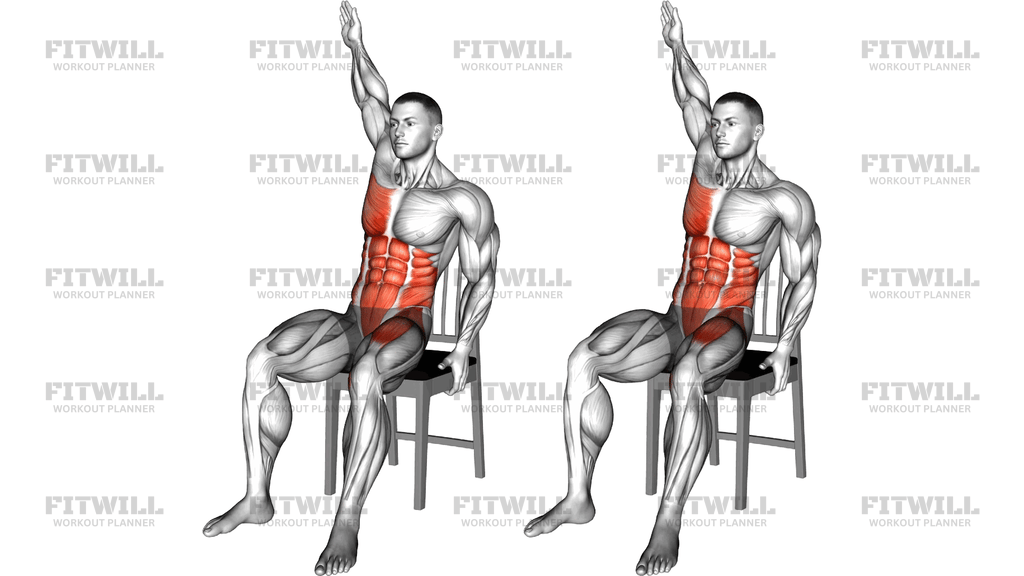
Instructions
- Position a sturdy, armless chair on a non-slip floor and sit toward the front edge of the seat with your feet flat on the floor, hip-width apart.
- Place your left hand on the seat beside your left hip and grip the edge of the seat firmly so your torso is supported from behind.
- Raise your right arm straight up overhead with your palm facing inward, and sit tall so your ears, shoulders, and hips line up.
- Brace your abdominals lightly as if preparing for a gentle poke to the stomach, and keep your chest lifted.
- Exhale and drive your right knee up toward your chest while curling your ribs down toward your pelvis so your torso rounds slightly forward.
- Let the raised arm sweep down and across toward the lifted knee at the top of the movement, squeezing your lower abdominals hard for a one-second hold.
- Inhale and lower the leg slowly, keeping tension in your abs rather than letting the foot drop and thud onto the floor.
- Complete all repetitions on one side, then switch your grip so the right hand holds the seat and the left arm reaches overhead, and repeat with the left knee.
- Between sets, reset your posture: sit tall, both feet flat, and re-grip the seat before starting the next set.
Tips & Tricks
- A common mistake is lifting the knee with the hip flexors alone while the torso stays perfectly upright, which turns this into a leg raise. Curl your upper body down a few degrees so the abdominals actually shorten.
- If the chair slides or wobbles, push it against a wall so the backrest cannot tip backward under your grip.
- Do not let your supporting shoulder shrug up to your ear as you pull; keep that shoulder blade pressed down so the work stays in your core.
- Keep the moving foot relaxed. Pointing or flexing it hard shifts tension into the thigh and shin and distracts from the abdominal contraction.
- If you feel a pinch at the front of the hip, reduce how high you drive the knee and slow the tempo; the restriction usually comes from rushing the lift rather than the range itself.
- Alternate legs rep by rep if holding one knee up repeatedly throws your balance toward the supporting arm.
- Exhale sharply on the knee drive, not halfway through it. Breathing out late is one of the most common reasons the abdominal squeeze feels weak at the top.
- To make the exercise harder, pause two full seconds at the top with your foot hovering just off the floor instead of resting between reps.
- Avoid collapsing backward onto your gripping hand. Your hand is there for balance and light support, not to carry your body weight through the set.
Frequently Asked Questions
What muscles does the Seated Knee Thrust On A Chair work?
The lower abdominals drive the knee lift with help from the hip flexors, while the obliques and deep core stabilize your torso against the twist created by the one-sided grip and overhead arm.
Is the Seated Knee Thrust On A Chair good for beginners?
Yes, it is one of the most approachable core exercises because the chair supports your spine and the resistance is just your own leg. Beginners should start with eight to ten controlled reps per side.
Why does one hand grip the seat during the Seated Knee Thrust On A Chair?
Gripping the seat edge anchors your torso so you can lift the knee without tipping backward, and it gives the obliques something to work against as they keep your body from rotating.
Should the opposite arm stay overhead or come down toward the knee?
Start the rep with the arm overhead, then let it sweep down toward the knee as you exhale. Coordinating the arm with the knee helps the ribs and pelvis move toward each other, which strengthens the abdominal contraction.
What kind of chair should I use for the Seated Knee Thrust On A Chair?
Use a stable, armless chair with four legs and no wheels, placed on a non-slip surface. Rolling office chairs and lightweight folding chairs can slide or tip and are not safe for this movement.
Why do I feel the Seated Knee Thrust On A Chair more in my hip than my abs?
That usually means the knee is being lifted by the hip flexors while your torso stays rigid. Slow down, curl your chest a few degrees toward the lifted knee, and focus on exhaling fully at the top of each rep.
Can I do the Seated Knee Thrust On A Chair every day?
Because the load is light, most people can perform it frequently, but your abdominals still benefit from rest days between harder core sessions. Two to four focused sessions per week is a reasonable rhythm.
What can I use instead of a chair for this exercise?
Any firm, stable seat works, such as a sturdy bench or the edge of a solid step. Avoid soft couches or anything without a firm edge you can grip beside your hip.
How do I make the Seated Knee Thrust On A Chair harder without adding weight?
Pause with your foot hovering just off the floor for two to three seconds at the top, slow the lowering phase to a three-count, or hold the top position for longer sets to increase time under tension.