Standing Rest Pose
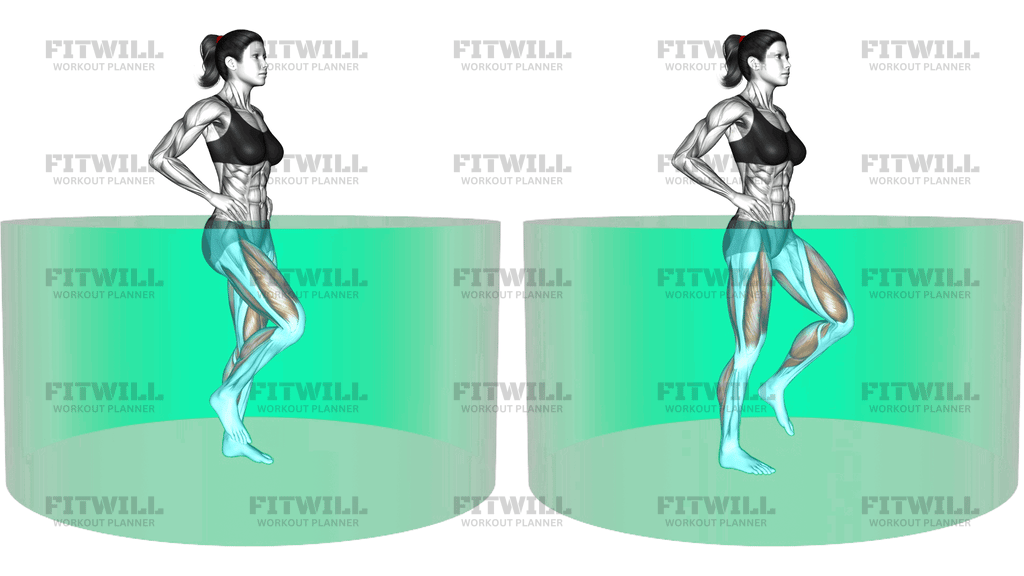
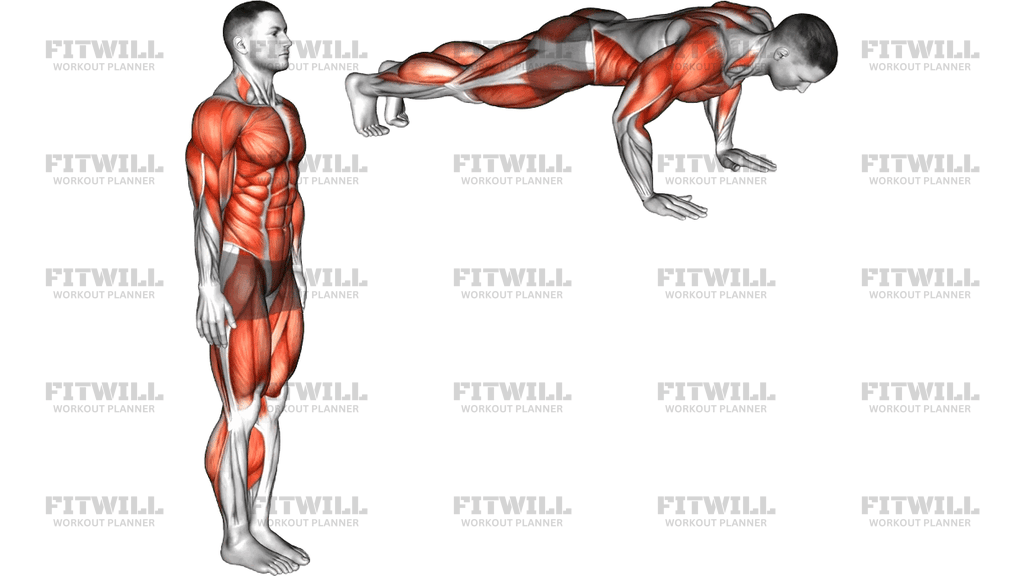
The Standing Rest Pose is a deliberate upright standing position used to reset the body between exercises, settle the breath, and re-establish good posture. From the outside it looks like simply standing with the arms relaxed at the sides and the feet about hip-width apart, but done with attention it becomes an active position: the weight spreads evenly across both feet, the legs stay engaged without locking, the ribcage stacks over the pelvis, and the shoulders hang back and down rather than rounding forward.
This pose is useful for everyone, but it especially helps people who move quickly between sets without really recovering, or who spend long hours sitting and have lost the feel of a neutral standing position. Between heavy lifts, circuits, or bodyweight work, standing tall for thirty to sixty seconds lets the heart rate drift down while keeping the body organized, so the next set starts from a better position than if you slumped onto a bench or wandered around hunched over.
Although no load is being moved, several muscle groups are quietly working. The deep core and lower back hold the torso upright, the glutes and hip stabilizers keep the pelvis level, and the calves and small muscles of the feet manage balance as your weight shifts subtly over your base. Holding the pose well trains endurance in these postural muscles, which carries over to squats, presses, carries, and everyday standing.
The setup matters because standing is where most people rehearse their worst habits: knees locked back, hips pushed forward, chest collapsed, chin jutting. Taking the pose seriously means building it from the ground up, feet first, then stacking ankles, knees, hips, ribs, and head. When each joint sits over the one below it, the muscles work far less hard to hold you up, and the pose actually feels restful instead of effortful.
To execute it well, plant the feet hip-width apart with the toes pointing forward, soften the knees slightly, and let the arms hang naturally at your sides. Breathe through the nose, letting the belly and lower ribs expand, and use each exhale to settle the shoulders a little further away from the ears. There is no movement path to trace and no rep to count; the work is entirely in maintaining the position and noticing where you tend to leak tension or collapse.
Use the Standing Rest Pose as active recovery between sets, as a warm-up drill to groove posture before training, or as a short standalone practice for anyone rebuilding awareness after long periods of sitting. It carries very little risk since there is no external load, but if standing for a minute causes dizziness or joint discomfort, sit briefly or lean against a wall until your tolerance improves.
[ Workout Log & Planner ]
Put your next workout in Fitwill
Keep your plan and training log ready when you are.


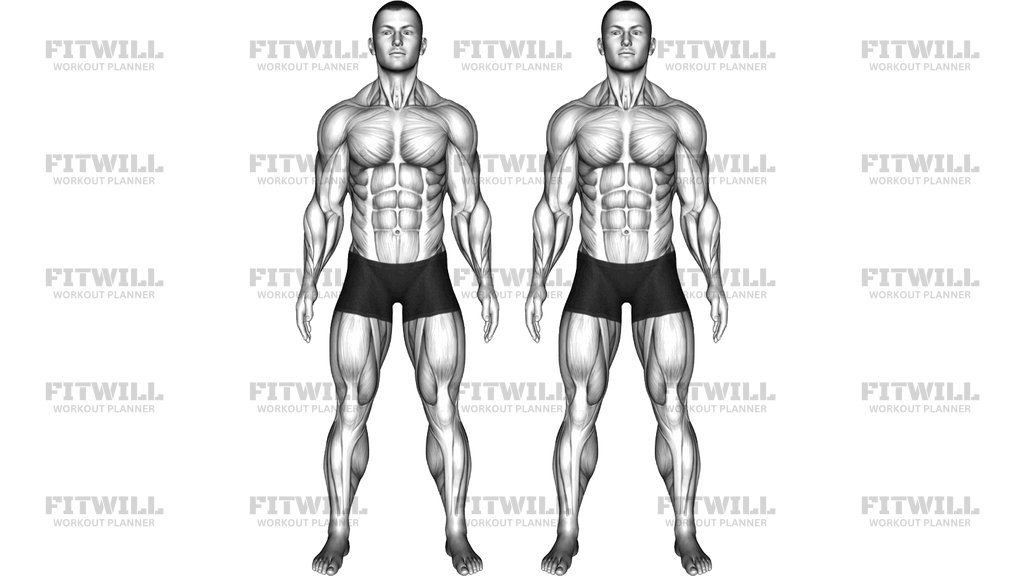
Instructions
- Stand with your feet about hip-width apart, toes pointing forward, and shift your weight until it feels even across the heel, the ball, and the outer edge of each foot.
- Let your arms hang loose at your sides with the palms facing your thighs and the fingers relaxed, holding no tension in the hands or forearms.
- Soften your knees so they are straight but not locked back, and gently squeeze the glutes just enough to feel the pelvis settle into a neutral, level position.
- Stack your ribcage directly over your pelvis, then draw the shoulders back and down so the chest stays open without arching the lower back.
- Level your gaze forward and lengthen the back of the neck, as if the crown of the head were being lifted toward the ceiling.
- Breathe slowly through the nose, expanding the belly and lower ribs on each inhale and letting the shoulders drop a little more on each exhale.
- Hold the position for thirty to sixty seconds, checking your posture each time you notice your weight drifting to one foot or your knees snapping back into a lock.
- To finish, simply walk away from the spot or transition into your next exercise, keeping the same tall posture as you move.
Tips & Tricks
- The most common fault is locking the knees back and resting in the joints; keep a soft bend so the thigh muscles share the work instead of the ligaments.
- Watch for the hips drifting forward so the weight hangs on the lower back; nudge the hips back over the ankles until your weight feels centered in the feet.
- If your shoulders creep toward your ears, exhale fully and let the arms go heavier; the shoulder blades should feel like they are sliding down your back, not pinched together hard.
- Many people hold their breath when trying to stand 'correctly'. Keep a steady nasal breathing rhythm the whole time, since the pose should lower tension, not add to it.
- Check your weight distribution every fifteen seconds or so; a slow drift onto one leg is the clearest sign the pose has turned into passive standing.
- If balancing feels shaky, shorten your stance slightly rather than widening it dramatically, and let the toes grip the floor gently to steady yourself.
- Treat the pose as practice for your other lifts by keeping the same rib and pelvis position you would use at the top of a squat or deadlift.
- If you feel lightheaded after a hard set, lean your upper back against a wall while keeping the same foot and hip setup instead of abandoning the posture entirely.
Frequently Asked Questions
What muscles does the Standing Rest Pose actually work?
It mainly trains postural endurance in the deep core, lower back, glutes, and calves, along with the small stabilizing muscles of the feet and ankles. The demand is low but continuous, which is exactly what these muscles are built for.
Is the Standing Rest Pose suitable for complete beginners?
Yes, it is one of the safest starting points in training because there is no load and no movement to coordinate. Beginners benefit most from it, since it teaches the standing posture that every other standing exercise builds on.
How long should I hold the Standing Rest Pose between sets?
Thirty to sixty seconds is enough for most people to catch their breath while staying upright and organized. If you need longer to recover from a heavy set, keep standing but let the pose become less active.
Why is standing considered an exercise at all if no weight is being lifted?
Holding an aligned standing position keeps the postural muscles under low-level tension, which builds their endurance and sharpens your awareness of posture. That awareness transfers directly to squats, presses, and daily life.
How do I know if my stance in the Standing Rest Pose is correct?
Your feet should be hip-width with the toes forward, and your weight should feel spread across both heels and forefoot. If you cannot tell which foot carries more weight, or you feel pressure only in your heels, reset and redistribute.
Can I use the Standing Rest Pose as a warm-up?
Absolutely. Standing tall for a minute or two before training raises awareness of your rib and pelvis position and gets the postural muscles switched on before you add load or speed.
What is the most common mistake in the Standing Rest Pose?
Letting it become passive standing: knees locked, hips pushed forward, shoulders rounded, weight on one leg. Check yourself every fifteen seconds and rebuild the position from the feet up whenever you notice the drift.
What can I use instead if standing for a minute is uncomfortable?
Lean your upper back lightly against a wall while keeping the same foot position and tall posture, or sit upright on a bench with the feet planted. You lose a little balance work but keep the postural practice.
Is there any safety concern with the Standing Rest Pose?
The risks are minimal because there is no external load, but standing still after intense exercise can cause dizziness in some people. If you feel lightheaded, walk gently or sit down briefly rather than forcing yourself to stay planted.