Squat To Toe Stretch Plantar Flexion
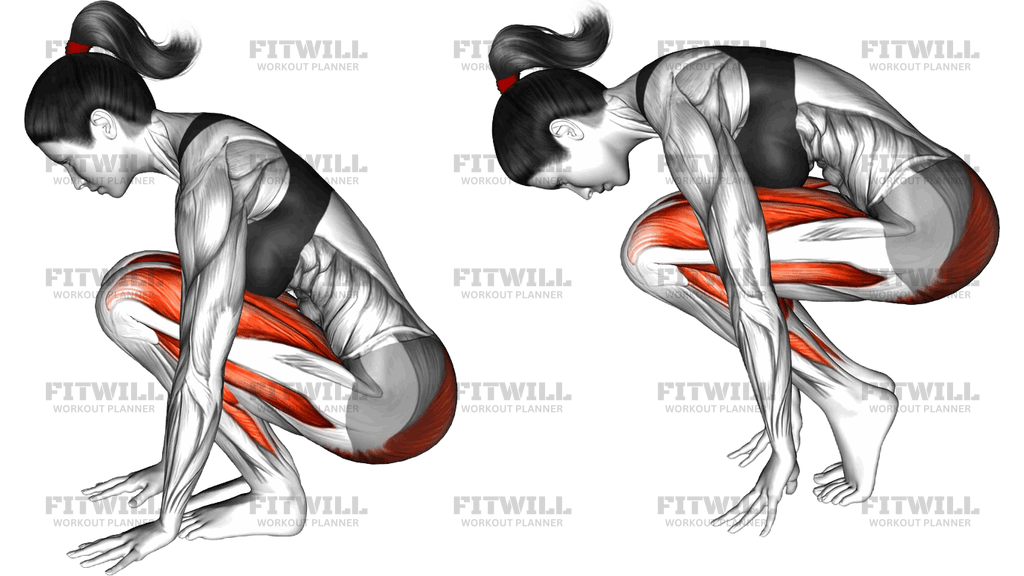
Squat To Toe Stretch Plantar Flexion is a body-weight mobility drill that takes you into a deep squat and then shifts your weight forward onto the balls of your feet, lifting your heels as high as possible before settling back down. It combines two positions that most people rarely visit: a full-depth squat with the hips folded closed, and a tall, loaded plantar-flexed position on the toes. Moving between them wakes up the ankles, feet, and hips in a way that isolated calf stretches on a step simply cannot.
This movement is especially useful for anyone who feels stuck in their ankles during squats, runers looking to keep their calves and feet resilient, and people who sit for long hours and have lost comfort in deep knee and hip flexion. Because the calves, quads, glutes, and hip flexors all get worked or stretched in one flow, it works well as a warm-up before lower-body training or as a standalone mobility session on recovery days.
Setup matters more than it looks. Your feet stay roughly shoulder-width apart with heels down in the squat portion, and your fingertips can touch or hover near the floor for balance as you sink. When you rock up onto your toes, the goal is to bring your hips up and forward while keeping your chest tucked toward your thighs, so the load travels through the forefoot and toes rather than dumping into the knees.
Executed well, you sink into the squat with a long spine, pause briefly, then press through the balls of the feet to lift the hips into the toe stretch, feeling the calves and the soles of the feet engage while the back of the hips opens. Lower the heels with control, reset, and repeat for smooth, unhurried repetitions. The transition itself is the point: slow rocking between the two shapes teaches the ankles and hips to move together.
Common use cases include pre-squat ankle preparation, improving toe-off mechanics for running and jumping, and rebuilding confidence in deep knee bends. It requires no equipment and very little space, so it travels well and fits easily into any routine.
A few practical points keep this safe. Never force depth in either position, keep the heels lowering under control rather than dropping, and expect the toes and forefoot to work harder than you anticipate. If your heels will not stay down in the squat at first, that is normal; work within your current range and let it improve over weeks, not days.
[ Workout Log & Planner ]
Put your next workout in Fitwill
Keep your plan and training log ready when you are.


Instructions
- Stand with your feet about shoulder-width apart, toes turned out slightly, and soften your knees.
- Hinge at the hips and sink into a deep squat, letting your fingertips touch or hover just above the floor between or beside your feet for balance.
- Keep your heels down, chest close to your thighs, and a long, neutral spine rather than a rounded lower back.
- Take a breath in the bottom position and feel the stretch through the hips, groin, and the backs of the ankles.
- Press firmly through the balls of your feet and all ten toes to lift your heels as high as they will go, letting your hips rise up and forward as you do.
- Hold the tall toe stretch for one to two seconds, with your weight balanced over the big toe and second toe, not rolling to the outside.
- Lower your heels slowly and with control back to the floor, returning to the deep squat rather than standing up.
- Exhale as you rise onto the toes and inhale as you settle back into the squat, keeping the breathing steady throughout.
- Complete 5-10 smooth repetitions, pausing in the squat each time before rocking forward again.
- To finish, walk your hands forward, straighten the legs into a gentle forward fold, then stand up slowly.
Tips & Tricks
- If your heels lift early during the squat portion, widen your stance a few inches and turn the toes out more so the hips can sink between the feet.
- Do not let the ankles collapse inward when you rise onto the toes; driving through the base of the big toe keeps the knees tracking safely.
- A common mistake is rushing the transition and bouncing between positions, which turns a mobility drill into uncontrolled momentum. Slow the rocking down deliberately.
- If your fingertips cannot reach the floor, place your hands on a low step, block, or the edge of a sturdy surface instead of rounding your back to reach down.
- Watch for the hips staying low while the heels rise; the point of the plantar flexion phase is to lift the hips up and over the toes, which loads the calves properly.
- Tight calves often make the squat phase shaky. Spend an extra second at the bottom with heels down before each toe lift to let the ankles gradually accept the range.
- Keep the knees tracking over or slightly outside the toes in both phases; knees caving inward usually means the hips and ankles need a wider setup.
- If your toes cramp when you press up, spread them on the floor during the squat first, and reduce how high you lift for the first few sessions.
- Warm ankles handle this much better. A minute of easy ankle circles or a short walk beforehand makes the toe stretch noticeably more comfortable.
Frequently Asked Questions
What muscles does the Squat To Toe Stretch Plantar Flexion target?
It primarily loads and mobilizes the calves as you press onto the toes, while the squat portion stretches the quads, glutes, hip flexors, and groin. The small muscles of the feet and ankle stabilizers also work hard to keep you balanced on the forefoot.
Is the Squat To Toe Stretch Plantar Flexion good for beginners?
Yes, as long as the range is scaled to what you currently have. Beginners can hold a doorframe or place hands on a block for balance and lift the heels only partway, progressing gradually as ankle and hip mobility improve.
Why do my heels need to stay down during the squat part?
Keeping the heels down in the squat is what creates the full ankle dorsiflexion stretch, which is the position many people lack for deep squats and running. If the heels lift early, the drill loses most of its ankle benefit.
Should I use my hands on the floor during this movement?
Light fingertip contact with the floor is expected and helpful for balance in the deep squat. Just avoid leaning so heavily on the hands that your weight stops loading the feet and ankles.
What is the most common mistake in the Squat To Toe Stretch Plantar Flexion?
The most common errors are rushing the rocking motion and rising onto the toes without lifting the hips, which turns the movement into a calf bounce. Slow the tempo and make sure the hips travel up and forward during the plantar flexion phase.
Can I substitute this if a deep squat is uncomfortable for my knees?
You can perform a supported version holding a squat rack, doorframe, or sturdy chair, squatting only as deep as is comfortable. Alternatively, do the toe-raise portion from a standing position and work on squat depth separately.
How many repetitions should I do?
Five to ten slow, controlled repetitions work well, either as a warm-up before leg training or as part of a daily mobility routine. The emphasis is on quality of the two positions, not on fatigue.
Why do my toes and forefeet feel sore after doing this?
Rising onto the toes from a deep squat places a significant load through the forefoot and toe flexors, which most training neglects. Mild soreness is normal at first; if it is sharp or persistent, reduce the hold time and how high you lift.
Is the Squat To Toe Stretch Plantar Flexion a stretch or a strength exercise?
It is best classified as a mobility and stretching drill, though the plantar flexion phase does actively strengthen the calves and foot muscles. Treat it as movement preparation or recovery work rather than a primary strength builder.