Standing Air Bike Foot Tap
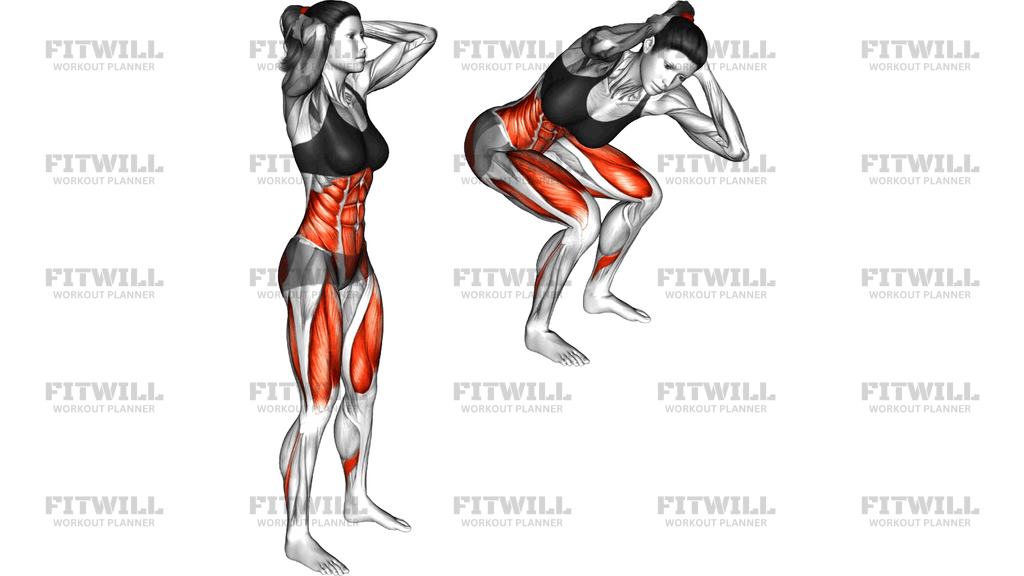
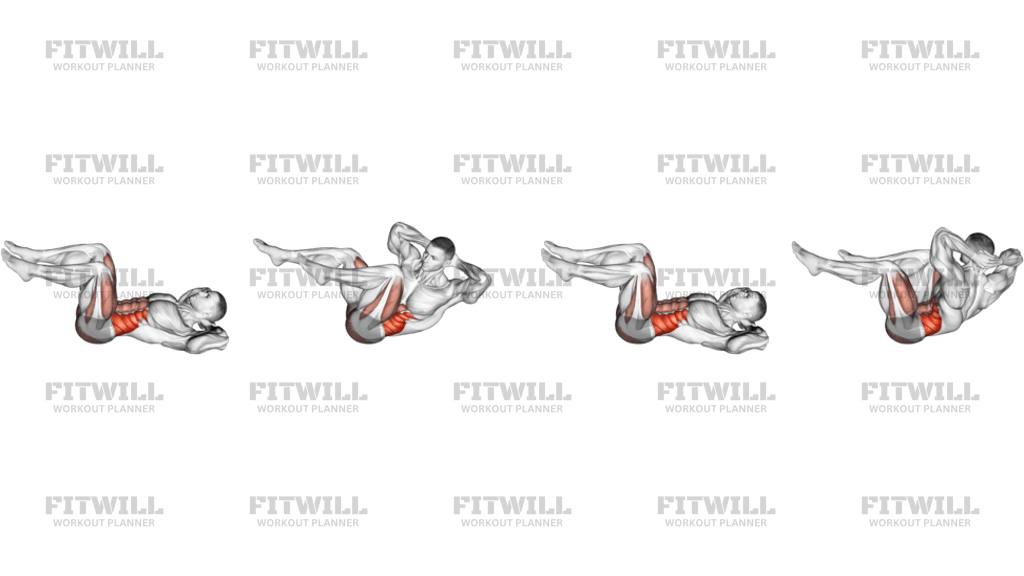
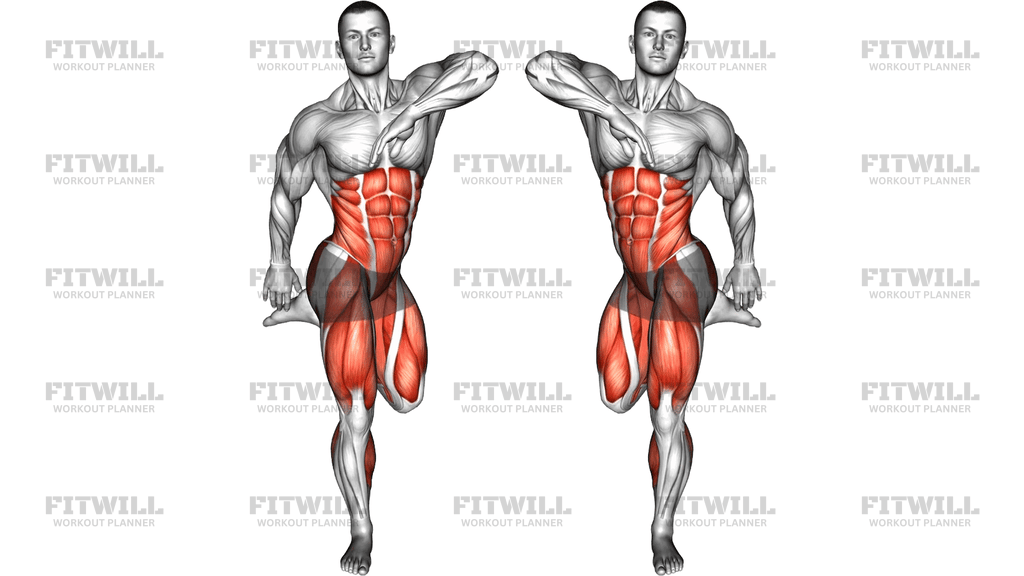
The Standing Air Bike Foot Tap takes the well-known bicycle crunch and stands it upright. Instead of lying on the floor and pedaling your legs through the air, you stand tall with your hands behind your head, drive one knee up and across your body, and rotate your torso so the opposite elbow travels toward that knee. The foot taps lightly down between repetitions, which gives the exercise its name and sets the rhythm for the alternating pattern.
This movement is a solid choice for anyone who wants direct oblique and abdominal work without getting down on the floor. It suits home workouts, warm-ups, hotel-room training, and group settings where floor space or mat hygiene is a concern. Because you stay on your feet, it also demands a bit of balance and single-leg control that the lying version simply does not ask for, which makes it useful for people who want their core work to carry over to walking, running, and rotational sports.
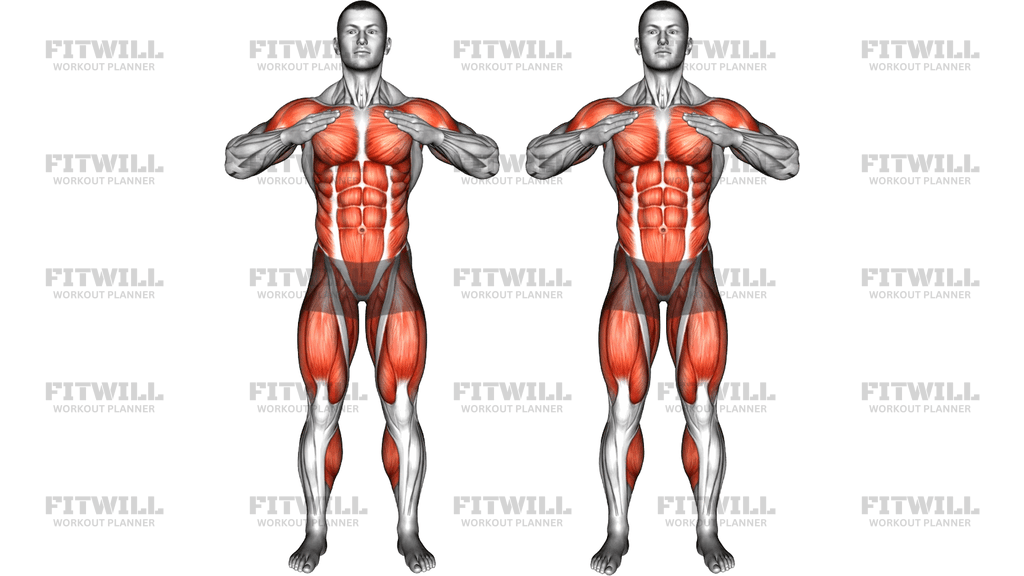
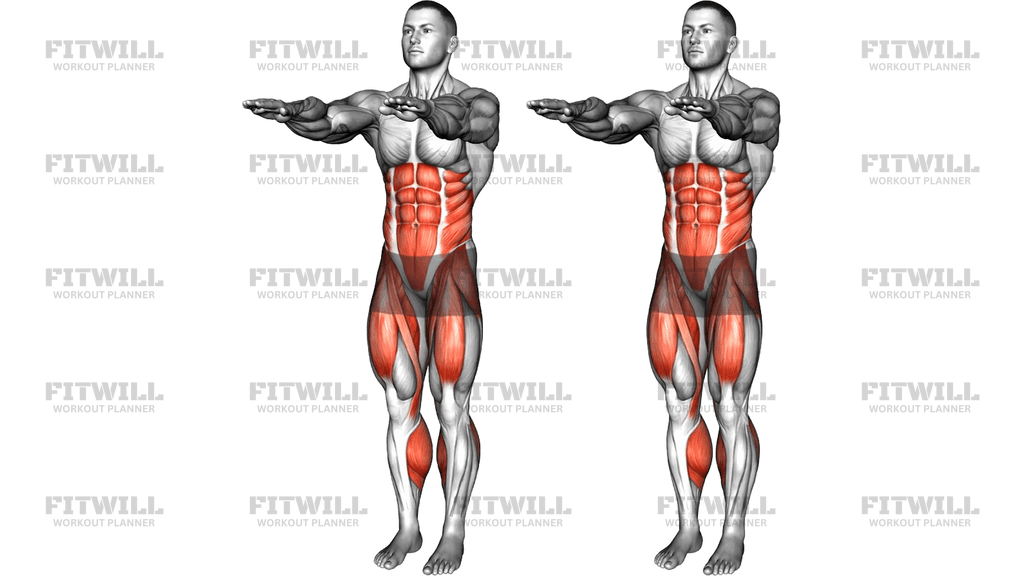
The main work comes from the abdominal wall, with strong involvement from the obliques as the ribcage rotates toward the lifting knee. The hip flexors raise the thigh, the quads help bend the knee, and the glutes and standing leg stabilize your base through every rep. Think of it as a rotation-driven core exercise with a lower-body assist, not a leg exercise in disguise.
Setup matters more than speed here. A stance about shoulder-width or slightly wider gives you a stable base to rotate on, and hands placed lightly behind the head — rather than pulling on the neck — keep the emphasis on the trunk. The knee should drive up and slightly across the midline while the torso turns to meet it; the tap of the foot on the floor between sides is your reset point and your pace setter.
To execute it well, brace the abdomen before each rep, exhale as the knee comes up, and let the ribs and hips rotate together instead of just swinging the elbows side to side. Common use cases include metabolic circuits, standing core finishers, and low-impact conditioning blocks where you want continuous movement without equipment.
Keep the movement controlled and moderate in range at first. If you feel it in your lower back or neck rather than around the waist and abdomen, slow down, shorten the knee drive, and reduce the rotation slightly until the trunk is doing the work.
[ Workout Log & Planner ]
Put your next workout in Fitwill
Keep your plan and training log ready when you are.


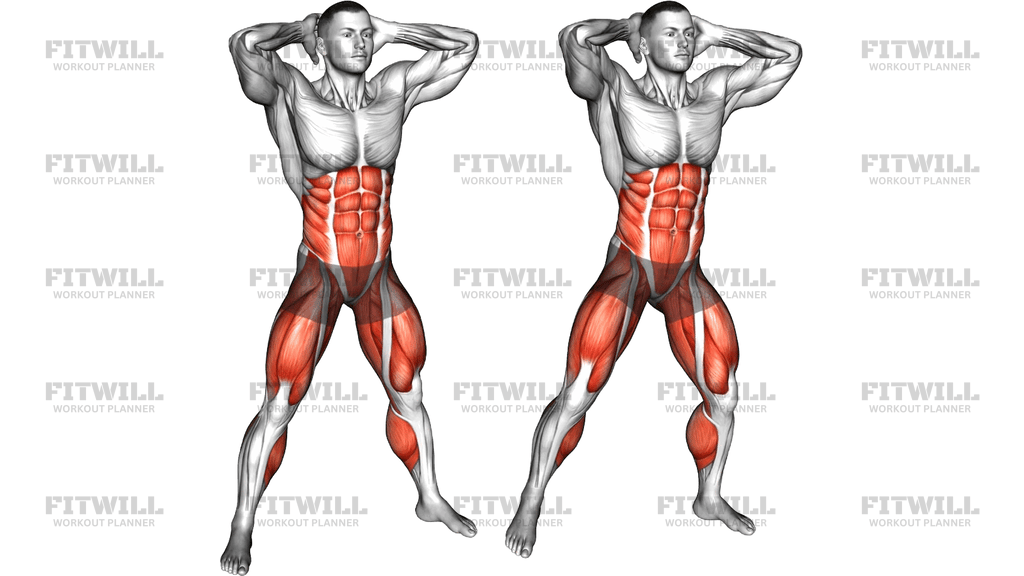
Instructions
- Stand with your feet roughly shoulder-width apart or slightly wider, toes turned out a few degrees, weight evenly distributed across both feet.
- Place your hands lightly behind your head with elbows out wide, fingers resting near the ears without interlacing or pulling on the neck.
- Draw your navel in slightly and brace the abdominal wall to set your trunk before moving.
- Shift your weight slightly onto one leg and drive the opposite knee up and across the front of your body.
- At the same time, rotate your torso so the elbow on the standing-leg side travels toward the raised knee, letting the ribs turn with the shoulders.
- Pause briefly at the top where the elbow and knee meet or come close, keeping your torso tall rather than hunched forward.
- Lower the raised leg in a controlled manner and tap the foot lightly on the floor to reset the rhythm.
- Immediately repeat on the other side, driving the opposite knee toward the other elbow in a smooth alternating pattern.
- Exhale as each knee drives up, inhale as the foot taps down, and keep breathing steadily rather than holding your breath.
- Complete all repetitions with even tempo on both sides, then stand tall, release the hands from behind the head, and shake out the hips before your next set.
Tips & Tricks
- The most common mistake is yanking the head forward with the hands. Keep the fingers as hooks behind the head and let the torso rotation — not the arms — bring the elbow toward the knee.
- If you swing the elbows side to side without rotating the ribcage, the obliques stop doing the work. Cue yourself to turn the belly button and chest toward the lifting knee on every rep.
- Do not let the standing knee lock out or drift inward as you balance. A soft knee and an even pressure across the whole foot keep the base quiet.
- Rushing kills this exercise. Use the foot tap as a built-in tempo: touch down, brace, then drive the next knee up with intent.
- Keep the knee drive across the midline rather than straight up in front. The crossing path is what separates this from a plain standing knee raise.
- Shorten the range if your lower back arches or your torso falls backward at the top. A smaller, tighter rotation beats a big sloppy one.
- Watch the foot that taps down — it should land under control near its starting line, not slap down wide or far behind you.
- If balance is shaky, widen the stance a few inches before reducing effort anywhere else. A wider base solves most wobble without changing the movement.
- Breathe out sharply as the knee comes up. This exhale naturally tightens the abdominal wall and makes the rotation feel crisper.
Frequently Asked Questions
What muscles does the Standing Air Bike Foot Tap work?
The primary work is in the abdominal wall, especially the obliques, which rotate the torso toward the lifting knee. The hip flexors raise the thigh, and the quads, glutes, and standing leg stabilize the movement.
How is the Standing Air Bike Foot Tap different from a floor bicycle crunch?
It replaces the lying position with a standing one, so instead of pedaling both legs through the air you drive one knee up at a time and tap the foot down between reps. The standing version adds balance and single-leg stability demands that the floor version does not have.
Why do my elbows move a lot but my waist feels nothing?
That usually means you are swinging the arms instead of rotating the ribcage. Keep the hands light behind the head and consciously turn your chest and belly button toward each lifting knee so the trunk does the work.
Should my elbow actually touch my knee in the Standing Air Bike Foot Tap?
Contact is optional. Bringing them close is enough; forcing a touch by hunching the shoulders or pulling the head forward costs more than it gains.
Is this exercise suitable for beginners?
Yes, as long as the tempo stays controlled and the knee drive stays modest at first. Beginners can reduce the rotation and skip the crossover angle until the balance and bracing feel comfortable.
What is the purpose of the foot tap between repetitions?
The tap gives you a consistent rhythm and a clean reset point between sides, which prevents rushed, sloppy reps. Treat it like a metronome: tap down, brace, drive the next knee up.
Can I do the Standing Air Bike Foot Tap if I have balance issues?
Widen your stance and slow the tempo before attempting any modification. You can also stand near a wall or sturdy support and let a hand hover nearby for reassurance while the working pattern stays the same.
What can I substitute if the rotation bothers my lower back?
Try a standing knee raise with a smaller, straight-up drive and no elbow crossover, or slow the movement down and shorten the range. Both keep the hip flexor and abdominal work while reducing the rotational demand.
How many repetitions should I do of the Standing Air Bike Foot Tap?
Count full left-and-right cycles rather than single knee drives. Sets of 10 to 20 controlled cycles work well as a core finisher or within a circuit, with the emphasis on even tempo on both sides.
Is any equipment needed for the Standing Air Bike Foot Tap?
No. It is a body weight movement that only requires enough floor space to stand with a shoulder-width or slightly wider stance, which makes it easy to use at home or while traveling.