Standing Hand Out Cross Kick
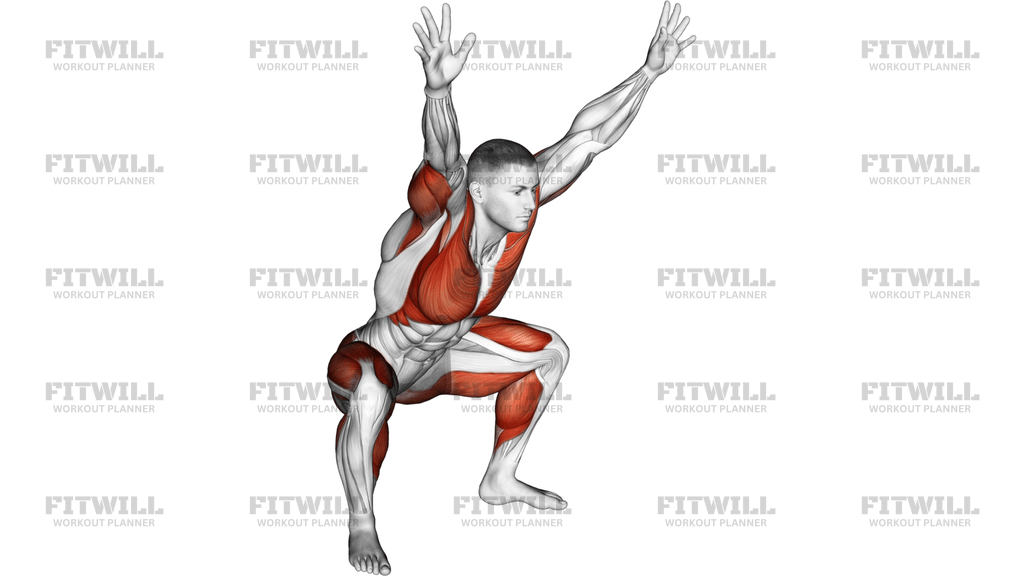
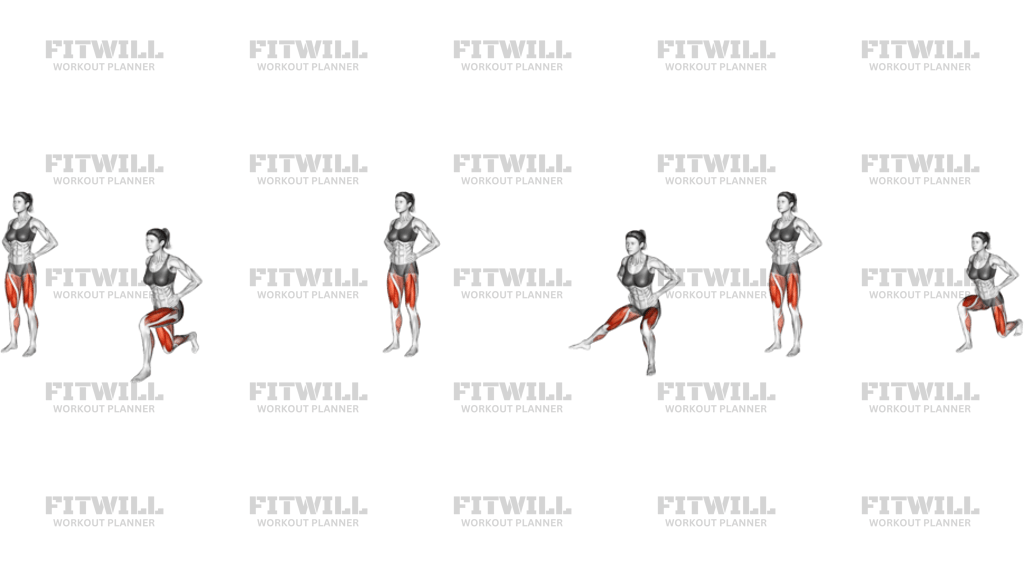
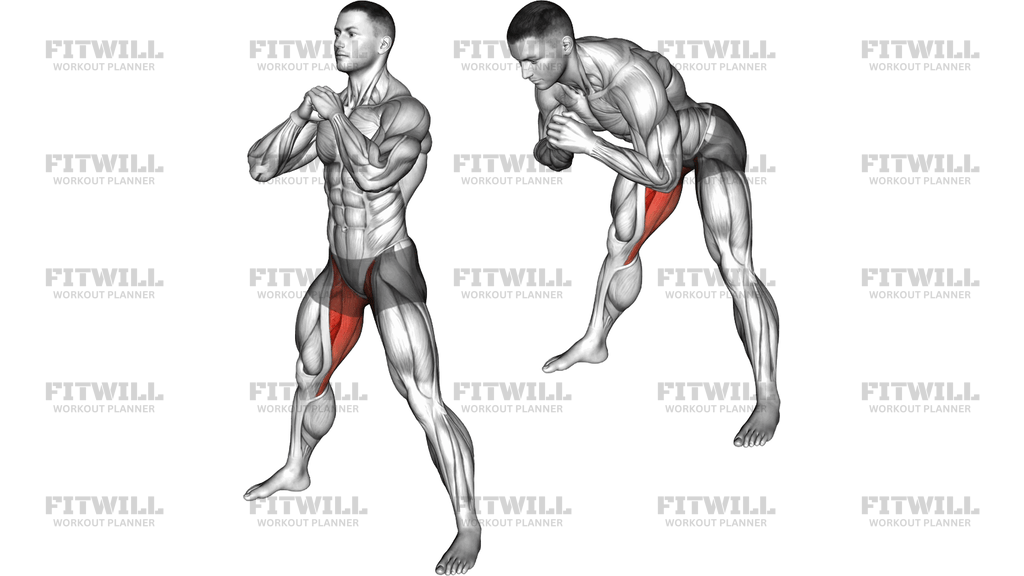
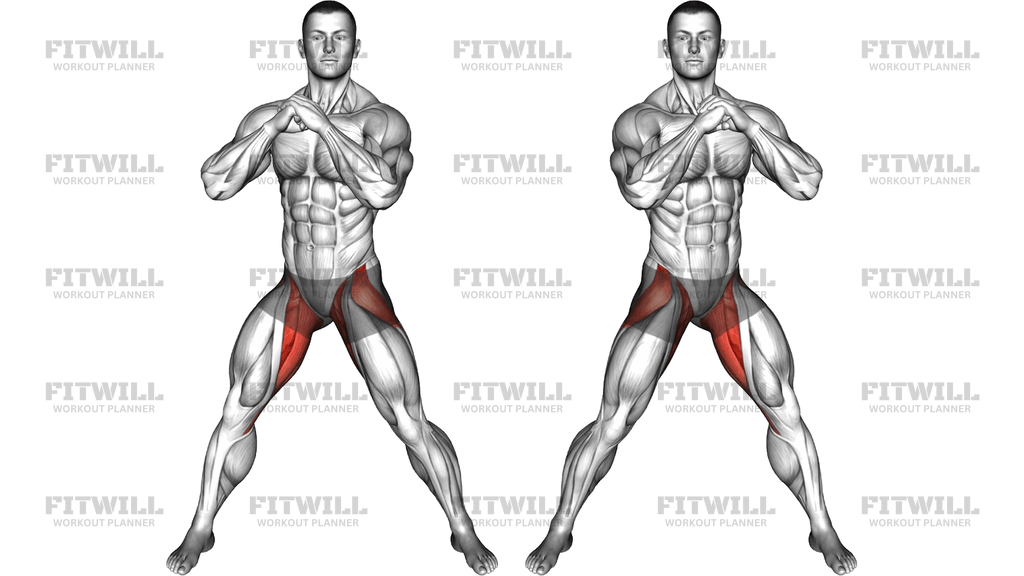
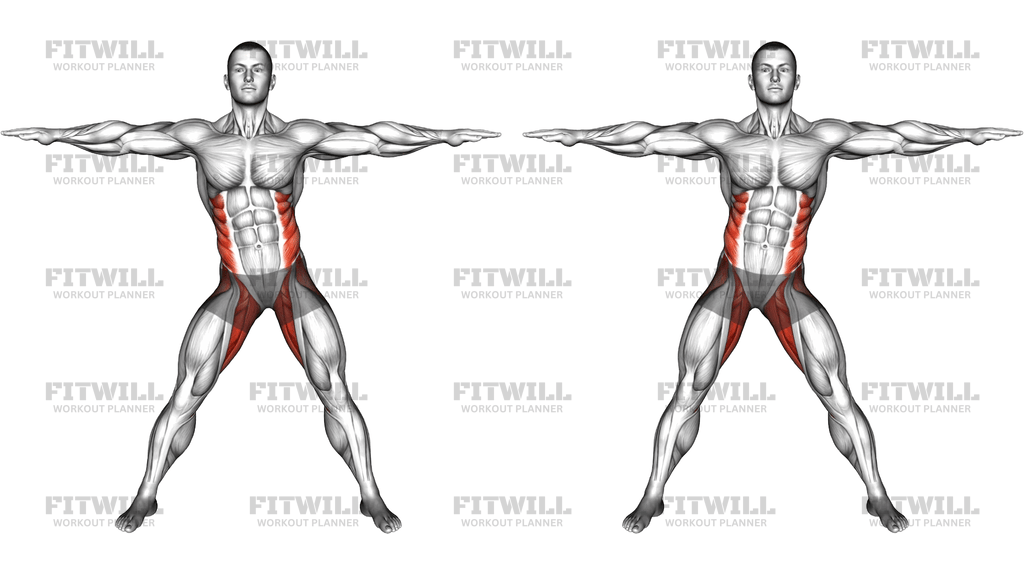
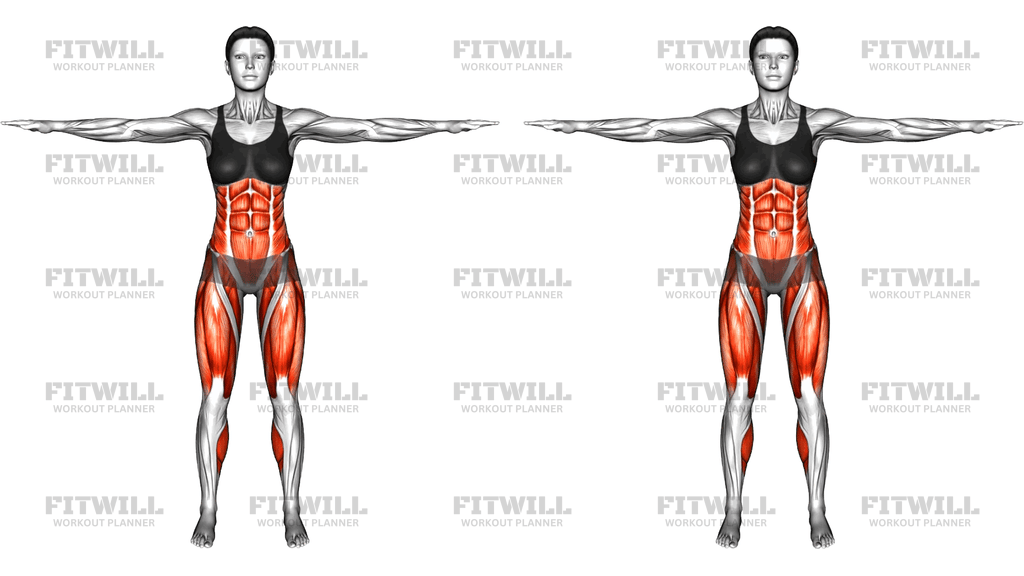
The Standing Hand Out Cross Kick is a body weight movement where you stand tall with both arms extended straight out to the sides at shoulder height, then swing one leg across the midline of your body toward the opposite side before returning it to the floor. The outstretched arms act as a visual and physical counterbalance, which makes it easier to stay upright while the working leg travels through a diagonal arc across your body.
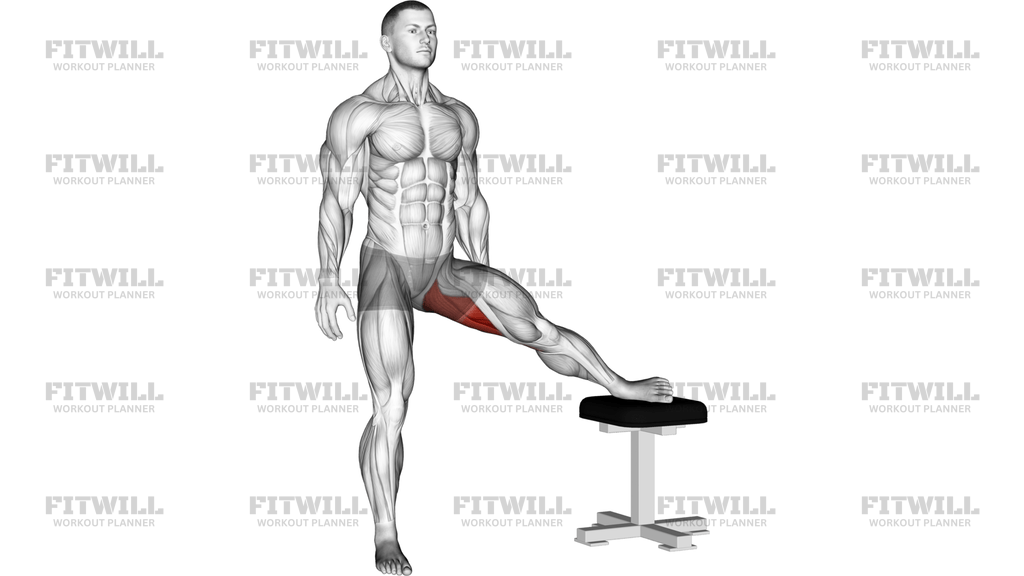
This movement primarily challenges the adductors on the inner thigh, which pull the leg across the midline, along with the hip flexors that lift the leg and the obliques that keep your torso from twisting as the leg crosses over. Because you are balancing on one leg during every repetition, the standing hip and ankle also work overtime to keep you steady, giving you a surprising amount of stabilizing work without any equipment at all.
The setup matters more than it might seem. With your arms held out in a T position, your shoulders stay open and your torso has a fixed reference point, so the kick comes from the hip rather than from a lean or a swing of the upper body. Keep the arms still and level throughout the set; if your hands start dipping or drifting toward the kicking leg, the movement is losing its balance and control benefits.
To perform it well, shift your weight onto one leg, brace your abdominal wall, and raise the other leg slightly off the floor. Sweep that leg across the front of your standing leg toward the opposite side in a smooth, controlled arc, reaching roughly toward the opposite hand at the top of the kick, then lower it back to its starting spot with the same control. The tempo should feel deliberate, not ballistic, especially if you are new to single-leg work.
This exercise fits well into warm-ups, dynamic mobility circuits, and lower body or core days where no equipment is available. It is also a common pre-training drill for sports that involve changing direction, since it rehearsea controlled adduction and single-leg stability. Beginners can reduce the height of the kick, while more experienced trainees can slow the tempo or pause briefly at the top of each cross to increase the demand.
The main safety point is to keep the kick within a pain-free range and avoid forcing height. A moderate, smooth arc with a stable torso trains the inner thighs and hips more effectively than a high, rushed swing, and it keeps the lower back and standing knee out of harm's way.
[ Workout Log & Planner ]
Put your next workout in Fitwill
Keep your plan and training log ready when you are.


Instructions
- Stand upright with your feet about hip-width apart and your arms extended straight out to the sides at shoulder height, forming a T shape with your body.
- Draw your shoulder blades down slightly so your arms stay level, and soften your knees so they are not locked.
- Brace your abdominal wall as if preparing for a light push, and keep your chest tall and your gaze forward.
- Shift your weight onto your left leg and lift your right foot an inch or two off the floor, keeping your standing knee soft.
- Sweep your right leg across the front of your body toward the left side in a smooth diagonal arc, allowing it to reach toward or past your left hand as far as your hips allow without leaning.
- Keep both arms extended and level the entire time; do not let your torso rotate or your hands dip toward the kicking leg.
- Reverse the arc with control and place your right foot back on the floor at its starting position.
- Exhale as you sweep the leg across, and inhale as you lower it back down.
- Complete your repetitions on the right leg, then switch your weight to the right leg and repeat the same cross kick with your left leg.
- Reset your stance and arm position between sets so each rep starts from the same tall, braced posture.
Tips & Tricks
- If you wobble at the top of the kick, lower the height rather than widening your arms; a modest arc with steady hands trains the adductors and balance better than a high, shaky swing.
- The most common mistake is turning this into a torso twist. If your chest rotates toward the kicking side, imagine your outstretched arms pressing against two walls and keep them in the same plane for the whole set.
- Keep the kick moving in a horizontal arc across your body, not a straight-leg raise upward; the leg should travel toward the opposite side, not toward the ceiling.
- Avoid locking the standing knee. A soft knee lets your hip and ankle make small balance corrections instead of dumping stress into the joint.
- If you lean backward as the leg crosses, shorten the range and think about keeping your ribs stacked over your pelvis throughout the swing.
- Slow the return. Most people control the kick out but let the leg drop back; lowering with the same tempo roughly doubles the work for the inner thigh.
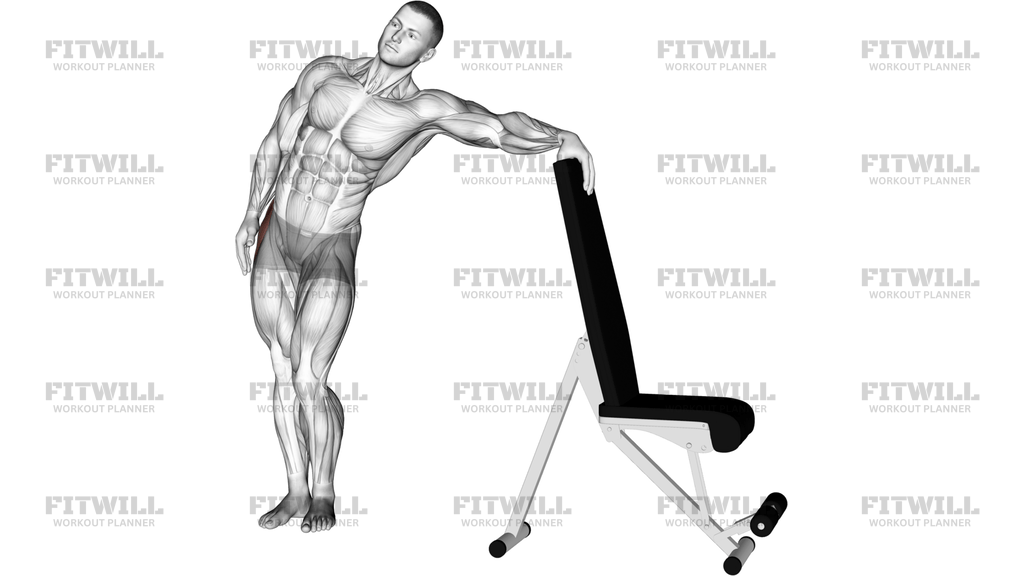
- If balance is the limiting factor, hover your fingertips against a wall or the back of a chair at first, and progress to the free-standing T position as your stability improves.
- Point your toes gently toward your shin rather than fully flexing or pointing the foot; a neutral foot keeps the kick smooth and reduces tension creeping into the hip.
- Do not rush repetitions. Because there is no load, tempo and range are your only tools, so a two-second out-and-back swing per rep is a better target than a fast flurry.
Frequently Asked Questions
Which muscles does the Standing Hand Out Cross Kick work the most?
The adductors of the inner thigh do the main work of pulling the leg across your midline, supported by the hip flexors that lift the leg. Your obliques and standing hip stabilizers also stay busy keeping your torso square and your balance steady.
Why do my arms have to stay out to the sides during this exercise?
The extended arms give you a counterbalance and a fixed reference, which helps the kick come from the hip instead of a lean or twist. If your hands drift, it usually means your torso is compensating.
Is the Standing Hand Out Cross Kick suitable for beginners?
Yes, it is a low-load body weight movement that beginners can do safely. Start with a lower kick and a slower tempo, and hold onto a wall lightly if single-leg balance is still a challenge.
Should the kicking leg stay straight or bend at the knee?
A mostly straight leg with a soft knee keeps the arc smooth and keeps the emphasis on the inner thigh. A deeply bent knee turns the swing into a hip flexion motion and reduces the cross-body range.
How high should I kick across my body?
Kick only as high as you can while keeping your torso upright and your arms level. For most people that means the foot reaches somewhere between the opposite knee and the opposite hand.
What is the most common mistake with this movement?
Rotating the torso or dipping the arms toward the kicking leg to gain height. Fix it by shortening the arc and pretending your outstretched hands are pinned at shoulder height on both sides.
Can I substitute the Standing Hand Out Cross Kick if balance is difficult for me?
You can perform the same cross-kick arc while lightly touching a wall or chair back with one hand, keeping only the fingertips in contact. Once that feels stable, return to the free-standing version with both arms out.
Where should I place this exercise in my workout?
It works well as a dynamic warm-up drill before lower body or directional-change training, or as a high-repetition stabilizer set on body weight leg and core days. Keep it early in the session while your balance is fresh.
How many repetitions should I do per side?
Eight to twelve controlled kicks per leg is a solid starting point. Because the load is low, quality of the arc and stability matter far more than chasing high numbers.
Is it safe to do this exercise every day?
For most people, yes, since it is a low-intensity body weight drill with no external load. If you feel any pinching in the groin or hip during the cross, reduce the range and give the area a day of rest before training it again.