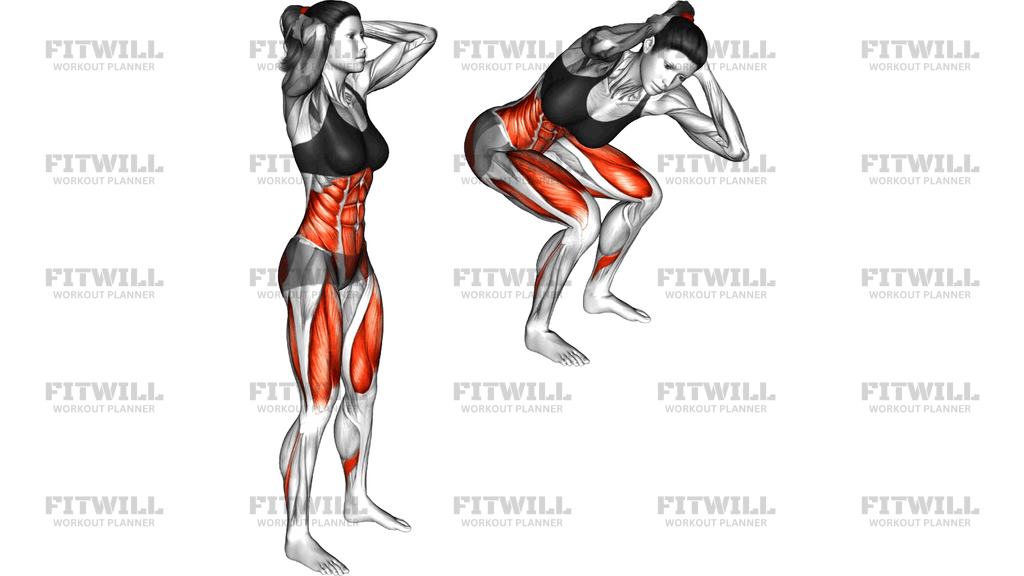
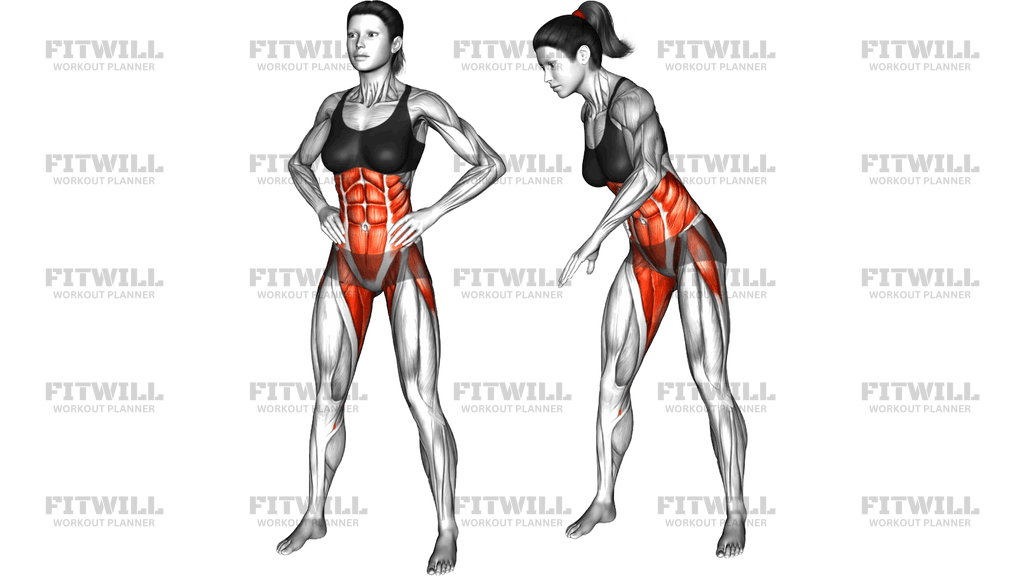
Standing Up Raise Side Twist
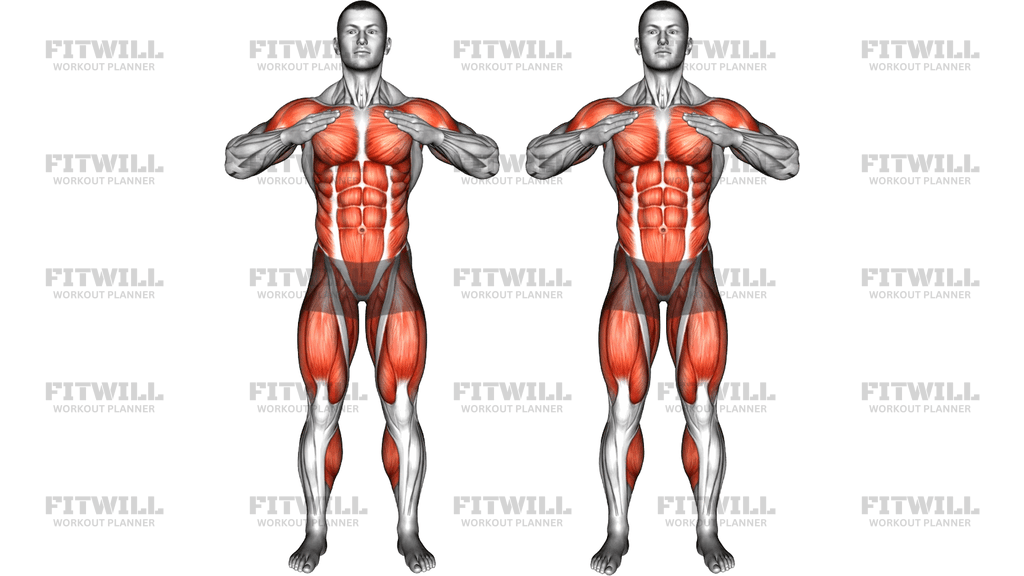
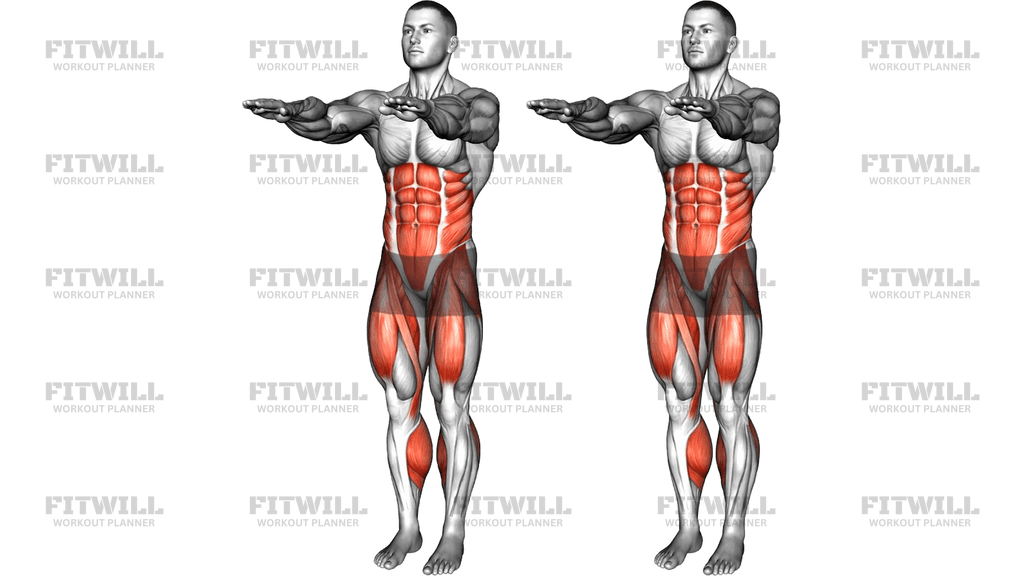
The Standing Up Raise Side Twist is a body weight rotational core exercise performed from a shoulder-width stance with the hands clasped together in front of the chest. From there, you press the clasped hands forward as you raise the arms to shoulder height and rotate the entire torso to one side, then return through the center and repeat. Because the feet stay planted, all of the rotation has to come from the trunk, which is exactly what makes the movement effective for the obliques.
This exercise trains the obliques on both sides of the waist as the primary movers, with the rectus abdominis helping to hold the trunk tall and the shoulders and arms working isometrically to keep the clasped hands extended. The hips and legs stay relatively quiet, but they contribute by stabilizing the base so the twist travels through the waist rather than collapsing through the knees or ankles.
Setup matters more than most people expect. With the feet rooted and the knees soft but still, the only free-moving segment is the torso. If the stance is too narrow or the feet keep sliding, the rotation gets absorbed by the lower body and the waist does less work. Keeping the hands pressed together and the arms extended also lengthens the lever, which increases the rotational demand without adding any external load.
To execute it well, think of rotating from the ribcage, not from the hands. The arms simply transmit the turn — if the hands swing wildly while the chest barely moves, you are wasting the rep. Move with control through the center on every rotation so both sides work evenly, and keep the head traveling with the shoulders rather than lagging behind or leading ahead.
This is a practical warm-up drill for any lifting session that involves rotation or pressing, and it works well as a standing break in desk-bound days when the midsection feels stiff. It also suits beginners who are not yet ready for loaded twists, since it teaches the feel of a controlled trunk rotation with zero equipment. Because there is no weight involved, you can perform higher repetitions and focus purely on quality of movement.
For safety, keep the rotation within a comfortable range and avoid whipping the torso at speed, especially if you are new to rotational training. The movement should feel like a firm squeeze through the waist, not a yank through the lower back. If you feel any sharp twisting sensation in the spine, shorten the range and slow the tempo before continuing.
[ Workout Log & Planner ]
Put your next workout in Fitwill
Keep your plan and training log ready when you are.


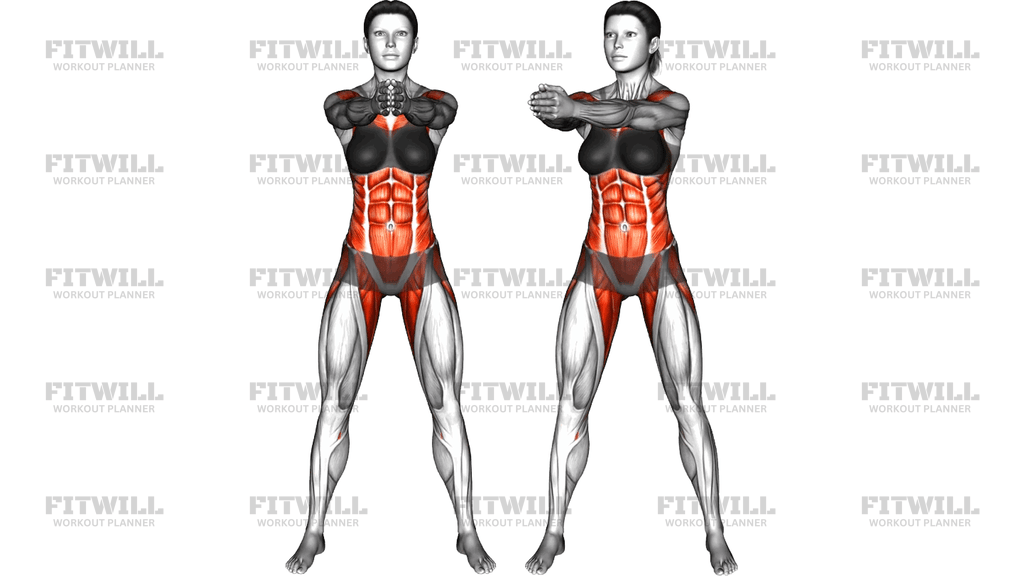
Instructions
- Stand with your feet about shoulder-width apart and point your toes straight ahead so the base stays quiet during the turn.
- Clasp your hands together in front of your chest with the elbows bent and the knuckles stacked.
- Soften the knees slightly, brace the abdominals, and keep the hips square to the front.
- Press the clasped hands forward until the arms are extended at shoulder height.
- Rotate the torso to one side by turning the ribcage, letting the extended arms travel with the chest while the feet and hips stay planted.
- Stop the turn when the shoulders have rotated as far as you can control without the heels lifting or the torso leaning.
- Rotate back through center with control, keeping the arms extended the whole way.
- Continue into a twist toward the opposite side, or complete all reps on one side before switching, depending on how you structure the set.
- Exhale as you rotate out to the side and inhale as you return through the middle.
- At the end of the set, bend the elbows and draw the clasped hands back toward the chest before lowering the arms to reset.
Tips & Tricks
- The most common mistake is turning from the hands while the chest stays facing forward — the arms should ride along with the ribcage, not swing independently.
- Watch your feet: if they pivot or slide on every rep, narrow your focus to driving the rotation from the waist while the soles stay glued to the floor.
- Keep the clasped hands pressed firmly together; letting the grip loosen turns the exercise into a loose arm swing instead of a controlled trunk rotation.
- Aim for the same rotation distance on each side — it is common for one side to feel tighter, so let the stiffer side set your working range rather than chasing extra twist on the looser side.
- Do not lean the torso backward or sideways as you rotate; a straight vertical spine keeps the tension on the obliques instead of loading the lower back.
- Keep the arms at shoulder height throughout. When the hands drop, the shoulders take over and the waist stops doing the work.
- If you want more challenge, hold the end position of each twist for two to three seconds rather than adding speed.
- Slow the return through center deliberately — most of the oblique work happens when you decelerate the rotation, not when you launch it.
Frequently Asked Questions
Which muscles does the Standing Up Raise Side Twist work?
The obliques along the sides of the waist are the primary muscles, since they drive the trunk rotation. The abs help brace the trunk, while the shoulders and arms work isometrically to keep the hands clasped and the arms extended.
Is the Standing Up Raise Side Twist good for beginners?
Yes. It uses no equipment and no load, so beginners can learn controlled trunk rotation with a low risk of overload. Starting with a modest range of motion and higher repetitions is a good way to build rotation control first.
Why do my feet keep turning during the twist?
The feet should stay planted so the rotation comes from the waist. If they are pivoting, your range is likely too large or your base is too narrow — widen the stance slightly and shorten the turn until the soles stay flat.
How far should I rotate on each rep of the Standing Up Raise Side Twist?
Rotate as far as you can while keeping the hips facing forward, the spine tall, and both heels down. For most people that is somewhere between a quarter and a half turn, and the range should match on both sides.
How many repetitions should I do?
Because the exercise is unloaded, reps in the range of ten to twenty per side work well for warm-ups and conditioning. Focus on controlled turns rather than speed, and stop when your rotation starts getting sloppy.
What can I substitute if I want more resistance for my obliques?
You can hold a plate, medicine ball, or dumbbell at chest height while performing the same clasped-hand rotation pattern. Cable woodchops are another option if you want constant tension through the turn.
Should I twist quickly to generate momentum?
No. Fast whipping motions shift the work from the obliques to momentum and can jar the lower back. A steady tempo with a brief pause at the end of each twist produces better muscle engagement.
Is it normal for one side to rotate further than the other in the Standing Up Raise Side Twist?
Yes, small side-to-side differences are common. Match your range to the tighter side and work with even reps so both sides develop symmetrically.
Can I use this exercise in a warm-up?
It works well as a warm-up before rotational lifts, throwing movements, or pressing days. A set or two of controlled, unloaded rotations raises trunk temperature and rehearses the twisting pattern without fatigue.
Does the Standing Up Raise Side Twist reduce fat around the waist?
No exercise targets fat loss in one specific area. The Standing Up Raise Side Twist strengthens and builds endurance in the waist muscles, while overall body composition depends on diet and total activity level.