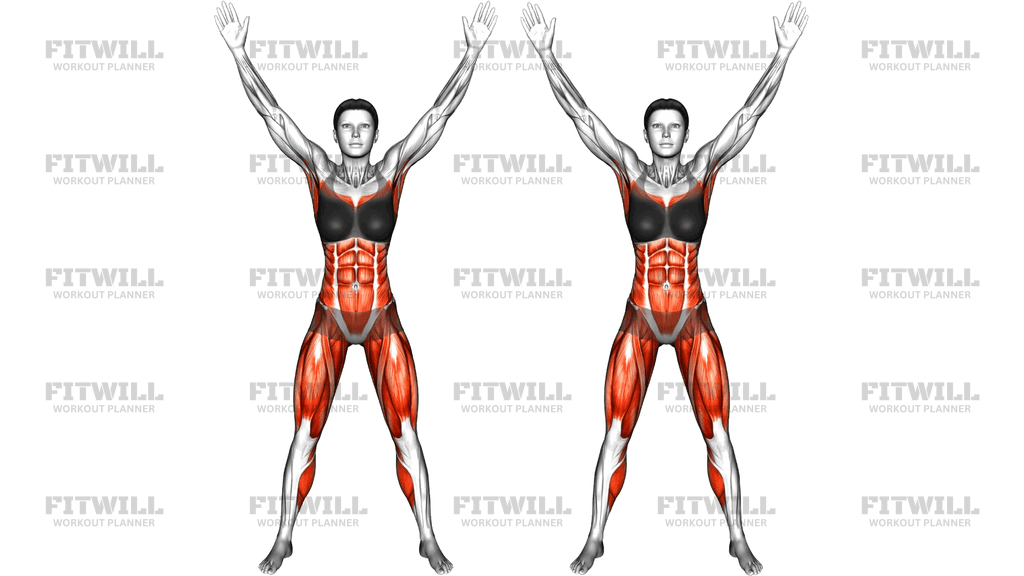
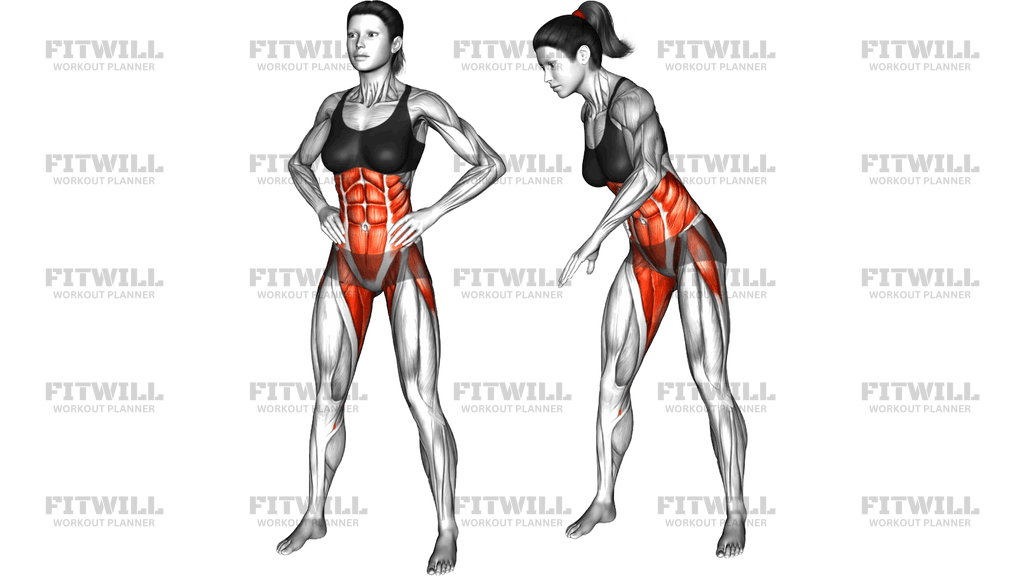
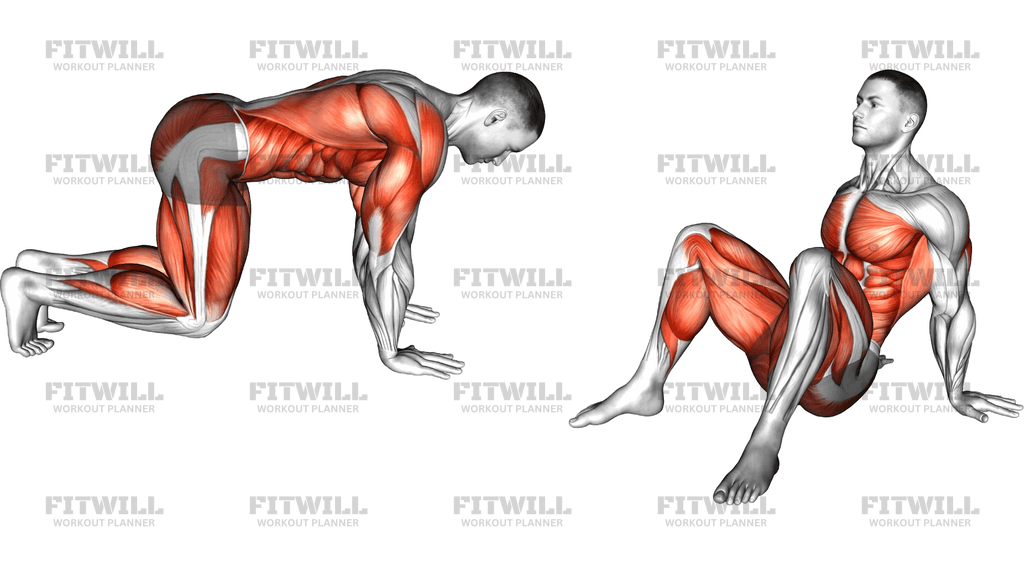
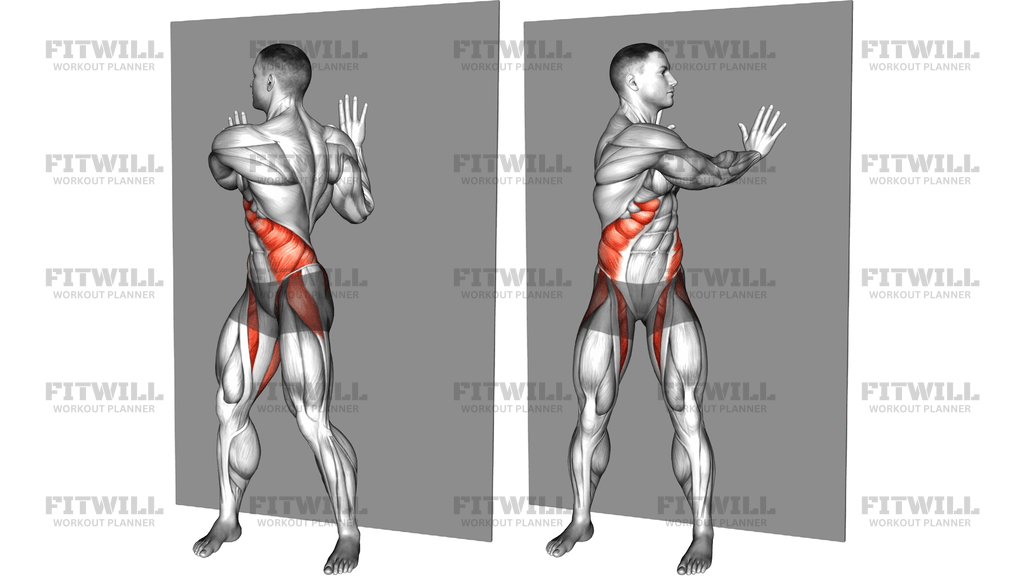
Side Step Downward Punch
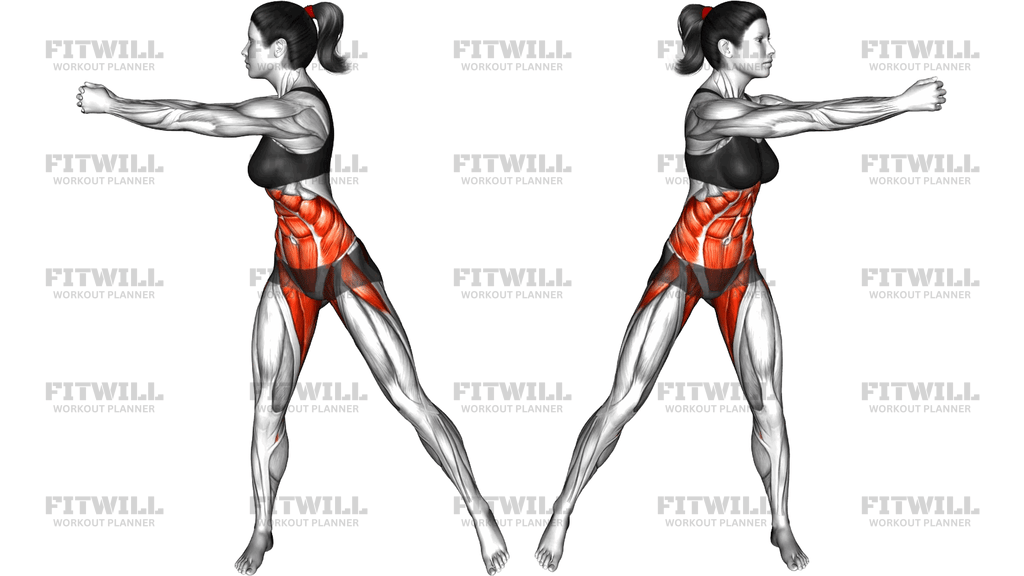
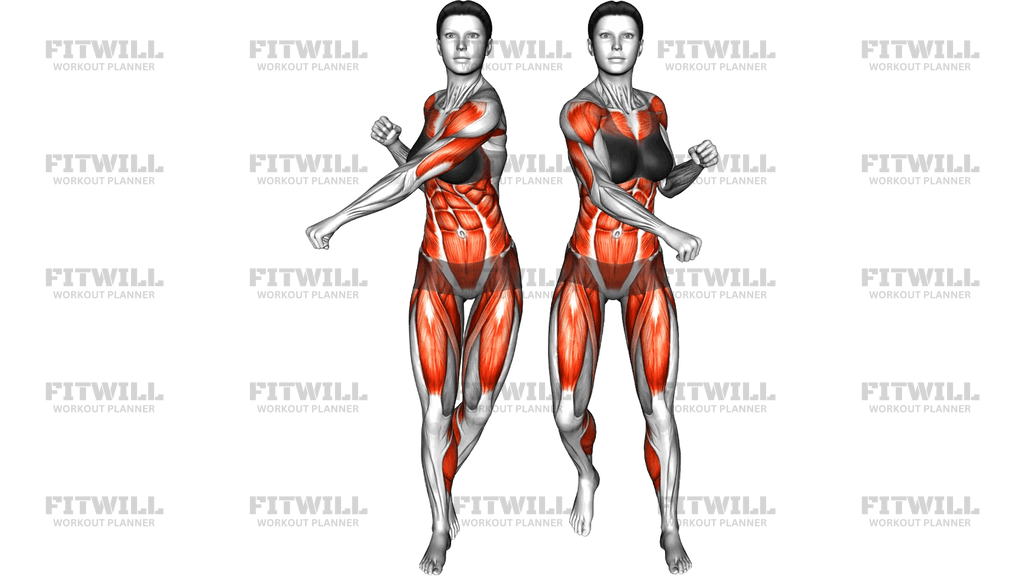
Side Step Downward Punch is a standing, body-weight conditioning move that combines a lateral step with a cross-body punch driven down and across the front of your torso. As you step to one side, the opposite arm swings diagonally across your body toward the lowered side, so every rep ties your legs, hips, and trunk into one coordinated chain. The following step to the other side simply mirrors the pattern, creating a continuous side-to-side rhythm.
This exercise works as a low-impact cardio drill with a real core demand attached. The stepping leg has to absorb your weight each time you land, which lights up the quads, glutes, and calves, while the twisting punch forces the obliques and deep trunk muscles to transfer force from the lower body into the arm. Because the punch travels downward across the midline, the side shoulders and upper back control the deceleration at the end of each swing.
It suits anyone who wants to raise their heart rate without jumping, including beginners building coordination and more experienced trainees using it as a warm-up or active recovery drill. Boxers and martial artists will recognize the cross-body mechanics, but no equipment or prior boxing experience is needed — just enough floor space to step comfortably side to side.
The setup matters because the value of the movement lives in the rotation. Stand tall with soft knees, feet roughly hip-width apart, and fists raised near chest height. If your feet are too narrow you will wobble on each step; too wide and the cross-body punch loses its reach. Keep the knees slightly bent throughout so the lateral step stays quiet and controlled rather than a hard stomp.
To execute it well, step out to one side, let the opposite arm sweep down and across your body as the torso rotates, then push back to center and repeat on the other side. The punch should feel powered by the hip and trunk turn, not just the arm swinging on its own. Exhale on each punch, keep the shoulders relaxed and away from the ears, and let the non-punching hand stay guard-high near your face.
Common use cases include circuit intervals, home cardio sessions, and sport warm-ups where lateral agility and trunk rotation are the priority. For safety, keep the stepping knee tracking over the toes rather than caving inward, land with the whole foot in contact with the floor, and scale the speed down before you scale it up — the drill rewards rhythm and control far more than raw pace.
[ Workout Log & Planner ]
Put your next workout in Fitwill
Keep your plan and training log ready when you are.


Instructions
- Stand with your feet hip-width apart, knees slightly bent, and weight distributed evenly across both feet.
- Raise both fists to chest height in a guard position, elbows tucked close to your ribs, and brace your trunk as if bracing for a light push.
- Step your right foot out to the right side about shoulder-width beyond your stance, keeping both knees soft.
- As you plant the right foot, rotate your torso to the right and sweep your left fist in a diagonal downward punch across the front of your body, finishing around hip height on the right side.
- Keep your right hand up near your face and let your hips turn with the punch so the rotation comes from the trunk, not just the arm.
- Push off the right foot to return to center, then immediately step out to the left and punch down and across with the right fist.
- Exhale sharply on each punch and inhale during the return to center, keeping the breathing rhythm tied to the steps.
- Continue alternating sides at a steady pace, landing each step quietly with the whole foot in contact with the floor.
- To finish, bring your feet back together at center, lower your fists, and shake out the shoulders before your next set.
Tips & Tricks
- A frequent mistake is punching with the arm alone while the torso stays square — drive the rotation from the hips and ribcage so the obliques actually do work.
- If you find yourself stomping on each side step, shorten the step width and think about landing mid-foot first, then settling the heel.
- Watch for the stepping knee collapsing inward when you plant; cue the knee to track over the second toe to protect the joint.
- Do not let the punching shoulder creep up toward your ear — keep it pressed down and relaxed so the delts work without neck tension.
- The downward diagonal matters: aim the fist across the body toward the opposite hip rather than straight down, or you lose the rotational benefit.
- Keep the non-punching hand glued near your cheek; letting it drop is a common drift that breaks the guard position and rhythm.
- Start slow enough that you could pause at the end of each punch — once the pattern is clean, build speed gradually instead of rushing from rep one.
- On soft surfaces like thick carpet, the lateral step becomes unstable; a firm, flat floor makes the footwork far more reliable.
- If your calves burn quickly, that is normal at first — reduce the pace and keep the heels from popping fully off the floor on each step.
Frequently Asked Questions
Which muscles does the Side Step Downward Punch work the most?
The obliques do the heavy lifting on the rotation, while the side shoulders control the punch itself. The quads, glutes, and calves handle the lateral stepping and landing.
Is the Side Step Downward Punch good cardio for beginners?
Yes. It is low-impact, so there is no jumping, and beginners can slow the tempo or narrow the side step until the footwork feels natural.
Why does the punch travel downward and across the body instead of straight forward?
The diagonal downward path forces the trunk to rotate through a longer range, which is what engages the obliques and links the legs to the arm. A straight punch would turn it into mostly a shoulder exercise.
How wide should my side step be?
Aim for roughly shoulder-width beyond your starting stance — wide enough to feel a weight shift, but not so wide that your knee has to twist awkwardly to plant the foot.
Can I add light dumbbells to the Side Step Downward Punch?
It is best learned with closed fists and body weight only. Adding load to a fast cross-body punch places extra stress on the shoulder and elbow, so master the pattern first.
My lower back feels the movement instead of my waist — what am I doing wrong?
You are likely rotating from the lumbar spine with the hips staying locked. Let the back foot's heel lift slightly and turn the hips with each punch so the rotation spreads across the hips and trunk.
What can I substitute if stepping side to side bothers my knees?
Keep both feet planted and perform only the downward cross punches with torso rotation, or reduce the step width and stay on the balls of your feet. Both keep the trunk rotation without the lateral load.
How long should I perform the Side Step Downward Punch in a session?
Work in intervals of 20 to 40 seconds when using it for conditioning, or slower continuous rounds of one to two minutes as a dynamic warm-up.
Should I stay on the balls of my feet or keep my heels down?
Stay grounded with the whole foot landing on each step, allowing only a slight heel lift on the trailing foot as you push off. Staying permanently on the toes fatigues the calves early and makes landing unstable.