Standing Under Knee Clap
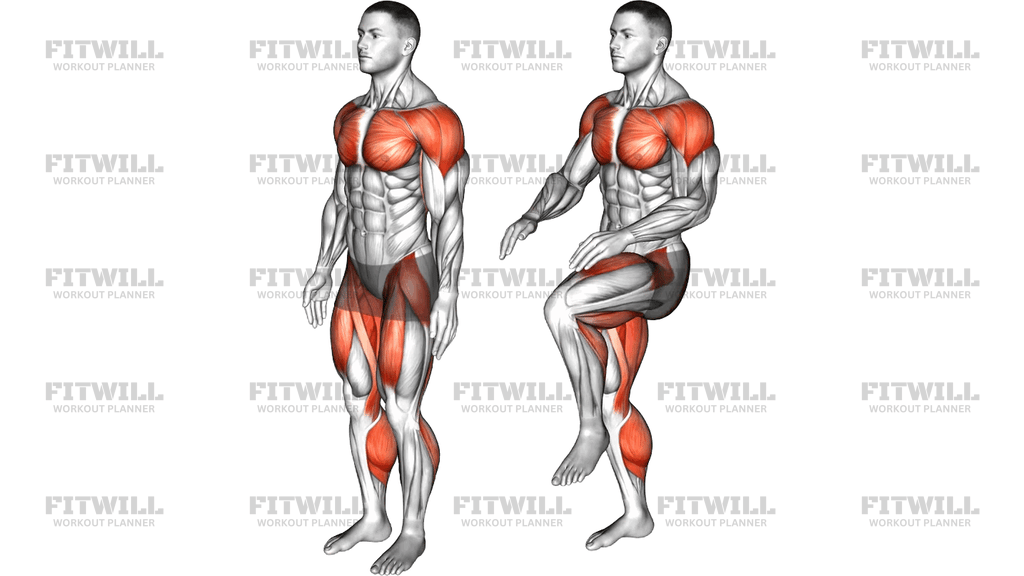
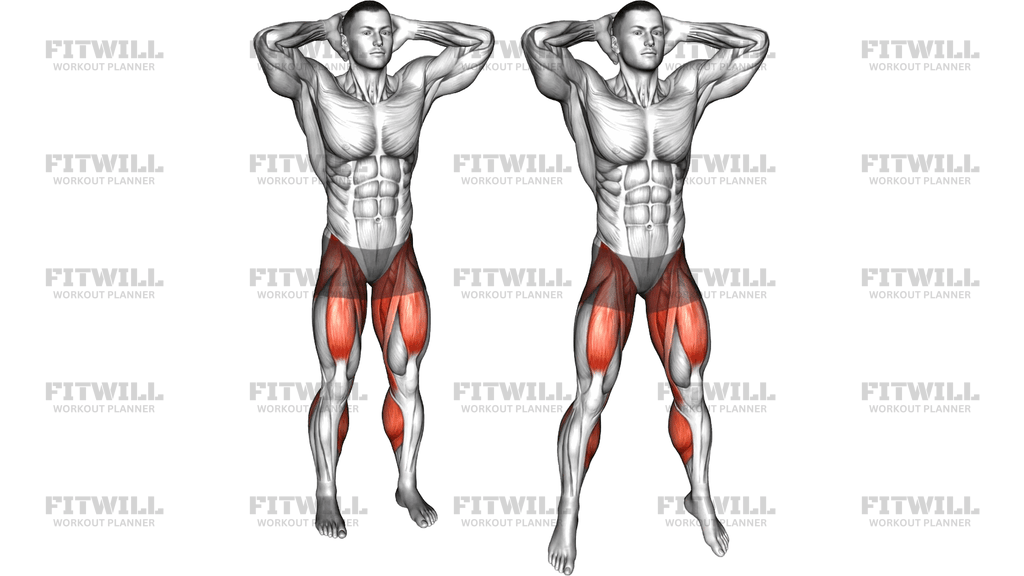
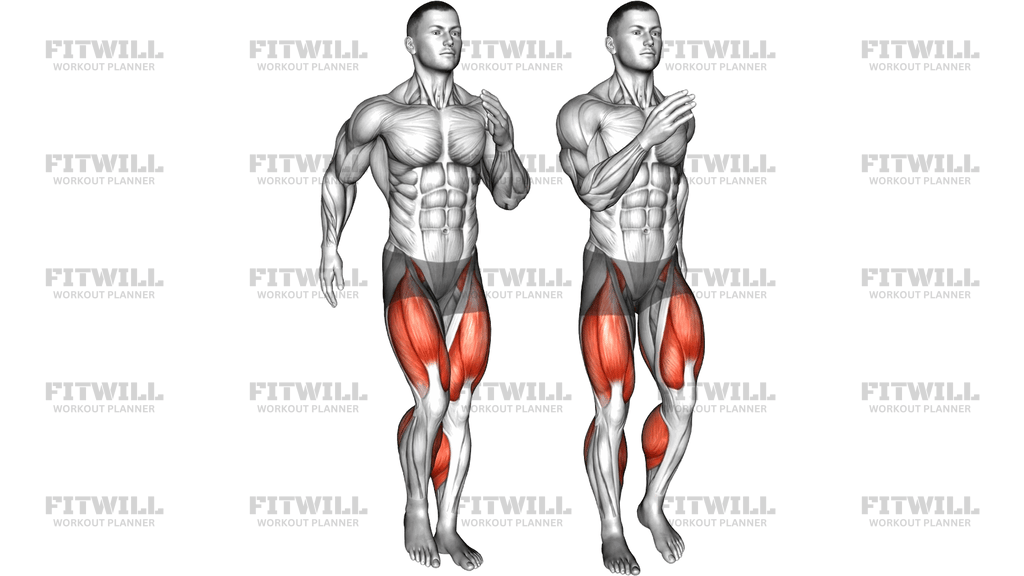
The Standing Under Knee Clap is a bodyweight coordination and conditioning drill performed from an upright stance with the arms lifted out to the sides. From that position, you drive one knee up in front of your body and swing both hands together to clap underneath the raised thigh, then return the foot to the floor and repeat on the other side. It combines a single-leg balance demand, a forceful hip flexion, and a fast, timed arm sweep, which is why it shows up in warm-ups, bootcamp circuits, and athletic movement prep.
This movement earns its place in a session because it trains several qualities at once. The lifting leg works through the hip flexors and quads, the standing leg has to stabilize the ankle, knee, and hip on every rep, and the trunk stays braced while the arms travel a wide arc. Because the clap requires your hands and knee to arrive at the same point at the same time, it also sharpens timing and rhythm in a way that slow, isolated drills do not.
Setup matters more than most people expect. You need enough space around you so the sweeping arms clear anything nearby, and you want to stand tall before each rep rather than starting in a slouch. The height of the knee, the width of the arm swing, and where you look all affect whether the clap lands cleanly. Starting with a modest knee height and an arms-out position similar to a T-shape makes the timing easier to learn before you try to lift higher or move faster.
To execute it well, think of the knee and the hands meeting under the thigh, not of slapping wherever they happen to collide. Exhale sharply as the knee drives up, let the clap happen just below the kneecap or against the underside of the thigh, and lower the foot with control instead of letting it drop. Keep your gaze fixed on a point ahead of you, since looking down at your knee pulls your chest forward and makes balance harder.
The Standing Under Knee Clap fits naturally at the start of a workout as an activator for the hips and core, in the middle of a circuit as a low-impact cardio station, or in a physical education and team warm-up context where rhythm and coordination are the goal. Because it needs no equipment and very little floor space, it travels well to hotel rooms, small home gyms, and outdoor group sessions.
For safety, prioritize a stable standing foot before you add speed. If your balance wobbles, slow the tempo down or reduce the knee height rather than reaching for the clap at any cost, and stop if you feel pinching at the front of the hip or any knee discomfort. The movement should feel crisp and rhythmic, never rushed to the point where your form falls apart.
Fitwill
Log Workouts, Track Progress & Build Strength.
Achieve more with Fitwill: explore over 9600 exercises with images and videos, access built-in and custom workouts, perfect for both gym and home sessions, and see real results.
Start your journey. Download today!




Instructions
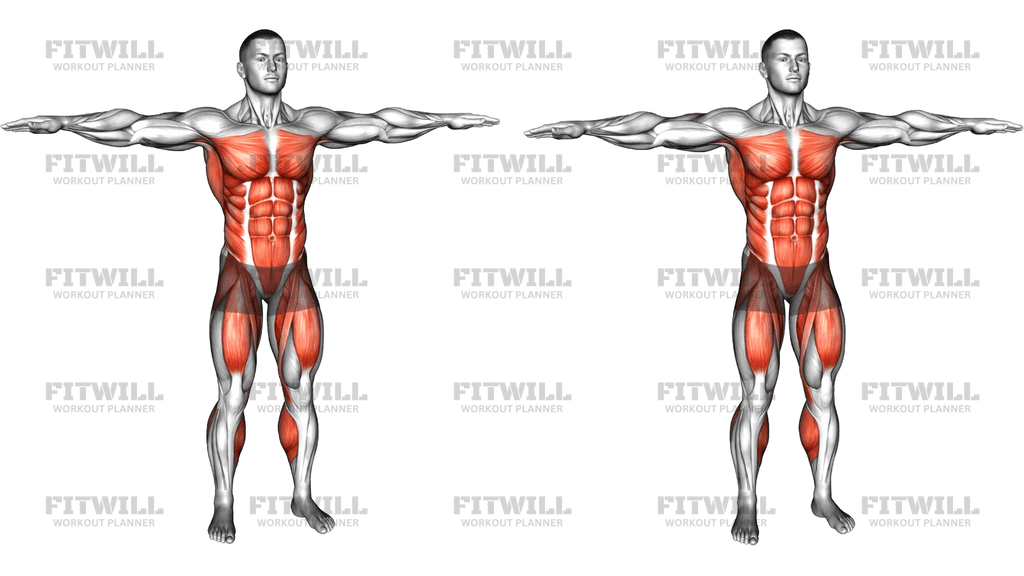
- Stand tall with your feet hip-width apart, arms extended straight out to your sides at shoulder height so your body forms a wide T-shape.
- Pick a fixed point on the wall in front of you at eye level and brace your abdominals lightly so your ribs stay stacked over your pelvis.
- Shift your weight onto one leg and press that foot firmly into the floor to create a stable base.
- Drive your free knee up in front of your body to roughly hip height while swinging both arms forward and down in a smooth arc.
- Clap your hands together just below the raised knee, letting the knee and hands meet at the same moment.
- Exhale sharply through the knee lift and clap, keeping your chest upright and your standing knee soft rather than locked.
- Open the arms back out to the sides as you lower the foot to the floor with control, returning to the wide T-shape.
- Reset your stance, re-brace, and repeat the lift and clap on the opposite leg.
- Continue alternating legs for the desired number of reps or time interval, keeping the rhythm even from side to side.
Tips & Tricks
- The most common fault is bending the torso forward to chase the clap. If you find yourself hunching, lift the knee slightly lower and keep your sternum tall instead.
- If your hands and knee keep missing each other, slow the arm swing down and start the hands moving a fraction before the knee lifts, since the timing usually fails when the arms start late.
- Keep the standing knee soft. Locking it out on every rep turns the drill into a joint-loading exercise rather than a balance and coordination one.
- Avoid slapping the top of the kneecap. Aim the clap at the underside of the thigh so the kneecap is never the contact point.
- Point the raised foot forward and keep it dorsiflexed slightly. A floppy, turned-out foot usually signals that the hip is rotating instead of flexing straight up.
- If balance is the limiting factor, hold the clap position for a beat before lowering, which forces the standing leg to stabilize rather than letting momentum carry you through.
- Keep the arm arc wide and round rather than chopping straight down. A rounded path gives you more time to time the clap and puts less strain on the shoulders.
- On faster tempo sets, stay light on the balls of your feet between reps so each transition feels springy instead of heavy and flat.
- If your shoulders tire before your legs, lower the arms slightly below shoulder height at the start of each rep rather than dropping the T-shape entirely.
Frequently Asked Questions
What muscles does the Standing Under Knee Clap work?
The main drivers are the hip flexors and quads on the lifting leg, with the calves and stabilizers of the standing leg working hard to keep you balanced. The abs brace to keep your torso upright, and the shoulders control the wide arm swing.
Is the Standing Under Knee Clap good for beginners?
Yes, as long as the tempo is slowed down and the knee is lifted only as high as feels stable. Beginners can start with a thigh-height lift and a gentler arm sweep before progressing to faster, higher reps.
Where exactly should my hands clap in the Standing Under Knee Clap?
Aim for just below the kneecap or against the underside of the thigh. Clapping on top of the kneecap can be uncomfortable and usually means your timing or knee height is off.
Why do my arms need to start out to the sides?
The wide arm position creates a longer, rounder swing path, which gives you time to sync the hands with the knee lift and makes the clap feel rhythmic rather than rushed. Starting with the arms already down by your sides turns it into a much choppier movement.
What is the most common mistake in this exercise?
Leaning the chest forward to reach the clap. This shifts your weight onto the toes of the standing leg and throws off balance, so correct it by lifting the knee a little less high and keeping your torso tall.
Can I substitute the Standing Under Knee Clap if my balance is poor?
Try a standing knee raise with a chest-level hand tap first, which removes the under-leg timing element while still training hip flexion and single-leg stability. You can also stand near a wall and place one fingertip on it for light support.
How many reps should I do?
For a warm-up, 10 to 20 total alternating reps at a controlled pace works well. In a cardio circuit, go for time, such as 20 to 30 seconds, and stop when your rhythm or balance breaks down rather than pushing sloppy reps.
Should I feel this in my lower back?
No, the effort should sit in your hips, thighs, and trunk, not your lumbar spine. If your lower back works overtime, you are likely arching as the knee lifts, so exhale harder and think about keeping your ribs down over your pelvis.
Is the Standing Under Knee Clap safe for the knees?
For healthy knees it is a low-load, controlled movement, and the standing knee should simply stay soft rather than locked. If you have a current knee injury or feel pinching during the lift, get clearance from a qualified professional before including it in your routine.