Spider Crawl
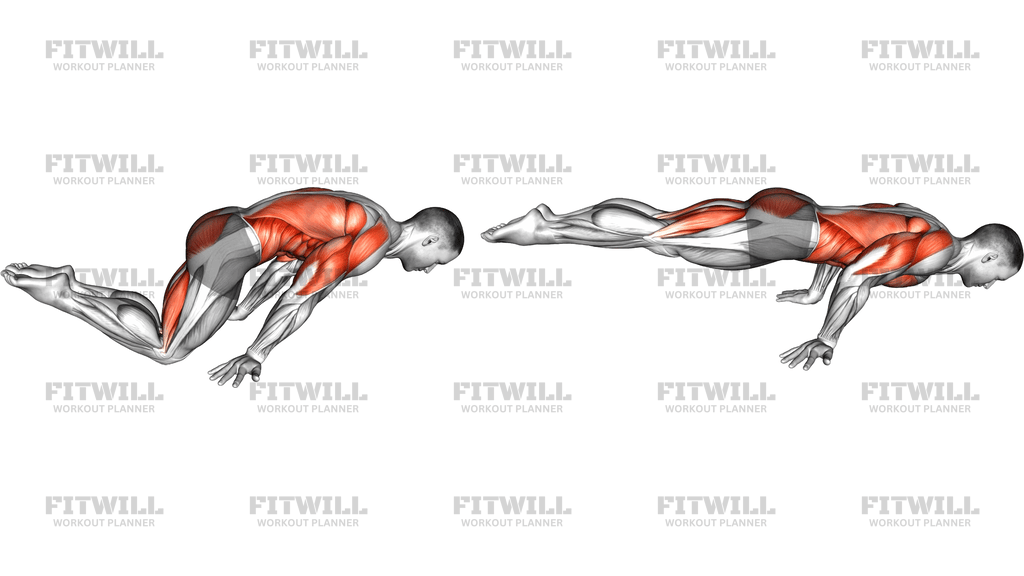
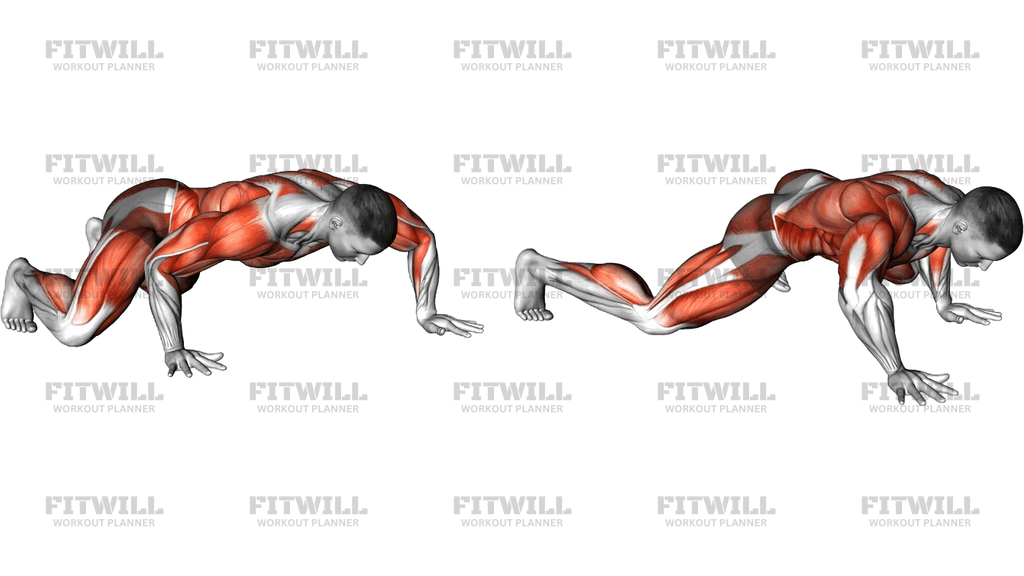
The Spider Crawl is a low, ground-based movement where you travel forward on your hands and feet while keeping your hips low and your body hovering just above the floor. The name comes from the wide, deliberate arm and leg positions that make you look like a spider moving across the ground. Unlike a bear crawl, where the hips stay higher and the knees stay under them, the Spider Crawl keeps you compressed and close to the floor, which makes the shoulders, chest, and core work much harder through every step.
This movement earns its place in conditioning circuits, athletic warm-ups, and strength finishers because it trains coordination under load. Every step forces you to support your weight on one arm while the opposite hand reaches forward, so the shoulder stabilizers, triceps, and chest get constant work. At the same time, the deep core and hip flexors fight to keep your torso from sagging or swaying as your limbs move. It is a genuine full-body demand packed into a no-equipment exercise you can do in a few meters of open floor.
The Spider Crawl is especially useful for athletes and anyone who wants better ground-based movement. Wrestlers, grapplers, and field-sport athletes have used crawls for decades because they build strength in the exact positions those sports demand. For general training, it works well as a warm-up primer to wake up the shoulders and core, or as a conditioning piece when done for distance or time. Because the knees stay bent and the hips stay low, the thighs also burn quickly, adding a leg-endurance element most upper-body movements lack.
Setup matters more than speed here. Your hands should be shoulder-width or slightly wider, your knees bent with the thighs angled down toward the floor, and your back flat rather than rounded or sagging. If your hips ride too high, you turn the movement into a bear crawl and lose the deep-core challenge. If your hips drop too low, your lower back takes stress it should not. The sweet spot is a low, controlled crouch with your torso nearly parallel to the floor.
Execution is about moving opposite limbs together and staying quiet. Step one hand forward while stepping the opposite foot, keep your knees brushing just above the ground, and move only as fast as you can control. Each hand placement should be deliberate, roughly at or slightly outside shoulder width, and your head stays neutral with your eyes on the floor a short distance ahead. Rushing turns the Spider Crawl into a sloppy scramble; slow it down and it becomes a strength exercise.
Keep the distance short when you start, ten to twenty meters or a few lengths of a room. Your wrists, shoulders, and quads will tell you quickly when form is fading. Stop the set when your hips start sagging or your steps get choppy, rest, and reset. Done with discipline, the Spider Crawl builds shoulder endurance, core control, and full-body coordination with nothing but floor space.
[ Workout Log & Planner ]
Put your next workout in Fitwill
Keep your plan and training log ready when you are.


Instructions
- Clear a flat, open stretch of floor at least a few meters long and place your hands on the ground about shoulder-width apart, fingers spread for grip.
- Bend your knees and lower your hips until your torso is nearly parallel to the floor, thighs angled down, knees hovering just above the ground rather than resting on it.
- Set your feet so they are roughly hip-width apart with the balls of your feet and toes gripping the floor, heels lifted.
- Brace your core as if bracing for a light push to the stomach, and keep your neck neutral by looking at the floor about half a meter ahead of your hands.
- Step your right hand forward a comfortable distance, then immediately step your left foot forward to match it, keeping the opposite hand and foot planted for support.
- Repeat on the other side: left hand forward, right foot forward, moving opposite limbs together in a steady alternating rhythm.
- Keep your hips low and level throughout; do not let them rise toward the ceiling or drop toward the floor as you step.
- Breathe steadily through your nose and mouth, avoiding held breath, and exhale naturally every few steps.
- Crawl forward for your target distance or time, then stop, stand up slowly, and reset your brace before starting another length if your form is still sharp.
- If you run out of floor space, turn carefully by stepping around with your hands and feet rather than pivoting sharply on one arm.
Tips & Tricks
- The most common breakdown is the hips creeping upward until you are doing a bear crawl instead of a Spider Crawl; fix it by keeping your knees bent and imagining a low ceiling just above your back.
- If your lower back starts to ache, your hips are sagging rather than staying crouched; squeeze your glutes slightly and shorten your stride until the sag disappears.
- Move opposite hand and foot together rather than leading with the hand and dragging the leg behind; this keeps your torso from twisting side to side.
- Keep your steps short. Long reaches force your shoulders to support your weight at extreme angles and drain your triceps long before the set should end.
- Spread your fingers and press the floor away slightly through your shoulder blades instead of sinking into your shoulder joints; this protects the shoulders during long crawls.
- Crawl backward for a few lengths once forward crawling feels smooth; the reverse pattern exposes weaknesses in coordination and hits the shoulders from a slightly different angle.
- Stay quiet. Loud, slapping steps usually mean your feet are landing flat and your control is slipping; land on the balls of your feet with intent.
- Treat form failure as the end of the set. Sagging hips, wobbling shoulders, or scrambled footwork mean the core has faded, and continuing only rehearses bad patterns.
- Do the crawl on a smooth surface with enough grip for your palms; slick or carpeted surfaces change foot traction and can throw off your step timing.
Frequently Asked Questions
What muscles does the Spider Crawl work?
The Spider Crawl primarily challenges the shoulders, chest, and triceps as they support and move your body weight, while the core, hip flexors, and thighs work to hold the low crouched position and stabilize every step.
How is the Spider Crawl different from a bear crawl?
In a bear crawl the hips stay higher and the knees stay under the torso, while the Spider Crawl keeps you compressed low to the floor with the thighs angled down. That lower position puts far more continuous load on the shoulders and deep core.
Can beginners do the Spider Crawl?
Yes, beginners can start with very short distances, such as five to ten meters, and focus on keeping the hips low and steps slow. If a full crawl is too demanding, holding the low crouched position stationary or crawling slowly in place builds the needed base.
How far or how long should I Spider Crawl?
Start with ten to twenty meters per length or twenty to thirty seconds per set, and end the set as soon as your hips sag or your steps lose their rhythm. Quality of position matters more than distance covered.
Why do my thighs burn so much during the Spider Crawl?
The low crouch keeps your knees deeply bent and your thighs loaded isometrically the entire time, and every step adds work for the hip flexors and quads. That burn is a normal part of the position, not a sign of poor form.
My wrists hurt when I do the Spider Crawl. What should I change?
Spread your fingers wide, press through the base of your palm rather than collapsing onto the heel of the hand, and distribute weight across the whole palm. If discomfort continues, shorten your sets and build wrist endurance gradually before crawling longer distances.
What is the most common mistake in the Spider Crawl?
The most common mistake is letting the hips rise into a bear crawl position, which removes the core challenge the exercise is built around. A close second is rushing, which turns controlled steps into a scramble and lets the lower back sag.
What can I substitute if I do not have floor space for the Spider Crawl?
Crawling in place, alternating reaching the opposite hand and knee while holding the low crouch, trains a similar pattern in a small area. A bear crawl or plank shoulder taps are reasonable stand-ins, though neither loads the deep core the same way.
Should the Spider Crawl go in my warm-up or my main workout?
Both work. Short, slow crawls make an excellent warm-up primer for the shoulders and core, while longer distances or timed sets done for multiple rounds serve as a conditioning finisher when your form under fatigue is still solid.
Is the Spider Crawl safe for people with lower back issues?
The exercise demands a braced, neutral spine under load, so anyone with an irritated lower back should be cautious. Keeping the hips from sagging and the steps short reduces strain, but it is wise to get clearance from a qualified professional first.