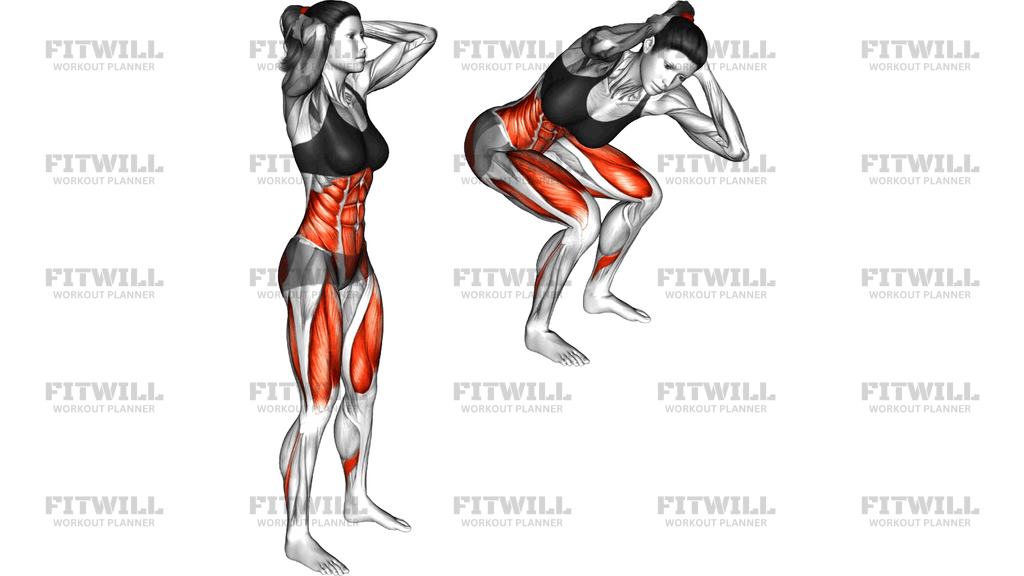
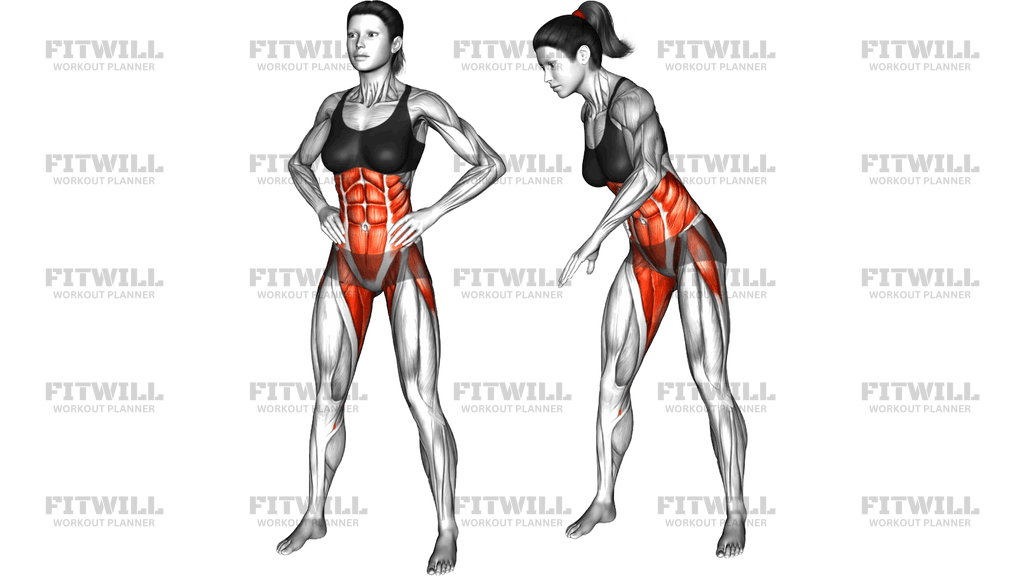
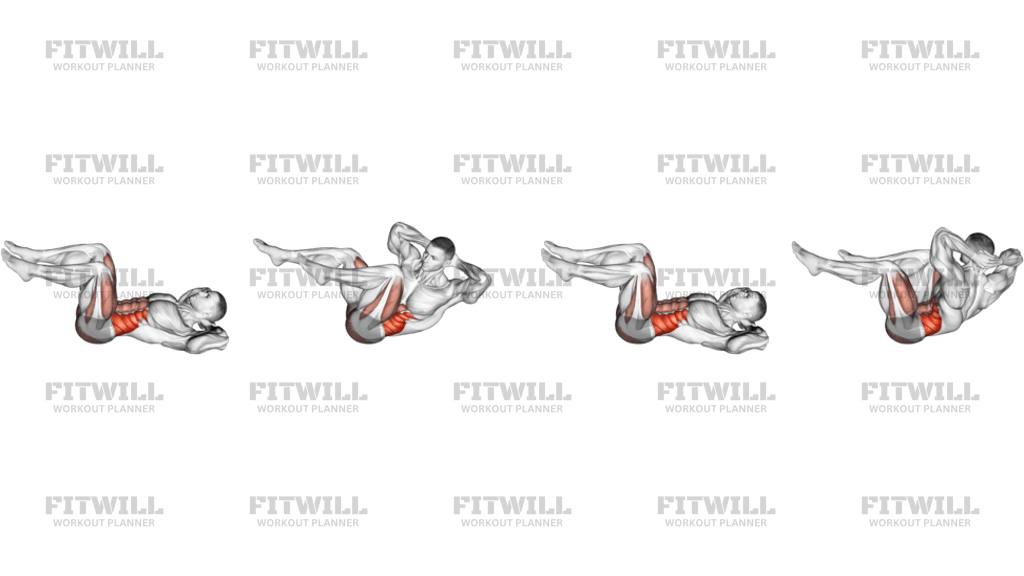
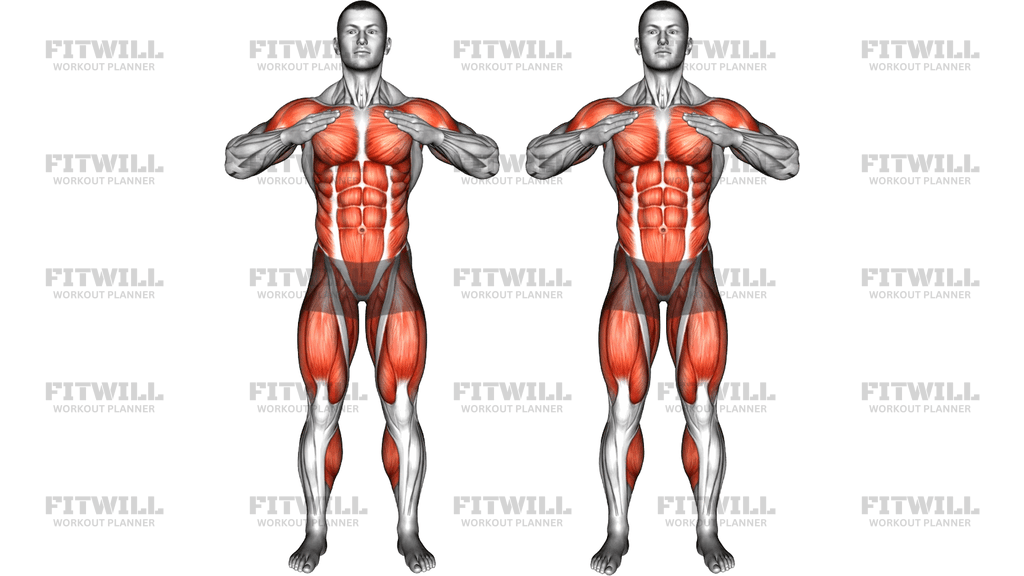
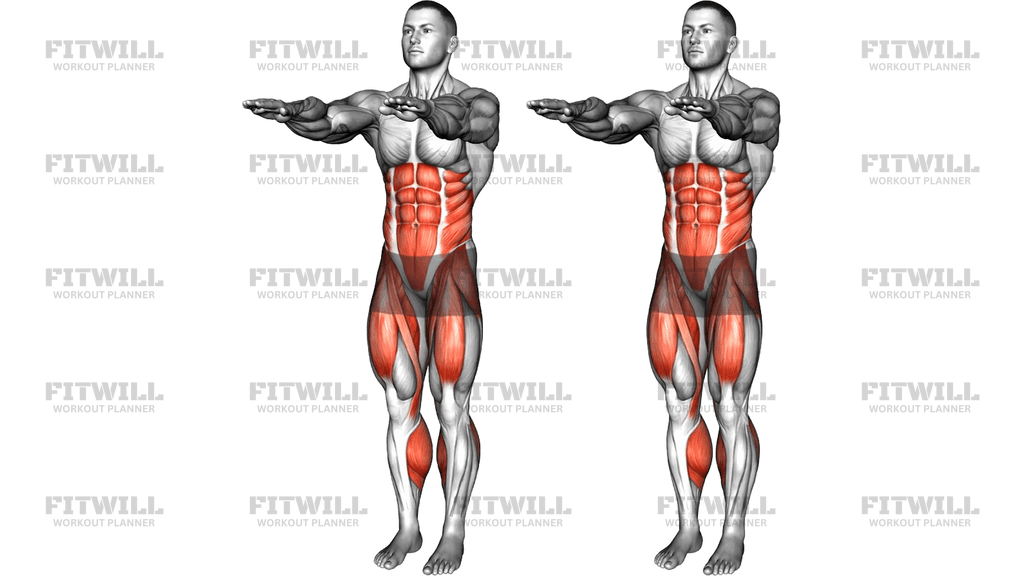
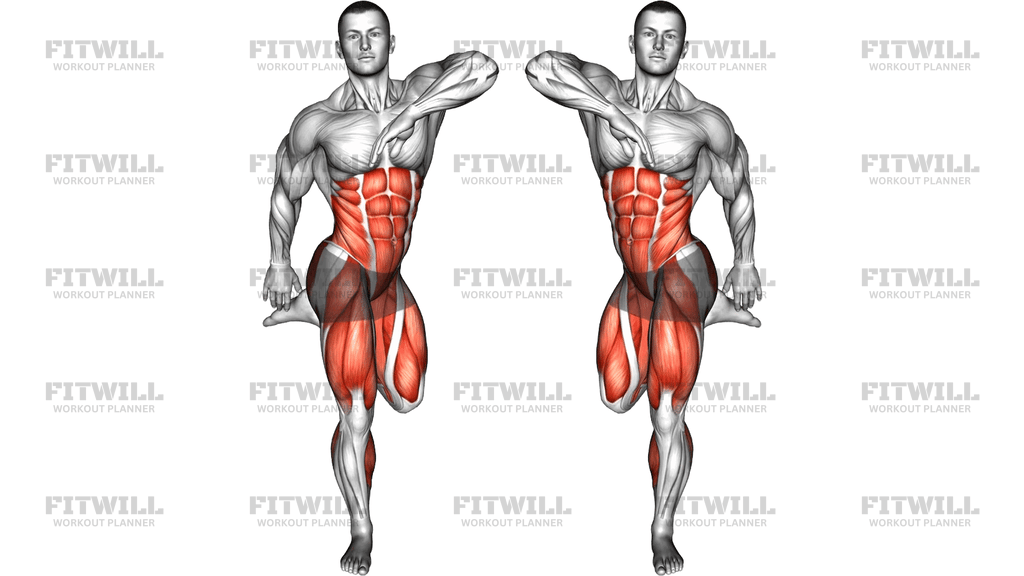
Standing Side Leg Raise Crunch
The Standing Side Leg Raise Crunch is a body weight core exercise that combines a lateral leg lift with a side-bending crunch of the torso. You stand tall with your hands placed lightly behind your head, lift one leg out to the side, and simultaneously fold your trunk sideways toward that leg so your elbow and thigh travel toward each other. Because you stay on your feet, it doubles as a balance challenge and needs no equipment, which makes it easy to slot into a warm-up, a circuit, or a short core finisher.
The main work comes from the obliques on the side you crunch toward, which pull your ribcage down toward your hip, while the deep core stabilizes your spine against the sideways pull. The standing leg's hip and glutes fire constantly to keep you from swaying, and the lifting leg works through hip abduction with the quadriceps holding the knee essentially straight. This mix of lateral trunk flexion, single-leg balance, and hip control is something floor crunches simply cannot give you.
Setup matters more than most people expect. Your stance should be about hip-width with your weight centered over the standing foot, and your hands should rest behind your head rather than pull on your neck. The pelvis needs to stay level and facing forward; if it tips or rotates, the obliques lose their line of pull and the lower back starts doing work it was not meant to do.
To execute the movement well, think of two actions happening at once: the leg swings up and slightly out to the side while the torso hinges sideways, bringing the same-side elbow and thigh closer together. The range does not need to be large. A controlled lift to roughly hip height with a definite squeeze at the top beats a big, sloppy swing every time. Lower the leg with the same control you used to raise it, re-stacking your torso tall before the next rep.
This exercise suits beginners building core awareness, anyone who wants standing core work without getting on the floor, and people training balance alongside strength. It is also a practical option for home workouts or travel since it requires nothing but a few feet of clear space.
From a safety standpoint, keep the movement smooth and avoid yanking your head forward with your hands. If you feel it in your lower back rather than your waist, reduce the range and focus on staying tall through the spine. Those with hip or lower back concerns should move through a smaller, pain-free arc and stop if anything pinches.
Fitwill
Log Workouts, Track Progress & Build Strength.
Achieve more with Fitwill: explore over 9600 exercises with images and videos, access built-in and custom workouts, perfect for both gym and home sessions, and see real results.
Start your journey. Download today!




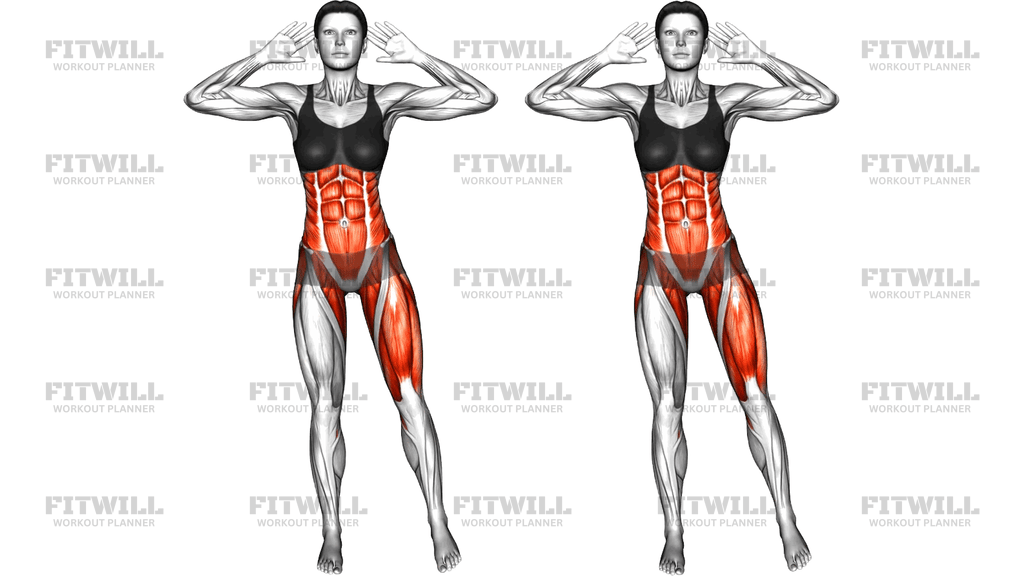
Instructions
- Stand with your feet about hip-width apart and shift your weight onto one leg, keeping a soft bend in that knee.
- Place your fingertips lightly behind your head with your elbows flared out wide, and lift your chest so your torso is tall.
- Brace your midsection as if bracing for a light push, and set your pelvis level with both hip points facing forward.
- Exhale and raise your free leg straight out to the side while simultaneously crunching your torso sideways toward that leg.
- Let the same-side elbow travel down toward the raised thigh, closing the gap between ribs and hip.
- Pause briefly at the top when you feel the squeeze along the side of your waist.
- Inhale as you lower the leg under control and unfold your torso back to the tall starting position.
- Complete all reps on one side, then switch legs, or alternate sides rep for rep if you prefer.
- Re-set your balance and posture before each rep so the standing leg stays stacked under your shoulder.
Tips & Tricks
- If your torso tips forward as the leg rises, your hips are rotating instead of staying square—cue yourself to point both hip bones straight ahead throughout the rep.
- Avoid pulling on your neck; the hands behind your head are a cradle, not a handle, so keep your elbows wide and your neck relaxed.
- Chasing a huge leg height usually collapses the crunch. A leg at knee-to-hip height with a strong side squeeze works the obliques more than a high swing with a flat torso.
- Keep a soft bend in the standing knee. Locking it out makes you wobbly and stresses the joint instead of training the hip stabilizers.
- Spread your toes on the standing foot and press through the whole foot to steady your balance; a wandering balance point is the most common reason this exercise feels chaotic.
- Do not let the pelvis drop on the lifting side—level hips keep the tension on the waist instead of dumping it into the lower back.
- Move at a tempo of about one second up, brief squeeze, two seconds down. Rushing turns this into a momentum-driven leg swing.
- If you cannot keep your balance, stand near a wall and let one hand hover over it for minimal support until your single-leg stability improves.
- Alternate sides rep for rep if one side fatigues faster; finish sets when the standing leg, not just the waist, starts to shake.
Frequently Asked Questions
What muscles does the Standing Side Leg Raise Crunch work?
The obliques on the crunching side are the primary movers, supported by the deep core and rectus abdominis. The lifting leg trains hip abduction through the gluteus medius while the quadriceps hold the knee straight, and the standing leg's glutes and ankles work to keep you balanced.
Is the Standing Side Leg Raise Crunch good for beginners?
Yes, it is a low-load way to learn lateral core control and single-leg balance. Beginners can reduce the range by lifting the leg only a few inches and focusing on the side crunch before adding height.
Should my elbow actually touch my knee at the top?
Touching is a bonus, not the goal. Aim to close the gap between your ribcage and hip on the same side; the exact contact point depends on your limb lengths and flexibility.
Why do I wobble or lose balance during the movement?
Balance usually breaks down when the standing knee is locked, the pelvis rotates, or the reps are rushed. Soften the standing knee, keep both hips facing forward, and slow the tempo so each rep stays controlled.
Can I do the Standing Side Leg Raise Crunch every day?
Because it uses only your body weight, it recovers quickly and can appear in most routines a few times per week. Treat it like any strength exercise and leave a day between harder core sessions for best results.
What can I use if I need a substitute for this exercise?
Standing oblique crunches without the leg lift, side-lying leg raises, or standing side leg raises with hands on hips all cover similar ground. Once body weight feels easy, a cable side crunch or a banded lateral leg raise adds resistance.
How many reps and sets should I do?
Start with 2–3 sets of 8–12 reps per side, focusing on the quality of the squeeze rather than speed. As control improves, progress to 15–20 reps per side or slow the lowering phase to add difficulty.
Is it safe if I have lower back issues?
Lateral trunk flexion under control is generally gentle, but reduce the range and stop if you feel pinching or pain in the lower back. If you have an existing back condition, check with a qualified professional before adding this movement.
Do I need any equipment or a mat for the Standing Side Leg Raise Crunch?
No equipment is required since you perform it standing on one leg with your hands behind your head. A mat underfoot can add comfort and grip if you are training on a hard floor.