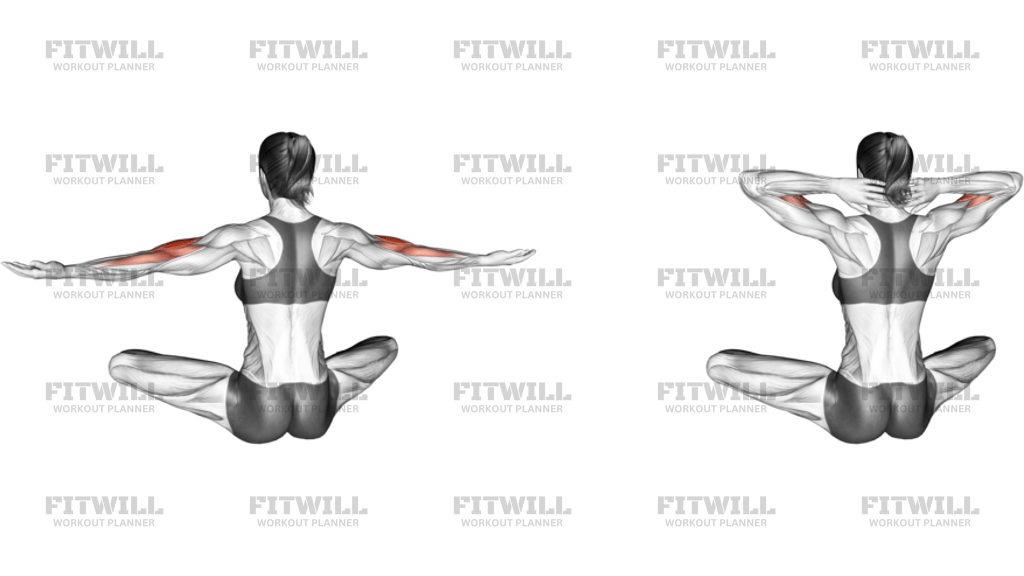
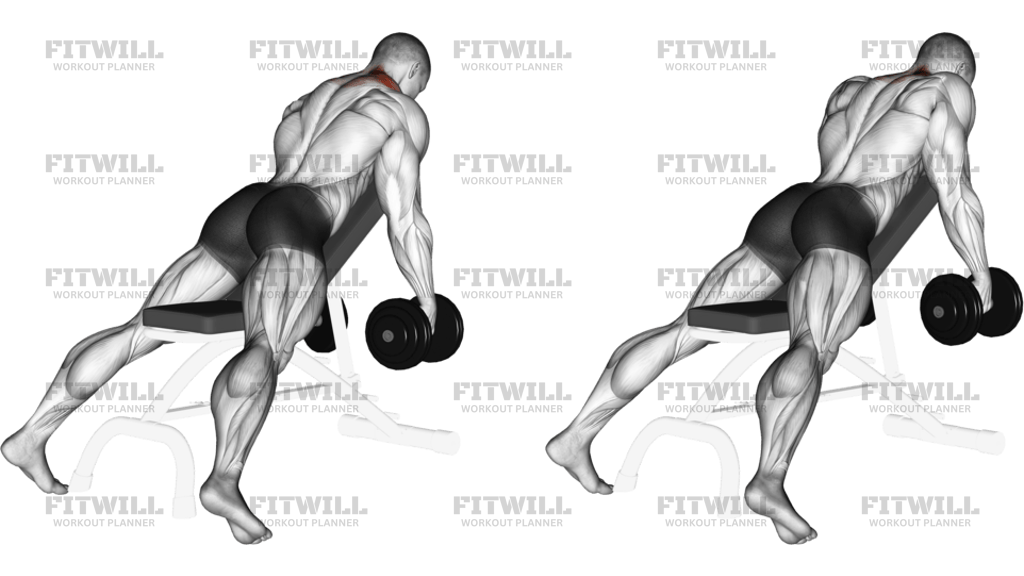
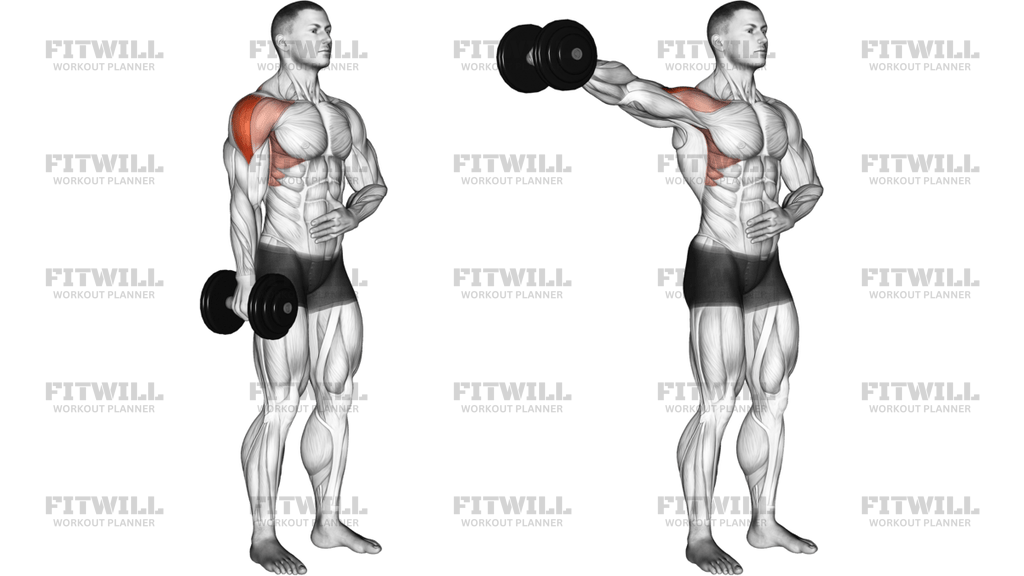
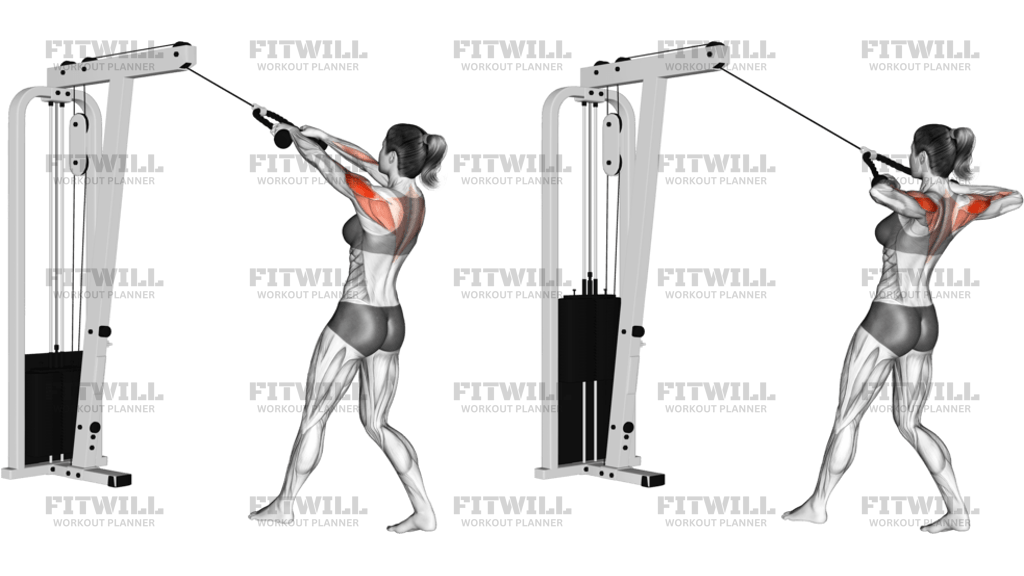
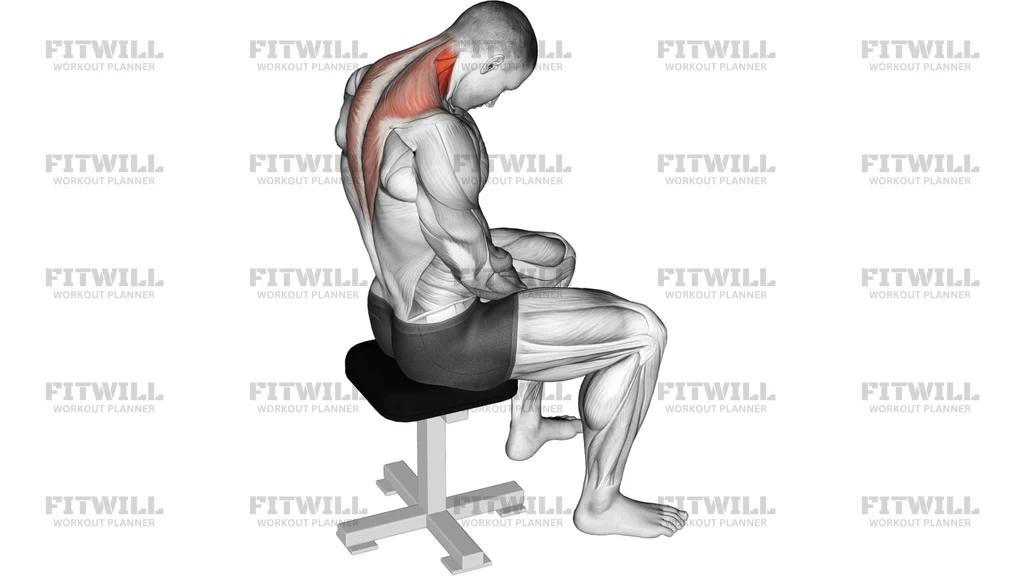
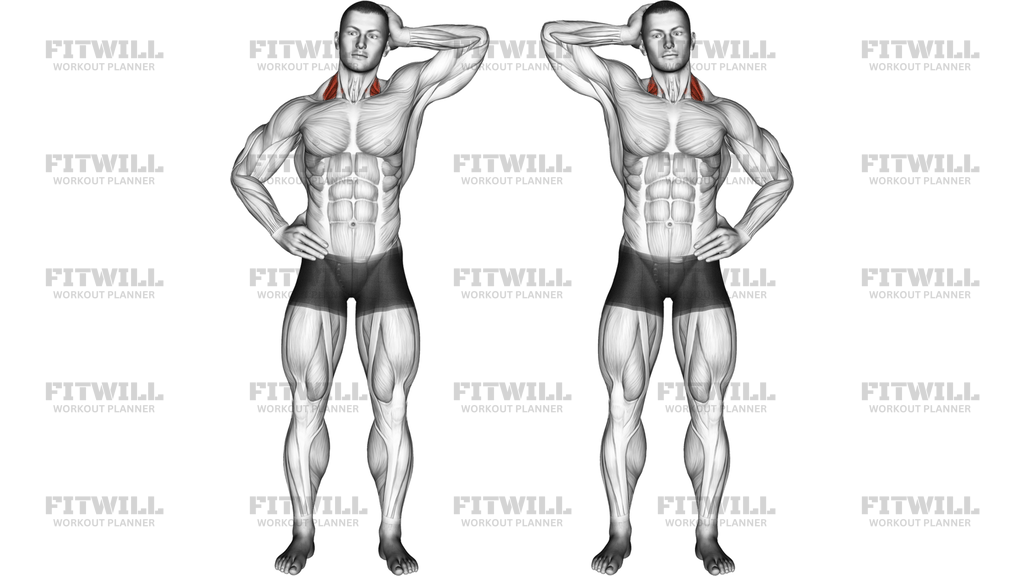
Sitting Side To Side Forward Backward Neck Stretch
The Sitting Side To Side Forward Backward Neck Stretch is a gentle, body-weight mobility drill performed seated on the floor in a cross-legged position. From this stable base, you slowly guide the head through lateral tilts — ear toward each shoulder — and through forward and backward nodding, letting the weight of the head create a mild, self-controlled stretch along the sides, front, and back of the neck. The upper trapezius and levator scapulae area across the top of the shoulders is the main target, with the smaller muscles along the cervical spine working to control each position.
This is one of the most practical tension-release drills you can add to a routine. It suits anyone who spends long hours at a desk, drives frequently, carries stress in the shoulders, or trains hard and needs to restore range of motion in the neck after heavy upper-body sessions. Because no equipment or partner is needed, it works equally well as part of a morning mobility flow, a warm-up before lifting, or a wind-down before sleep.
The seated cross-legged setup matters more than it looks. Sitting on the floor with the hands resting lightly on the knees anchors the shoulders and upper back, which forces the movement to come from the neck itself rather than from shrugging or leaning the torso. Keep the spine tall and the shoulders relaxed and level — if the shoulder lifts to meet the ear, the stretch on the upper trapezius is largely lost.
Execution should be slow and unhurried. Tilt the head sideways until you feel a comfortable pull from the ear down to the opposite shoulder, pause briefly, return to center, and repeat on the other side. Then draw the chin gently toward the chest to stretch the back of the neck, and carefully tip the head slightly backward to open the front of the neck. Each direction should feel like a mild stretch, never pain, tingling, or dizziness.
Because the neck is a mobile but sensitive area, restraint is the key coaching point. Never pull forcefully on the head, never jerk between positions, and keep every repetition smooth and breathing-led. If you have a history of neck injury, cervical disc issues, or persistent symptoms that radiate into the arms, check with a qualified professional before adding this drill to your routine.
[ Workout Log & Planner ]
Put your next workout in Fitwill
Keep your plan and training log ready when you are.


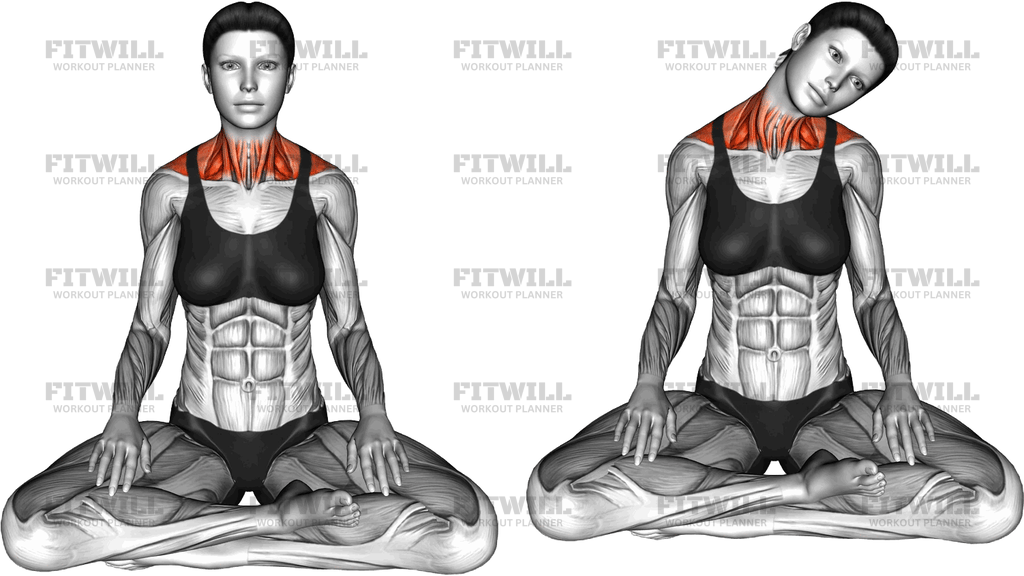
Instructions
- Sit on the floor in a comfortable cross-legged position with your weight evenly distributed through both sitting bones and your spine tall.
- Rest your hands lightly on your knees with the shoulders relaxed and drawn slightly down, away from the ears.
- Take a slow breath in, then exhale as you begin the first direction of movement.
- Tilt your head to the right, bringing the right ear toward the right shoulder, and hold the position for 15 to 30 seconds while the left side of the neck lengthens.
- Return your head to a neutral, forward-facing position with control, then tilt to the left and hold for the same duration.
- After completing both sides, draw your chin slowly down toward your chest to stretch the back of the neck and hold for 15 to 30 seconds.
- Finish the sequence by tipping your head a small amount backward, eyes toward the ceiling, holding only a few seconds if the front of the neck feels tight.
- Breathe steadily throughout each hold — inhale through the nose, exhale slowly, and let the shoulders stay heavy on every exhale.
- Move between directions only through neutral: come back to center each time rather than rolling or swinging the head in circles.
- Repeat the full side-to-side and forward-backward cycle 2 to 3 times, staying well within a comfortable stretch.
Tips & Tricks
- The most common mistake is letting the shoulder rise to meet the ear during the side tilt. Pin the shoulder down first — think of pressing the opposite forearm gently into the knee — so the stretch lands in the upper trapezius instead of collapsing into a shrug.
- Avoid rotating or looking up sideways as you tilt; the nose should stay pointing forward so the stretch stays on the side of the neck rather than turning into a twist.
- On the backward tilt, keep the range small. A large head-back position can compress the back of the cervical spine and often does more harm than good for desk-bound necks.
- Do not lace your fingers behind your head and pull. The weight of the head alone is enough load for this stretch; added force is where most neck strains happen.
- If sitting cross-legged bothers your hips or knees, sit on a folded blanket or firm cushion to raise the hips — a stable, comfortable base keeps you from tensing the shoulders.
- Keep the jaw loose during each hold. Clenching the teeth is a subtle sign you are pushing the stretch too far.
- Stop if you feel tingling, numbness, or dizziness at any point; those sensations mean the position is not right for you, not that you need to push through.
- Match the hold length to your goal: longer, gentler 30-second holds suit relaxation and cool-downs, while shorter 10-to-15-second repeats work well as a pre-training warm-up.
- Move in one plane at a time — side, then other side, then forward, then back — rather than circling the head, which mixes several directions and blurs the stretch.
Frequently Asked Questions
Which muscles does the Sitting Side To Side Forward Backward Neck Stretch target?
The main target is the upper trapezius and the deep muscles along the sides and back of the neck, including the levator scapulae. The forward and backward portions add a mild stretch to the front-of-neck muscles and the muscles at the base of the skull.
Why is the stretch done sitting cross-legged instead of standing?
Sitting cross-legged with the hands resting on the knees locks the shoulders and torso in place, so the movement has to come from the neck itself. Standing, people tend to lean the whole upper body and lose the focused neck stretch.
Can beginners do the Sitting Side To Side Forward Backward Neck Stretch?
Yes, it is very beginner-friendly because you only use the natural weight of your own head. Start with smaller tilts and shorter holds, and let comfort — not the end of your range — decide how far you go.
Should I use my hand to pull my head deeper into the side stretch?
No, this version relies on head weight alone. Pulling on the head is a different, stronger variation and is easy to overdo; keep the hands on the knees so the intensity stays controlled.
How long should I hold each direction?
Fifteen to thirty seconds per side and per direction works well, repeated two to three rounds. If your neck is very tight, use the lower end of the range and shorter holds at first.
I feel the stretch more in my shoulder than my neck — what am I doing wrong?
That usually means the same-side shoulder is shrugging up to meet the ear. Settle the shoulder down and keep it level before you tilt, and the pull will shift back into the side of the neck.
Is it safe to tip the head backward in this stretch?
A small, comfortable backward tilt is fine for most people, but keep the range modest and skip it entirely if it causes pinching, dizziness, or any symptoms running down the arms.
When is the best time to do this stretch — before or after training?
Both work: short, easy repetitions fit well in a warm-up to free up the neck before pressing, pulling, or overhead work, while longer holds suit a cool-down or an evening desk-tension release.
What can I do if sitting on the floor is uncomfortable?
Sit on a firm cushion or folded blanket to lift the hips above the knees, or perform the exact same head movements while seated upright on a chair with both feet flat — the neck stretch itself is unchanged.
Who should be cautious with the Sitting Side To Side Forward Backward Neck Stretch?
Anyone with a recent neck injury, cervical disc problems, or symptoms such as radiating pain, numbness, or frequent dizziness should get clearance from a healthcare professional before performing it, and should work only within a pain-free range.