Slight Squat Torso Twist
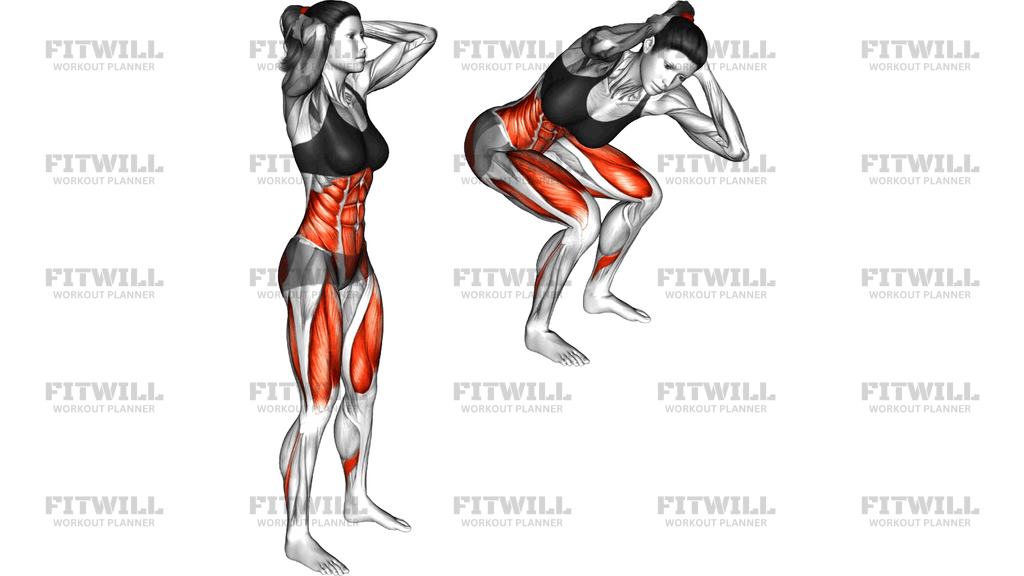
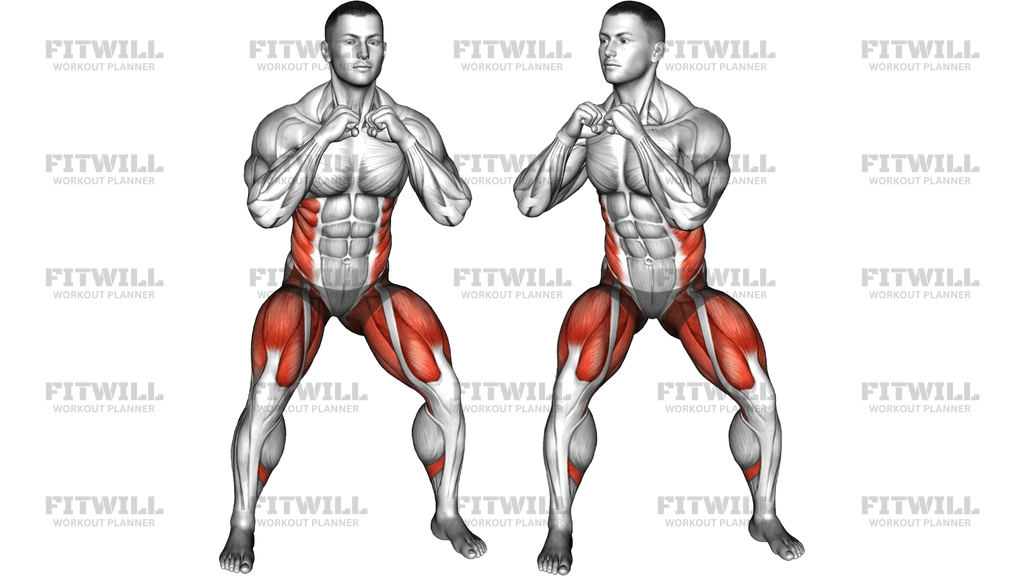
The Slight Squat Torso Twist combines two simple elements — a shallow isometric squat and a rotating trunk — into one of the most practical core drills you can do without any equipment. You hold a quarter squat with your feet wider than shoulder width, keep your fists raised in front of your chest in a guard-like position, and rotate your upper body from side to side while your lower body stays planted. The legs provide a stable, loaded base while the waist does the work, which is exactly what makes this drill different from a seated or standing twist performed on a loose, unloaded frame.
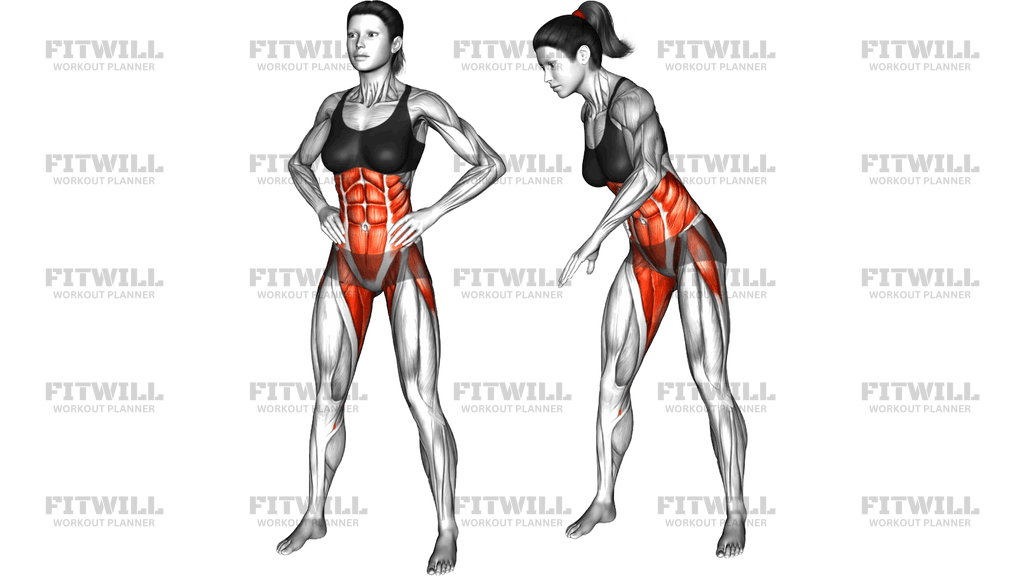
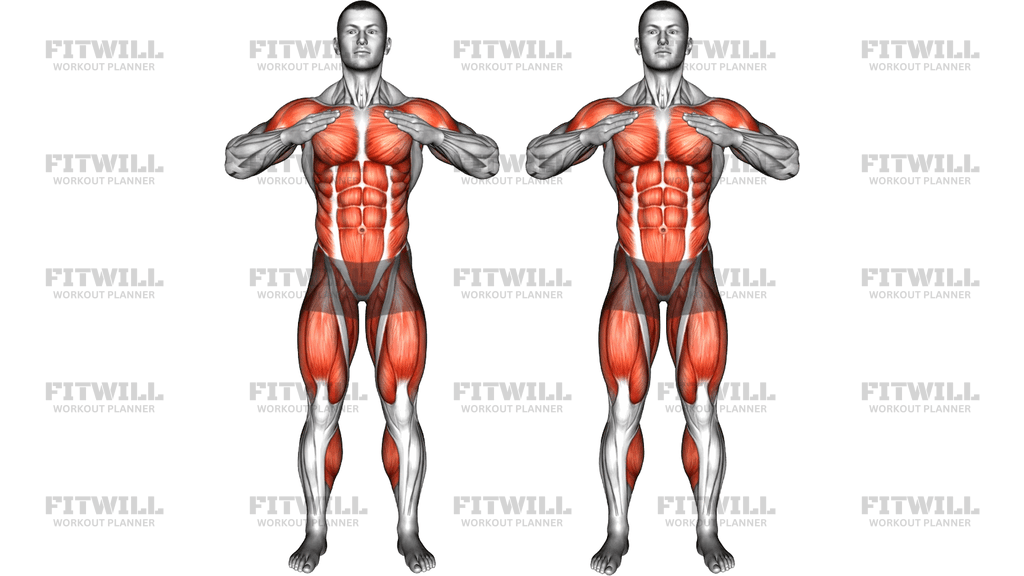
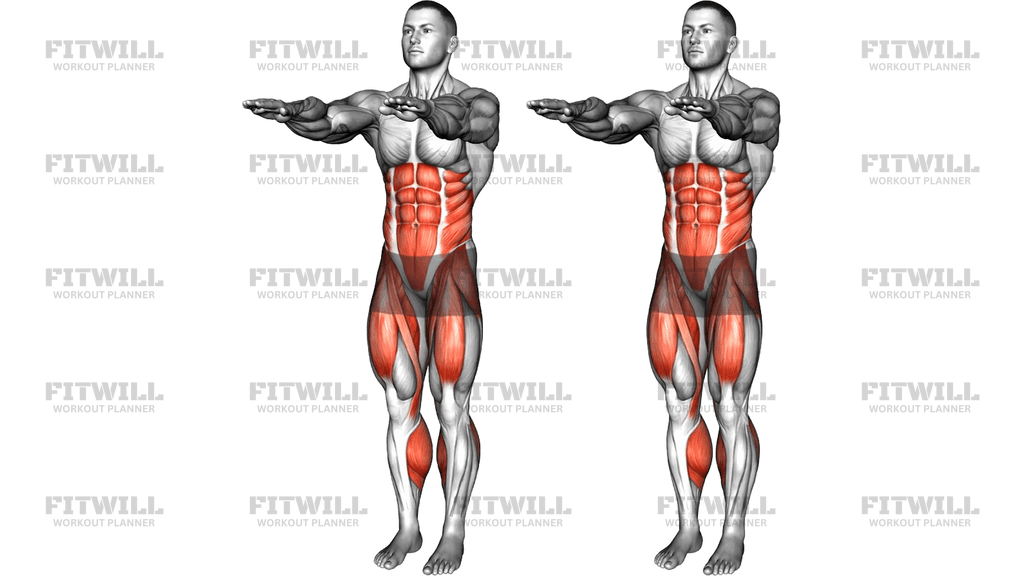
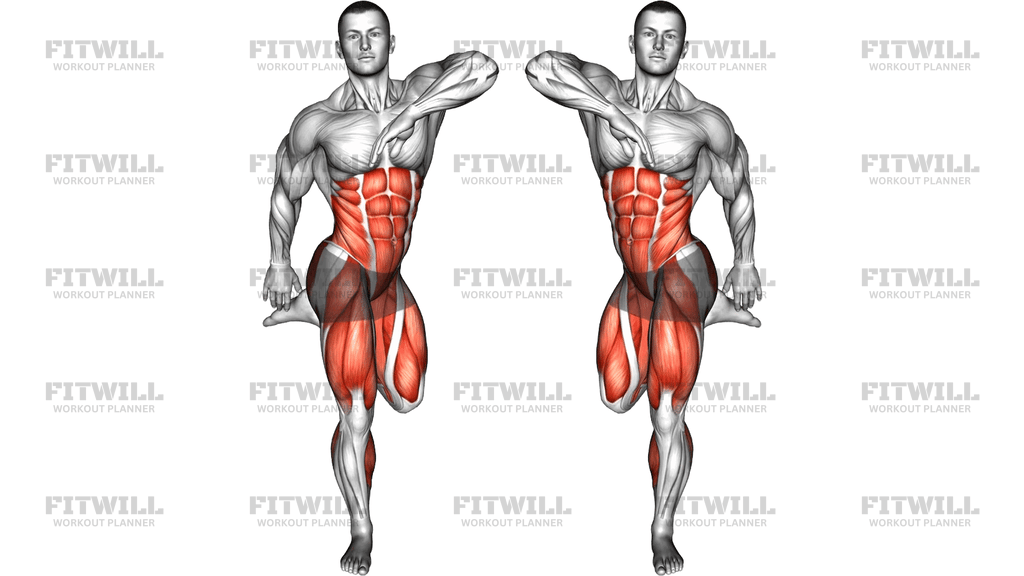
Because the squat position keeps constant tension in the quads, glutes, and hip stabilizers, your obliques are forced to drive the rotation without borrowing momentum from a swaying pelvis. That separation — still hips, moving ribcage — is the whole point of the exercise. It trains rotational control rather than just rotational range, and it teaches you to keep your knees tracking over your toes while your trunk turns above them. The highlighted working areas in this movement are the side waist and the thighs, with the deep core and hip muscles acting as the stabilizing layer underneath.
This drill suits a wide range of people. Beginners can use it as an accessible introduction to rotational training because there is no load to mismanage. Anyone involved in sports that require turning, swinging, or changing direction — racket sports, golf, baseball, martial arts, or throwing events — will recognize the pattern immediately, since the guard-position twist closely mimics the weight transfer of a punch or a swing. It also works well as a warm-up before lower-body or core training, waking up the hip rotators and waist before heavier work.
Setup matters more than it looks. If your feet are too narrow, you will lose balance as you rotate; if your squat is too deep, the legs fatigue before the core gets challenged. Aim for a stance roughly one and a half shoulder widths wide, knees bent just enough that you feel the thighs engage, and weight spread evenly across both feet. The fists stay lifted near the chin throughout, elbows tucked, so the arms travel with the torso as one unit rather than swinging independently.
Execution should be deliberate. Rotate from the ribcage and waist, let your head and eyes follow your hands, pause briefly at each end range, and twist back through the center to the opposite side. Keep the movement smooth rather than ballistic — snapping into the end range is the most common fault and the easiest way to irritate the lower back. Breathe steadily, exhaling as you twist, and stop the set when your squat position starts to rise or your knees start to drift inward.
A typical starting dose is two to three sets of ten to twenty twists per side, either as part of a warm-up or as a core block at the end of a session. As control improves, you can slow the tempo, extend the pause at each end range, or add light resistance later, but earn the body-weight version first. If you feel the work in your thighs and waist without any pinching in the knees or lower back, your setup is right.
Fitwill
Log Workouts, Track Progress & Build Strength.
Achieve more with Fitwill: explore over 9600 exercises with images and videos, access built-in and custom workouts, perfect for both gym and home sessions, and see real results.
Start your journey. Download today!




Instructions
- Stand with your feet about one and a half shoulder widths apart, toes turned out slightly, and spread your weight evenly across both feet.
- Drop into a slight squat by bending your knees until you feel your thighs engage, keeping your chest tall and your knees tracking over your toes.
- Raise both fists in front of your chest in a guard position, elbows tucked close to the ribs, and brace your core as if preparing for light contact.
- Keep your hips and pelvis facing forward and completely still — they are the anchor for the entire set.
- Rotate your upper body to the right from the waist and ribcage, letting your head and eyes follow your hands, until you reach a comfortable end range.
- Pause for a beat at the end of the twist, feeling the tension on the opposite side of your waist.
- Rotate smoothly back through center and continue to the left side without letting your hips swing or your knees collapse inward.
- Exhale as you twist into each rotation and inhale as you return through the middle.
- Complete your target repetitions on both sides, then stand up fully out of the squat to reset before the next set.
- If your thighs burn out first, rise slightly out of the squat so the rotation work stays on your waist.
Tips & Tricks
- The most common fault is the pelvis rotating with the shoulders. Fix it by imagining your belt buckle pointing at an imaginary target in front of you for the entire set.
- If your knees drift inward as you twist, widen your stance slightly and actively press your knees out over your little toes.
- Do not let your fists drop as the set gets tiring — once the guard position sinks, the rotation loses its leverage and the shoulders start doing the work.
- Keep the squat shallow. If your thighs shake before your waist feels anything, you have squatted too deep for your current strength.
- Rotate from the ribcage, not the arms. Your elbows should stay near your ribs so the fists travel as an extension of the trunk.
- Avoid snapping into the end range of the twist. A one-second pause at each side builds control and keeps the movement out of your lower back.
- Keep your heels glued to the floor. If you rock onto your toes during rotation, shorten the range slightly until your balance improves.
- Progress by tempo, not speed. Slower twists with a longer pause at each end range are harder and safer than faster whipping reps.
- Use this as a warm-up before squats or rotational sports, but keep the reps crisp — save high-rep burnout sets for the end of a workout.
Frequently Asked Questions
Which muscles does the Slight Squat Torso Twist work?
The primary movers are the obliques on the sides of your waist, which drive and control the rotation. The quads and glutes work isometrically to hold the slight squat, and the deep core stabilizes your spine throughout the twist.
Why is the squat position necessary — can't I just twist while standing upright?
The slight squat loads your legs and locks your hips in place, which forces the rotation to come from your waist instead of momentum or hip swing. Standing upright lets your pelvis cheat, so you lose much of the rotational training effect.
How deep should the squat be during the Slight Squat Torso Twist?
Only deep enough that your thighs feel engaged — roughly a quarter of the way down. If your legs fatigue before your waist, come up slightly; the squat is the anchor, not the main event.
Is this exercise suitable for beginners?
Yes. There is no external load, the range is self-selected, and the guard-position setup is easy to learn. Beginners should focus on keeping the hips still and the knees tracking over the toes before trying to increase speed or reps.
How many reps of the Slight Squat Torso Twist should I do?
Start with two to three sets of ten to twenty twists per side. As a warm-up, keep the reps lower and the movement brisk; as a core finisher, slow the tempo and let the burn build.
My lower back feels the twist instead of my waist — what am I doing wrong?
You are likely rotating too forcefully into the end range or letting your pelvis turn with your shoulders. Reduce the range slightly, slow down, and keep your hips locked facing forward so the obliques do the rotating.
Can the Slight Squat Torso Twist help with sports performance?
It builds rotational control in the same pattern used for punching, swinging, throwing, and changing direction. It will not replace loaded rotational work, but it is an effective groove-the-pattern drill and warm-up for those sports.
What can I use if I want to make this exercise harder?
Once your form is solid, slow the tempo, extend the pause at each end range, or progress to light loaded variations such as a cable or medicine ball rotation. Do not add resistance until you can keep your hips perfectly still through every rep.
Should my knees move at all during the twist?
Your knees should stay bent at the same depth and keep pointing in the same direction for the whole set. They hold the stable base — if they twist or drift inward, reduce your rotation range and refocus on the leg anchor.