Band Standing Single Arm Chest Fly
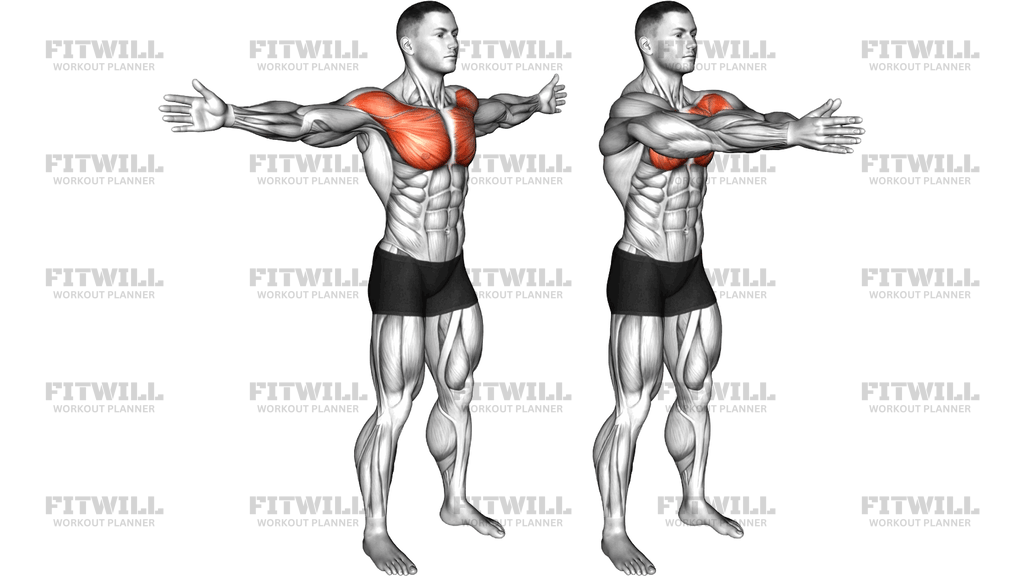
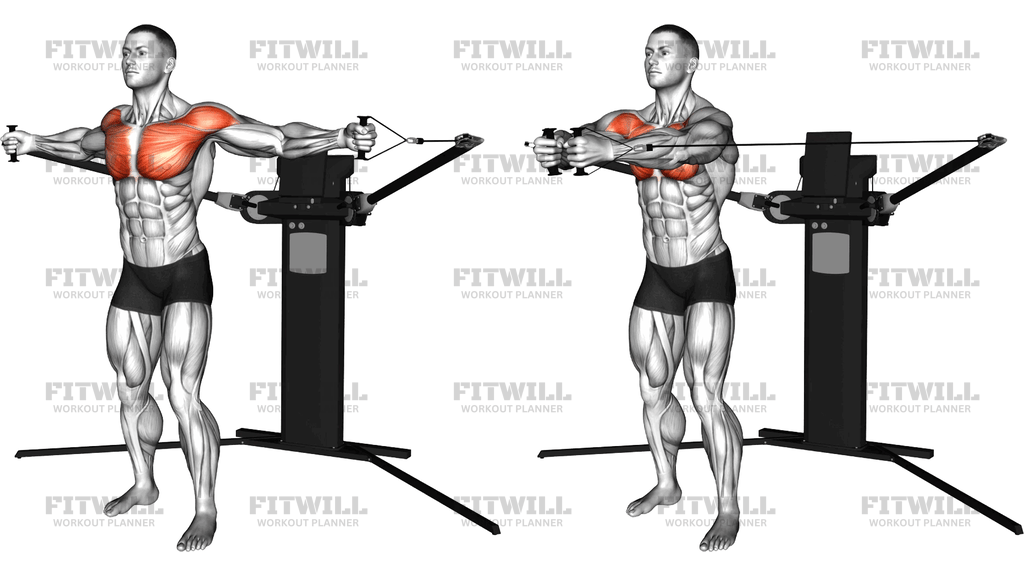
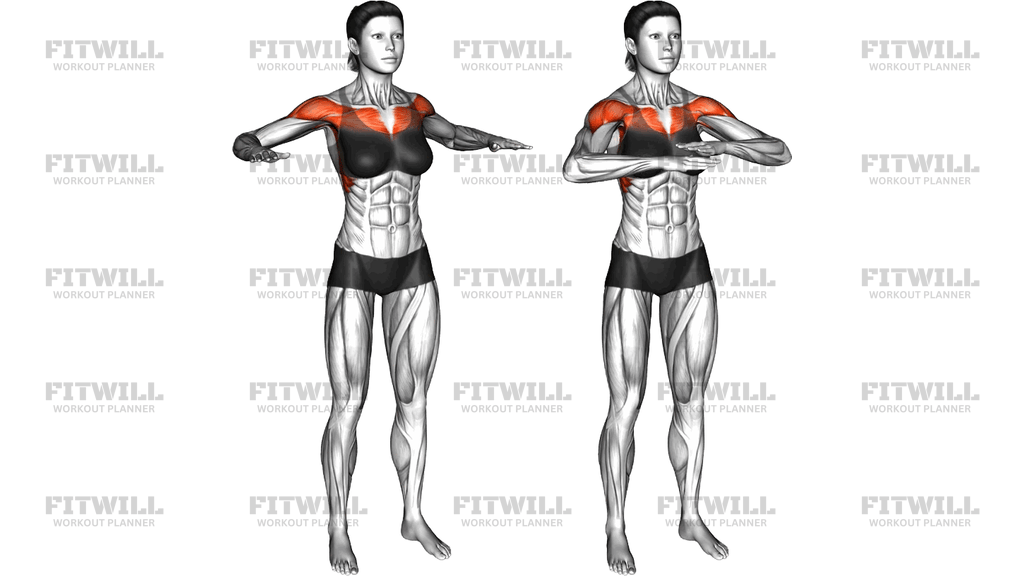
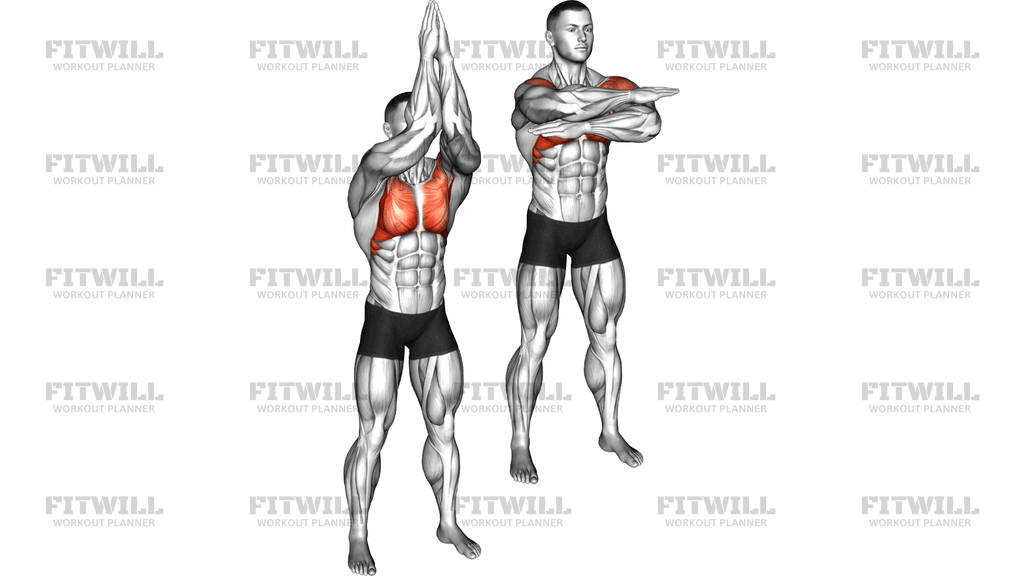
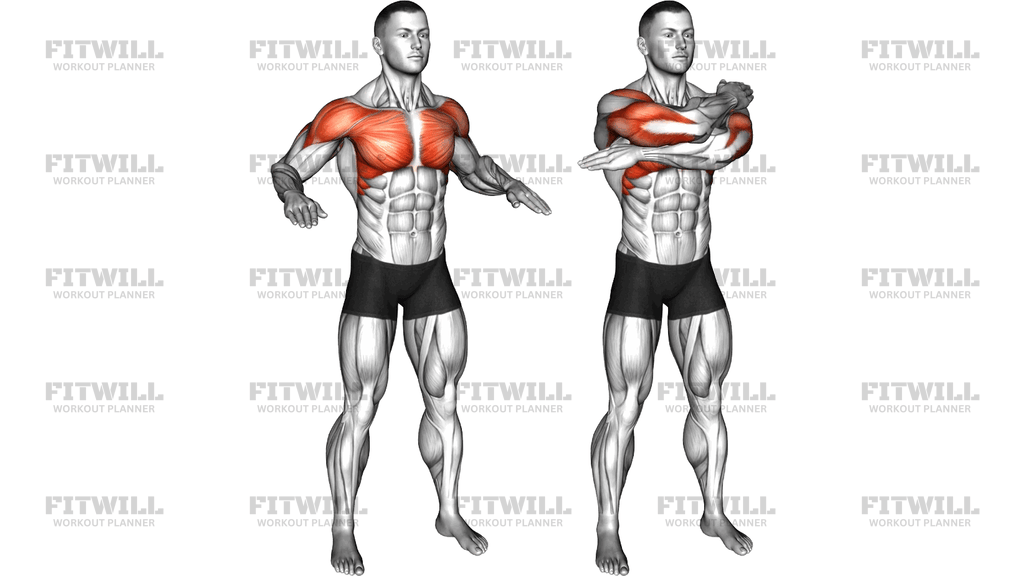
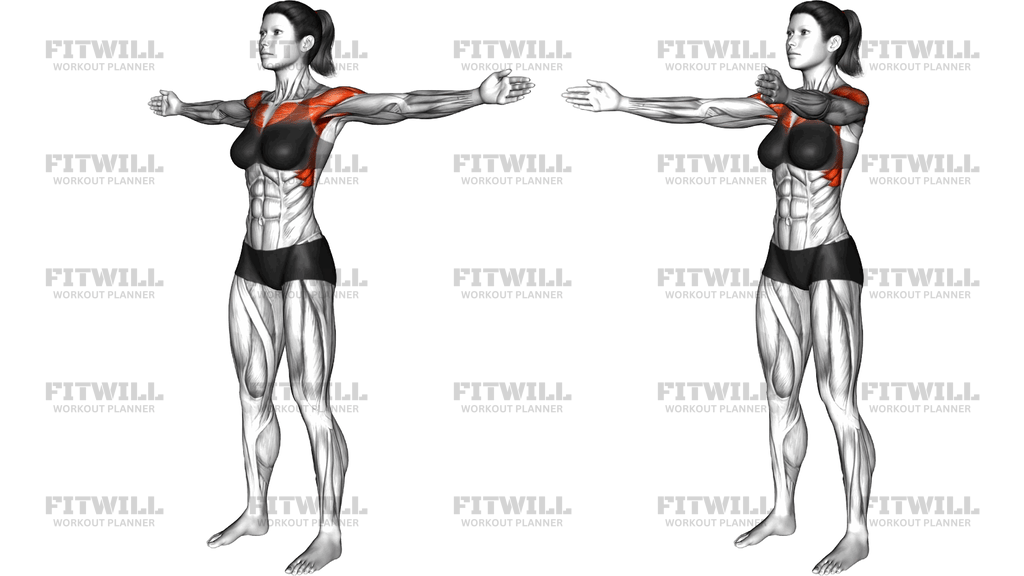
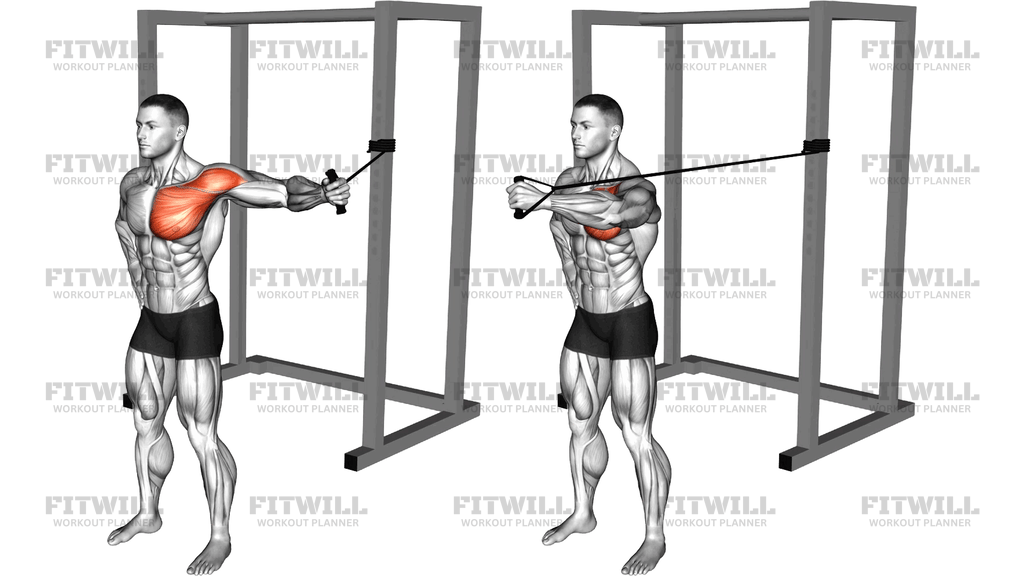
The Band Standing Single Arm Chest Fly is a unilateral chest exercise performed with a resistance band anchored at roughly shoulder height behind you. You stand facing away from the anchor point, hold the handle in one hand with your arm extended out to the side, and sweep the handle across the front of your body toward the opposite side of your chest. Because the band pulls backward and slightly outward at the start, your chest has to work through the entire arc to bring the arm across the midline.
Working one side at a time makes this movement especially useful for spotting and correcting left-to-right differences in chest strength and development. It also suits home trainees who have a band and a sturdy anchor such as a rack, since it delivers a fly pattern that normally requires cables or dumbbells and a bench. The standing position adds a light demand on your core and legs to keep your torso from rotating as the band pulls you back.
The main muscles worked are the pectorals, with the front of the shoulder assisting as the arm travels horizontally across the body. The resistance profile of a band means tension is lightest at the start and heaviest near the finished position, which is the opposite of a dumbbell fly and makes the strongest part of the chest contraction the hardest working portion of the rep.
Setup matters more here than in most band drills. The anchor height determines the angle of pull, so a chest-height attachment keeps the fly on a flat, horizontal path. Stand far enough forward that the band is already under slight tension with your arm out to the side, and square your hips and shoulders toward the front so the band pulls from directly behind your working shoulder.
To perform it well, keep a soft bend in the elbow and move only at the shoulder joint. Sweep the handle in a wide arc until your hand crosses toward the opposite side of your chest, squeeze briefly, then let the band pull your arm back with control instead of letting it snap to the start. A stable stance with a slight forward stagger helps you resist the backward pull.
This exercise fits well as an accessory after pressing work, as a warm-up activator before benching, or as a finisher for higher-rep chest volume when weights are limited. Keep the resistance modest at first; the band's tension ramps up quickly at the end range, and controlling the return is where most people lose form.
[ Workout Log & Planner ]
Put your next workout in Fitwill
Keep your plan and training log ready when you are.


Instructions
- Anchor a resistance band to a rack or sturdy upright at about chest height, with the band running directly behind your working shoulder.
- Grip the handle in one hand and step forward until the band is taut with your arm extended straight out to your side at shoulder height; place your free hand behind your lower back or at your hip for balance.
- Set your feet in a comfortable staggered stance, square your chest to the front, and brace your core so your torso will not twist toward the band.
- Exhale and sweep the handle in a wide arc across the front of your body, keeping a slight, fixed bend in the elbow and moving only at the shoulder.
- Finish with your hand crossing toward the opposite side of your chest, and pause for a moment to feel the pecs contract.
- Inhale and slowly let the band pull your arm back out to the side along the same arc, resisting all the way until the arm is back at the start.
- Keep your shoulder blade stable and your chest tall throughout; do not let the shoulder roll forward at the finish or shrug up toward the ear.
- Complete all reps on one side, then switch hands, recheck your stance, and repeat on the other side with the same range and tempo.
Tips & Tricks
- The most common mistake is twisting the torso into the fly to help the arm across. If your shoulders rotate toward the working side, you are cheating the chest out of its job—lighten the band and square up again.
- Do not lock the elbow. A hard-locked arm turns the movement into a shoulder stress test, while a soft, fixed bend keeps the tension on the pecs.
- Watch the return phase. Bands pull the arm back aggressively at the end of the set, and letting it snap out to the side wastes half the rep and strains the shoulder—decelerate it deliberately.
- If you feel the work in the front of the shoulder instead of the chest, lower the anchor slightly or reduce tension so you can control the arc rather than fight it.
- Keep the arc low enough that the hand finishes around the mid-chest, not up near the face. Sweeping too high shifts stress upward and away from the pecs.
- Because the band is heaviest at the finished position, choose a lighter resistance than you would use for a cable fly at the same rep range.
- Set your staggered stance so the band cannot pull you off balance backward—one foot slightly forward gives you a base to lean against.
- Keep the wrist neutral and the handle grip relaxed; squeezing the handle too hard shifts tension into the forearm and steals focus from the chest.
Frequently Asked Questions
What muscles does the Band Standing Single Arm Chest Fly work?
The pectorals are the primary movers as the arm sweeps across the body, with the front delts assisting. The core and legs work lightly to keep your torso from rotating against the band's pull.
Why does the tension feel hardest at the end of the rep instead of the start?
A band's resistance increases as it stretches, so the load peaks when your hand is crossed over your chest and drops off as the arm returns out to the side. This is the reverse of a dumbbell fly, where gravity loads the mid-range most.
How high should I anchor the band?
Chest height gives a flat, horizontal fly path that targets the mid-pecs. Anchoring lower angles the pull upward toward the upper chest, while a higher anchor shifts emphasis downward.
Is this a good exercise for beginners?
Yes, provided the band is light. The single-arm setup gives immediate feedback if you twist or shrug, and the band's gentle start tension is friendlier to the shoulder than heavy dumbbells at full stretch.
Why do one arm at a time instead of a two-arm band fly?
The unilateral setup lets each side work independently, so a stronger side cannot cover for a weaker one. It also makes it easier to feel the pec contracting and to spot side-to-side differences.
My torso keeps rotating during the fly—how do I fix it?
Step back to reduce tension, widen your stance, and brace your abs as if bracing for a light punch. You can also place your free hand behind your lower back to give the torso a fixed reference.
Can I substitute the Band Standing Single Arm Chest Fly with a cable fly?
A single-arm standing cable fly is the closest match and follows nearly the same path. Dumbbell floor or bench flies work the chest similarly, though the resistance curve and standing core demand differ.
How many reps and sets should I do?
Because band tension peaks hard at the end range, moderate reps of 10 to 15 per side over 2 to 3 sets work well. Prioritize a slow, controlled return over adding resistance.
Is it safe for the shoulder joint?
For most people, yes, as long as the elbow stays softly bent and the arm stays at or slightly below shoulder height. If you have a history of shoulder irritation, start with low tension and stop short of any pinching sensation at the start position.