Standing Hand Behind Side Bend
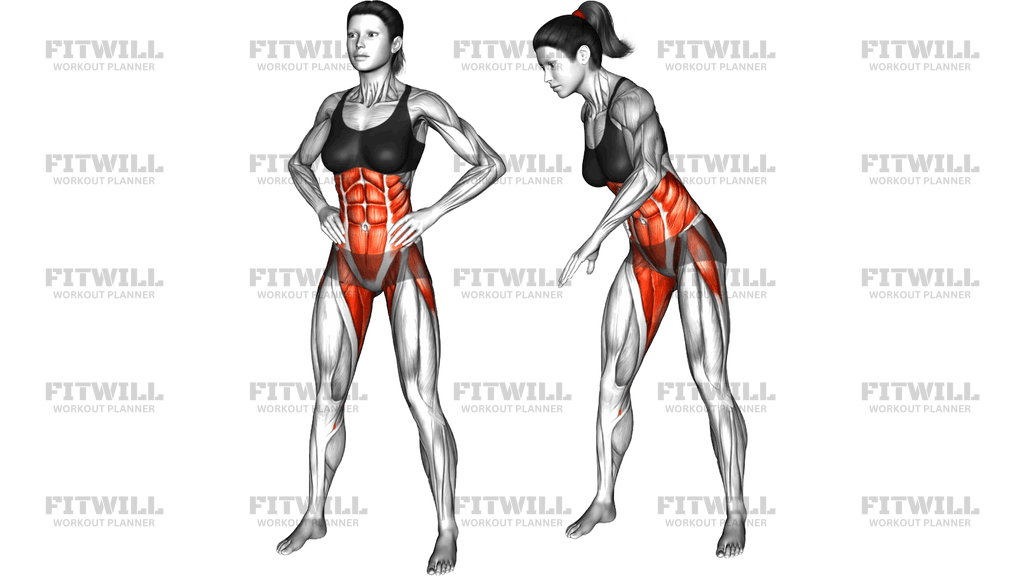
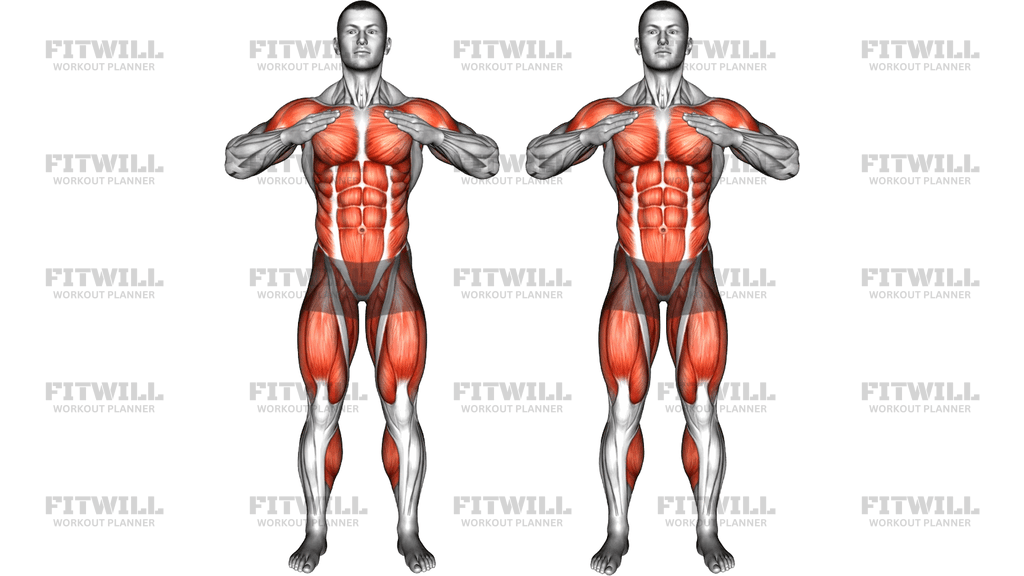
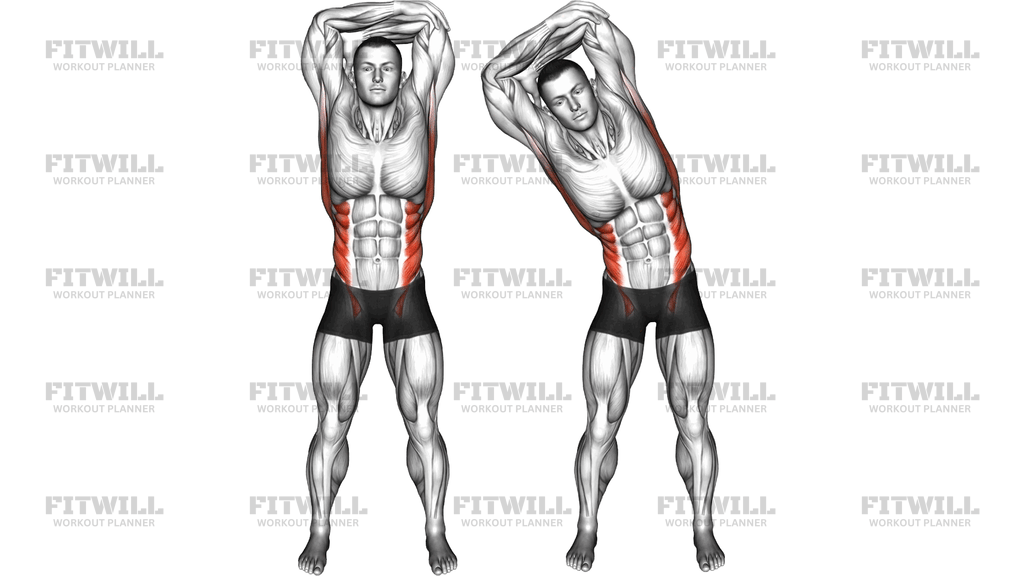
The Standing Hand Behind Side Bend is a bodyweight lateral stretch performed from a tall standing position with the arms raised overhead and one hand clasping the other behind the head. From there, you lean sideways, letting the clasped-arm position pull gently on the entire side of the body. The highlighted areas in the movement are the obliques running along the waist, with the lats and the small muscles of the lower side back assisting as the torso travels through the arc.
This movement is useful for anyone whose sides feel compressed or stiff: people who sit for long hours, lifters who train heavy squats and deadlifts without much lateral work, and athletes in sports that demand rotation and reaching, such as tennis, baseball, or golf. It also serves as a simple warm-up or cool-down drill because it requires no equipment and very little space.
Setup matters more than most people expect. The feet should be grounded and roughly hip-width apart so the hips stay square and the bend happens at the spine, not by the whole body tipping sideways. Raising the arms overhead before bending lengthens the lats and the tissues between the ribs, which is what separates this from a casual standing lean. The clasped-hand position behind the head also keeps the shoulders open and discourages collapsing forward.
To execute it well, keep the spine long as you begin the lean, and think of reaching up and over rather than simply flopping to the side. The stretch should be felt along the opposite side of the waist and ribs. Avoid pushing into a sharp or pinching sensation; a steady, comfortable pull is the goal. Keep breathing throughout, since holding your breath tends to tighten exactly the muscles you are trying to lengthen.
A common mistake is bending forward or twisting while leaning, which steals tension from the obliques. Another is rushing the return. Move into the stretch slowly, pause at your end range for a few calm breaths, and come back up under control before switching sides.
Because it is gentle, self-regulated, and repeatable, the Standing Hand Behind Side Bend fits easily into daily routines, pre-workout mobility blocks, and post-training recovery. If you have any lower back discomfort, keep the range shallow and the movement smooth, and stop if the bend produces anything more than a mild stretch sensation.
[ Workout Log & Planner ]
Put your next workout in Fitwill
Keep your plan and training log ready when you are.


Instructions
- Stand upright with your feet about hip-width apart and your weight spread evenly across both feet.
- Raise both arms overhead and reach one hand behind your head, clasping that wrist or hand with your opposite hand so the elbows stay wide of the ears.
- Pull your navel in slightly and set your hips square so both hip points face straight ahead.
- Inhale, then as you exhale, lean your torso directly to the side over the leg you are bending toward, keeping your chest facing forward.
- Continue until you feel a steady stretch along the opposite side of your waist, ribs, and lat, with the clasped arms staying overhead.
- Hold the end position for two to four slow breaths without letting your hips drift backward or forward.
- Engage the stretched side to bring your torso back up to vertical along the same path you leaned down.
- Switch the clasp so the other hand is behind your head, then repeat the bend to the opposite side.
- Breathe steadily throughout, inhaling on the return and exhaling as you lean into each stretch.
- Reset your stance between sides so each repetition starts from a tall, even base.
Tips & Tricks
- If your torso drifts forward during the lean, imagine sliding your back along a wall behind you so the bend stays purely sideways.
- Keep the hips planted. If your hips shoot sideways, the obliques stop working and the lower back takes over the motion.
- The hand clasped behind the head should gently pull the elbow toward the opposite side to deepen the lat stretch; do not yank the neck or head.
- If you feel pinching at the side of the waist, shorten the range slightly instead of forcing deeper; a mild, even pull is more productive.
- Avoid holding your breath at the bottom of the stretch; each exhale usually lets you settle a little further with less tension.
- Do not twist the shoulders toward the floor. Check that both elbows stay visible in your peripheral vision as you bend.
- Keep the knees soft rather than locked so the legs can support the torso without straining the joints.
- If one side is noticeably tighter, give the tighter side one extra hold rather than bending harder on that side.
Frequently Asked Questions
Which muscles does the Standing Hand Behind Side Bend target?
The main targets are the obliques along the sides of the waist, with the lats, the muscles between the ribs, and the quadratus lumborum in the lower back assisting as the torso leans sideways.
Why is one hand placed behind the head in this stretch?
Clasping one hand behind the head keeps the arms overhead and the chest open, which lengthens the lats and intercostal areas while preventing the shoulders from collapsing forward during the bend.
Is the Standing Hand Behind Side Bend suitable for beginners?
Yes. It requires no equipment, and beginners can simply reduce the depth of the lean until they feel a mild stretch along the opposite side of the waist.
Should my hips move when I bend to the side?
No. Keep the hips square and stacked over the feet so the side bend happens through the spine; shifting the hips sideways reduces the stretch on the obliques.
How long should I hold each side of the Standing Hand Behind Side Bend?
Two to four slow breaths per side works well, and repeating two to three rounds per side is enough for most warm-up or cool-down routines.
What is the most common mistake in this movement?
Bending forward or twisting while leaning to the side, which shifts tension away from the obliques. Keep your chest facing forward and the bend strictly lateral.
Can I do a standing side bend without clasping the hands behind the head?
You can, but the overhead clasp adds length to the lats and ribs on the stretching side, making the Standing Hand Behind Side Bend more complete than a simple arm-down lean.
When is the best time to use this stretch?
It works well as a warm-up before lifting or rotational sports and as a cool-down after training sessions that load the trunk heavily.
Is it safe if I have lower back sensitivity?
Keep the lean shallow, move slowly, and stay within a mild stretch sensation. If the movement causes sharp or radiating discomfort, stop and consult a qualified professional.