Seated Shoulder Press On A Chair
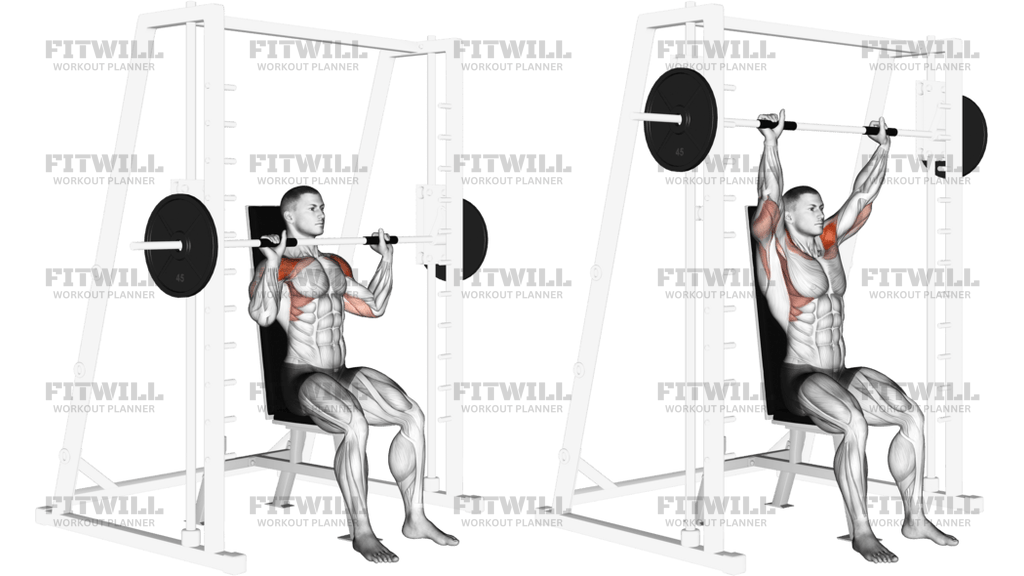
The Seated Shoulder Press On A Chair is a bodyweight pressing pattern performed from an upright chair. You sit tall with your feet planted, raise your arms into a goalpost position with elbows bent at roughly ninety degrees, and press your fists straight up overhead until your arms are fully extended, then lower them back to shoulder height. Because there is no external load, the movement works as a low-resistance shoulder press that emphasizes range of motion, control, and muscle activation rather than maximum strength.
This exercise suits beginners learning the overhead pressing groove, older adults or anyone returning from a layoff who wants a joint-friendly reintroduction to pressing, and office workers who want a quick shoulder refresher without leaving their desk. It is also a useful warm-up drill before loaded pressing, since it takes the shoulders through the full overhead arc with zero weight.
The primary muscles working are the front and side shoulders, which lift the arms overhead. The triceps extend the elbows at the top of the press, the upper traps help elevate and stabilize the shoulder girdle, and the core works quietly to keep your torso upright on the seat. Because you are seated, the chair itself removes momentum from the legs and hips, forcing the shoulders to do the work.
The setup matters more than it might seem. Sitting on a firm chair with your back away from the backrest encourages an upright spine and honest shoulder movement. If the seat is too soft or you slouch, your ribs flare and your lower back arches to fake extra overhead range, which is exactly the habit you want to avoid before progressing to dumbbells.
To execute it well, think about pressing the ceiling away rather than just lifting your hands. Reach fully at the top so your biceps end up near your ears, then lower with the same control, stopping when your elbows reach shoulder height. Move at a steady pace the whole time; the lack of load means tempo and precision are your only training tools.
Use this movement as a warm-up, an active recovery drill, or a first step toward loaded pressing. Once it feels easy, add light dumbbells or a resistance band to convert the same pattern into a progressive strength exercise.
[ Workout Log & Planner ]
Put your next workout in Fitwill
Keep your plan and training log ready when you are.


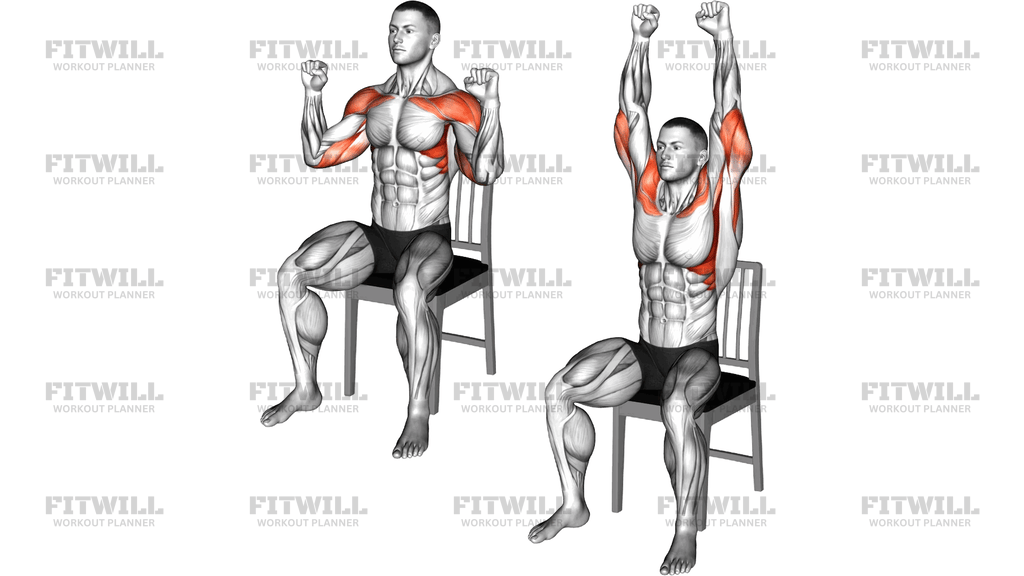
Instructions
- Sit on a sturdy, armless chair with your feet flat on the floor about hip-width apart and your weight spread evenly across both sit bones.
- Sit up tall away from the backrest, stack your ribs over your hips, and gently brace your stomach so your lower back is not arching.
- Raise both arms out to the sides and bend your elbows to about ninety degrees, so your upper arms are at shoulder height and your fists point toward the ceiling.
- Pull your shoulder blades down slightly so your shoulders are not shrugged up toward your ears.
- Exhale and press both fists straight up overhead until your arms are fully extended and your biceps are close to your ears.
- Pause for a moment at the top with elbows locked out softly, without letting your ribs flare forward.
- Inhale and lower your arms slowly along the same vertical path until your elbows return to shoulder height and the ninety-degree bend.
- Keep your torso still throughout, resisting the urge to lean back as your arms travel overhead.
- Complete your repetitions, then rest your hands on your thighs and reset your posture before the next set.
Tips & Tricks
- If your lower back arches as you press up, tighten your stomach and think about tucking your ribs down; this keeps the work on the shoulders instead of the spine.
- A common mistake with a chair seat is sliding forward into a slouch halfway through the set. Sit on your sit bones and check your posture between reps.
- Do not let your elbows drift behind or in front of the vertical press path; straight up and straight down keeps the shoulder joint in a friendly position.
- If shrugging your shoulders toward your ears creeps in at the top, deliberately reach a little taller with your fingertips instead of lifting your traps.
- Slow the lowering phase to two or three seconds. With no external weight, the eccentric is where most of the useful tension comes from.
- Keep your wrists firm and fists closed so your hands do not flop backward at the top of the press.
- Your head should stay neutral; push your head slightly forward through the gap between your arms at the top rather than tipping your chin up.
- If the chair wobbles or has wheels, move to a fixed chair, since a stable base is non-negotiable for any overhead movement.
- If full overhead reach is uncomfortable, press only as high as you can while keeping your ribs stacked, and build range gradually over sessions.
Frequently Asked Questions
Which muscles does the Seated Shoulder Press On A Chair work?
The front and side shoulders do most of the lifting, while the triceps straighten the elbows overhead. The upper traps and core contribute by stabilizing your shoulder girdle and upright torso.
Is the Seated Shoulder Press On A Chair effective without dumbbells?
Yes, but for different reasons than a loaded press. It trains the overhead movement pattern, control, and endurance in the shoulders, making it ideal for warm-ups, beginners, and active recovery rather than maximal strength.
Why is this press done seated on a chair instead of standing?
Sitting removes help from your legs and hips, so you cannot use body English to finish reps. The chair also gives beginners a stable base while they learn to keep their ribs stacked overhead.
What should my starting arm position be for the Seated Shoulder Press On A Chair?
Start with elbows bent at about ninety degrees and held at shoulder height, out to the sides, with fists pointing up. From there, press straight overhead and return to that same position each rep.
How many reps should I do of the Seated Shoulder Press On A Chair?
Because the resistance is low, sets of 12 to 20 slow, controlled reps work well. If you are using it as a warm-up, one or two sets of about 10 reps is usually enough.
My lower back arches when I press overhead. How do I fix it?
Brace your stomach lightly and think about pulling your ribs down toward your hips as you press. If the arch persists, press only to the height where you can keep your torso stacked, and improve range gradually.
Can I progress the Seated Shoulder Press On A Chair into a heavier exercise?
Yes. Once your form is consistent, hold light dumbbells or loop a resistance band under the chair and over your hands, keeping the exact same seated position and press path.
Is the Seated Shoulder Press On A Chair safe if my shoulders hurt overhead?
Discomfort during overhead reaching is a signal to stop rather than push through. Reduce the range, slow the tempo, and check that your elbows stay on a vertical path; if discomfort continues, get it assessed before loading the pattern.
What kind of chair works best for this exercise?
Use a firm, armless chair that does not rock or roll, with your feet flat on the floor. Avoid soft couches or office chairs with casters, since an unstable base undermines the whole point of the seated setup.