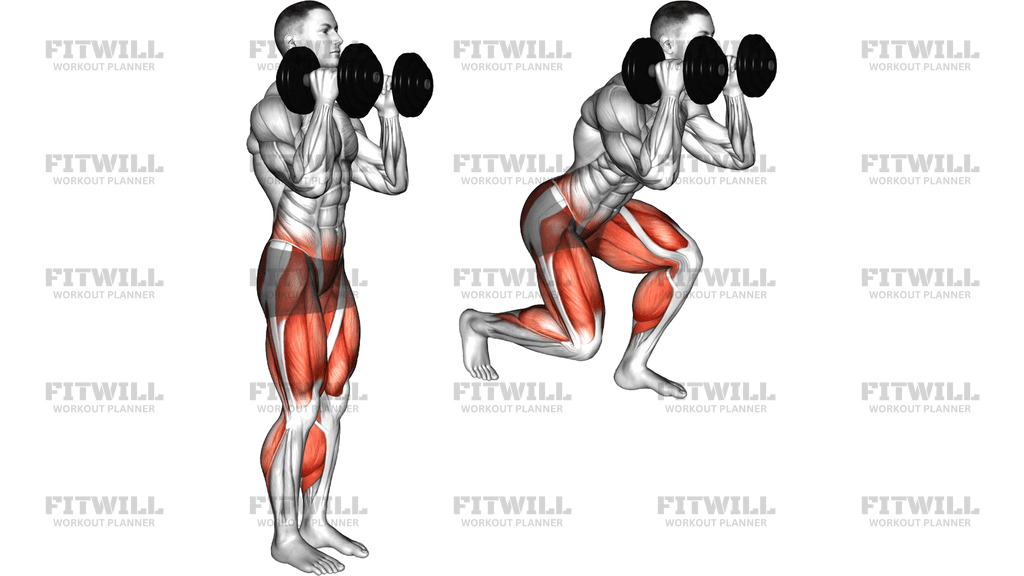
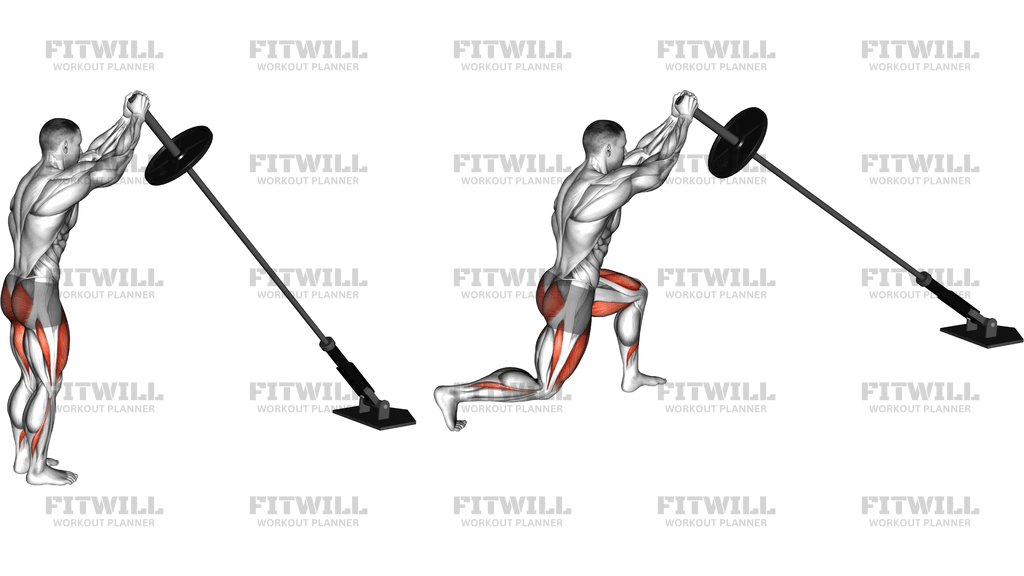
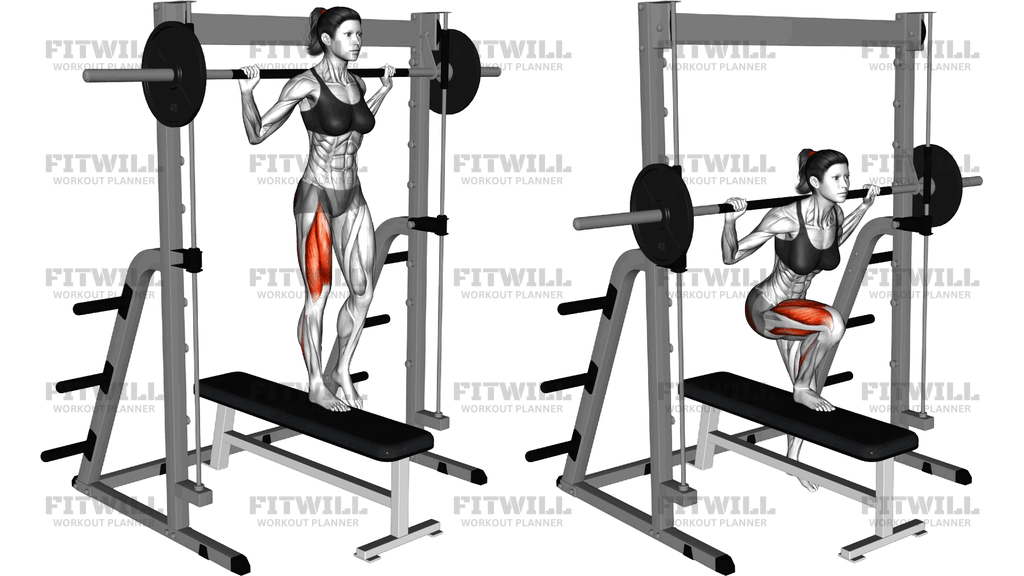
Barbell Forward Backward Lunge (Version 2)
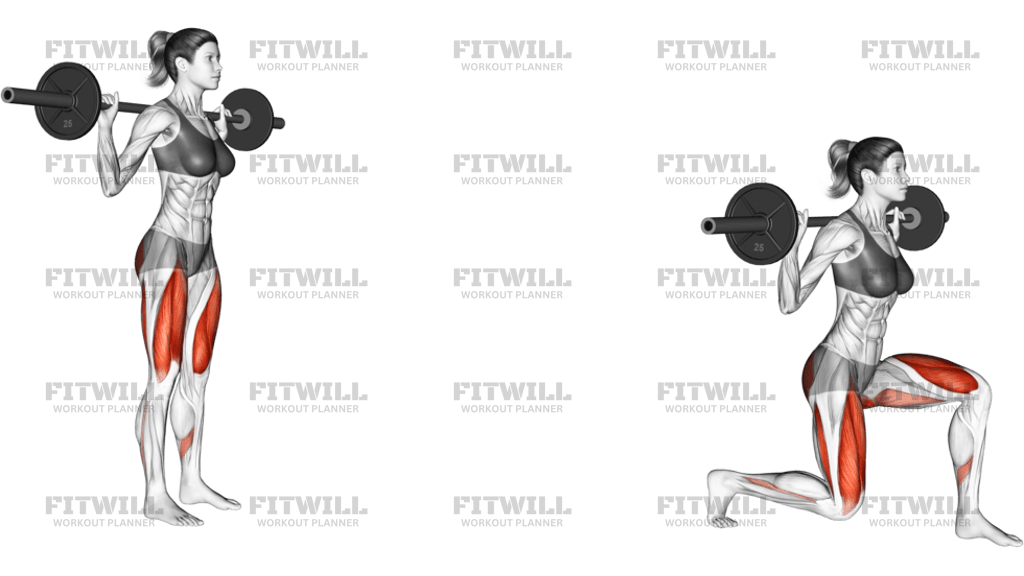
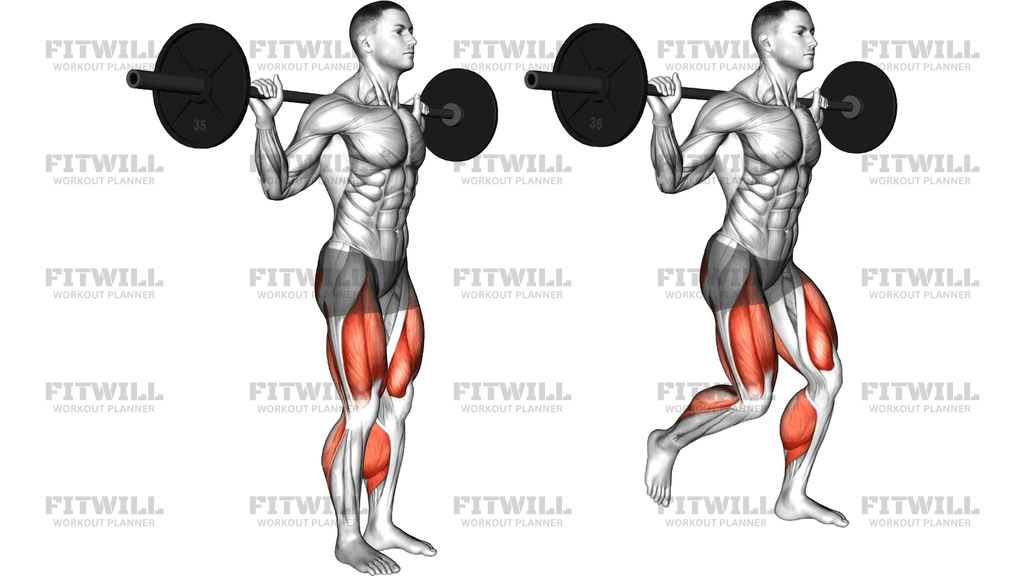
The Barbell Forward Backward Lunge (Version 2) is a barbell lunge variation where you alternate stepping forward and stepping backward from a standing position, all while holding a barbell racked across your upper back. Instead of repeating the same lunge direction for a set, you complete one forward lunge, return to standing, then perform one backward lunge with the same leg before switching sides. This back-and-forth pattern keeps your working leg under continuous tension and challenges your balance from two different angles in a single rep scheme.
The movement is loaded with the bar resting on your trapezius, the same position you would use for a back squat, so your upper body and core have to stay tall and braced throughout. The forward lunge places slightly more emphasis on the quadriceps, while the backward lunge tends to shift a bit more load toward the glutes and hamstrings. Cycling between the two directions in one exercise gives you a balanced stimulus for the whole thigh and hip area without needing a separate exercise for each pattern.
This exercise suits intermediate lifters who are already comfortable with barbell squats or static lunges and want to build single-leg strength, hip stability, and coordination. It is especially useful for athletes who need deceleration control, since stepping forward and absorbing your bodyweight is essentially a controlled braking action. It also works well in hypertrophy programs as a secondary leg movement after squats, when the goal is to fatigue each leg individually and address left-to-right strength differences.
Setup matters more here than in a standard forward lunge. Because you are stepping in two directions from the same spot, you need clear space in front of and behind you, and the bar must be secured tightly on your upper back so it does not shift as your torso angle changes. A narrow-ish split stance with an upright torso keeps the bar path stable; letting your chest collapse or your front knee cave inward are the fastest ways to lose control of the rep.
To execute well, step forward into a lunge where both knees reach roughly 90 degrees, drive through the front foot to return to standing, then step the same leg straight back into a reverse lunge, again lowering until the back knee approaches the floor. Push through the working leg to return to center, complete your reps on one side, then switch. Move deliberately rather than quickly; the transitions in and out of each lunge are where balance is most likely to break down.
Because this is a balance-dependent barbell movement, start lighter than you would for a regular barbell lunge and master the forward-backward rhythm first. If you wobble noticeably, reduce the load or hold onto a rack for the first few sessions until your footwork becomes automatic.
[ Workout Log & Planner ]
Put your next workout in Fitwill
Keep your plan and training log ready when you are.


Instructions
- Set a barbell in a squat rack at about chest height, duck under it, and position the bar across your upper traps, not your neck, with your hands gripping slightly wider than shoulder width.
- Lift the bar out of the rack, step back to clear space in front of and behind you, and set your feet hip-width apart with your toes pointing forward.
- Take a brace breath into your belly, pull your shoulder blades together to keep the bar stable, and lift your chest so your torso stays upright.
- Step your right leg forward about two to three feet and lower straight down until both knees are bent close to 90 degrees, keeping your front knee stacked over your ankle.
- Drive through your right heel to push back up to a full standing position with both feet together.
- Without pausing, step your right leg straight back into a reverse lunge, lowering until your right knee hovers just above the floor and your left thigh is vertical.
- Push through your left heel to return to the starting stance, keeping your torso tall as you rise.
- Exhale as you push out of each lunge, and inhale at the top before your next step.
- Complete all reps on the right leg, re-rack nothing yet, then switch to the left leg and repeat the forward-backward sequence.
- When finished, walk the bar back into the rack and set it securely on the hooks before resting.
Tips & Tricks
- Keep the bar pressed into your traps with your elbows pulled down and slightly forward; letting the elbows flare back encourages the chest to drop as you step.
- Choose your foot placement spot before you start, since you need enough room to lunge in both directions without bumping into a rack or wall behind you.
- On the forward lunge, think about sitting straight down rather than lunging far out, which keeps your front shin more vertical and your knee safer.
- On the backward lunge, reach the foot back with a long stride; short back-steps crowd your rear knee and reduce glute involvement.
- If your front knee drifts inward as you rise, cue yourself to spread the floor with your front foot, which engages the outer hip and straightens the track.
- Slow down the lowering phase rather than the lift; most balance problems in this exercise happen on the way down, not on the way up.
- Do not let the working foot drift sideways between the forward and backward reps; returning to exactly the same standing line makes the pattern cleaner.
- Start with an empty bar or light load for your first session, because the direction change doubles the coordination demand compared with a normal lunge.
- Keep your gaze on a fixed point at eye level; looking down at your feet as you step back is a common cause of losing the bar position.
Frequently Asked Questions
What muscles does the Barbell Forward Backward Lunge (Version 2) work?
The quadriceps do most of the work in both directions, with strong support from the glutes and hamstrings, especially during the backward lunge. The calves and core stabilizers are also active to keep you balanced as the bar moves over a shifting base.
How is the Barbell Forward Backward Lunge (Version 2) different from a regular barbell lunge?
Instead of stepping in one direction for a whole set, you alternate a forward step and a backward step with the same leg before switching sides. This changes the hip and knee angles each rep and trains both the deceleration of a forward step and the hip-dominant pattern of a reverse lunge.
Is the Barbell Forward Backward Lunge (Version 2) suitable for beginners?
It is better suited to lifters who have already practiced bodyweight or dumbbell lunges and back squats. Beginners can start with a bodyweight version of the same forward-backward pattern to learn the footwork before adding a barbell.
Should I do all reps on one leg before switching, or alternate legs each rep?
Complete the full forward-backward sequence on one leg before switching, which matches the standard way this movement is performed. Finishing one side first keeps the working leg under consistent tension and makes it easier to track reps.
Where exactly should the barbell sit during the Barbell Forward Backward Lunge (Version 2)?
Rest the bar on the shelf formed by your upper traps, just below the base of your neck, with your hands gripping wider than your shoulders to keep it secure. It should never rest on your neck, and it should not slide as your torso angle changes between the two lunge directions.
Why do I lose balance when stepping back after the forward lunge?
The transition from a forward to a backward step requires you to re-center your weight over the standing leg, which is the hardest part of this exercise. Slow the return to standing, stand fully upright before stepping back, and if needed, reduce the load or practice the pattern with no weight.
How far should I step forward and backward?
Step far enough that both knees can bend to about 90 degrees without your front knee pushing past your toes. For the backward lunge, take a similarly long stride so your rear knee can travel down toward the floor rather than staying cramped under your hip.
What can I use instead of the Barbell Forward Backward Lunge (Version 2) if I do not have a barbell?
Dumbbells held at your sides work well and are actually easier on balance. A Smith machine is another option because the fixed bar path lets you focus entirely on the footwork.
How heavy should I go on the Barbell Forward Backward Lunge (Version 2)?
Use noticeably less weight than your barbell squat or standard lunge, since the double-direction pattern and balance demand are much higher. Pick a load you could control for all prescribed reps without your chest dropping or your feet wobbling.
Are there any safety precautions I should take with this exercise?
Always set the bar in a rack at chest height and lift it out with a secure grip, and make sure the area behind you is clear before stepping back. If you feel sharp knee discomfort or significant wobbling, stop the set and reduce the load or range.