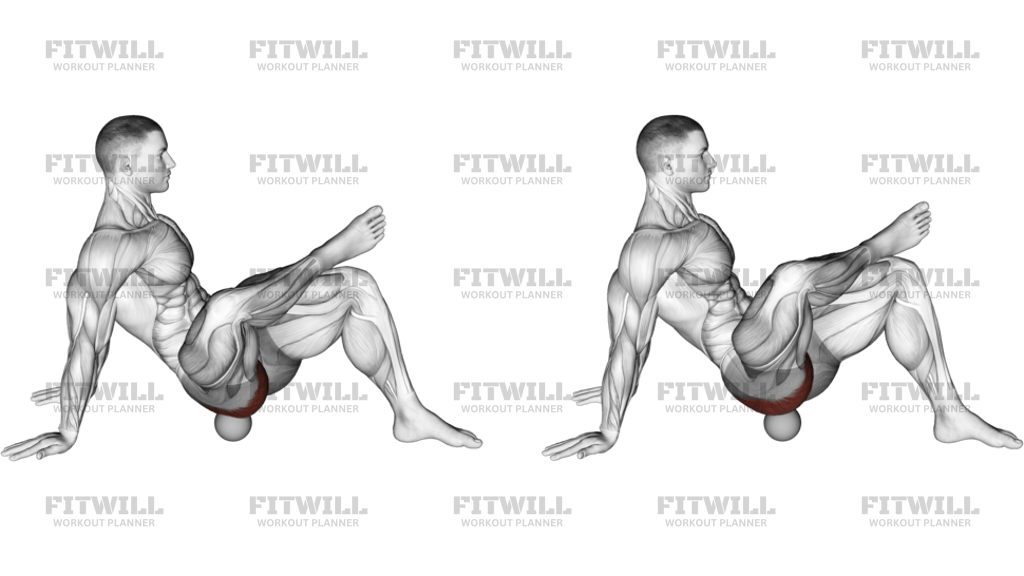
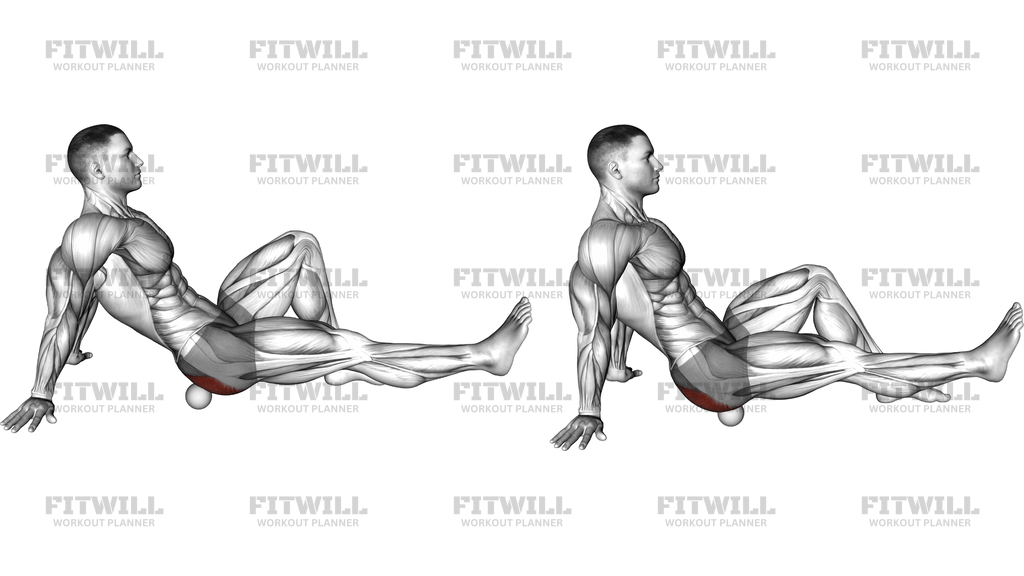
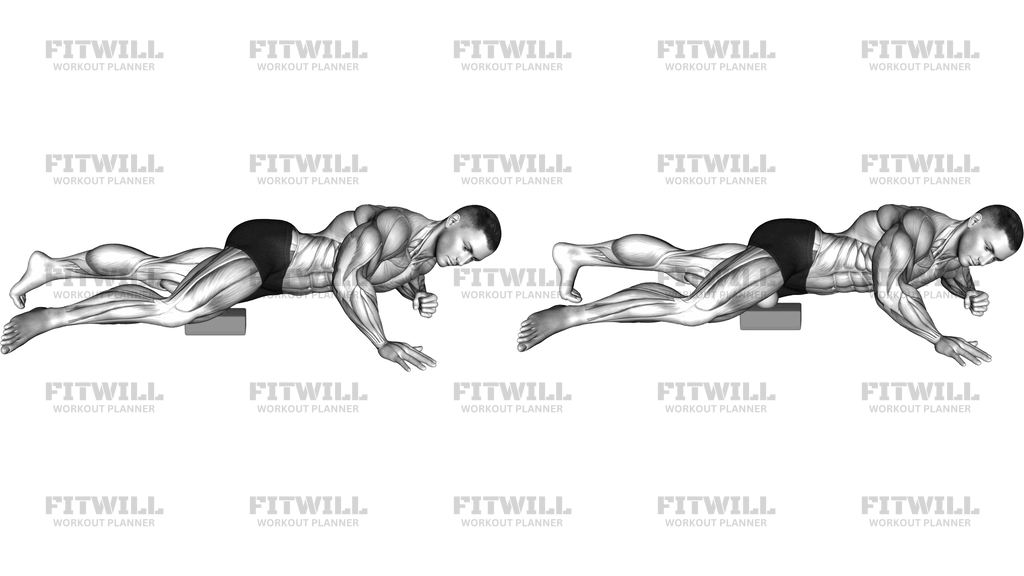
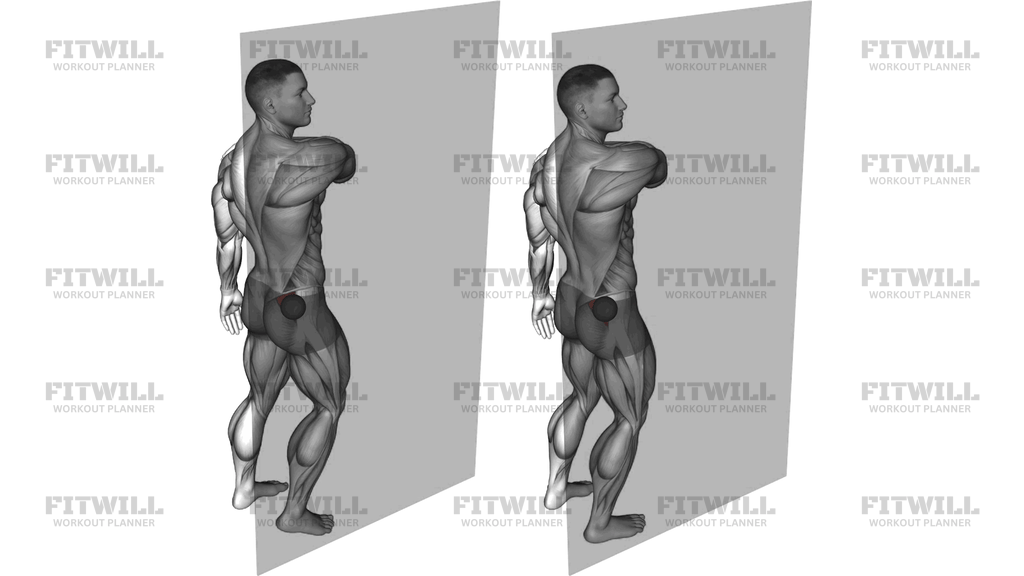
Roll Ball Gluteus Maximus
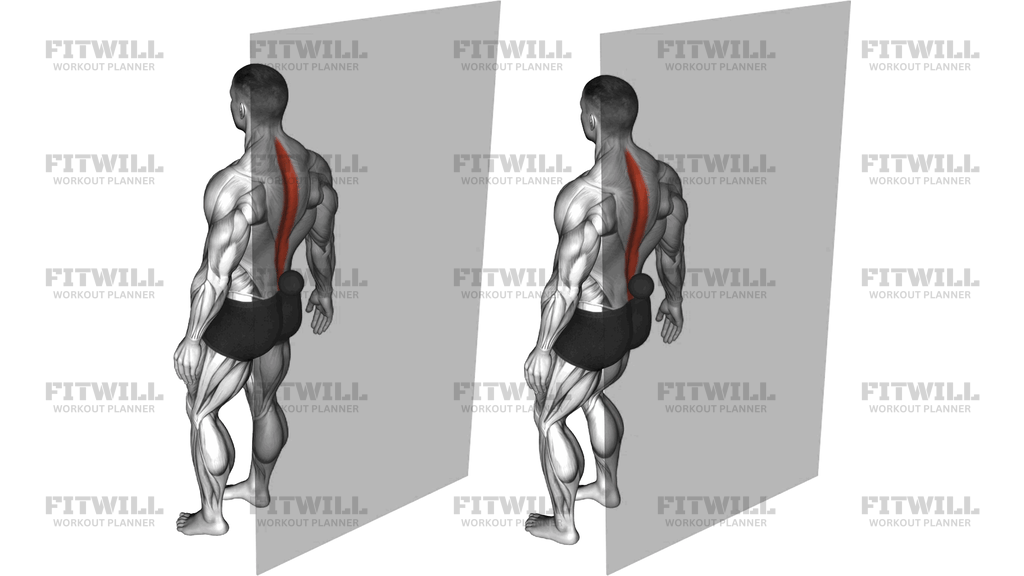
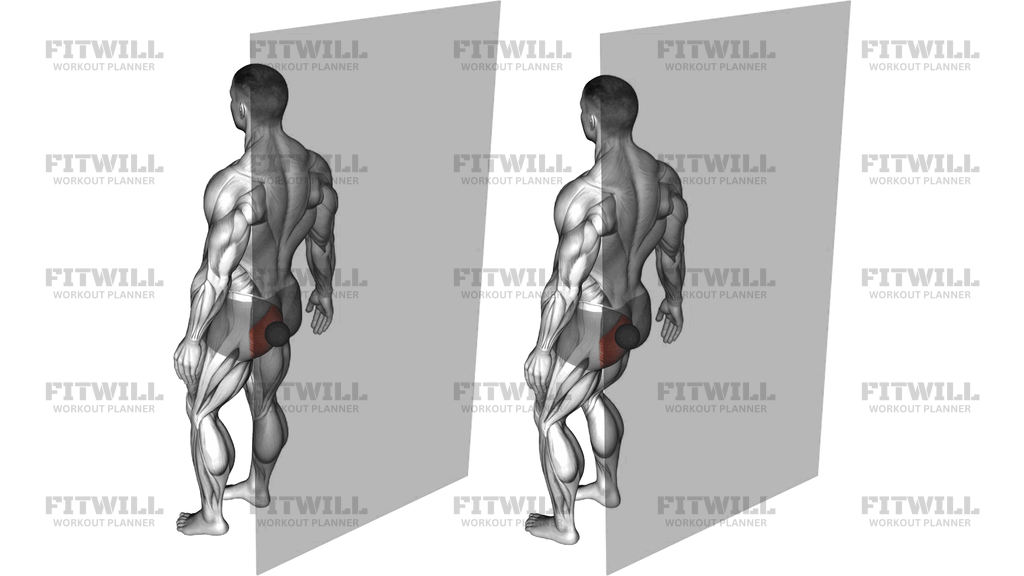
Roll Ball Gluteus Maximus is a self-massage and soft-tissue release exercise performed standing with your back against a wall. You place a small firm ball between one side of your glutes and the wall, then use your own body weight to press into the muscle and roll it slowly across the ball. The muscle map highlights the gluteus maximus as the target, with the surrounding hip muscles absorbing some of the work as the ball moves across the area.
This is a recovery and mobility tool rather than a strength builder. It is especially useful for people who sit for long hours, lifters whose glutes feel tight or achy after heavy squats, deadlifts, or hip thrusts, and runners or cyclists who finish sessions with stiff, heavy-feeling hips. Because you control the pressure by leaning more or less into the wall, it is easy to scale for anyone from a complete beginner to someone who likes firm, deep pressure.
The standing setup matters for two reasons. First, the wall gives you a stable vertical surface so the ball stays where you place it, letting you work one small patch of the glute at a time. Second, standing lets you fine-tune the load instantly by bending your knees and shifting your hips back into the wall, so you never have to commit to more pressure than you can relax into. If the pressure feels too intense, you simply stand taller; if it feels too mild, you lean further back and soften the knees.
To perform it well, move slowly and deliberately rather than grinding back and forth. Roll a short distance, pause on any spot that feels tight or tender, and breathe through the pause until the sensation fades, then continue. Cover the whole glute, including the upper portion near the hip and the lower portion near the sitting bone, but stay on the muscle mass of the buttock rather than pressing on bone or the back of the hip joint.
A few practical points will keep this effective and safe. Spend 30 to 60 seconds per side as a starting point, keep the movements small, and expect mild discomfort on tight spots but never sharp or radiating pain. Avoid rolling directly over bony points, and skip the exercise entirely if you have a fresh bruise, skin irritation, or a recent injury in the area. Used consistently after training or on rest days, it helps the glutes feel looser and more responsive before your next session.
[ Workout Log & Planner ]
Put your next workout in Fitwill
Keep your plan and training log ready when you are.


Instructions
- Stand with your back facing a clear section of wall and place a small firm rollball between the wall and one side of your glutes, roughly at the center of the buttock.
- Lean your hips back into the ball so it is gently compressed between your glute and the wall, and stagger your feet slightly for balance.
- Bend your knees a little and brace your core lightly so your torso stays upright and your hips do the moving, not your lower back.
- Begin rolling by bending and straightening your knees or shifting your hips side to side, letting the ball travel a few inches across the glute.
- When you find a tender or tight spot, stop there and hold steady pressure for 15 to 30 seconds, letting the muscle soften as you breathe slowly.
- Adjust the angle of your hips slightly to reach the upper glute near the hip bone and the lower portion toward the sitting bone, keeping the ball on muscle rather than bone.
- Control the intensity throughout: stand taller to reduce pressure or lean further back with softer knees to increase it.
- Breathe steadily the whole time, exhaling as you settle onto tighter spots instead of holding your breath.
- Spend about 30 to 60 seconds on the first side, then step away from the wall, reposition the ball on the other glute, and repeat.
- Finish by standing up, taking a few slow hip circles or bodyweight squats, and noting any difference in how each side feels before your next set or exercise.
Tips & Tricks
- A common mistake is rolling too fast, which skims over the muscle without giving the tissue time to respond; keep each pass slow, about one to two seconds per inch.
- If you feel the ball slipping or skidding on your skin or clothing, reposition it against a smoother section of the wall and reset your lean before continuing.
- Do not let your lower back round or arch as you hunt for spots; hinge slightly from the hips and keep the movement coming from the knees and hip joints.
- Leaning in as hard as possible usually backfires because the muscle guards against it; choose a pressure level where you can still breathe calmly and let the area release.
- Keep the ball on the fleshy part of the glute, and steer clear of the tailbone, the top of the hip bone, and the back of the hip joint where the bone sits close to the surface.
- If standing balance feels shaky, hold the wall lightly with one hand or place your feet wider; stability matters more than pressure on this drill.
- Tight hamstrings can pull your pelvis and make it hard to reach the lower glute, so soften the knees slightly to tilt the pelvis and expose that area.
- For a pre-workout version, use quicker, lighter passes for 20 to 30 seconds per side; for recovery afterward, use slower holds and longer pauses on tender spots.
- If one side feels dramatically tighter than the other, spend extra time there but finish with a few light glute contractions, such as slow standing squeezes, to reawaken the muscle.
Frequently Asked Questions
What does Roll Ball Gluteus Maximus actually do?
It applies direct pressure to the gluteus maximus against a wall to release muscle tension and improve local comfort and mobility. Think of it as a targeted self-massage rather than a strength or cardio exercise.
Which muscles does Roll Ball Gluteus Maximus target?
The primary target is the gluteus maximus, with the gluteus medius and surrounding hip muscles getting some work as you adjust the ball's position. The exact area depends on where you angle your hips against the ball.
Can beginners do Roll Ball Gluteus Maximus?
Yes, and it is one of the easiest self-release drills to learn because you control the pressure just by leaning more or less into the wall. Beginners should start with light pressure and short 20 to 30 second sets per side.
How long should I roll each glute?
About 30 to 60 seconds per side is a solid starting point, extending to around 90 seconds if the area feels particularly tight. More time is not automatically better, and excessive rolling can leave the area irritated.
Why use a wall instead of a foam roller or the floor?
The wall holds the ball precisely against one patch of the glute, which a loose roller or floor setup cannot do as well. It also lets you adjust pressure with tiny changes in your lean, which is harder to control lying on the floor.
What kind of ball should I use?
A small firm rollball or massage-style ball works best because it stays put and digs into the muscle. Softer balls feel gentler and suit beginners, while very hard balls increase the pressure significantly.
Is it normal to feel discomfort during Roll Ball Gluteus Maximus?
Mild, tolerable pressure on tight spots is normal and usually eases as you hold. Sharp pain, tingling, or pain radiating down the leg is a signal to stop, reposition the ball, and use less pressure.
Should I do this before or after training?
It works in both slots: shorter, lighter rolling before training can help the glutes feel looser, while slower, longer holds after training suit recovery. On rest days, use it whenever the hips feel stiff from sitting.
What is a good substitute if I do not have a ball?
You can use a foam roller against the wall, though it covers a broader area with less precision, or roll the glute on a firm ball while seated on the floor. A rolled towel pressed against the wall is a last-resort option with much gentler pressure.
How often can I perform Roll Ball Gluteus Maximus?
Daily use is generally fine as long as pressure stays moderate and the area is not sore afterward. If the glute feels tender for more than a day after rolling, give it a day or two of rest before the next session.