Swan Dive Pilates
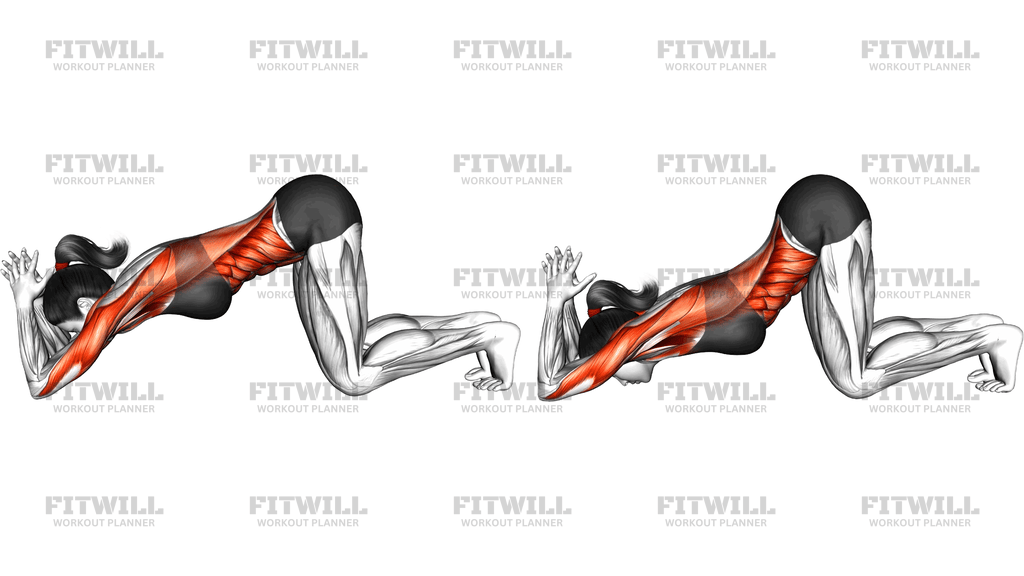
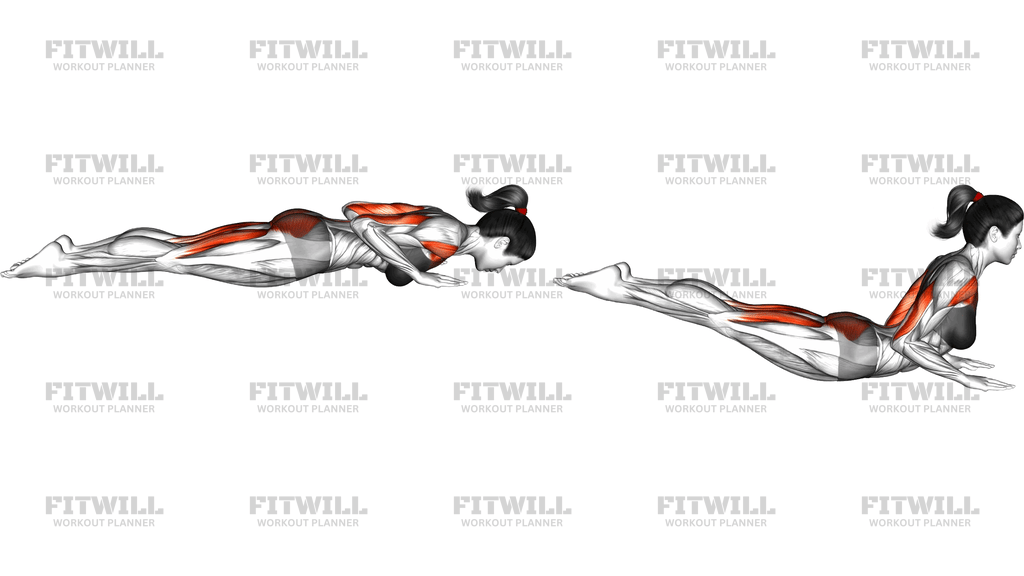
The Swan Dive Pilates is a classic mat exercise that takes you from a face-down plank-like position into a full swan extension, with the chest and legs lifting together as the arms press the torso up. It is one of the more dynamic back extension drills in the Pilates repertoire, and the flowing dip-and-lift rhythm is what separates it from a static back extension hold.
This movement primarily strengthens the lower back muscles that run along the spine, along with the glutes and hamstrings, which extend the hips and keep the legs actively lifted. The upper back and rear shoulders work to open the chest, while the abdominal muscles brace continuously to protect the lumbar spine. Because the arms press into the mat, the chest, shoulders, and triceps also contribute, especially at the top of the lift.
The Swan Dive Pilates suits people with a solid foundation in gentler back extension work, such as the swan prep or cobra stretch, who want to build spinal extension strength and control. Dancers, swimmers, and anyone whose daily routine involves long hours of sitting often benefit from it, since it trains the exact opposite of a slouched posture. It also teaches you to move from your back and hips rather than dumping all the work into your lower back joints.
Setup matters a great deal here. Your hands belong directly under your shoulders, your legs reach long behind you with the tops of the feet grounded, and your abdominal wall is drawn in before you move at all. Without that brace, the extension tends to collapse into the lumbar spine, which is the most common reason this exercise feels pinchy instead of strong.
Executed well, the pattern is: press the torso up into an arc, let the legs lift as the chest rises, then rock forward in one controlled dive so the hands and chest lower toward the mat while the legs swing higher behind you. The rhythm should feel like a rocking boat, with the body moving as one long piece rather than two hinged halves.
Keep the repetitions modest, usually five to eight dives, and stop as soon as you feel compression or pinching in the lower back rather than muscular effort. If you are new to back extension, work on the static swan hold first and only add the dive once you can lift without gripping through the lower back.
[ Workout Log & Planner ]
Put your next workout in Fitwill
Keep your plan and training log ready when you are.


Instructions
- Place an exercise mat on the floor and lie face down with your legs extended straight behind you, hip-width apart, and the tops of your feet pressing lightly into the mat.
- Position your hands directly under your shoulders, elbows bent and tucked close to your sides, and rest your forehead toward the mat so your neck stays in line with your spine.
- Draw your abdominal wall up and in to brace your trunk, and gently squeeze your glutes so your pelvis is anchored before any movement begins.
- Inhale as you press your hands into the mat and extend your arms, arching your chest, upper back, and head upward while your legs lift off the mat behind you.
- Reach the crown of your head forward and up so the arc runs the whole length of your body, keeping your shoulders down away from your ears and your neck long.
- Exhale and dive forward in one piece: lower your arms and chest toward the mat as your legs swing up higher behind you, keeping the knees straight.
- Rock back onto your hands and press up into the swan again, letting the momentum carry you smoothly between the two ends without collapsing at either end point.
- Breathe steadily throughout, inhaling on the lift into the swan and exhaling on the forward dive, rather than holding your breath.
- After your final repetition, lower down slowly, sit back onto your heels to decompress the spine, and take a few breaths before standing up.
Tips & Tricks
- If you feel a pinching sensation in your lower back at the top of the swan, you are likely over-arching and relying on the lumbar joints instead of spinal muscle strength. Reduce the height of the lift and put more emphasis on lengthening the crown of the head forward.
- Bending the knees during the dive is a common way to fake the rocking motion. Keep the legs straight and let the hips and glutes drive the leg lift so the hamstrings and glutes do the work.
- Flaring the elbows out to the sides shifts stress into the shoulders. Keep your elbows brushing your ribs as you press up so the arms stay in the power line.
- Letting the abs release mid-set is the fastest route to a cranky lower back. Re-brace your abdominal wall before every single dive, not just the first one.
- Cranking the neck backward does not add anything to the exercise. Keep your gaze slightly forward and down so the neck is an extension of the spine, not a separate hinge.
- Do not rush the rocking. If you cannot keep the dive controlled, slow the tempo down and treat it as a controlled extension and lowering drill until the rhythm feels natural.
- Cold lower backs complain about this exercise. Warm up with a few gentle cat-cow movements or swan prep holds before attempting the full dive.
- Keep the tops of the feet grounded at the start; if your feet flop or turn out, the legs lose their line and the hip extension becomes sloppy.
Frequently Asked Questions
What muscles does the Swan Dive Pilates work?
The main effort comes from the lower back muscles that extend the spine, supported strongly by the glutes and hamstrings as they lift and swing the legs. The upper back, rear shoulders, and triceps assist as you press the torso up, and the abdominals work throughout to brace and protect the spine.
Is the Swan Dive Pilates suitable for beginners?
It is better treated as an intermediate exercise. Beginners should first build comfort with static swan prep, where the chest lifts and holds without the diving rock, and only add the full dive once that feels controlled and pain-free.
How many repetitions of the Swan Dive Pilates should I do?
Five to eight controlled dives is a typical set. Back extension muscles fatigue quickly, and quality drops fast once they do, so stop while you can still keep the movement smooth and braced.
Why do I feel the Swan Dive Pilates in my lower back instead of my glutes?
This usually means your abdominals have released and your lumbar spine is doing the extending. Re-brace the abdominal wall, squeeze the glutes harder as the legs lift, and slightly reduce the arch so the hip extensors share the load.
What can I substitute for the Swan Dive Pilates?
A static swan hold or cobra extension trains the same extension pattern without the rocking, and lying back extensions such as the double-leg kick or floor back extension are gentler options. Once those feel easy, progress to the full dive.
How is the Swan Dive Pilates different from a regular back extension?
A regular back extension usually lifts the chest from a fixed position and lowers under control, while the Swan Dive adds a continuous rocking rhythm in which the chest dips forward as the legs rise. That dynamic transfer demands more coordination and continuous trunk bracing.
Should my legs stay together during the Swan Dive Pilates?
Keep the legs extended and roughly hip-width apart with the knees straight. Together-and-squeezed can work, but if the legs turn out or the knees bend, the hip extension line is lost and the glutes stop driving the movement.
Is it safe to do the Swan Dive Pilates every day?
Because it loads the lumbar spine dynamically, treat it like any strength exercise and allow at least a day of recovery between sessions. Two to three times per week within a balanced routine is a sensible frequency for most people.
When should I avoid the Swan Dive Pilates?
Skip it if you currently have lower back pain, feel sharp or pinching sensations during the movement, or have been advised to limit spinal extension. Discomfort in the working muscles is expected; joint compression or nerve-type symptoms are a signal to stop.