Dumbbell Narrow Squat
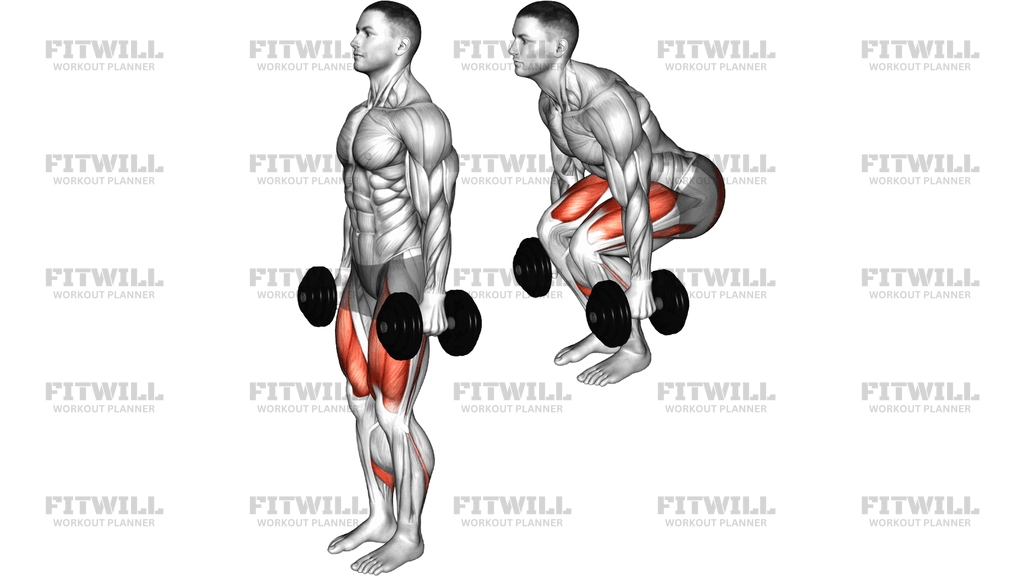
The Dumbbell Narrow Squat is a lower-body squat variation performed with a dumbbell in each hand, arms hanging at your sides, and the feet set close together instead of the wider stance used in a conventional squat. Bringing the feet inward changes the mechanics of the squat noticeably: the knees travel further forward over the toes, the torso stays relatively upright, and the quadriceps take on a larger share of the work compared with a wide-stance version where the hips and glutes dominate.
This movement suits lifters who want to emphasize the front of the thighs without loading a barbell on the spine. Because the dumbbells hang freely at the sides, there is no compressive load on the upper back or shoulders, which makes the exercise easier on the torso and simpler to set up. It is a practical choice for home training, for lifters working up to barbell front or back squats, and for anyone who finds a wide stance uncomfortable at the hips.
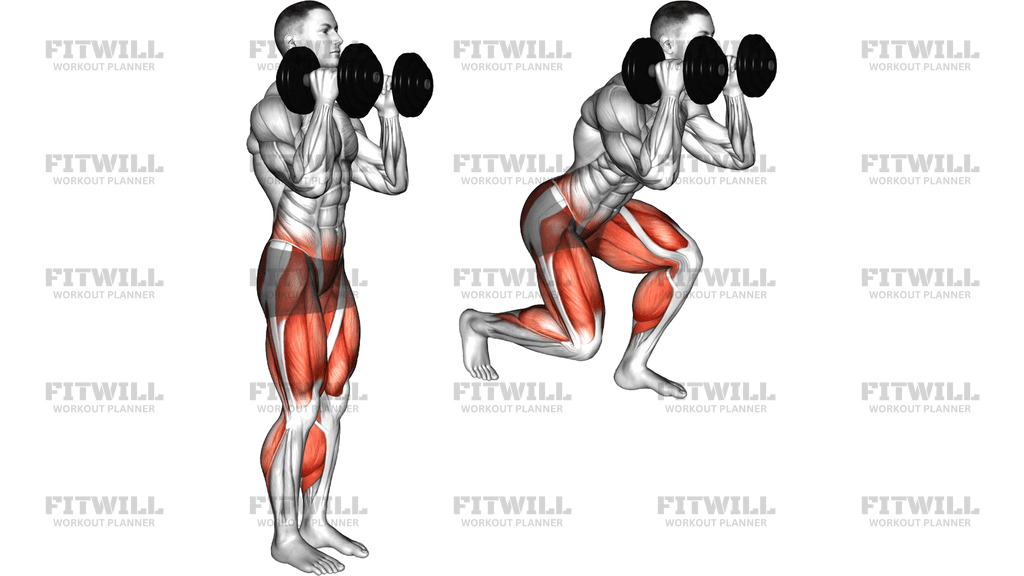
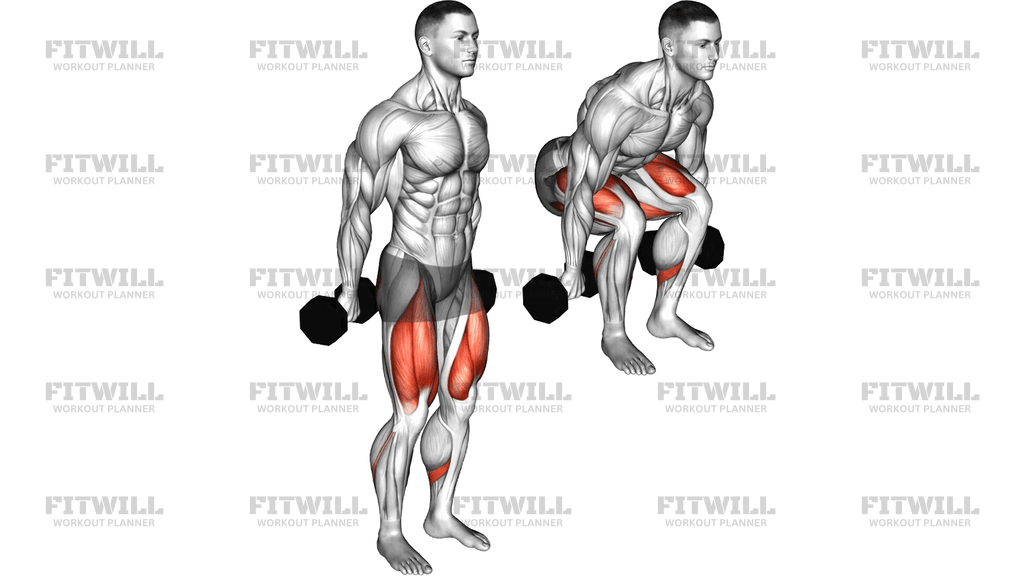
To perform it, stand tall with a dumbbell in each hand, feet roughly hip-width apart or slightly closer, toes pointing forward or turned out just a few degrees. Squat by pushing the hips back a little and bending the knees, letting them track in line with the toes as you descend. The narrow stance typically allows a deep bottom position, and the image shows the lifter dropping until the thighs are fully folded and the dumbbells hang beside the shins. Drive back up through the whole foot to a full stand, keeping the dumbbells still at your sides throughout.
Form details matter more here than in a wider squat. With the feet close together, balance is less forgiving, so a slight forward lean is normal, but the spine should stay long rather than rounding. Keep your weight distributed over the midfoot, and if your heels want to lift at the bottom, work within a depth you can hold before pushing the range further. Two stable dumbbells of moderate weight will always produce better reps than a heavy pair that drags you forward.
In a typical program, the Dumbbell Narrow Squat works well as a main lower-body lift in dumbbell-only training, or as an accessory after barbell squats to add quad-focused volume with lighter load and less systemic fatigue. Two to four sets of eight to fifteen reps covers most goals, and the shallow learning curve makes it accessible to beginners while still challenging for experienced lifters who slow the tempo or deepen the bottom position.
[ Workout Log & Planner ]
Put your next workout in Fitwill
Keep your plan and training log ready when you are.


Instructions
- Stand with your feet about hip-width apart or slightly closer, toes pointing forward or turned out a few degrees.
- Hold a dumbbell in each hand with a neutral grip, arms fully extended and hanging at your sides, shoulders pulled back and down.
- Draw in a breath and brace your core as if preparing for a light push to the stomach.
- Push your hips back slightly and bend your knees, squatting straight down while the dumbbells slide down alongside your thighs and shins.
- Let your knees travel forward over your toes, keeping them aligned with the direction of your feet rather than caving inward.
- Descend until your thighs are at least parallel to the floor or as deep as your balance and mobility allow without your heels lifting or your lower back rounding.
- Drive through the midfoot and press the floor away to stand, extending the hips and knees together at the top.
- Exhale as you rise, then inhale again at the top before starting the next repetition.
- Keep the dumbbells hanging still at your sides for the entire set; do not swing them or rest them on your thighs at the bottom.
- After the final rep, set the dumbbells down on the floor with a hinge at the hips rather than bending over at the waist.
Tips & Tricks
- The most common error in this variation is letting the knees collapse toward each other because of the narrow base. Cue your knees to track over your little toes on every descent.
- If your heels lift off the floor at the bottom, the usual cause is tight ankles combined with a load that is too heavy. Try a lighter pair of dumbbells and stop an inch above your deepest point while you build ankle mobility.
- Rounding the lower back at the bottom is easy to miss because the dumbbells block your view of your own hips. Film one set from the side to check that your spine stays long.
- Resist the urge to rest the dumbbells on your knees or thighs at the bottom to buy a breather. If you need that pause, the weight is too heavy for clean reps.
- A slight forward lean is fine, but if your chest drops toward your knees, the dumbbells are pulling you forward. Squeeze your shoulder blades together to keep the weights stacked under your shoulders.
- Because balance is narrower than in a standard squat, start with a weight you could comfortably hold for a full minute before adding load.
- Slowing the lowering phase to two or three seconds is an easy way to intensify the quads without buying heavier dumbbells.
- Warm up your knees and hips with a few bodyweight narrow squats first; the position is different enough from your regular squat stance that it deserves a specific rehearsal.
Frequently Asked Questions
Which muscles does the Dumbbell Narrow Squat work the most?
The quadriceps are the primary movers because the narrow stance and forward knee travel lengthen the demand on the front of the thigh. The glutes and hamstrings assist on the way up, and the calves and adductors help stabilize the position.
How narrow should my stance be for the Dumbbell Narrow Squat?
Set your feet about hip-width apart or slightly closer, with toes pointing forward or turned out a few degrees. If you feel pinching at the hips or lose balance, widen your stance slightly until you can squat smoothly.
Is the Dumbbell Narrow Squat good for beginners?
Yes. The dumbbells hang at the sides instead of sitting on the spine, so the setup is simple and the movement pattern is easy to learn. Beginners should start light and prioritize depth they can reach with a flat back and heels down.
Why do my heels lift when I squat narrow with dumbbells?
A narrow stance requires more ankle range of motion, so limited ankle mobility or heavy dumbbells pulling you forward can lift the heels. Reduce the depth slightly, lighten the load, and work on ankle mobility before chasing a deeper bottom.
Should my knees go past my toes in the Dumbbell Narrow Squat?
In most cases yes, and that is expected for this variation. The important cue is that the knees track in line with your toes rather than caving inward, not that they stop at some imaginary vertical line.
How does the Dumbbell Narrow Squat differ from a regular dumbbell squat?
The close foot position shifts emphasis toward the quadriceps and requires more ankle flexion and balance, while a wider stance squat recruits the glutes and inner thighs more heavily and allows a more upright shin angle.
Can I do the Dumbbell Narrow Squat if I have knee discomfort?
If you have a current knee issue, check with a qualified professional before adding this movement. If it is simply a sensitive joint, limit depth to a pain-free range, control the tempo, and avoid adding load until the pattern feels comfortable.
What can I substitute if I do not have two dumbbells?
You can hold a single dumbbell or kettlebell in a goblet position at your chest, which actually makes staying upright easier, or perform the same narrow stance with body weight only and add a slow tempo for resistance.
How heavy should the dumbbells be for this exercise?
Choose a pair you can control for eight to fifteen reps while keeping your heels down, knees tracking over your toes, and the weights hanging still at your sides. Balance fails before strength in this stance, so progress more gradually than you would on a wide-stance squat.
How deep should I go on the Dumbbell Narrow Squat?
Aim for thighs at least parallel to the floor, and go deeper only if you can keep your heels planted and your lower back from rounding. Depth you can control consistently beats a deeper bottom that costs you position.