Seated Open Wings
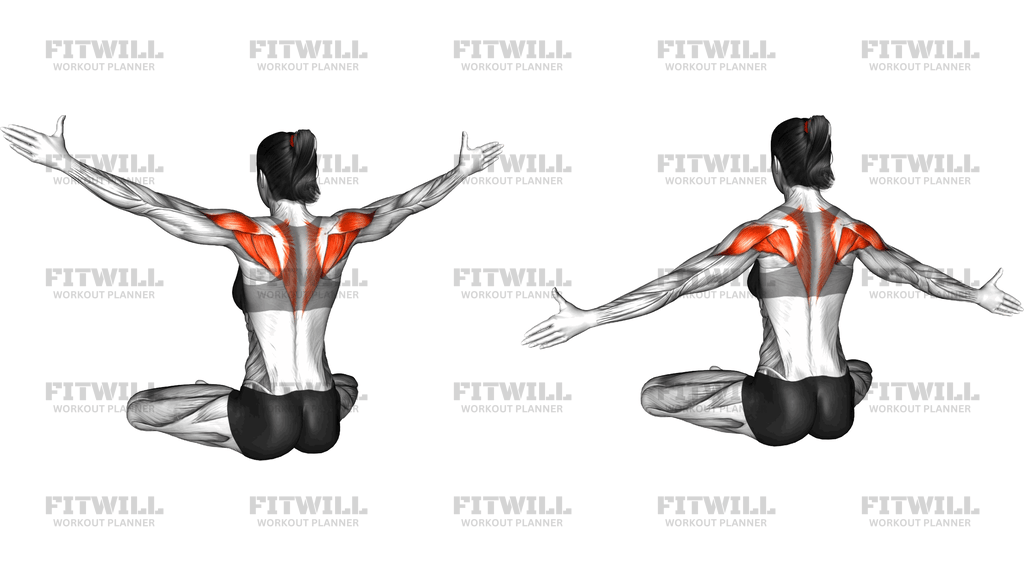
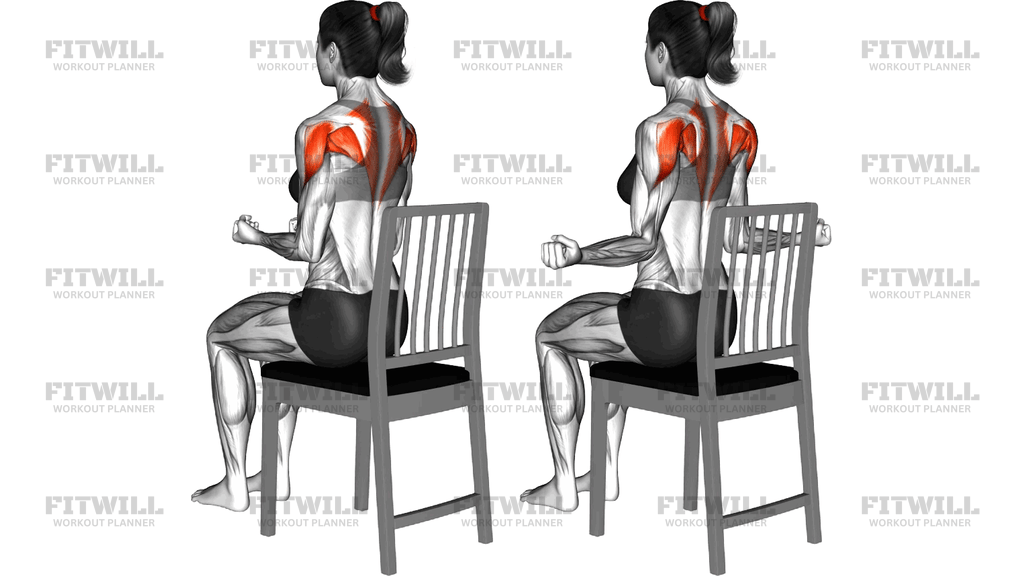
Seated Open Wings is a simple bodyweight drill that trains the muscles that pull your shoulder blades together and rotate your arms outward. You sit upright, place your hands on your lower back with palms facing away from you, and draw your elbows back and toward each other so the arms open behind you like a pair of wings. Because your own hands press into your lower back, they act as a fixed point that the shoulders have to work against, which turns what looks like a stretch into a genuine activation exercise.
The main work comes from the rear shoulders, which drive the backward sweep of the upper arms, while the rhomboids and middle trapezius pull the shoulder blades together on the spine. The rotator cuff muscles, especially the external rotators, are heavily involved because the arms stay rotated outward through the whole movement. This combination makes it a useful drill for anyone whose shoulders round forward after long hours at a desk, or who wants to wake up the upper back before pressing, pulling, or overhead work.
The seated position matters more than it might seem. Sitting cross-legged or on a low seat with a tall spine removes the option of leaning back to fake the range of motion, so the shoulders and upper back have to do the actual work. A tall, quiet torso also lets you feel the shoulder blades gliding on the ribcage, which is the whole point of the movement. If you slump, the shoulder blades drift away from the spine and the exercise loses most of its value.
To execute it well, think of the movement as happening at the shoulder blades first. Start with the elbows forward of the torso, then squeeze them back and slightly toward one another, keeping the hands planted on the lower back. Pause for a beat in the open position with the chest lifted, then bring the elbows forward under control. The range is modest by design; forcing extra motion usually means arching the lower back or shrugging the shoulders, neither of which helps.
Because it requires no equipment and only a small amount of space, Seated Open Wings fits easily into warm-ups, desk-break routines, and rehabilitation-style shoulder programs. It pairs well with band pull-aparts and face pulls on strength days, and it is gentle enough to use daily for people rebuilding shoulder blade control. Keep the effort moderate, the breathing steady, and stop short of any pinching at the front of the shoulder or discomfort in the lower back.
[ Workout Log & Planner ]
Put your next workout in Fitwill
Keep your plan and training log ready when you are.


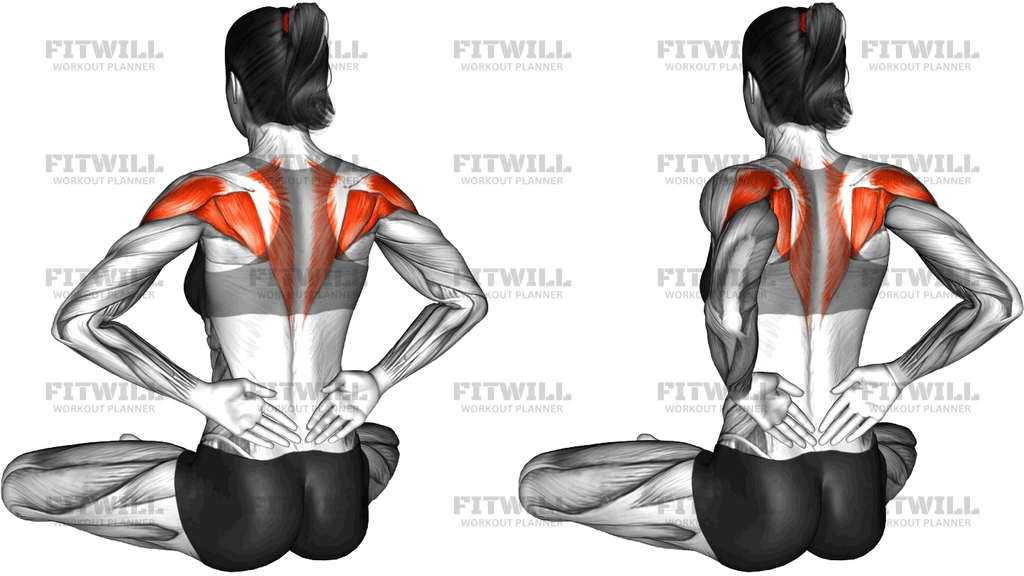
Instructions
- Sit upright on the floor with your legs crossed, or on a firm low seat, with your weight balanced evenly over both sitting bones and your spine tall.
- Place both hands on your lower back, fingers pointing down or slightly inward, with your palms resting against the beltline.
- Draw your shoulders down away from your ears and gently lift the front of your chest so your upper back is long rather than rounded.
- Brace your trunk lightly and keep your head stacked over your ribs, eyes forward, so nothing moves except the shoulders and arms.
- From this position, sweep your elbows back and slightly toward each other, letting your upper arms rotate outward as your shoulder blades squeeze together on your spine.
- Hold the open position for one to two seconds, with the chest lifted and the hands still pressed firmly into the lower back.
- Slowly bring your elbows forward again, letting the shoulder blades glide apart without letting your shoulders round or slump.
- Exhale as the elbows open back, and inhale as they return forward, keeping the breath smooth and continuous.
- Complete your set, then release the hands from the lower back and roll the shoulders briefly to reset before the next set.
Tips & Tricks
- The hands on the lower back are your resistance point; press them in slightly as the elbows open so the rear shoulders have something to work against rather than just swinging through air.
- If you feel pinching at the front of one shoulder, reduce how far the elbows travel back; the open position should feel like a strong squeeze, not a strain.
- A common mistake is shrugging as the elbows come back, which trades rear shoulder work for neck tension. Keep the space between your ears and shoulders constant throughout.
- Do not arch your lower back to make the arms travel farther. The extra range comes from the spine, not the shoulders, and it removes tension from the muscles you are trying to train.
- Keep the elbows at or slightly below shoulder height; driving them high turns the drill into an upper trap exercise and shifts effort away from the shoulder blades.
- If your hips are tight and sitting cross-legged tips you backward, sit on the edge of a cushion or low bench so the pelvis stays level and the spine can stay tall.
- Think shoulder blades first: the arms simply follow the blades as they draw together. If your blades never move, the set will feel empty no matter how far the elbows travel.
- Use slow tempos and deliberate pauses rather than fast repetitions; this drill rewards control far more than speed.
- Start with bodyweight-only sets before adding any band tension. Adding resistance too early usually causes the wrists or lower back to take over the stabilizing job.
Frequently Asked Questions
Which muscles does Seated Open Wings work?
The rear shoulders do the main work as the elbows sweep back, supported by the rhomboids and middle trapezius, which pull the shoulder blades together. The external rotators of the rotator cuff assist because the arms stay rotated outward throughout.
Is Seated Open Wings a strength exercise or a stretch?
It functions as an activation drill with a strength emphasis: your hands braced on the lower back give the rear shoulders and upper back something to work against as the elbows open. It also produces a mild opening sensation across the chest, but the intent is muscle work, not passive stretching.
Why do my hands go on my lower back during Seated Open Wings?
The hands create a fixed point that limits how far the upper arms can travel, so the shoulder muscles must actively pull the elbows back instead of the arms drifting freely. Pressing the palms in gently increases the resistance.
Can beginners do Seated Open Wings?
Yes, it is very beginner friendly because the load is your own body and the range is small. Start with short sets of eight to twelve slow repetitions and focus on feeling the shoulder blades squeeze together.
How far back should my elbows go in Seated Open Wings?
Open the elbows to a point where the chest stays tall and the shoulders stay down, usually with the elbows roughly in line with or slightly behind the sides of the torso. If you have to arch your back or shrug to go farther, you have passed your useful range.
My lower back arches when my elbows go back. How do I fix it?
Lighten the trunk brace and reduce the range slightly, keeping the ribs stacked over the pelvis. Sitting against a wall with only a small gap behind you can also give feedback when the spine starts to overextend.
What can I substitute for Seated Open Wings if sitting on the floor is uncomfortable?
The same hand-on-lower-back elbow sweep works seated on a bench or chair, or standing with a tall posture. Band pull-aparts and prone shoulder blade squeezes train similar muscles if you need a different option entirely.
How many sets and reps of Seated Open Wings should I do?
Two to three sets of ten to fifteen slow repetitions work well as a warm-up or daily shoulder routine. Pause one to two seconds in the open position and prioritize the squeeze over adding reps.
Is Seated Open Wings safe for sore or cranky shoulders?
It is generally low load and easy to scale by shortening the range, but stop if you feel sharp pain, pinching at the front of the shoulder, or tingling down the arm. If symptoms persist, check the movement with a qualified professional before continuing.