Sphinx Pose Opening
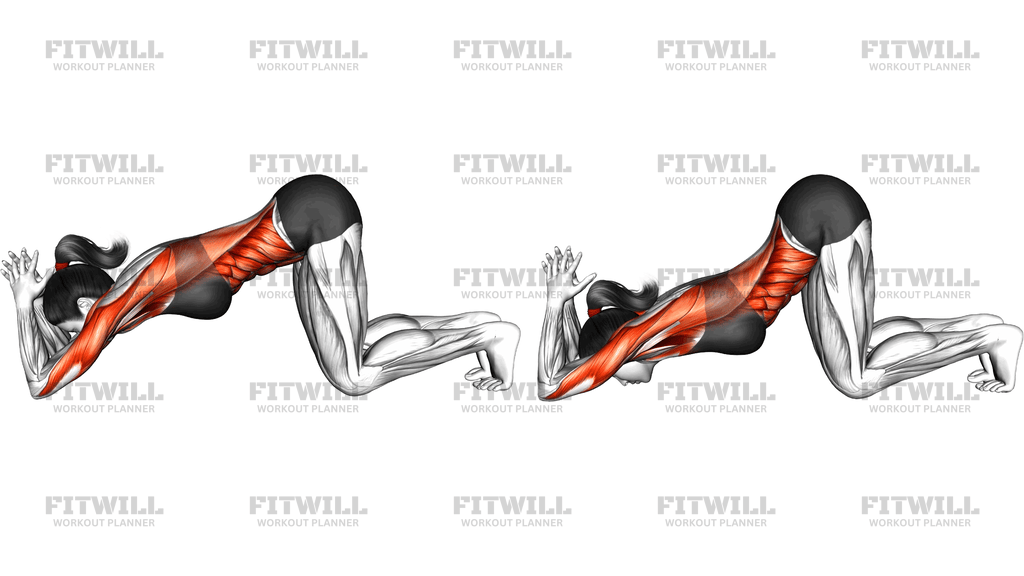
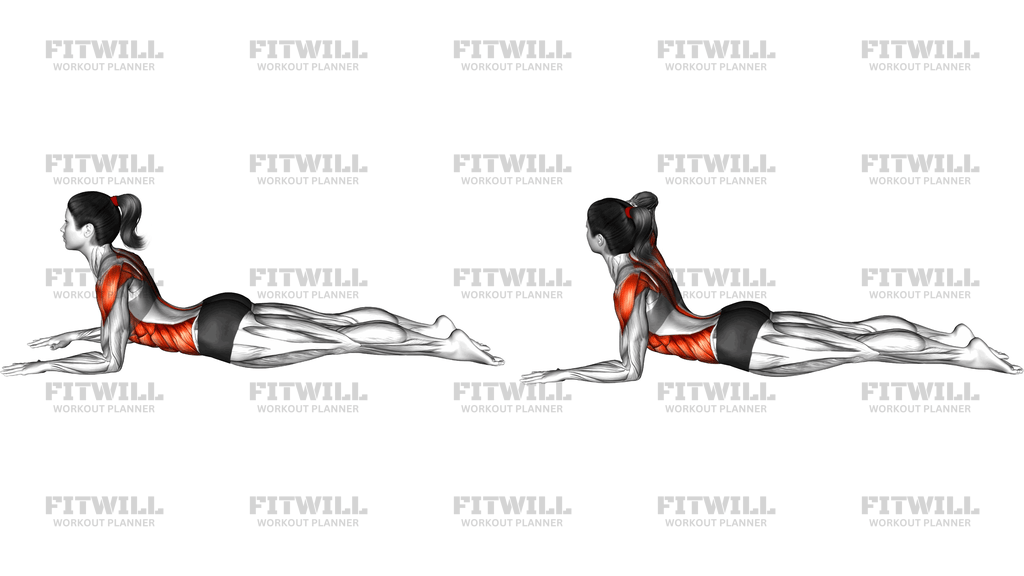
Sphinx Pose Opening is a prone back extension taken from yoga, performed by lying face down and propping your torso up on your forearms so the chest lifts while the hips, legs, and tops of the feet stay anchored to the floor. From that supported base, the movement gently opens the front of the body and lengthens the abdominal wall while the lower back moves into a controlled, supported extension. Because the forearms do the holding, your spine never has to catch you mid-air the way it does in a full cobra or upward dog, which makes this one of the safest entry points into back extension.
This movement is especially useful for anyone who spends long hours sitting. A desk-bound day tends to leave the hip flexors shortened, the abs compressed, and the lower back stiff and passive. Sphinx Pose Opening reverses that exact posture: the chest lifts, the front of the hips lengthen, and the muscles along the spine are asked to do gentle supported work rather than nothing at all. It is a common fixture in yoga sequences, pilates-informed warm-ups, and mobility circuits before lifting days.
The primary demand falls on the erector spinae along the lower back, which work at a low intensity to hold the torso up. The abdominals receive a lengthening stretch across their front, the chest and front shoulders open as the ribcage lifts, and the glutes and legs stay quietly active to keep the hips heavy and grounded. The forearms, shoulders, and even the neck stabilize throughout, so the pose trains posture as much as it stretches.
Setup matters here more than most people expect. Elbow position dictates everything: place them directly under the shoulders, roughly shoulder-width apart, so the ribcage is lifted by structure rather than by cranking the lower back. If the elbows drift too far forward, the pose turns into a passive hang that strains the lumbar spine; if they sit too wide, the shoulders collapse and the chest never truly opens. Forearms flat and parallel on the mat, fingers spread, give you a stable shelf.
To execute it well, press the forearms and the tops of the feet into the floor, draw the shoulder blades gently down the back, and lift the sternum forward and up rather than just tipping the head back. Keep the glutes relaxed but the legs long, and let the neck stay in line with the spine as you look ahead. The lift should feel like the front of the body is unfolding, not like the lower back is being pinched at one spot.
Use Sphinx Pose Opening as a mobility break between sets of pressing or deadlifting, as the opening sequence of a stretching session, or as a nightly reset for a stiff back. If you feel sharp or pinpoint pressure in the lumbar spine rather than a broad, even extension, come down, re-set the elbows, and try a lower, more supported lift. Consistent, comfortable holds will do far more for your back than forcing height.
Fitwill
Log Workouts, Track Progress & Build Strength.
Achieve more with Fitwill: explore over 9600 exercises with images and videos, access built-in and custom workouts, perfect for both gym and home sessions, and see real results.
Start your journey. Download today!




Instructions
- Lie face down on an exercise mat with your legs extended straight behind you and the tops of your feet resting on the floor.
- Bring your elbows under your shoulders, forearms flat and pointing forward, hands relaxed with fingers spread on the mat.
- Draw your shoulder blades gently down your back so your chest has room to lift, and keep your neck long with your gaze slightly forward.
- Press your forearms and the tops of your feet firmly into the mat, and lightly engage your thighs so the kneecaps and legs stay active.
- Inhale, then on the exhale push the floor away through the forearms to lift your chest and ribcage up and forward into the sphinx position.
- Hold the lifted position with the hips, thighs, and pubic bone staying heavy on the mat, breathing steadily through the nose.
- Keep the shoulders away from the ears and the chest open; do not let the head drop or crank backward past the line of the spine.
- Lower the chest back down slowly by bending the elbows and releasing the forearms toward the mat under control.
- Rest for a breath with your head turned to one side and arms alongside your body, then re-set the elbows and repeat for the desired number of reps or hold time.
Tips & Tricks
- If you feel a pinching sensation in one spot of the lower back, walk your elbows slightly forward to lower the angle of extension before coming out of the pose entirely.
- A common mistake is lifting with the neck by throwing the head back first; initiate the lift from the sternum instead and let the head follow as a passenger.
- Keep the glutes soft rather than clenched — squeezing them hard flattens the natural curve you are trying to encourage and shifts work into the hips.
- Check that your elbows stay stacked under your shoulders the whole time; when they drift outward or back, the chest closes and the shoulders take over.
- If your hips lift off the floor as you rise, reduce the height of the lift — the pelvis should stay weighted so the extension happens in the spine, not the hip hinge.
- Tight hip flexors can pull the pelvis and make the lower back do all the work; a small towel roll under the hip crease can make the hold more comfortable.
- Breathe into the belly and ribs during the hold; holding your breath usually means you are bracing and tensing instead of letting the front of the body open.
- Treat this as a warm-up for deeper back extensions like cobra or upward dog — spend a few weeks here before progressing if your extension range is limited.
Frequently Asked Questions
Which muscles does Sphinx Pose Opening work?
The erector spinae of the lower back work isometrically to hold the torso up, while the abdominals lengthen and the chest and front shoulders open. The legs and hips contribute mostly as stabilizers that keep the pelvis grounded.
Is Sphinx Pose Opening suitable for beginners?
Yes, it is one of the most beginner-friendly back extensions because the forearms support the torso and limit how far the spine extends. Beginners can reduce the intensity further by sliding the elbows slightly forward to lower the chest.
How long should I hold Sphinx Pose Opening?
For mobility purposes, hold for 20 to 40 seconds per rep for 2 to 3 rounds, or cycle shorter 5 to 10 second lifts as a dynamic warm-up. In a yoga context, longer holds of a minute or more are also common.
Why do my lower back feel pinched instead of stretched in Sphinx Pose Opening?
That usually means the extension is collapsing into one lumbar segment, often because the elbows are too far forward or the glutes and legs are fully relaxed. Re-stack the elbows under the shoulders, lightly engage the thighs, and lift less high until the sensation spreads evenly along the spine.
How is Sphinx Pose Opening different from Cobra Pose?
In cobra the hands are flat and the arms press toward straight, creating a much deeper extension, while sphinx keeps you supported on the forearms the entire time. Sphinx is the gentler version and a good stepping stone toward cobra.
Should my hips stay on the floor during Sphinx Pose Opening?
Yes, the hips, pubic bone, and tops of the feet should stay heavy on the mat throughout the lift. If the hips rise, the movement turns into a hip extension exercise and the lower back loses the supported stretch it is meant to get.
What can I do if lying on my stomach is uncomfortable?
Place a thin towel or folded mat under the hip creases and thighs to pad the hip bones, or substitute a standing back extension over your hands on a counter. Both give a similar extension without direct pressure on the abdomen.
Can Sphinx Pose Opening help with a stiff back from sitting all day?
It is a practical daily reset because it directly reverses the rounded, compressed sitting posture by extending the spine and opening the front of the body. Keep the holds comfortable and frequent rather than long and forced.
Is it safe to do Sphinx Pose Opening every day?
For most people, yes — it is a low-intensity stretch and mobility movement rather than a maximal effort. Stop and re-evaluate if you ever feel sharp, radiating, or pinpoint pain rather than a broad, comfortable extension.