Bodyweight Bent Over Rear Delt Fly
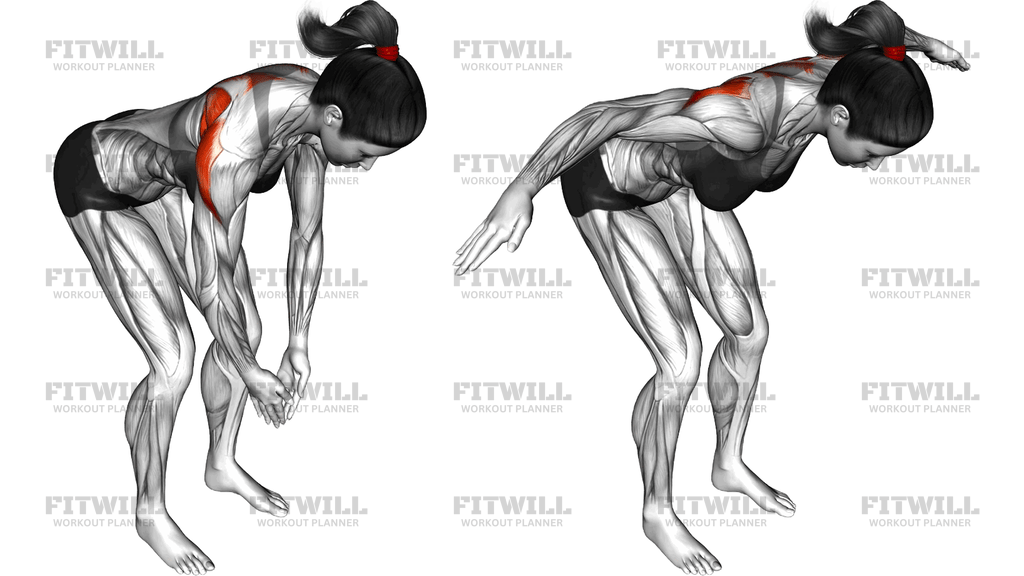
The Bodyweight Bent Over Rear Delt Fly is a no-equipment isolation movement for the back of the shoulders. You hinge forward at the hips until your torso is angled toward the floor, let your arms hang straight down, then raise them out to the sides in a wide arc until they are roughly level with your shoulders. Because there is no external load, the exercise relies entirely on slow, deliberate muscle tension, which makes it a surprisingly effective way to learn what the rear delts actually feel like when they contract.
This movement is especially useful for people whose shoulders roll forward from desk work, driving, or an overload of pressing and front-raising exercises. The rear delts and the muscles between the shoulder blades are often the weakest link in that pattern, and training them helps balance the shoulder girdle and support better posture. It is also a go-to warm-up or activation drill before any upper-body session, and a solid choice for home workouts where no dumbbells or cables are available.
The primary muscles worked are the posterior deltoids, with strong assistance from the rhomboids and mid-traps as the shoulder blades draw together at the top. Your lower back and hamstrings work isometrically to hold the bent-over position, which is why trunk positioning matters so much here. The arms stay essentially straight with a soft elbow bend; the motion comes from the shoulder joints, not from swinging or shrugging.
Setup is the whole game with this exercise. A deep, stable hip hinge with a flat back puts your arms in the correct line of pull for the rear delts. If you round your spine or stand too upright, the movement drifts toward the traps and mid-back and you lose most of the shoulder isolation. Think of your torso as a fixed bench that your arms are moving from.
To execute it well, hinge forward, brace your core, and raise your arms on a wide, slightly forward arc with your pinkies leading and thumbs angled down. Pause briefly at the top, then lower your arms under control over two to three seconds rather than letting them drop. Because there is no weight, tempo is your resistance: the slower and more controlled the rep, the harder the rear delts work.
Use this exercise as a high-rep finisher after presses or rows, as a stand-alone shoulder health drill, or as a teaching progression before adding dumbbells to bent-over flyes. If you feel it in your neck or lower back instead of behind your shoulders, shorten the range, reduce the hinge depth slightly, or rest a hand on your thigh for support between reps.
[ Workout Log & Planner ]
Put your next workout in Fitwill
Keep your plan and training log ready when you are.


Instructions
- Stand with your feet about hip-width apart and soften your knees so your legs can support the hinge.
- Push your hips back and hinge forward until your torso is angled between 45 degrees and parallel to the floor; keep your back flat and your neck in line with your spine.
- Let your arms hang straight down from your shoulders with your palms facing each other or slightly turned inward, elbows soft.
- Brace your core lightly and squeeze your shoulder blades down and back to lock your torso in place before moving.
- Exhale and raise both arms out to the sides in a wide arc, leading with your pinkies and keeping a slight bend in the elbows.
- Stop when your upper arms reach shoulder height or just shy of it, and squeeze the back of your shoulders for a one-count.
- Inhale and lower your arms slowly over two to three seconds back to the hanging position without letting them swing.
- Reset your hinge position if your torso has lifted, then begin the next rep from a still, stable start.
- Complete your set, then stand up slowly by driving your hips forward, keeping your back flat as you rise.
Tips & Tricks
- If you feel this in your neck, you are most likely shrugging as you lift. Pull your shoulder blades toward your back pockets instead of toward your ears.
- The most common mistake is letting the torso bounce or rock to help the arms up. Hold the hinge perfectly still so the rear delts do all the work.
- Do not let your arms travel backward toward your hips; the rear delt arc should stay out to the sides and slightly forward of your torso line.
- Keep your thumbs rotated down or neutral. Lifting with the palms turned up shifts tension toward the front of the shoulder and away from the rear delts.
- Because there is no weight, tempo is your load. If the reps feel effortless, add a two-second pause at the top or slow the lowering phase to four seconds.
- If your lower back fatigues before your shoulders, place one hand on your thigh and work one arm at a time, or hinge slightly less deep while keeping your back flat.
- Stop the lift at shoulder height. Raising the arms higher than the torso tends to recruit the traps and upper back and takes tension off the rear delts.
- Your elbows should stay wider than your wrists throughout the arc. If your hands end up above your elbows, the emphasis slides toward the mid-back rowing pattern.
- Start with high reps in the 12 to 20 range. This movement is about control and connection, and light, precise work beats fast, sloppy reps every time.
Frequently Asked Questions
Which muscles does the Bodyweight Bent Over Rear Delt Fly target?
The posterior deltoids at the back of the shoulders are the primary movers, supported by the rhomboids and mid-traps as the shoulder blades pull together. The lower back and hamstrings work statically to hold the hinge position.
Can the Bodyweight Bent Over Rear Delt Fly build muscle without weights?
Yes, but progress comes through tempo and volume rather than added load. Slow eccentrics, top-end pauses, and higher rep ranges create enough tension to stimulate the rear delts, especially for beginners and intermediates.
How deep should I hinge over during the Bodyweight Bent Over Rear Delt Fly?
Aim for a torso angle between 45 degrees and parallel to the floor, whatever depth lets you keep your back completely flat. Deeper is generally better for isolating the rear delts, but never at the cost of a rounded spine.
Why do I feel the Bodyweight Bent Over Rear Delt Fly in my traps instead of my shoulders?
That usually means you are shrugging or letting your shoulder blades ride up as you lift. Keep the shoulder blades drawn down and lead the arc with your elbows rather than your hands.
Should my arms be straight or bent in this exercise?
Keep them mostly straight with a soft, fixed bend of about 10 to 15 degrees at the elbows. Bending the elbows more as you lift turns the movement into a row and shifts work away from the rear delts.
Is the Bodyweight Bent Over Rear Delt Fly good for beginners?
It is one of the best starting points for rear delt training because the lack of load lets you focus entirely on feeling the correct muscles work. Master the movement here before adding dumbbells to bent-over flyes.
How many reps and sets should I do of the Bodyweight Bent Over Rear Delt Fly?
Two to four sets of 12 to 20 controlled reps works well for most people. Since the resistance is light, chase quality of contraction and slower tempo rather than chasing a maximum rep count.
What can I substitute if the bent-over position bothers my lower back?
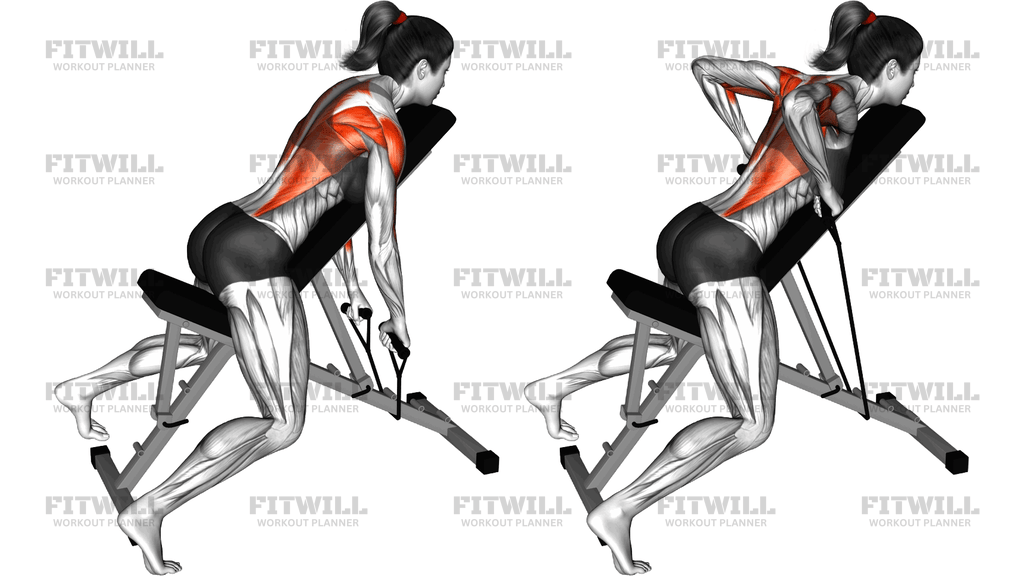
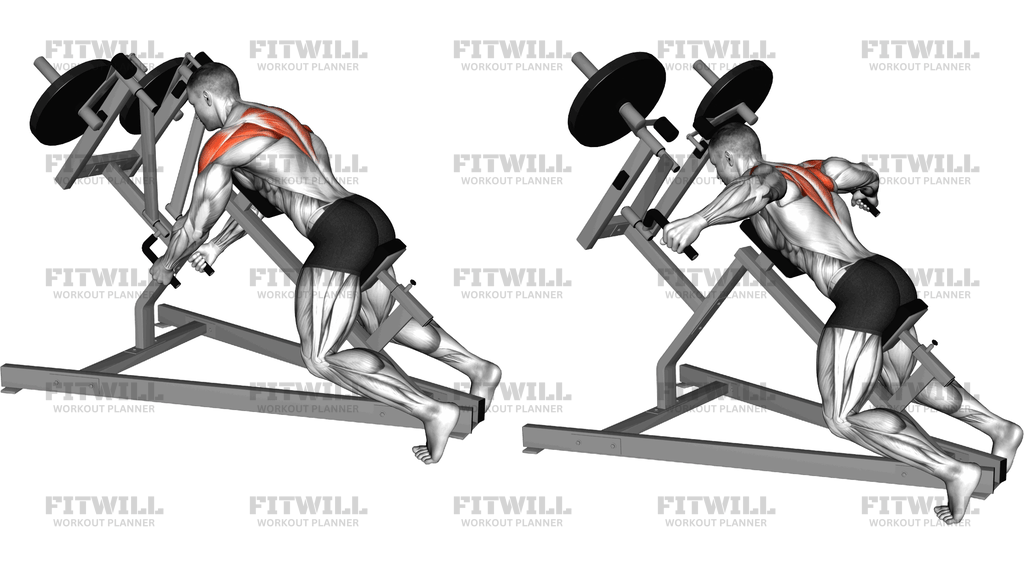
Try single-arm versions with your free hand braced on a bench or thigh, or perform the same fly pattern lying chest-down on an incline bench. Both options support the torso while keeping the rear delt arc intact.
Should I do the Bodyweight Bent Over Rear Delt Fly before or after my main lifts?
It works well as a light activation drill before pressing or pulling sessions, and as a high-rep finisher afterward. Avoid doing it to fatigue right before heavy rows, since the rear delts assist in those lifts.