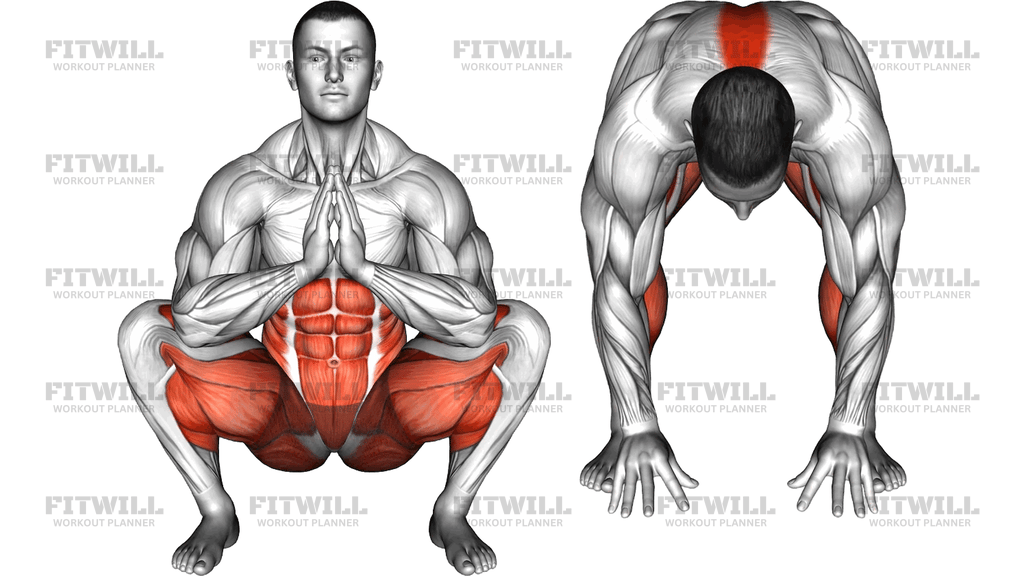
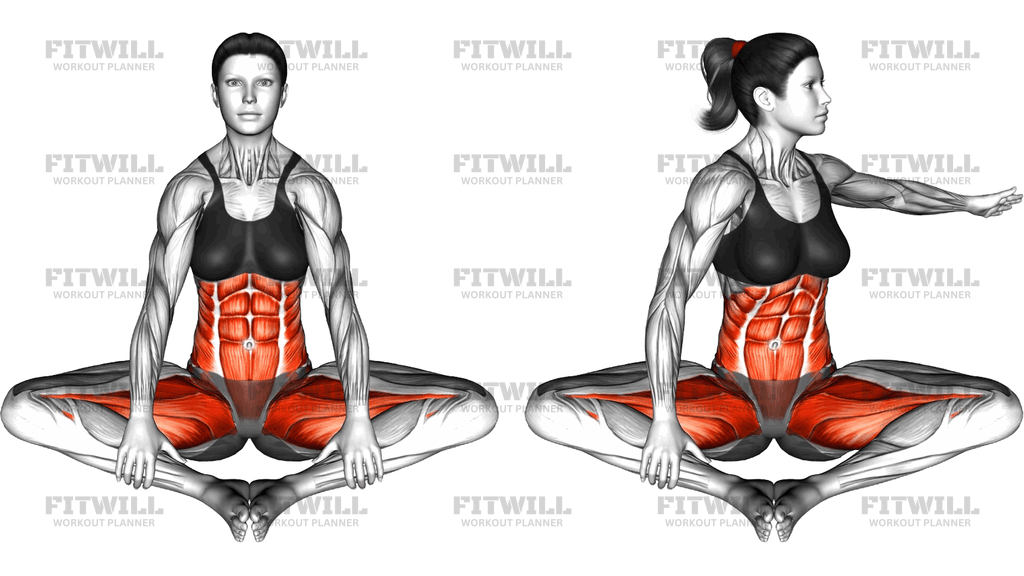
Side Lunge Stretch (Version 2)
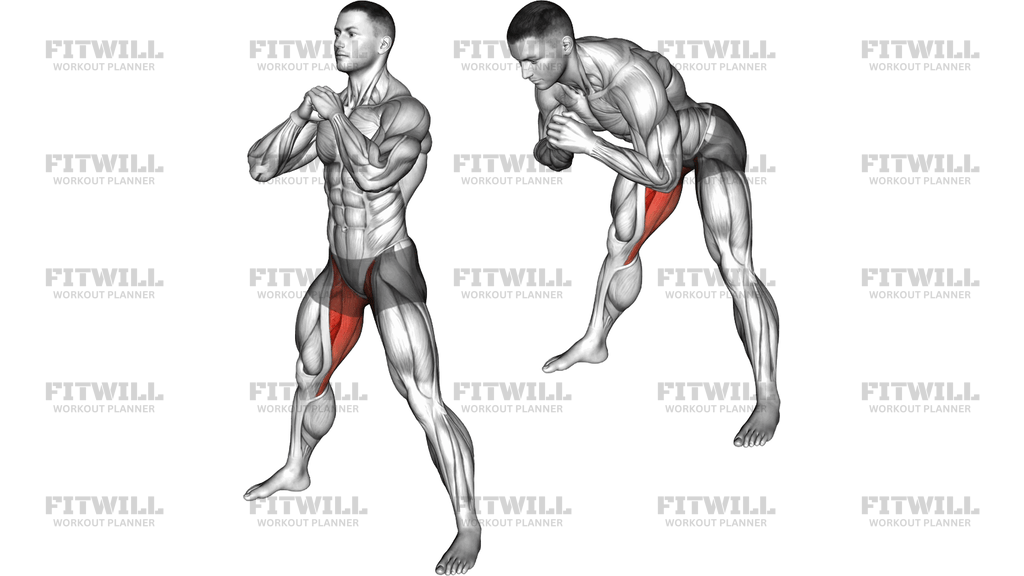
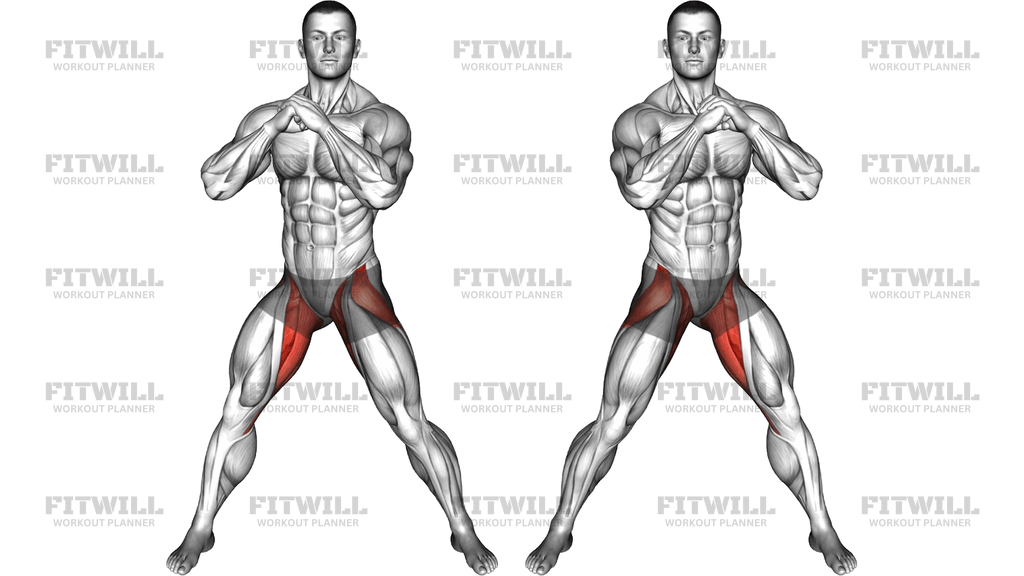
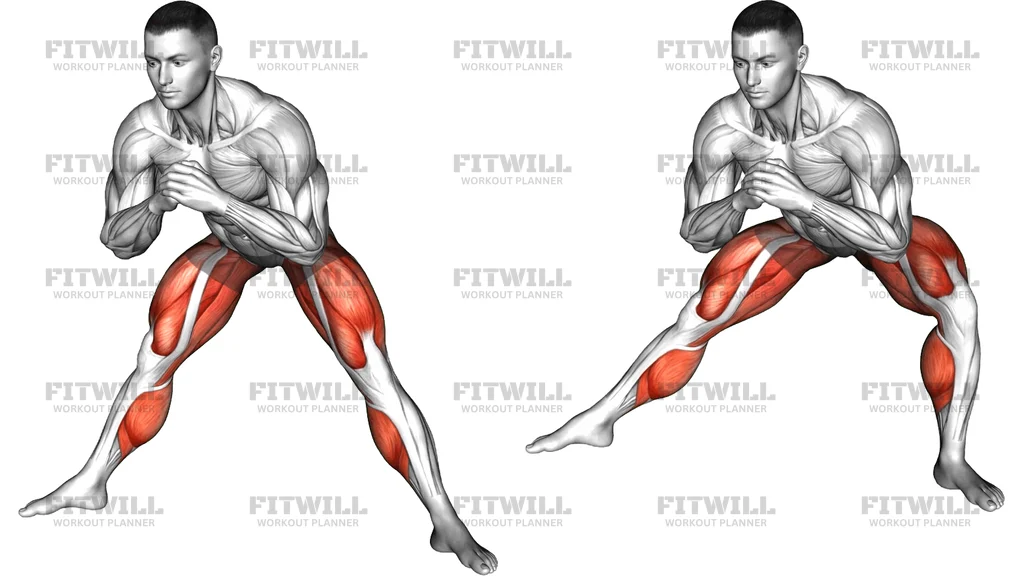
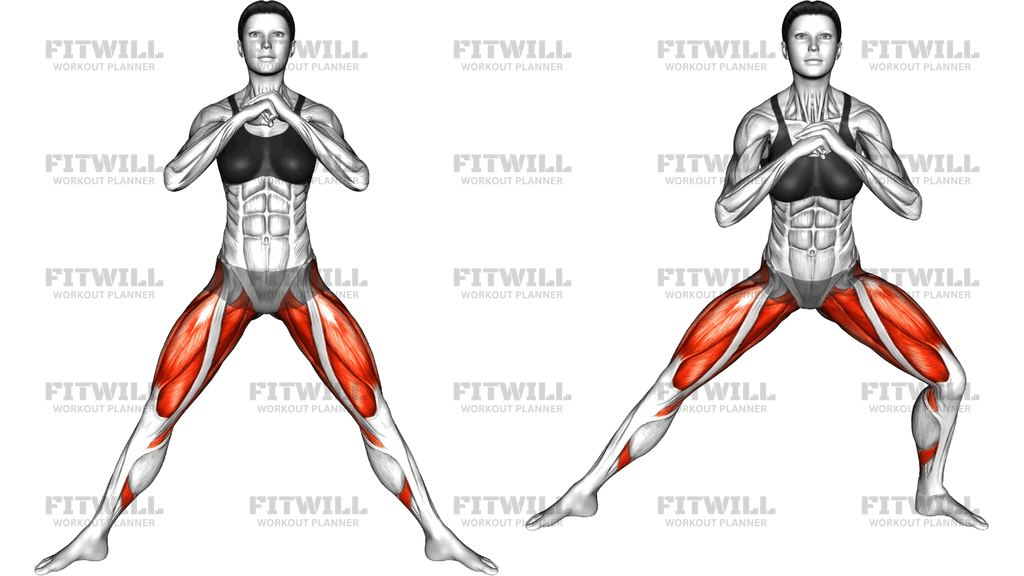
The Side Lunge Stretch (Version 2) is a body weight mobility drill that takes the classic lateral lunge and turns it into a deep, held stretch for the inner thighs and hips. From a very wide stance, you shift your weight over one bent leg, sink the hip down toward the heel, and lean the chest forward over the bent-knee thigh with the hands clasped for support. The opposite leg stays long and straight with the toes pulled toward the ceiling, so the adductors on both sides of the body are working at the same time: the bent-knee side gets a strong groin and hip stretch, while the extended side opens the inner thigh along its full length.
This position is especially useful for anyone who feels tight or restricted when moving sideways. Runners, cyclists, and lifters tend to develop stiff adductors from repetitive forward-only movement, and tight inner thighs often show up as a narrow squat stance, poor side-to-side agility, or a nagging pull near the groin. Spending 30 to 60 seconds per side in this stretch before training or on rest days helps the hips accept a wider, deeper range.
What makes this version distinct is the forward torso lean over the working thigh. By folding the chest down and bracing the hands on the bent knee or the floor, you add a hip-opening component that the upright version does not provide, lengthening the glutes and deep hip rotators on the bent-knee side along with the adductors. The extended leg keeps tension on the groin and also loads the hamstring and calf of that leg.
Setup matters more than depth here. The stance needs to be wide enough that the extended leg is genuinely straight, and the bent knee must track over the toes rather than collapsing inward. Because the torso leans forward and the hands carry some load, a rounded spine is the most common fault, so treat the lean as a hinge from the hips rather than a slump through the lower back.
To execute well, sink gradually, let the breath stay slow and steady, and hold the deepest comfortable position rather than forcing range. Small adjustments, like rotating the extended toes up slightly or easing the chest a little closer to the thigh, let you fine-tune where the stretch lands.
Use this stretch as part of a warm-up for leg day, after running or field sports, or in an evening mobility routine. It requires no equipment and very little space, which makes it one of the most practical hip openers to keep in regular rotation.
Fitwill
Log Workouts, Track Progress & Build Strength.
Achieve more with Fitwill: explore over 9600 exercises with images and videos, access built-in and custom workouts, perfect for both gym and home sessions, and see real results.
Start your journey. Download today!




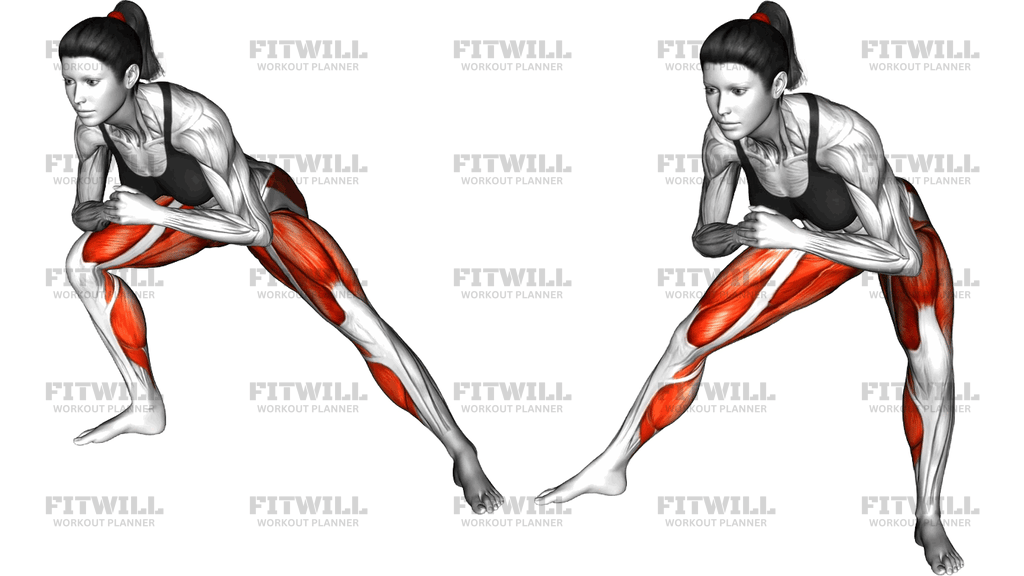
Instructions
- Stand with your feet roughly twice shoulder-width apart, toes angled slightly outward, and shift your weight toward the side you want to stretch first.
- Bend the working knee and push the hip back and down toward the heel, letting the extended leg straighten fully along the floor with the toes pointing up or forward.
- Clasp your hands together and rest your forearms over the bent-knee thigh, or place the fingertips on the floor inside the bent foot for extra support.
- Brace the abdomen lightly and hinge forward from the hips, lowering the chest toward the bent-knee thigh without rounding the lower back.
- Hold the deepest position where you feel a strong but tolerable stretch through the inner thigh of the bent-knee side and the groin of the extended leg.
- Keep the extended heel heavy on the floor and the bent knee stacked over the ankle, never collapsing inward toward the midline.
- Breathe slowly through the hold, exhaling as you let the hips sink a little deeper on each breath out.
- Stay in the stretch for 20 to 60 seconds, making only small adjustments to the torso angle as the muscles release.
- Press through the bent foot to drive the body back up to the wide standing stance, pause, then repeat on the other side.
Tips & Tricks
- If the extended knee locks or hyperextends, keep a micro-bend in that leg so the stretch stays in the adductors instead of stressing the joint.
- A collapsed inward knee on the bending side is the most common fault; actively push the knee toward the pinky toe to keep it over the foot.
- Do not chase depth by slumping the chest; if the lower back rounds, support the torso higher with the hands and lean only as far as the hips allow.
- If the groin pull is too sharp on the extended side, shorten the stance slightly and re-set the feet before leaning forward.
- Bend the extended knee a touch off the floor only if the straight-leg position causes pinching, then work toward straightening it over time.
- Warming the hips first with light walking or a few easy body weight lunges makes this stretch noticeably more comfortable than going in cold.
- Keep the extended foot's toes relaxed and pulled back rather than cranking them; the foot position shapes how much the calf and hamstring join the stretch.
- Ease out of the hold slowly and stand up between sides, since rushing the exit from a deep groin stretch can cause a strain.
- Where you feel the stretch can be tuned: sinking the hips lower biases the bent-knee side, while sliding the extended foot farther out lengthens the straight leg more.
Frequently Asked Questions
Which muscles does the Side Lunge Stretch (Version 2) target?
It primarily targets the adductors of the inner thighs on both legs at once, with the bent-knee side also stretching the glutes and deep hip muscles due to the forward torso lean. The extended leg adds lengthening through the hamstrings and calves.
How is Version 2 different from the standard Side Lunge Stretch?
In this version you lean the chest forward over the bent-knee thigh with clasped hands or fingertips on the floor, which deepens the hip and glute stretch beyond the upright lateral lunge position.
Can beginners do this stretch safely?
Yes, as long as they use a narrower stance and stay more upright at first. Beginners should hold a tolerable stretch for shorter periods and let the range grow gradually over weeks rather than forcing depth in the first sessions.
Why does my bent knee keep caving inward during the stretch?
Inward knee collapse usually means the stance is too wide or the hip is too weak to control the position. Narrow the stance slightly and deliberately push the knee out over the little toe throughout the hold.
Should I feel this stretch on both legs?
Yes, most people feel it in the inner thigh of the straight leg and through the groin, hip, or glute of the bent-knee side. Feeling it mainly on one side is normal and depends on where your personal tightness sits.
How long should I hold the Side Lunge Stretch (Version 2)?
Hold each side for 20 to 60 seconds. Shorter holds of around 20 to 30 seconds work well in a warm-up, while longer holds closer to a minute suit post-training or evening mobility sessions.
What can I use if I need extra support or balance?
Place your fingertips on the floor inside the bent foot, or rest your hands on a low bench, chair, or yoga blocks set beside the bent knee. Carrying some load through the hands makes it easier to keep the spine long.
Is it normal to feel the stretch in the knee rather than the thigh?
No, sharp sensation in or around the knee joint is a warning sign. Back off the depth, make sure the bent knee tracks over the toes, and keep a slight bend in the extended leg so the stretch returns to the thigh muscles.
Should I do this stretch before or after training?
It works both ways: shorter, easier holds before squats, running, or field sports prepare the hips for lateral movement, while longer holds after training or on rest days help maintain and gradually improve the range.