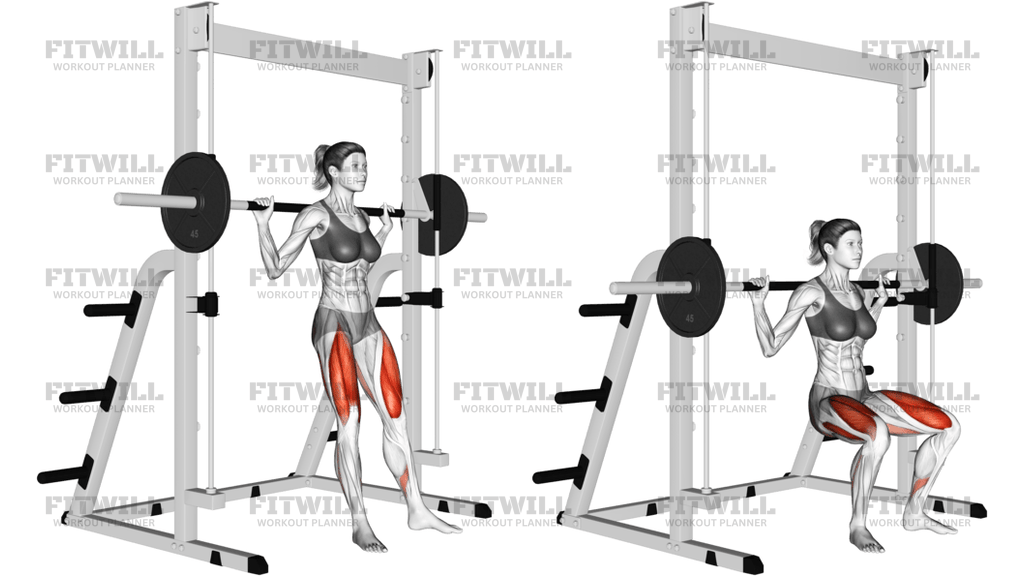
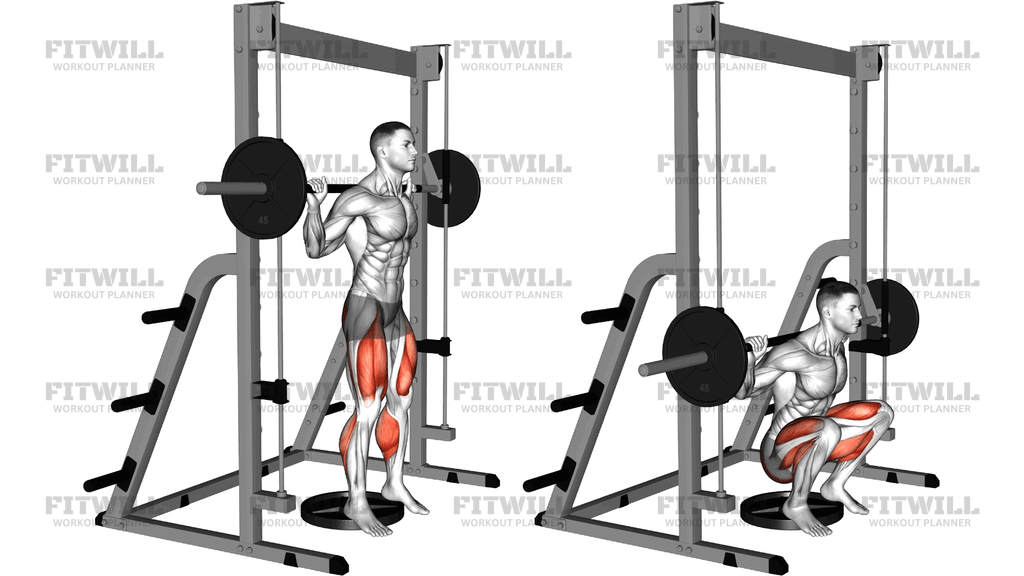
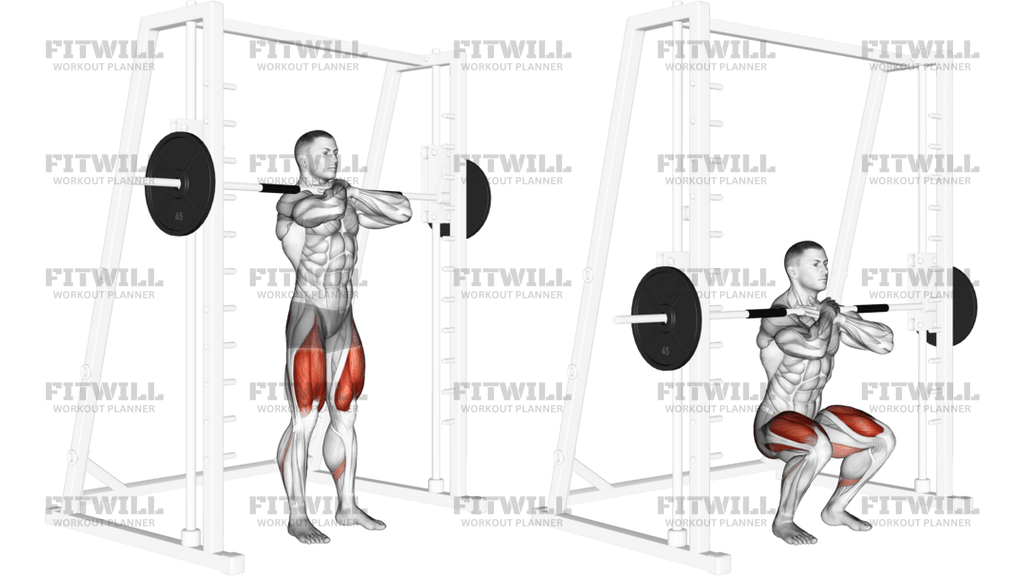
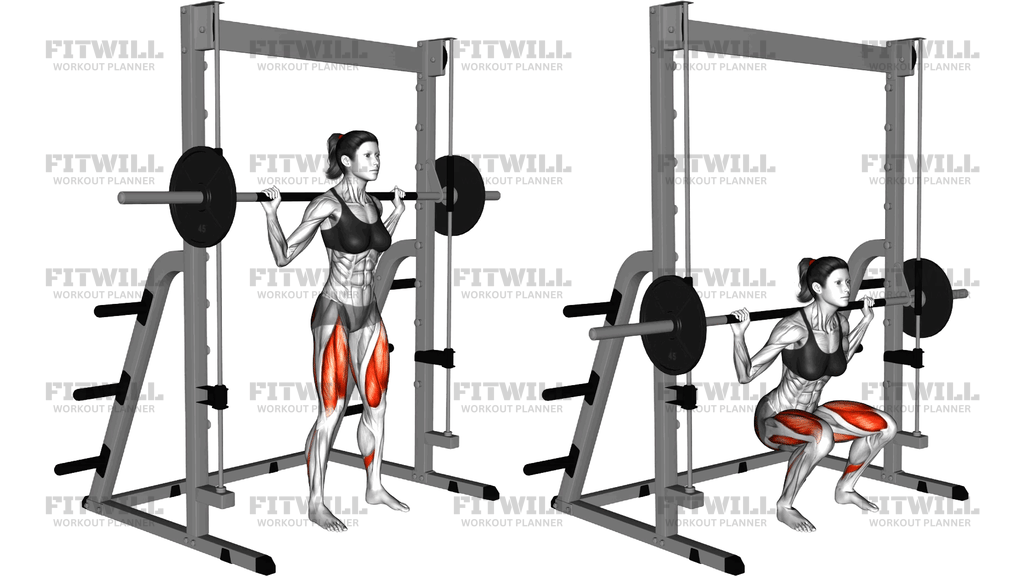
Smith Rear Lunge From Deficite
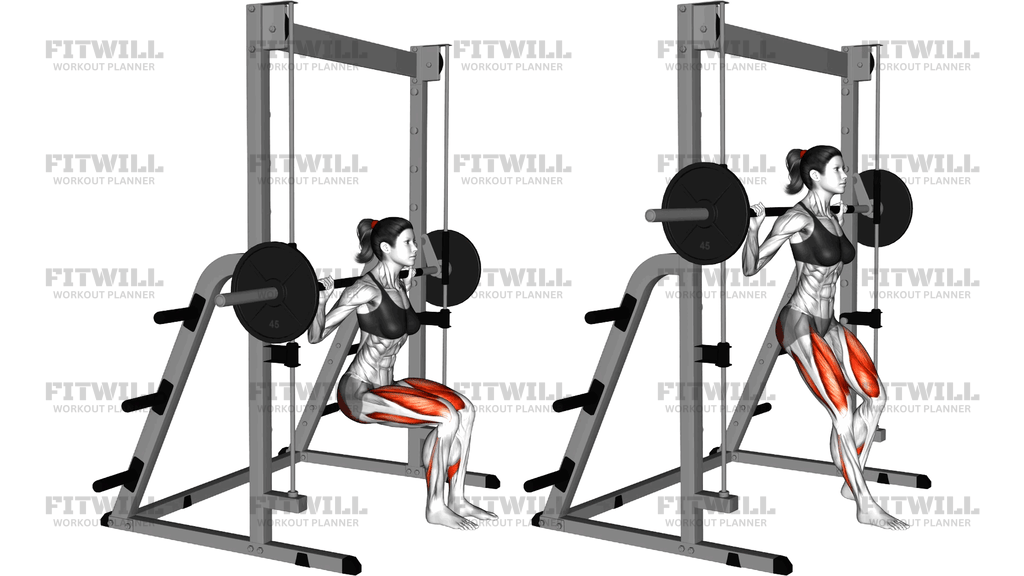
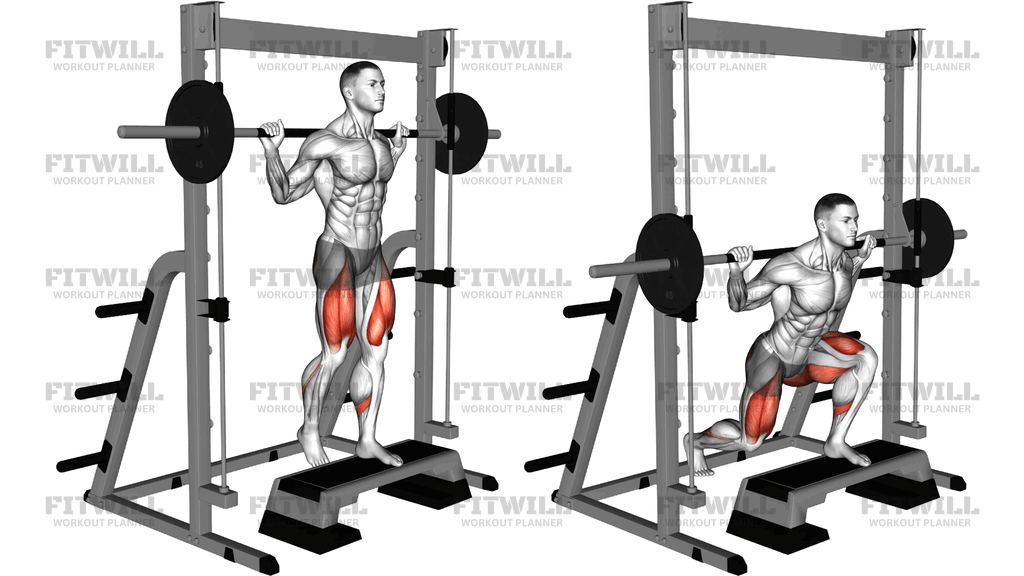
The Smith Rear Lunge From Deficit is a reverse lunge performed with your working foot elevated on a step platform while the bar of a Smith machine rests across your upper back. Because the bar travels along the machine's fixed vertical path, you can concentrate entirely on leg positioning and depth instead of balancing a free barbell. The deficit — standing on a low step or platform — lets your rear leg drop below the level of your front foot, which increases the range of motion at the front hip and knee.
This version is especially useful for lifters who want to load the quadriceps and glutes of one leg at a time without the stability demands of a heavy walking or barbell lunge. Elevating the front foot lengthens the working leg's range, placing extra stretch on the glutes and hamstrings of the lead leg while the quads handle a large share of the braking and drive back up. The rear leg mostly provides a brace, so you can bias whichever side you are training.
The setup matters more here than in a standard lunge. The step must be low and stable, the bar should sit securely on your traps, and your front foot needs to be far enough forward that your shin can stay roughly vertical as you descend. Because the Smith machine bar locks into a straight line, an incorrect foot position shows up quickly as awkward joint angles or a heel lifting off the platform.
To perform it, unrack the bar, place one foot flat in the center of the platform, and step your other foot back behind you, lowering until that knee approaches the floor and your front thigh reaches at least parallel. Drive through the whole front foot — heel and mid-foot together — to return to the top, keeping your torso upright with a slight forward lean. Complete all repetitions on one side before switching legs.
This exercise fits well as a secondary lower-body movement on leg days, particularly after squats or presses when free-weight balance is harder to maintain but you still want unilateral volume. It is also a practical option for taller lifters, beginners learning lunge mechanics, or anyone rehabbing coordination after time away from split-stance work, since the fixed bar path removes one major variable.
Keep the load moderate at first. The deficit and the single-leg stance both increase demand on the front knee and hip, and the Smith machine can hide fatigue until your last rep. Control the descent, avoid bouncing the rear knee off the floor, and step fully back onto the platform between sets before re-racking the bar.
[ Workout Log & Planner ]
Put your next workout in Fitwill
Keep your plan and training log ready when you are.


Instructions
- Set a low step platform in the center of the Smith machine, directly under the bar path, and load the bar evenly on both sides.
- Position the bar across your upper traps, grip it with hands slightly wider than shoulder width, and unrack it by rotating the bar out of the safety hooks.
- Place one foot flat on the platform so it sits directly under the bar, and extend your other leg back behind you with the ball of that foot ready to reach the floor.
- Brace your core, lift your chest, and keep a small, natural forward lean from the hips while your head stays neutral.
- Inhale, then lower by bending both knees at the same time, letting the rear knee travel down toward the floor behind you while your front shin stays close to vertical.
- Descend until your rear knee is just above or lightly touching the floor and your front thigh is at or below parallel to the platform.
- Exhale and press through the heel and mid-foot of the front leg to drive back up, keeping the rear foot relaxed as a balance point.
- Rise until both the working leg and the rear leg return to the top position with the working foot still flat on the platform.
- Finish all repetitions on one leg, then step the rear foot forward onto the platform, re-rack the bar by rotating it back into the hooks, and switch sides.
Tips & Tricks
- Check your front foot placement before loading heavy: if your heel lifts off the platform at the bottom, nudge the foot forward an inch or two, since the Smith bar will not move to meet you.
- A common mistake is taking too short a rear step, which turns the rep into a cramped split squat and drives the front knee far past the toes — reach the rear foot further back so the front shin stays vertical.
- Keep the deficit low, around 2-4 inches; a platform that is too tall forces the rear hip into excessive flexion and pulls your torso into a heavy forward lean.
- Push the floor away through the whole front foot rather than rocking onto the toes, which is the most frequent fault when the quads fatigue on this elevated version.
- Do not let the rear knee slam down at the bottom — the lowering phase is where much of the glute and quad work happens, so take two to three seconds on the way down.
- Keep the bar pressure even across both traps; because the machine fixes the bar path, leaning to one side changes the load distribution on your legs without you noticing.
- If your standing leg wobbles at the top, narrow your rear foot's travel and slow the tempo before reducing weight — the fixed bar helps balance but does not remove the stability requirement entirely.
- Set the safety stops of the Smith machine just below the bar height at the bottom of your lunge so a failed rep cannot drop you forward.
Frequently Asked Questions
What muscles does the Smith Rear Lunge From Deficit work?
The quadriceps and glutes of the front leg do most of the work, with the hamstrings assisting as the hip extends. The rear leg and the calves of the working side contribute stability throughout the movement.
Why is the front foot elevated on a platform in this exercise?
The deficit lets the rear knee drop below the level of the front foot, which extends the range of motion at the front hip and knee. This increases the stretch on the glutes and hamstrings and demands more control from the working leg.
Is the Smith Rear Lunge From Deficit good for beginners?
Yes, provided you start with little or no weight. The fixed bar path removes the balance challenge of a free barbell, so beginners can focus on learning split-stance mechanics, foot placement, and depth before adding load.
How is this different from a regular Smith machine reverse lunge?
The elevated front foot increases the working range and puts the lead leg under a longer stretch at the bottom, generally making the movement harder at the same weight. Start noticeably lighter than you would on the flat version.
How high should the step platform be?
Keep it low, roughly 2-4 inches, high enough that your rear knee can travel below the level of your front foot without your front heel lifting. If your form breaks down or your torso pitches forward, lower the height.
Should I do all my reps on one leg or alternate?
Finishing all repetitions on one side before switching keeps fatigue consistent and makes it easier to match volume between legs. Alternating mid-set is fine, but per-side sets give you cleaner control of load and effort.
What is the most common mistake in this movement?
Standing too close to the bar with a short rear step, which shoves the front knee past the toes and turns the rep into a cramped, knee-dominant grind. Reach the rear foot fully back so the front shin stays close to vertical.
Can I substitute this exercise if my gym has no Smith machine?
A dumbbell reverse lunge with the front foot on a low step replicates the same pattern, trading the fixed bar path for a balance demand. Dumbbells held at the sides are usually the easiest way to load that version.
Is it safe for my knees?
When the front foot is positioned correctly and the load is controlled, the shin stays near vertical and knee stress stays reasonable. If you have a history of knee discomfort, use a lighter load, limit depth to a comfortable range, and stop if you feel pinching rather than muscular effort.